
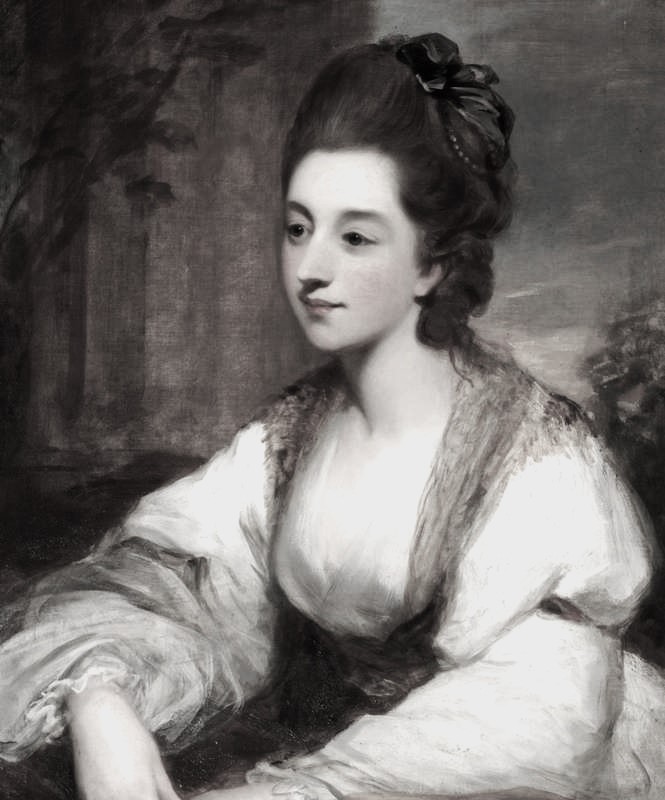

Memorie.al / Lady Elisabeth Carnarvon, the wife of Lord Henry Howard Herbert-Carnarvon, came to Albania at the end of 1923, shortly after the death of her son Habry Erbert [Aubrey Herbert]. Unlike other female travellers, she was not struck by the exotic and curious Albanian world, but by the destitution and misery of an entire people. Naturally, after witnessing this bitter reality, she felt sorry for them, so she decided, within her means, to ease somewhat the pains of this indescribable poverty. A year later, when she came for the second time to Albania, she brought two English specialized nurses, Miss Harrison and Miss Hald Houghton, for the Psychiatric Hospital of Vlorë. Initially she paid them from her family budget, and later from the Herbert Foundation.
This was the beginning, but afterwards she intensified her work, not only in simply collecting aid, but more so in raising public awareness. She used every connection and opportunity. Among other things, also her family ties. Her brother was the British ambassador in Washington. On a special trip to the USA in 1927, she created and brought to Albania the “Rockefeller Foundation” as well as the charitable organization “Near East Foundation”. For many years, these organizations and associations played a very important role for the emancipation, education, cultivation and health improvement of the Albanian people. Alongside this, the fight against malaria was institutionalized with the establishment of medical centres for the treatment of thousands of Albanians, as well as the elimination of infection hotspots.
For six consecutive years she did not stop working, raising funds and sensitizing circles and charitable associations in England and America, among others also for the numerous Kosovar and Bosnian refugees who, driven out by the Serbs, streamed into Albania. With the collected aid, but also with her personal funds, she settled hundreds of Kosovar families in Myzeqe and Kavajë. Moreover, in Kavajë she built a village with 50 new houses where 50 Kosovar families took shelter; she not only furnished the houses for them, but also gave each household a Jersey cow. In this village she also built the school and other socio-cultural facilities. She named the village after her son, Herbert, but this name did not last long and it reverted to Qerret.
Within the framework of aid, she donated equipment, furniture and even small industrial workshops to the American Technical School, and paid the salaries of a part of that institution’s staff.
During that period, Lady Carnarvon, although ill, began to build the library “Albanian Youth”, but she did not live to see it built and operational. Other family members took it over. In that serious state of health, unfortunately for Albanians, on 3 February 1929, Lady Carnarvon died at the age of 72 in Portofino, Italy, leaving behind many plans and projects unfinished.
The “Carnarvon” Library, an English gift to Albanian youth
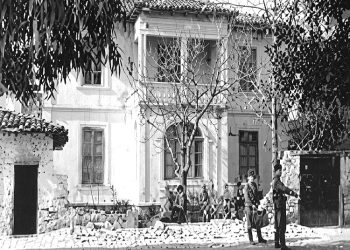
Where the “Ali Demi” cinema once stood, and where a large, modern building has left no trace of the old, there used to be the “Carnarvon Library”, built in 1928 and inaugurated in 1929, as a gift from the family of English Earls Herbert and personally from the great Albanian‑philanthropist Countess Carnarvon, called by Albanians themselves “Mother of Albanians” and decorated with the Order of Skanderbeg in 1929. Countess Carnarvon had chosen this spot under the dense crown of olive trees as a cult in memory of her son, but unfortunately, she passed away a few days before the inauguration.
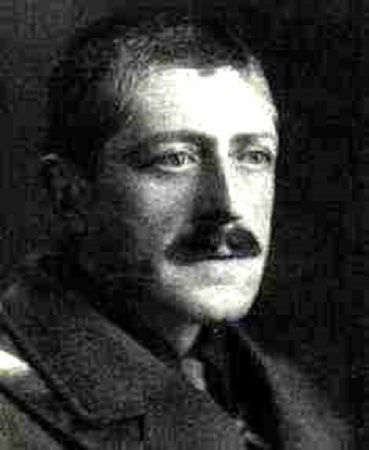
This library was dedicated to her son, the great friend of Albania, lawyer and defender of Albanian rights, Sir Aubrey Herbert (1880‑1923). Although there was once a street named “Carnarvon”, its name has been changed twice and now has a different name. Likewise, the name of “Habry Herbert” street has been removed! The library at that time reached a collection of 5,000 books in English, French, German, Italian, classical languages, etc., and became for Tirana the second most important library after the National Library. The library had a large reading hall, 26 shelves for books with 7 cupboards each. At that time it became an important cultural, entertainment, and recreation centre; it became a milieu in the broadest sense of the word – a milieu of cultured and emancipated life.
Besides the tennis and table tennis court, in its halls various conferences on national and scientific themes were organized every week, film shows with great artists, exhibitions of artistic works, etc. At the library’s inauguration ceremony, Lady Carnarvon was posthumously awarded the highest decoration of the time, “Grand Officer of the Order of Skanderbeg”, which was presented to her son Mervyn Herbert. Unfortunately for Albanians, Mervyn Herbert, two weeks after leaving Albania, died suddenly in Rome on 30 May 1929, and the family legacy was carried on and fulfilled with great dignity by Mary Herbert, the respected wife of Colonel Aubrey Herbert.
The Italian occupation of the country also brought the tragic end of this institution. The Fascists stole 12 large crates filled with the valuable books of that library, while the other members of the Herbert family left this country that they loved and that loved them so much.
Here are the works of two English nobles
In 1926, Mit’hat Frashëri wrote about this contribution of the English aristocratic family: “Gratitude is not only a quality that nourishes and increases one’s virtue, but it is also a duty. There are people whose deeds and help are worth an entire army. Such was for us the late Aubrey Herbert.”
With her family budget, as early as 1923, she equipped the Psychiatric Hospital of Vlorë with supplies, medicines and two specialized nurses. She brought from England Dr. Ruth Pennington, a powerful personality who for 14 consecutive years made a true revolution for the emancipation of Albanian women and families, working as a doctor, nurse, teacher and careful housewife. Through the “Herbert” foundation, she created and brought to Albania the “Rockefeller Foundation” and the charitable association “Near East Foundation”, which made an extraordinary contribution in the fight against poverty.
She institutionalized the fight against malaria by setting up health centres for the regular treatment of thousands of Albanians who had suffered for years from this disease. Alongside this, the elimination of infection hotspots was pursued with chemical and biological warfare agents. She generally helped in the settlement of Kosovar refugees, but her greatest contribution was the creation of the village of Qerret in Kavajë, where she built houses, a school, and gave a Jersey cow to each of the 50 Kosovar families settled there.
She donated equipment, furniture, small industrial workshops to the American Technical School, and for several years she paid the salaries of part of the leading staff of this school. Particularly extraordinary was the contribution of this family to the construction and operation of the “Library for Albanian Youth” with a collection of 5,000 books in English, French, German, Italian, classical languages, etc.
A passionate advocate of Albania’s independence, after visiting the country for the first time in 1907. When Albanian delegates went to the London Conference of 1912‑1913, they found Herbert’s help as adviser and companion. Herbert was one of the closest and most sincere friends of Albanians, and especially of the distinguished figures of our nation such as Ismail Qemali, Mithat Frashëri, Dhimitër Berati, Pandeli Vangjeli, King Zog, Hasan Prishtina, Isa Boletini, Mehmet Konica, Faik Konica, Charles Telford Erickson, etc.
During the days when the Albanian delegation was in London, he hosted Isa Boletini in his own house, and his friendship with him continued until his death. As early as 1912, Herbert had set up a pro‑Albanian society with parliamentarians, scholars and journalists. After his death, this society turned into an institute and the mission in Albania was continued by his mother, Countess Carnarvon.
Aubrey Herbert was also a poet. The English Parliament published the book “Albania’s Greatest Friend Sir Aubrey Herbert”, which contains notes, diaries, and articles by Herbert of great value for diplomacy and for those who wish to know Albania. He strongly denounced the ugly crimes of the Serbs in the autumn of 1913. Working behind the scenes but very active, he helped in the preparation of the Congress of Lushnja and the Vlora War of 1920. / Memorie.al