From GEORGE FRED WILLIAMS*
Part One
Memorie.al / “Bah! Look at these barbarians!” has cried every tyrant who has driven their victim into misfortune, when at last they found it impossible to make them a slave. The painful event of Albania has not been shown to the people of the United States of America. It has been obscured in its own land of Byron and of the great powers, who have decided to wipe this heroic people off the face of the earth. In the dark halls of European diplomacy, for centuries, the fate of Albania has been sealed in suffering. Even now, with tears in its eyes and utterly weakened by centuries of bondage and injustice, it stretches out its gaunt hands to seek justice and freedom; but still in vain. Yes, the wages of sin is death, and the righteous providence of God brings forth the fact that the evil state of Europe today flows directly from that very policy which it used against Albania.
Although there is much to be said, I step forward to tell this story, to describe the land, origin, language, customs, and history of this people, the intrigues of Europe to keep this people a slave to Turkey, their sufferings and just demands for freedom and independence, and finally how America can help by leading this people towards their rights.
THE LAND OF THE ALBANIANS
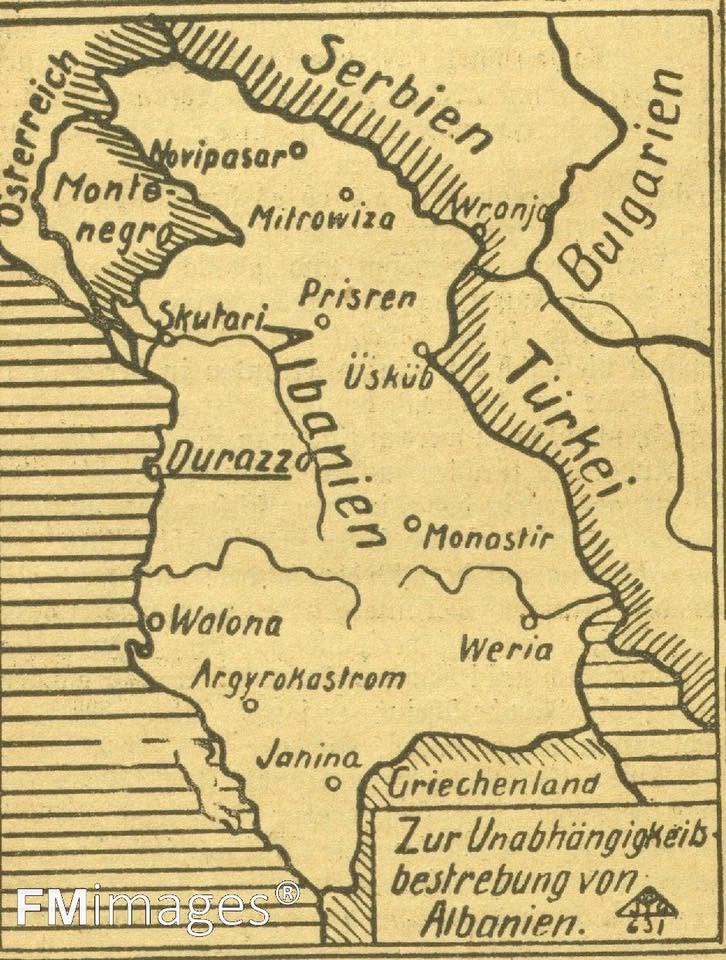
Vlora was a small part of this land from which those who trod upon Albania created the name Albania in the 11th century. The true name of this land is Shqipëri and of the people Shqiptar, which means the land and sons of the Eagle. Albania, situated between Montenegro and Austria to the North, Serbia to the East, and Greece to the South, stretches 390 km along the eastern shore of the Adriatic. It is very close to the Italian coast, where cities and ports from Brindisi to Venice seem to want to say that they are exalted and proud of their progress and happiness before the desolate opposite shore of their neighbor. Both in the South and in the North of Albania, there are beautiful ports and large, magnificent lakes.
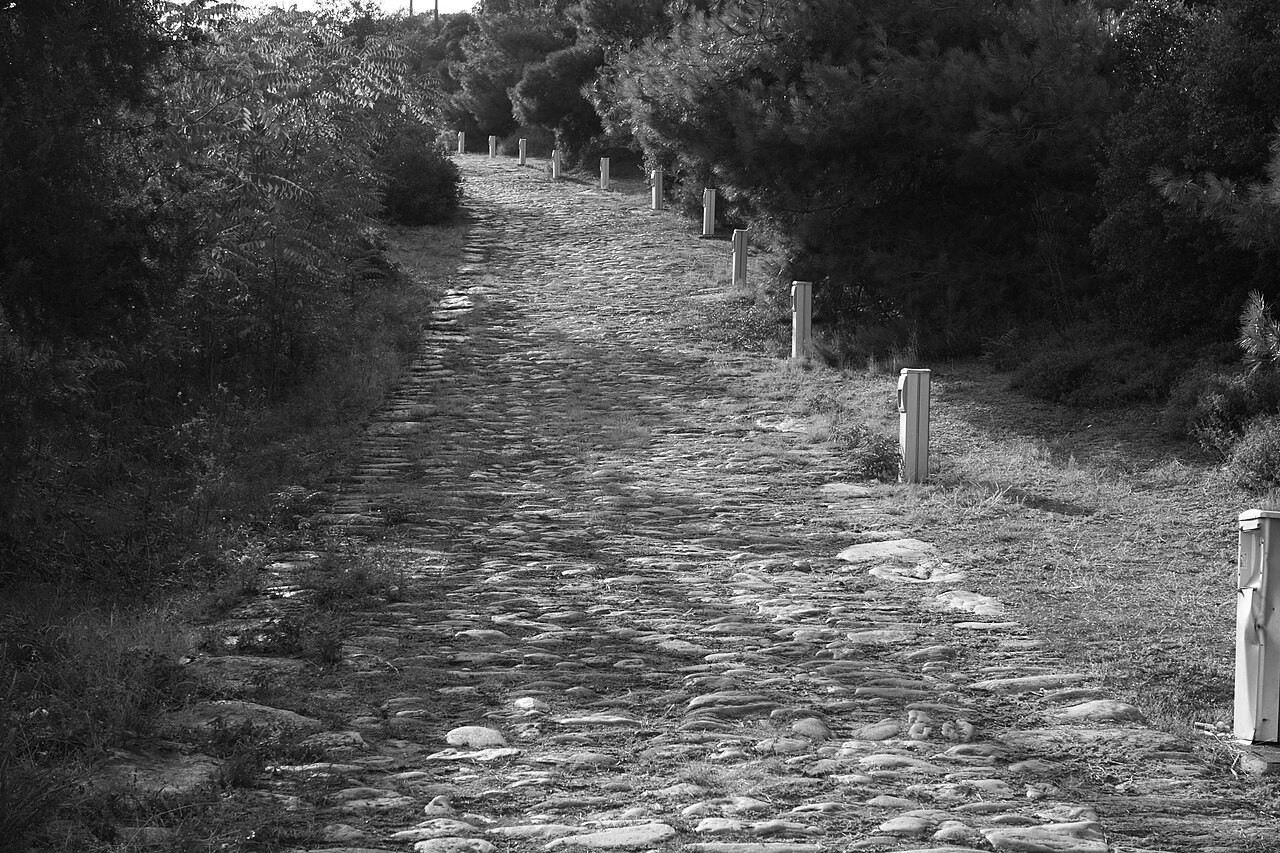
The mouth of the Drin and Lake Shkodra, which are now almost unused, should have been the means by which a great and general trade would develop. Four other ports along the Albanian coast are without breakwaters and without any improvement. The rivers are clogged and unusable, while great forests are rotting in mud and swamps. Large and fertile plains serve only as a poor pasture for flocks of sheep of a very weak race; the only plough is the wooden ard of ancient Rome. The mines worked by the Romans and Venetians have disappeared from sight and their whereabouts are entirely unknown. Apart from the Via Egnatia, a marker of Roman occupation, there are no roads, and great waterpowers flow to waste, because there is not a single electric power plant.
There is no bank and very little money; there is no national post office except those of foreigners. There are very few newspapers and books; very rarely does any kind of machine move, and there is not even a national government. The Italian Minister of Foreign Affairs, the distinguished San Giuliano, gave a description of how he traveled from the seacoast to Shkodra, the principal city, on horseback, through fields, swamps, thickets, and mud, along a blind path, while along his way on one side flowed the beautiful, obstructed, and useless river, which with little expense could be made navigable for steamers of over three thousand tons from the city to the sea. Impossible! That such a desert should exist in the heart of Europe, yet it was a fact.
In truth, this happens because this country has greater opportunities for progress than any other state in the Balkans, but Europe has seen fit to make this country miserable and desolate. This country holds the best geographical position in Europe; it is the key to Balkan trade and the gateway to the East. Despite this, today there is not a single railway line crossing the Balkans from the Adriatic, in a way that would be a continuation of the Austrian line. When Prince Wied and the representatives of the six Great Powers made Durrës the capital of the Kingdom, they today took a bad location, a foul village, yet Durrës under the name “Epidamnos” as it was called in ancient times. Cicero, two thousand years before, described it as a beautiful, great, and flourishing place. At that time, it was a great commercial center, but today, like its neighbor Tivar (Bar) to the North, they stand as a monument to the sin of Turkish destruction.
In the land of Epirus today, 600,000 souls live miserably; under the Pax Romana, 4,000,000 lived in happiness. We shall see later that it was not nature, but black magic that brought this land down from its early happiness to its current grievous and wretched state. It was sheared and shortened in the Treaty of Berlin, in the division of the Balkans, and in the London Agreement, so that no one today can know its surface area and population. It may be as large as the states of Connecticut and Massachusetts combined, and the population may be estimated from 500,000 to 1,500,000, but on average it might be 750,000 souls. Shkodra has 40,000 inhabitants, and with few exceptions, this country consists of villages.
THE ORIGIN OF THE ALBANIANS
Back in prehistoric times, before Homer’s poets sang of their gods and mythical heroes, before the Greek language was written, there lived a people called the Pelasgians. Herodotus (484-425 B.C.) attributed to the Pelasgians a history which mentions them long before the civilization of the Greeks; the rough work that covers the sides of the Parthenon in Athens is still called Pelasgic. They built great walls called Cyclopean, about which Prof. Pocock says they were built long before the Greeks of Homer existed. From this strong prehistoric race, only the Albanians remain. Only in recent times did it become clear that the Pelasgians were the ancient Illyrians, the first Indo-European branch, whose empire stretched from Asia Minor to the Adriatic and from the North to the Danube.
From the studies of modern writers, such as Prof. Max Müller and Prof. Pott, this origin became firmly established in the Albanian language. These Illyrians, who still live in Albania as Tosks, were also dispersed into Italy and are known as Tuscans, Toscanos, and Etruscans. It is futile to seek the gods of Greece in the etymology of its own language. In the Albanian language, these are very clear and their meanings very precise. For example, Kaos is haps (space); Erebus, the son of Chaos, is er-het-os, to make dark; Uranos is I-Vran-os, meaning the fairy of the clouds, the clouds themselves; Zeus, Zaa, Zee, Zoot-Zot, meaning “seizes lightning”; Athena is E thëna, “the spoken word”; Nemesis, nemës, meaning curse, call of the devil; Muse, Mosois, is “the teacher”; Afërdita means “near the day,” the dawn.
When the Albanian language has been thoroughly studied and when its oral traditions have been unearthed, then many of Homer’s works will be revised, and some of them will need to be corrected as well. Herodotus did not know that the names of the heroes in Homer’s works were perfectly clear in the Pelasgian language. And even the very name of Homer himself can be traced in the Albanian language: I mirë (the good), and in the form Imiros, it means “good poetry”.
THE NATIONAL FLAG
In the Albanian language, Agamemnon is Ai-ge-mendon, “he who thinks”; Ajax is Ai-gjaksi, “blood-spiller”; Priamos is Bir-i-amës, “son of the mother,” with the ironic meaning “Son of the earth, of the land”; Achilles is I-qiellit, “one from heaven,” a descendant of the sky; Odysseus is I-udhës, “the traveler,” he who roams; Ithaca is I-thak, “irritable”; Droilos is Droili(os), “he who fears,” a coward. Many others could be added to this list. It is no wonder if people who have studied the Albanian language say that this is the original language of Homer and that the Greeks took from the Pelasgian poets the majority of their songs of prowess and heroic deeds. What great knowledge awaits the archaeologist when the Albanian land opens the treasury of Pelasgian history!
These and many other derivations prove that the Albanians today are on the land of their forefathers and speak the language of their great-grandfathers. Even before the Hellenic branch was known in the mountains of Thessaly, Shkodra, the principal city of Albania, was without doubt the capital of the magnificent Kingdom of Illyria. Albanian was the native language of Alexander the Great, who conquered the world, and of Pyrrhus of Epirus, one of the greatest generals mentioned in history and the final opponent of the conquering Roman armies. A tragedy, beyond the imagination of any tragedian, is that this ancient and strong race has come to such a wretched and cruel state, which is seen as a scandal to European civilization. It is no wonder that the Ottomans did not allow any excavations in the Albanian land, because it could remind this people of their former flourishing.
THE INHABITANTS OF ALBANIA
They are not Turks, as many think; formerly they were all Christians, but over the centuries the majority converted to the Mohammedan faith. Many of the highlanders are Catholics, while in Southern Albania; almost the Greek Church is entirely acceptable, except for the Mohammedans. The Albanian language is as distinct from the other languages of Europe as the Celtic and Basque languages. They have no literature except a few books by Catholic priests; they do not yet even have a stable alphabet. In the few schools, the Turks did not allow their language to be taught, and there are not many who know how to write and read.
The history of Albania is a long record of invasions, plunder, and bloodshed. Their songs tell of and emphasize only war and bravery. All the cruel invasions of Europe have swept this land with fire and sword. After the death of the hero Gjergj Kastrioti, who kept the armies of the Sultan away from Albania for 24 years, destroying them one after another from the face of the earth, the Ottomans were able to conquer Albania and held it under their yoke for more than 450 years. Apart from the people of the plains, who have been killed off more by the yoke of bondage, generally speaking, Albanians are brave and strong warriors. The highlander never leaves his house unarmed and even the shepherd tends his flock armed to the teeth.
War has been their only faith; indeed, they say: where the sword is, there is the faith. The boy grows up without any education or discipline, except in the use of weapons. In the Turkish army, he learned how to steal and plunder; in his own home and country, officials and tax collectors hindered his savings, labors, and industries. Raised in an atmosphere of violence and theft, even hunger has often compelled him to earn his living as he could, even from the enemy who trampled his hearth. It should not be wondered at why theft committed against the Turks was considered high patriotism. Undoubtedly these highlanders are fierce and merciless in assault or defense. That they also have badly habits needs no proof, but they were raised in a pessimistic atmosphere.
A NOBLE PEOPLE
This people is the greatest example of preserving inherited morals and merits, for their nobility and their capacity that, although for centuries under tyrannical and devaluing influence, they still hold their heads high, have not lost their hopes, and always say, “I am an Albanian,” even in the midst of fire. And for this, they deserve to be ranked with a long list of pure and exemplary virtues. San Giuliano says that Albanians are first-rate egoists. Certainly they are not a race that submits and cowers in fear. Their bravery knows no bounds; they face death and their own misfortune without trembling.
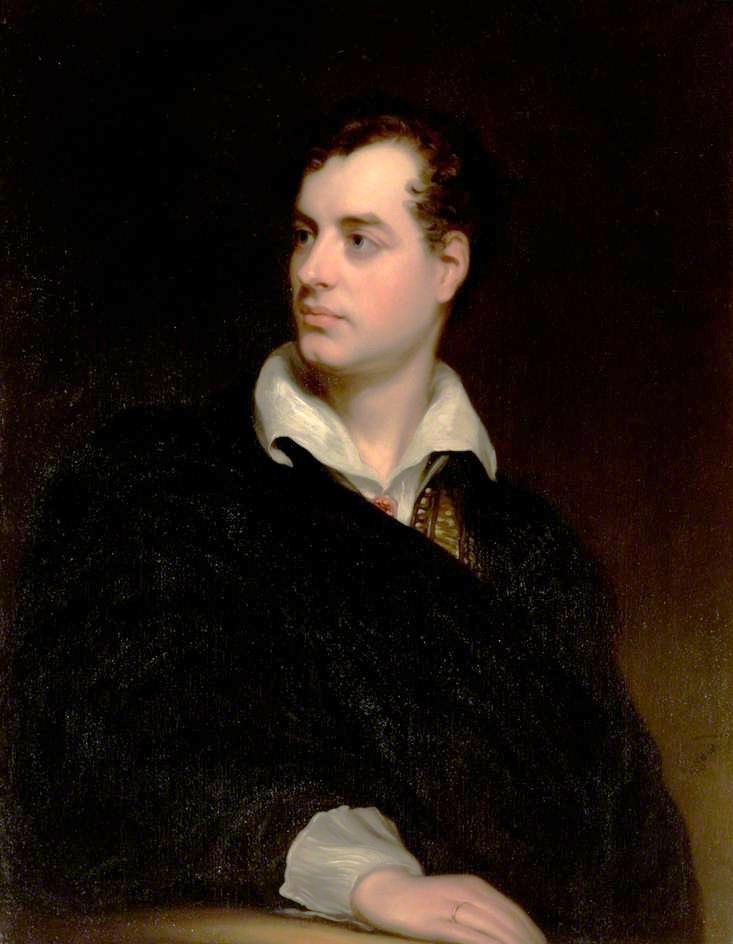
The word of Besa for them is much more sacred than the great deeds of civilized peoples, and their hospitality continues until nothing is left. The virtues of their women are inherited, and death is the usual and swift punishment in case of betrayal or immorality. Their sensitivity to dishonor and children is much greater than to lies and slander, and these cases always end in blood feuds. In no other country in the world is a woman safer from insults than in Albania; he who kills a woman falls in value and loses his name and fame. Byron honors the loyalty of the Albanians in this way, from his personal experience with them:
“Rough are the sons of Albania, and yet they lack not virtues, were those virtues more mature; Where is the foe that has seen their backs and the path to make them flee? Their forts and homes are never safer than they themselves in times of turmoil and need; How heavy their anger, but when they forgive, friendship is entirely sure. When gratitude or nobility calls them to shed blood, they go fearlessly wherever their leader guides them.”
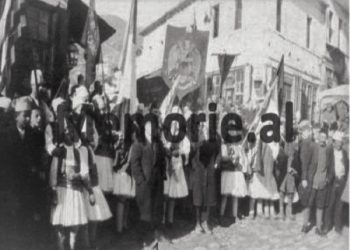
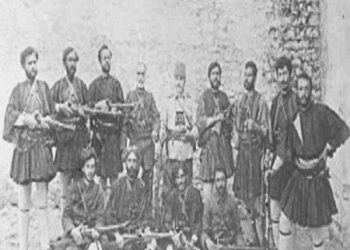
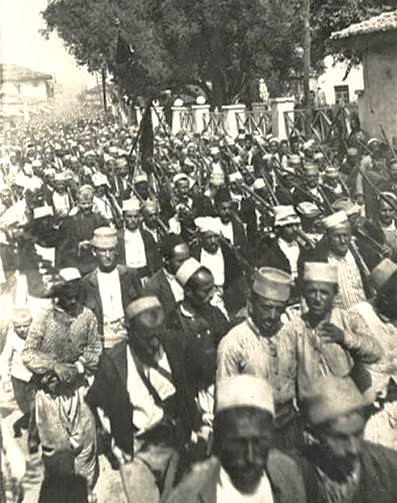
So greatly did Byron admire this people that Shelley called him by the pet name ALBI? The highlander is distinguished from the city-dweller. The dress generally is like the national dress of Greece. The fustanella, a white skirt that reaches to the knee, white stockings covering the calves of the legs, shoes with turned-up toes and tufts on them, a waistbelt filled with weapons, a xhamadan with sleeves hanging down the back, and a qeleshe (felt cap). (George Fred Williams has visited only the southern coast of Albania; therefore he describes the southern Albanian folk costume – translator’s note). This people lives in a patriarchal form, meaning the elder of the house is honored and distinguished above others, and everyone listens to him.
Daughters honor and obey their mother. Every desire of the parents is fulfilled before that of others. Among this people, respect for age is a particular trait. They are very kind-hearted to one another, help each other in case of danger or need, have respect for their superiors, and keep their word with justice and a clear conscience. Among themselves, they speak a refined language, use pure expressions, and foul language is punished without delay, sometimes very severely. Even in jest, profane language is not used. Hospitality is at its peak in Albania. An attack made against a guest in any way is a great dishonor to the host and to his entire clan.
He who robs or steals from a guest, according to the custom of the land, is punished very severely, either by death or by being cast out of the clan. The men are tall; the Ghegs in the North are taller than the Tosks in the South; also stronger and more severe. One writer describes the movement of the northern highlanders as that of wild goats climbing the sharpest peaks and crags and descending fearlessly from these places, which when you see them, you would say no living thing could escape from them. Besa is the most sacred tradition; when one has the besa of a good person of one clan, the greatest dishonor awaits its breaker from the person of that clan. The Besa of the Albanian is not only kept and defended with the best will, but the Albanian, if necessary, also gives his life to keep his given word. A traveler under the word of besa is under sacred protection./ Memorie.al
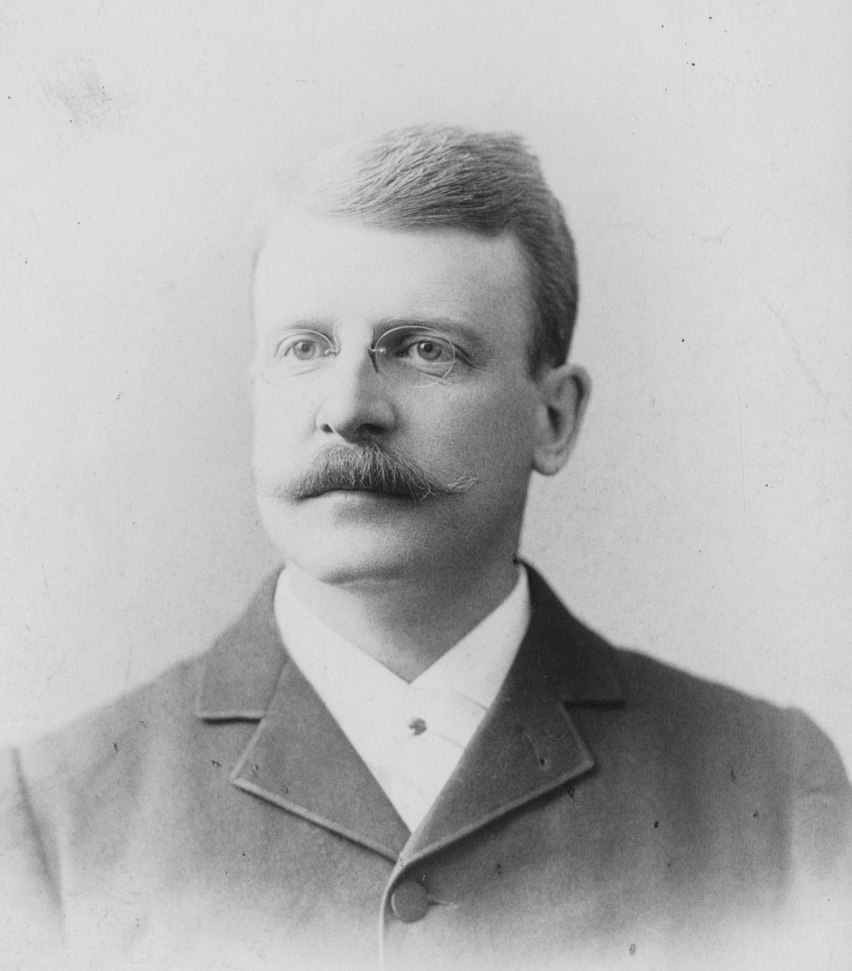
*George Fred Williams (1852-1937), American diplomat, former ambassador of the United States of America to Greece and Montenegro, in the years 1913-1914.