From Auron Tare
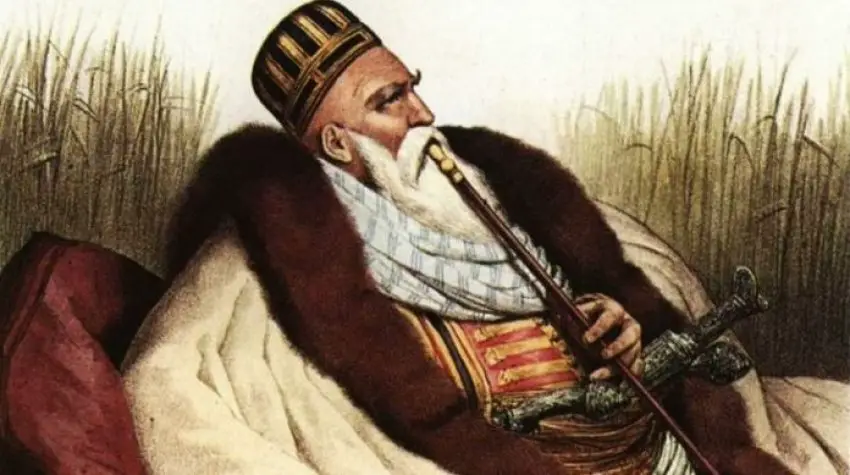
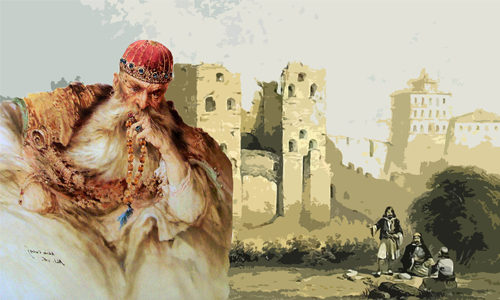
Memorie.al / For years, I have kept a very interesting document in my personal archive, first published in April 1820 in a New England journal, *The North-American Review and Miscellaneous Journal*. That journal, the first literary journal published in America since 1815, with a circulation of 3,000 copies but with a great fame for the time, published this document anonymously. The reasons for the anonymous publication are not very clear, but the document is a wonderful description of the journey of a small group of American travellers to the Albanian lands in April 1818. For years, this document has often prompted me to publish it, even without an author, because the descriptions and details it contains are very interesting for shedding light once again on such a monumental figure as Ali Pasha Tepelena.
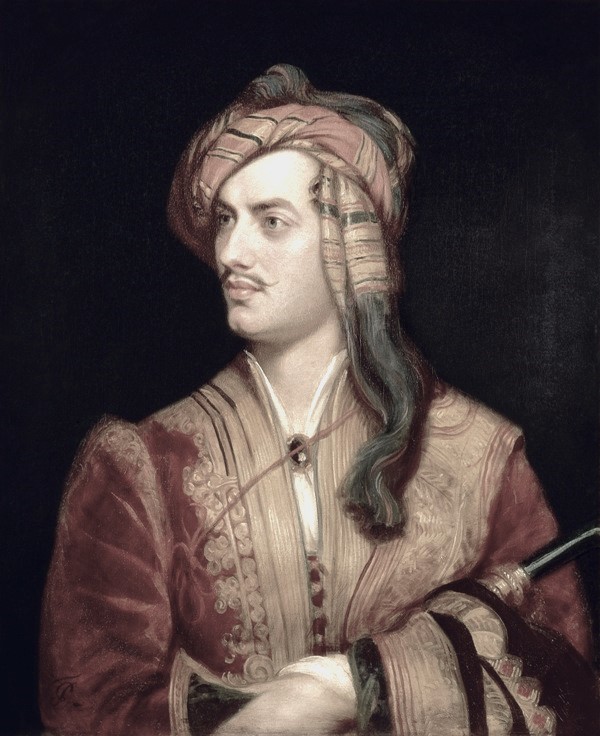
I found the document unexpectedly at Harvard University, when I was searching for materials to help the American novelist Katherine Neville with her book *The Fire*, a book already published in Albanian under the title Zjarri. The interesting documents I found at Harvard at that time, and which I published for the first time, contained information about two important personalities of the literary and political life of America at that time: Prof. George Ticknor and a member of the famous New England family, Coolidge, who had sought the intervention of the poet already famous in Europe, Lord Byron, for a letter of mediation to meet Ali Pasha Tepelena in Ioannina.
The letters of George Ticknor, which I published under the title “An American at the Court of Ali Pasha Tepelena”, brought for the first time an interesting picture of the relations between Ali Pasha and the young British poet, even after the latter’s visit to Albania, proving that, even years later, these two European personalities had continuous communication with each other. Likewise, a very interesting detail emerging from these published letters was the previously unknown fact that the fame of Ali Pasha Tepelena had already spread to the literary salons of faraway America.
After the publication of Childe Harold in America as well, it seemed that there were also eccentric American personalities who sought to meet Ali Pasha Tepelena and his Albanians. From the documents described by George Ticknor, we also learned that Lord Byron had ordered a special weapon in America for Ali Pasha Tepelena and wanted to send it to his Albanian friend, knowing Ali’s great passion for weapons. Together with the novelist Neville, we searched extensively through the archives of the US Congress to discover traces of the American weapon for Ali Pasha.
With the help of the famous American Rifle Association, the NRA, we managed to determine that the most likely weapon Lord Byron could have ordered, a special one for that time, was a “Kentucky” rifle, produced by German immigrants settled in Pennsylvania. This rifle, quite modern for the time, had not yet arrived in Europe and, it seemed, would be a very precious gift for a person like Ali Pasha Tepelena.
All these details about the relationship between Ali Pasha and Byron were quite intriguing for anyone interested in that era. Unfortunately, George Ticknor, although equipped with recommendation letters from Lord Byron, was never able to reach Ioannina to meet the Old Pasha, because his political engagements kept him for a long time in France and Portugal. Despite his great desire to obtain evidence of Ali Pasha’s contacts with the new continent, the fact that George Ticknor, the first American who had expressed a desire to come to Ioannina, could not fulfil his wish, dismissed the hypotheses that Ali Pasha had such contacts.
But the discovery of the anonymous document, published in the New England Literary Journal and housed in the Harvard University archive, has intrigued me all this time to publish it, even without a name, because in any case it was a very valuable testimony and definitively confirms the Old Pasha’s contacts with America. From my research so far, I have not found that this document has been published or cited in any studies or writings of scholars of this period.
In recent days, while reading a number of copies of documents from the archive of Lord Byron’s publisher, John Murray, I carefully examined the testimonies left by George Ticknor about his meetings with the English poet. There are a number of meetings, and the impressions of the famous poet were recorded by George Ticknor, founder of the famous Boston library, and later a professor at Harvard, in notes written years after Byron’s death.
Ticknor confirms once again that Byron’s publisher, John Murray, burned the manuscript of the poet’s autobiography, left by Byron himself for publication, thus forever losing the possibility of its publication. Likewise, Ticknor writes that Byron had often spoken to him about his memories of his Albanian travels, discussing with him for hours the impressions of the Albanian landscape and his inspiration from Albanian characters and wild mountains.
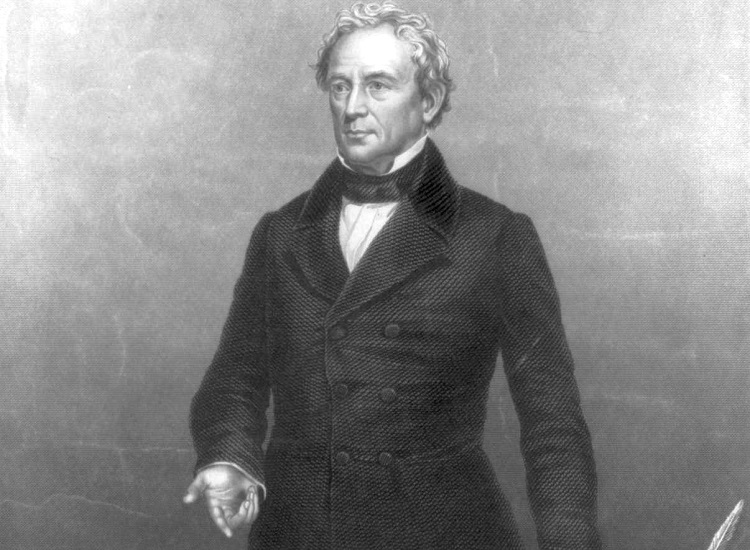
The letters that Byron wrote to his Albanian friends, Ticknor asserts, are in his personal archive, even though the poet has been dead for years. However, among these documents, a short testimony, written on 3 August 1859, drew my attention more. This testimony, written by the American Minister at the Court of St James in London, His Excellency Edward Everett, is very interesting, and I think it sheds light on the true author of the manuscript describing the visit to Ioannina in April 1818 of several American travellers with the aim of meeting the famous Pasha of Tepelena. This document was published in April 1820 in the famous New England Journal.
His Excellency
Minister Plenipotentiary at the Court of St James, Edward Everett
3 August 1859
At a fairly young age I had a great interest in modern Greece. This interest increased further after I read the first cantos of *Childe Harold*, which were published after I had finished college. Determined to go to Greece myself, this desire became even stronger after I arrived in London in the spring of 1816, where I also met Lord Byron.
An introduction to him was offered by several friends, but in particular by Robert Sharpe Esq., known in English Society as “The Sharp Conversationalist”. For various reasons this meeting was delayed, and my youthful enthusiasm led me to send him a letter, as well as some poems printed privately by me, in which he was mentioned as my source of inspiration. In this way, I asked him to give me the opportunity and the honour of meeting him. I received a very obliging reply the next day, accompanied by a book of his poems, which was very valuable because it contained a series of corrections in his own handwriting, and in which he also set the hour of the meeting. The conversation was very friendly.
Friendly relations between Britain and America had just been established after the War of 1812‑1814, and, apparently, I was the first American that Lord Byron had had the opportunity to meet. He expressed his pleasure at the evidence of his fame, which had already reached across the Atlantic. Our conversation focused mainly on the education and literature developed in that country (America, ed.), as well as on Greece, about which he told me he was very attached, and that family reasons prevented him from being able to live there forever.
Without my asking, he gave me a number of letters for his friends there, and especially for Ali Pasha of Albania. Lord Byron, now with the satisfaction of understanding that he was at the summit of British literature, had set aside the misanthropic tone and eccentric manners that he had brought with him from the East. He was now a very favoured character of high society and much sought after by his friends. Likewise, it seemed that he had managed to smooth over the quarrels he once had with those he had attacked in his poem English Bards and Scotch Reviewers.
I would like to emphasise here that the letters of recommendation that Lord Byron gave me for his friends in Corfu, Albania and continental Greece were very valuable to me, especially at the Court of Ali Pasha. “The Black Mussulman”, his son, so well-known to readers of *Childe Harold*, was the first distinguished person I met in Ioannina, where he was Governor.
The long letter of the American Ambassador in London, about his impressions of Lord Byron, is the most accurate confirmation we have of the authorship of the document in question. From the passage presented here to readers, it is clear that the young Everett, together with his American friends, who so far remain unknown, is the author of the long description from the Court of Ali Pasha in Ioannina. In this letter he confirms that it was Edward Everett who visited Ioannina and met not only the Old Pasha, but also his son “The Black Mussulman”, as he calls him in this letter.
However, the most interesting details we have from this document, which will be published in full, are the fact that Ali Pasha Tepelena asked the American travellers for help in establishing trade relations with the distant continent, as well as the possibility of diplomatic placements, requesting an American Consul in Ioannina. This testimony, coming from Edward Everett, brings a very interesting perspective on the foreign policy of Pasha Tepelena, always surprising us with his original foresight. / Memorie.al