By Arshin Xhezo
Part Two
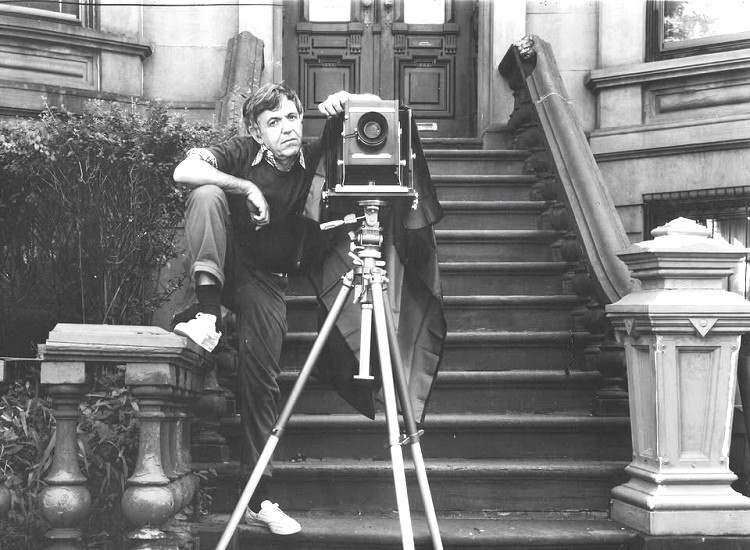
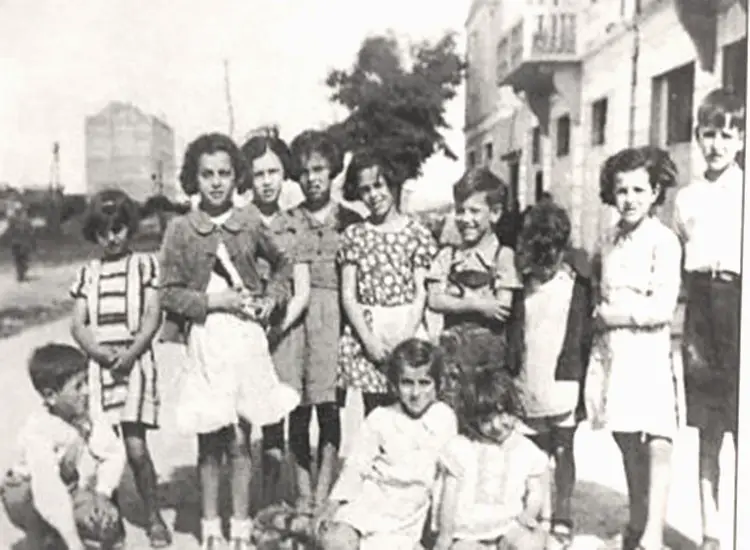
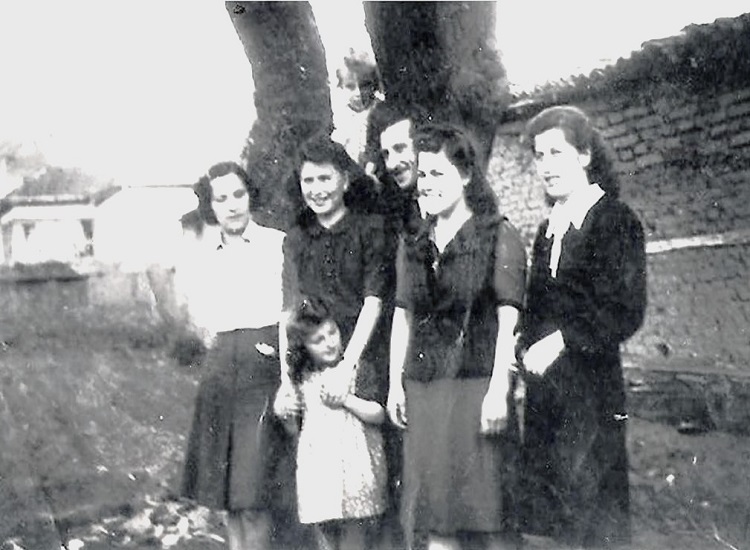
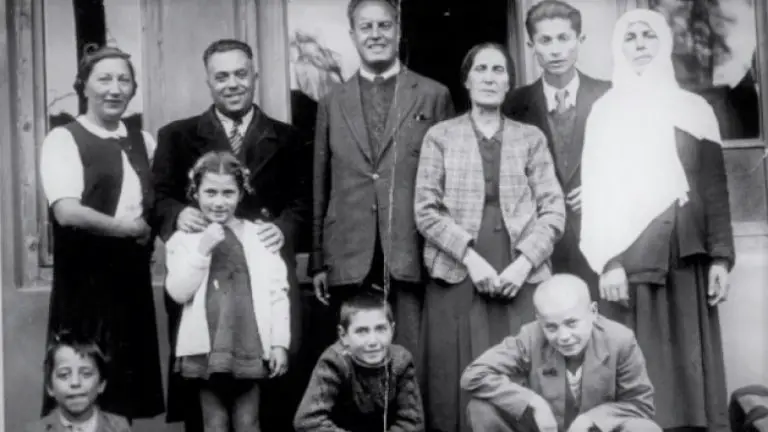
Memorie.al – In the spring of 2005, the American-Jewish photographer Norman H. Gershman, director of the Islamic foundation called “Besa,” came to Albania – and a few months later also went to Kosovo. First in Tirana, then in other Albanian cities – Berat, Krujë, Shkodër, etc. – following a list he had with him, Mr. Gershman sought out and photographed citizens, witnesses from families who had sheltered and saved Jews during World War II, or their descendants; but only Muslims by religious faith, and with them he would later create a photographic exhibition and a special album. “The reason I have focused on Muslims in Albania,” said Mr. Gershman, “is that the world, outside this room, does not even know that Albanians are a Muslim country, that their ‘Besa,’ God, the friend, are sacred to them, and that is the reason why they saved hundreds and thousands of Jews from certain death, all of them.”
Continued from the previous issue
The institution of religious and ethnic coexistence and harmony in Albania is a great and historically valuable consensus, achieved over centuries and, of course, at considerable cost. This consensus is not merely a besa, an oath among individuals, much less a handshake and photo-op among heads of religious institutions, as we see them in posed stances, in photos and on television screens. It is not a ceremonial agreement of “figureheads” and politicians, followed by signatures and stamps.
The great consensus of ethnic and religious coexistence or harmony in Albania, among Albanians themselves first, but also with “the different” who joined their fate with theirs, like any true and lasting consensus, is founded and built upon a base of vital, economic, existential, and survival interests, among which national interests certainly stand out, along with cultural, religious, moral, ethical interests, etc.
The merit of Albanians is that they have known not only how to build and preserve consensus among themselves, but also how to teach this culture of consensus to newcomers, “outsiders” with different cultures and beliefs. But the newcomers, “the different,” also deserve credit for having embraced this culture.
The platform of our National Renaissance, which also inspired the love and the “going together” with “Serbs, Greeks and Bulgarians,” as Naim Frashëri writes, finds, I believe, its most beautiful embodiment in one of the most beautiful poems, Fan Noli’s “Hymn to the Flag” – poet, historian, translator, musicologist, former prime minister, and also the founder of the Albanian Autocephalous Orthodox Church:
“Flag that bore Saint Constantine,
Reconciling Islam with Christendom,
Proclaiming brotherhood among faiths,
Generous flag for Humanity.”
It is very interesting to know the texts of the national anthems of the world’s peoples. Noli’s “Hymn to the Flag,” published in 1926, prompted me to look at some of these texts. Quite a few of them are extremely aggressive and have a morbid vocabulary: “bones,” “blood,” “graves.” I do not believe I am exaggerating if I say that Noli’s “Hymn to the Flag” is the most beautiful and most enlightened I know, worthy of today’s united Europe.
“Albanian nationalism is secular,” observes the analyst and good connoisseur of the Balkans, Janusz Bugajski, rightly so.
In today’s Europe, “without visas,” coexistence in ethnic, religious, linguistic, and cultural diversity is a criterion of civilization and culture, a condition for existence. “Uni-faith states are outdated for modern Europe,” writes Karl Popper.
Albania does not have the level of Greece, nor even of Serbia, despite the crisis in those countries. But it does not seem normal at all that, despite the arrival of thousands of immigrants every year, especially from Eastern countries, where the majority is of the Muslim faith, the uni-faith status remains almost untouched.
The very figure of about 800,000 Albanian emigrants who have immigrated to Greece, most of whom are of the Muslim faith, would change that percentage. For decades in Athens, the capital of that country, the construction of at least one single mosque was not allowed.
Albania and Albanians lack many things, but this treasure, this “priority,” they do have, even though it is not on the list of “12 priorities” of the European Union. It is perhaps one of the extremely rare cases when, with conviction and not without pride, the word “model” can be said and written.
In Albania, with at least four religious faiths and which has never known wars motivated by religion, such wars have seemed and continue to seem absurd, like the half-century-long war in Northern Ireland between Protestants and Catholics, in which at least 4,000 people were killed. Likewise, the strife and war in Iraq between Sunnis and Shiites; Cyprus divided into “Greek” and “Turkish,” etc.
Albania, despite its illnesses, does not suffer from Daltonism. The eye of an Albanian would find a “black-and-white” city – with only mosques or only churches; only the black clothes of Christian clerics, or only the black-and-white or only the green clothes of Muslim or Bektashi clerics – monochrome and monotonous.
Religious and ethnic coexistence and harmony have made our cities, even though not yet as rich as Europe’s most prosperous cities, resemble art galleries, where, alongside national colors, the colors of “others” also stand beautifully and in complete harmony; works of art and cultural monuments.
Alongside churches, mosques, and tekes, also Jewish synagogues, as many as have been left unravaged by the barbarism of the invaders, especially the last invader, the German Nazis, who, during World War II, killed about six million Jews alone in the world.
In Albania, as is known, all Jews were saved, whereas at the end of World War II it turned out that the Jewish community had multiplied compared to the pre-war period. Meanwhile, documents show that Berat is the center that sheltered and saved the most Jews.
From 1941 onward, the city of Berat hosted about 600 Jews coming from Kosovo; 94 families and 87 individuals, who found shelter and salvation among the people. Berat saved not only “its own” resident Jews, but also those who came from Central Europe and the Balkans, thus becoming a very special case even in the world.
This is explained by all the factors mentioned, but I would single out the exemplary religious and ethnic coexistence, which anyone can easily see in the city itself, which is entirely an “art gallery”: wonderful churches, with foundations in the early Middle Ages, with astonishing architecture, inside which you can see stunning murals and icons; mosques and Bektashi tekes equally beautiful. An entire toponymy testifies to the life and livelihood of the Jews: “Jewish Quarter,” “Jew’s Grave,” “Jew’s Pass.”
These, together with documents in archives, books, and the witnesses who still live in the homes where Jews were sheltered and saved during the last war, make the Jews close and every day. And these saviors are not “only Muslims.”
Of the 38 families and individuals honored by the city municipality, 18 are of the Christian faith, in addition to many other families from all religious faiths. These “noble ones” are not on the municipality’s lists, nor perhaps in the Holocaust Museum in Israel, but they are in Berat and in Albania.
Religious coexistence and harmony have brought people together even in sacrifices of this nature, just as churches and mosques are together, even intermingled in neighborhoods. In the “Mangalem” quarter, for example, which was mainly inhabited by Christian families, there is a mosque called “The Bachelors’ Mosque.” The preservation of cult objects by all is an early culture.
It seems astonishing how, during five centuries of Ottoman rule, churches and the works of art inside them have remained intact. The ecumenical art in Berat, as in all of Albania, which appears in medieval works of art, also testifies to great artists, but at the same time testifies to civic coexistence. To mention just one: the fresco of the great medieval painter Onufri, in the Cathedral of St. Mary in the “Kala” quarter, has at its center a Christian cleric and a Muslim cleric talking.
No criminal or civil proceeding regarding religious matters can be found in Berat; in no period, under no regime. In Berat, the holidays of the adherents of one faith were and are also those of the others; for Easter lunch, for example, invited guests of the Muslim faith, and vice versa, on the holiday of Bajram of Muslims or those of Nowruz or Ashura of the Bektashis.
Born in this city, to me, then a child, it seemed the most normal thing that we had so many holidays. Almost every week we had holidays, because we went to the homes of neighborhood and classmates of other faiths, just as they came to ours. Later I realized that the world was not like that.
There are also many facts, details, and documents that truly astonish everyone, but in the end I would like to cite one document, more precisely, a Ferman (Firman). It is the Firman of Sultan Abdul Aziz, which he sends to Berat, at the end of the 18th century, or in the year 1225 according to the Arab calendar:
“At the request of the Muslim and Orthodox population of the city of Beligrad Arnaut (Albanian Berat), I order the construction of the Church of St. Demetrius in the center of this city” (Sami Starova, *Shekulli* newspaper, 21.08.2012). But, perhaps even more beautiful is the news we received recently from journalist Marin Mema, on the television channel “Top Channel,” in his segment “The Other Albania”:
“In the village of Malibardhë in Kurbin, the residents, mostly Muslim, have built, with their own contribution, a church for those few fellow villagers of theirs of the Catholic faith. After this, the latter decided to build a mosque as a sign of gratitude for the church that their Muslim fellow villagers built for them.” “Malibardha should be declared a pilgrimage site for politicians…” wrote the only newspaper, Dita that published it.
I believe that we should all go!… / *Memorie.al*