By Agron Tufa
Part Three
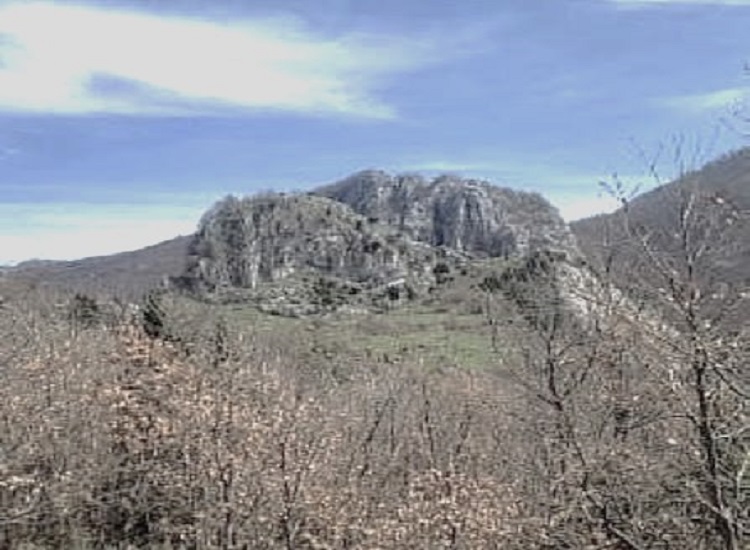
Memorie.al / As a family, the Kastrioti, the ancestors of Skanderbeg, appear in historical sources later than many of the generous Albanian families of his time, who are mentioned as small feudal lords in the 1270s, with some perhaps earlier. As was said, during the Middle Ages, Albanian nobles generally used the name of their early village as a surname. Moreover, this practice continued until our days (Naim Frashëri, Faik Konica, Zef Jubani, Filip Shiroka, Ymer Prizreni, Isa Boletini, and many others). The Kastrioti must have also used this practice. In Albania, there is only one village named Kastriot. It is located in the deep mountainous interior of Eastern Albania, 8 kilometers north of Peshkopia, in Lower Dibra, within the borders of the micro-region or regional community of Qidhna, one of the nine “mountains” of the Dibra area.
Continued from the previous issue
In conclusion, the notices contained in the works of Lukari, Bardhi, and Fermenxhin are not from the time of Skanderbeg, but from later periods, when history turns into legend; as such, they are not reliable sources. In Skanderbeg historiography, a document issued in Vlorë, on September 2, 1368, by the ruler of Kanina, Alexander Komnen Asen, has often been cited, by which he and his subordinates swear to be friends of the Republic of Ragusa. Among his subordinates, certain Kastriot, castellan of Kanina is mentioned (in the Slavic text: kefalija kaninski Kastriot).
There are historians who think that here we are dealing with a great-grandfather of Skanderbeg, who was in the service of the Serbian ruler of Vlorë. But this claim is unfounded. In the document of 1368, Kastriot, the qefalia of Kanina, is a proper name and not a surname, just as several other officials are mentioned (voivode Prodan, castellan Branilo, porter Rajce, deputy Ujedja, judge Obrad), because if it were a surname, it would have the obligatory Slavic suffix – if, as two others appear in this document (Zgur Dukajserević and Kostandin Surbović). Consequently, Kastriot of Kanina shows no signs of being connected to the Kastrioti of Dibra.
Regarding the regional origin of the Kastrioti and their genealogy, there is not one, but a series of archival documents and testimonies of contemporaries, which convincingly support the origin of the Kastrioti from the region of Dibra, even from the regional community of Qidhna and, more precisely, from the village of Sinë in this area, a community in which the village of Kastriot is also located, about 3 kilometers on the right bank of the Drin River.
One of them is provided to us by the Albanian nobleman, Gjon Muzaka, a contemporary of Skanderbeg, even with family ties to him (first cousin of Donika Kastrioti), also well acquainted with the Albanian feudal families of the 15th century. After Skanderbeg’s death, Gjon Muzaka left Albania and in exile, in Naples, in 1510, when he was of very advanced age, dictated his memoirs about his three sons.
Among the multitude of very interesting notices he gives about Albanian nobles, some of whom he knew personally, he also mentions a piece of data of interest regarding Skanderbeg’s grandfather. He says, in his “Memoranda,” that; “the grandfather of Lord Skanderbeg was called Lord Pal Kastrioti and he had no more than two villages called Sinja and Gardhi i Poshtëm (Iavo del Signor Scanderbeg se chiamo Signer Paulo Castrioto, e non ebbe piu de due casali nominati Signa e Gardi-ipostesi).
It is no coincidence that both villages are located in the region of Qidhna, facing the village of Kastriot, from which they are separated by the Black Drin. Muzaka’s Sinja, which is called Sinë by the locals today, is divided into two parts: Sina e Epërme (Upper Sina) and Sina e Poshtme (Lower Sina).
Divided into two, it is registered as a village in the nahiya of Lower Dibra, also in the Turkish cadaster of 1467. Sina e Poshtme is no more than 6 km from the village of Kastriot. Gardhi does not exist today as a settlement, but as a double toponym about 2 km south of Sinë: Gardhi i Epërm (Upper Gardhi) and Gardhi i Poshtëm (Lower Gardhi). That a settlement existed here in the 15th century is evidenced by the ruins and, even more so, by the Turkish cadaster of 1467, where in the same nahiya only Gardhi i Poshtëm is recorded as a village, textually: Gardi Posti, exactly as Muzaka also records it. If we take into account that his son, Gjon Kastrioti, in 1405 (when Skanderbeg was born) was the parent of eight children (the ninth child was born later), Pal Kastrioti must have been the lord of Sinë and Gardhi i Poshtëm in the third quarter of the 14th century, i.e., at the time of the strengthening of the feudalized Albanian leaders after the death of Stefan Dušan.
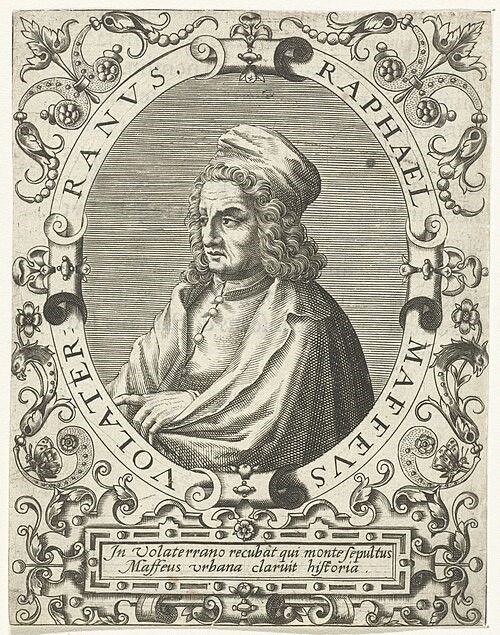
Another interesting notice is that of the Italian historian, Raffael Volaterrano, also a contemporary of Skanderbeg, who, although long known in historiography, has not been utilized by scholars with the care it deserves. The Italian humanist published, in 1506, a short biography of our Hero, at least a couple of years before the well-known work of Marin Barleti was published.
Therefore, in terms of its content, his biography is completely independent not only from the treatment of the Shkodran humanist, but also from the memoirs of Gjon Muzaka. Volaterrano’s notice concerns Skanderbeg’s father, whom he does not call Gjon Kastrioti, but Gjon Dibra or Dibrani (Johannes Dibra sive Doberiensis). Then he adds that he had in his possession Troja and several other places within the country (Trojam non nollaque alia loca interius obtinebaf).
Here the question immediately arises: what is this Troja? Perhaps here we are dealing either with a historical appellative attributed to Kruja, which resisted like the Homeric Troy, or with a *lapsus calami*, since the transformation from Crojam to Trojam is easily possible, despite the fact that Gjon Kastrioti, as was said, never had Kruja in his possession.
Almost one hundred years after the time when Pal Kastrioti was the feudal lord of the two villages of Qidhna and when his grandson, Skanderbeg, was over 60 years old, we have another interesting testimony, which this time comes from the fund of Turko-Ottoman documentation. It is the aforementioned cadaster of the registration of inhabitants, villages, and timars that the Ottoman imperial administration carried out in 1467 in the territories of the sanjak of Dibra, which included, among others, the current districts of Dibra and Mat.
In this cadaster, two people appear who bear the surname Kastrioti. One, Dhimitër Kastrioti, is registered as a simple inhabitant, as a rayah peasant in the village of Sina e Poshtme of Qidhna. The other, named Mark Kastrioti, is registered as a jamak (assistant to the feudal spahi), in the village of Shtjaknëz of Mat. The cadaster does not say about either one whether they had any family connections with Skanderbeg.
But it is known that jamaks, as assistants to spahis, could be, but also might not be, inhabitants of that village where they served. On the contrary, Dhimitër Kastrioti, as a peasant subjected to the timar yoke, must have necessarily been an inhabitant of the village. Thus, in the village of Sinë, three or four generations after Pal Kastrioti, we find a family with the same surname, such as Dhimitër Kastrioti, while Marku is the first and last Kastriot mentioned in the field of historical documentation in Mat.
Besides the Turkish cadaster of 1467, we also have in hand another detailed register of the population and villages of Dibra, compiled by Ottoman governors 104 years later, in 1571, unpublished to this day. In this cadaster, not in Sinë, but in the neighboring village, in Qidhna e Epërme (Upper Qidhna), the names of two homonymous heads of families are registered together, since both are called Pal Kastri. We believe that in both cases, we are dealing with an abbreviation of the surname Kastri(oti).
This is not an unfounded assumption, because 31 years later, another Kastriot descendant from this village appears to us. We encounter this descendant in the act of the inter-regional Albanian assembly, which was held in 1602, in the village of Dukagjin of Mat, where he participated as a representative of Dibra, signing: Jozef Kastrioti from Qidhna (Joseph Castriotida Cidna), alongside two other representatives from Dibra.
From what has been said, the conclusion can be drawn that the appearance of the Kastrioti in this area over a time span of 250 years – from Pal Kastrioti, lord of the village of Sinë in the third quarter of the 14th century, Gjon Kastrioti of the first half of the 15th century, designated as Gjon Dibrani, Dhimitër Kastrioti, inhabitant of the village of Sinë in 1467, Pal Kastri(oti) inhabitant in 1571 of Qidhna e Epërme, neighboring Sinë, up to Jozef Kastrioti from Qidhna, who is mentioned in 1602 – cannot by any means be called a coincidence. In the light of these contemporary documentary data, the notices of the Ragusan chronicle of P. Lukari, especially those of the Bosnian codex of Fermenxhiu, also lead us to the region of Qidhna.
This continuity of data, which represents approximately 8 human generations, shows that the Kastrioti were at least since the 14th century inhabitants of Qidhna in general, and of Sinë in particular, until around the 17th century, when their traces in this area are definitively lost. Not only the genealogy, but also the feudal properties they owned, reinforces their Dibran origin.
Besides Gjon Muzaka’s statement regarding Pal Kastrioti’s holdings in Qidhna (Sinjë and Gardhi i Poshtëm), we have two archival acts, the so-called Hilandar acts, which testify that his son, Gjon Kastrioti, had full feudal ownership of at least two villages, Radostusha and Trebishti, which are also located in the Dibra region.
There is then an archival act from 1453, from which it is understood that Skanderbeg had rights of ownership over the place called Cassi (nuper quendam loca Cassi intercepisse). Here Cassi should not be read as Gashi, as A. Gegaj does, because the region of Gashi is located in the Highlands of Gjakova, thus very far from the Kastrioti’s place of residence, but as Hasi, because it is known that in Latin texts the “h” of other languages sometimes falls (Has: As; Humoi: Umoi; Harzan, Arzen), and sometimes becomes velarized (Has: Cas; Humoi: Cumoi; Hamza: Camusa).
Furthermore, as will be seen below, when Skanderbeg undertook the legendary epic, he bore the title “Lord of Dibra and Mat” (Dominus Dibra et Mati). In the light of these data, the Dibran origin of Skanderbeg is now also corroborated by Barleti himself. Thus, for example, it is no coincidence that he calls the areas of Qidhna; “The lands of Skanderbeg.”
Likewise, the words of the Shkodran humanist now take on a new meaning when he says not only that Skanderbeg, when he returned from Nish to Dibra, knew the Dibran people, but also that the Dibran people knew Skanderbeg, which is why he entered Dibra without a fight, as if into his own home.
Then, the next morning, he set out, accompanied by hundreds of Dibran people, to take Kruja by cunning. No one from the Dibran people, continues Barleti, opposed his daring deed, not only because of his great fame, not only because of their love for freedom, but “also from the longing they had felt for him for such a long time.”
Therefore, he writes further, the Dibran people “poured all around him, each one vying to be first, with all their bread and wine and, dancing with joy, with tears streaming down their faces from immense happiness, some kissed his hands, some his cheeks and head, others his feet and then his whole body, smothering him with endless embraces.” It is understood that such deep love and devotion could be shown, in 1443, before Skanderbeg began his epic, only by his fellow countrymen who had grown up with him. / Memorie.al