By Besnik Dizdari
Part Three
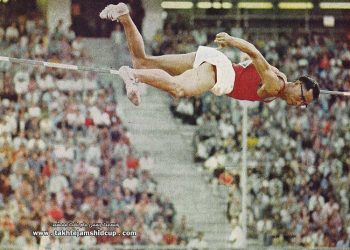
Memorie.al – Sports euphoria would reach its peak a few weeks later with the successful performance of the USSR at the Rome Olympics. The special Albanian lead article is entirely dedicated to the “ancient and eternal Albanian–Soviet friendship,” culminating in this original apotheosis of sycophancy of an unprecedented absurdity: “A friendship which our people, as far back as the time of the Turkish occupier, found with the Russian people.” From the outside, the year 1960 seemed a “bright” year. So it did for us young people, who had just finished high school, nicely caught between the three main entertainments: sports, cinema, and, necessarily, books…!
Continued from the previous issue
I don’t know why, but in Shkodër, Radio RAI was heard well than in Tirana. I did not hesitate to take the road and go from Tirana to Shkodër, to the house of my cousin, the distinguished intellectual, the unforgettable Col Dizdari, and listen live to the Olympics, even taking my own notes.
The strange thing was that in the evenings we even listened to Vatican Radio, which, surprisingly in its impressive Gheg dialect, commented on the Olympic Games. I cannot fail to mention here: understanding my passion, the unforgettable physical education teacher, among other things a man of my tribe, Ibrahim Dizdari – one of the greatest founders of Albanian sport – had given me a historical book on the Olympics to read, and I had copied all the Olympic champions into a beautiful notebook.
I have kept that notebook safe to this day, as a “document” of an era and as a precious memory of a culture, and of Mr. Brahim, as everyone called him. And who, in that year 1960, could never have foreseen that this boy, nearly half a century later, would dedicate to him his book “Balkaniada 1946”…
As people from Shkodër, we were all with the US Olympic team. The next day at the “Great Café” there was no little commentary about this. Endless discussions with my unforgettable high school friend, Ndok Pistulli, volleyball player, polyglot, pianist, and composer – an emblem of Shkodër’s youth – with whom I passionately discussed what we had heard on the radio, a broadcast that marked a historic premiere for Italian spoken journalism. Here is how Italy’s legendary radio commentator, Sandro Ciotti, explained this in his memoirs:
“…Regardless of my periods as a footballer and sports journalist, I became a football radio commentator almost by chance, precisely when I was sure that my field of specialty would always remain music and entertainment. So it was not a willing choice; on the contrary, I was mobilized for such a duty and could not refuse. The opportunity would be the 1960 Olympics in Rome.
The first Olympic Games in Italy would be more than a national emergency, an emergency for RAI, which would undertake to broadcast many hours live, without actually having enough staff to honour this commitment, especially since at that time it was a relatively small institution (and would remain so for several years). Many of us, who, among other things, had never been to a stadium in our lives, would thus be forced to improvise as sports journalists (Italo Moretti, Lello Bersani, and Antonello Marescalchi).
As for me, it was Nando Martellini who would ‘spy’ on me to the director of the Radio Commentary Editorial Office, at that time Bonciani, a very likeable character, a former paratrooper colonel, saying to him: ‘You know, Ciotti played football for Lazio, so at least he must know football.’ That’s exactly how I became a correspondent, without any special preparation, to comment on the match Denmark – Argentina; and that’s exactly how I was forced to improvise a radio commentary.
At a time when I usually hardly listened to the radio. Since I played football myself, I didn’t listen to radio commentaries at all, because I was on the pitch. And then I had never had a particular interest in this field. But from that time on, even though throughout the 1960s the time I would devote to football broadcasts would be only 1/4 of that which I devoted to music and film sections, sports radio commentary thus began to take up more and more space in my life”…
FOR THE GLORY OF THE SOVIET “BROTHER ATHLETES”
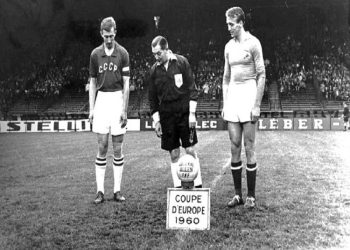
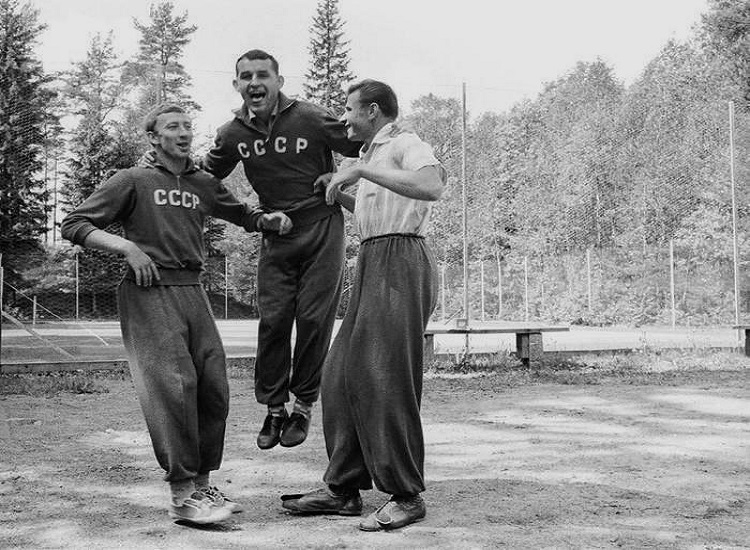
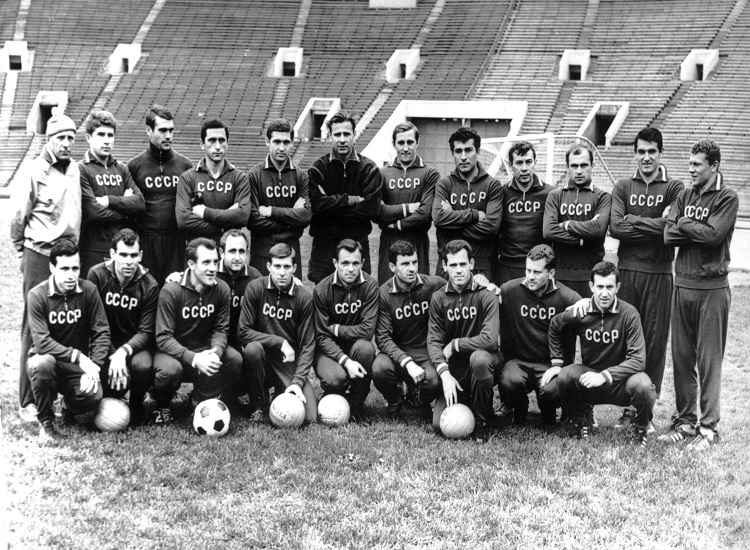
And after the euphoric experience of the Soviet title in the European Football Championship, official Albania also arrives at the Olympics. The Soviet Union had triumphed: 43 gold medals, 29 silver, 31 bronze against the 34-21-16 of the “enemy” USA. The entire socialist camp went into ecstasy.
Tirana’s Sporti Popullor wrote:
“Despite the efforts of their imperialists to disrupt the atmosphere of the Games and the Olympic idea of peace and friendship, the 17th Olympic Games in Rome were crowned with success…! As in previous Olympics, a great contribution in this direction was made by the athletes of the socialist countries and above all by the athletes of the Soviet Union…! The athletes and sports fans of our country greet this victory of the brother athletes of the great country of socialism as their own victory and wish the Soviet athletes success and new victories for the glory of Soviet sport.” The world had never known such an extreme politicization of sport.
Only a few days pass and the Greek government does not allow Albanian athletes on its soil for the Balkan Championship. The Albanian press, erupting through official statements, headlines: “The Greek government views sports relations between Balkan countries from the positions of the ‘Cold War’. A protest with almost unstoppable resonance, reaching the determination: ‘A new hostile act of the Greek government against our country that does not serve peace and understanding in the Balkans’.”
Meanwhile, what continued to flourish was the friendship with the Soviet Union. In Tirana, work continued on the construction of the Palace of Culture, a “gift from the Soviet people,” as it was said. The Puppet Theatre in Tirana staged the play “Ponço” by the Soviet author V.I. Bjellozerov, directed by the Soviet director V.N. Korotkov. On the other hand, “the youth sing to Lenin’s friendship” through traditional Albanian–Soviet evenings in Tirana’s schools.
Furthermore, an academic conference on the 90th anniversary of Lenin. Even sections such as “Soviet Humour”! And the Soviet director V. Bortko working at the People’s Theatre to stage “Hamlet”. Shortly before, the production of the “Soviet school” had also been the on-stage performance of the portrayal of Lenin. Press headlines thus remain always “original”: “The first emotions of the spectators when they saw Lenin on our stage are still fresh.” “The Soviet method of rising calves with a nurse cow.” On Radio Tirana, “romances with Soviet authors” and twice a day “Moscow Speaking.” Meanwhile, *Zëri i Popullit* did not stop:
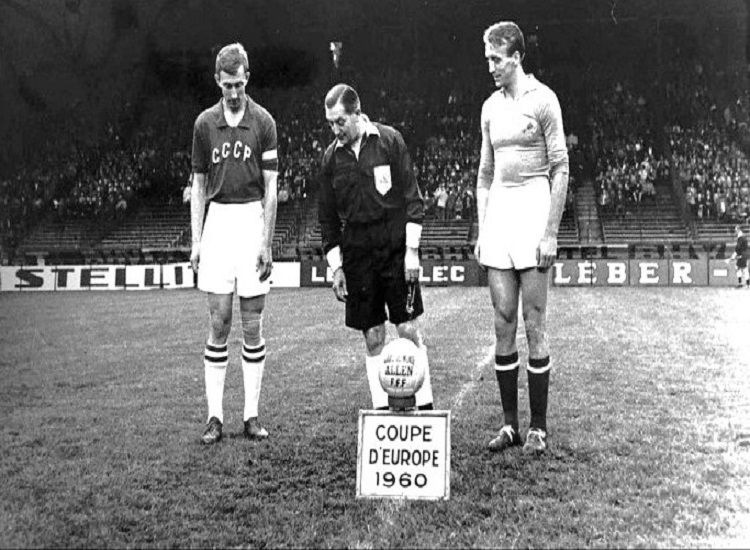
“Let us denounce to the end the revisionist conspirators of Belgrade,” precisely three days after the triumph of the Soviet team over Yugoslavia in the Paris final. And soon after, an echo of Nikita Khrushchev’s statement after the shooting down of the American plane, RB-47. The headline of *Zëri i Popullit* is naturally merciless: “New unmasking of aggressive American policy.” Such was the intensity of our Soviet-Albanian relations throughout this year 1960.
And most importantly: within one year, this 1960, Enver Hoxha and Mehmet Shehu visited the Soviet Union twice. In February for the Warsaw Treaty meeting and in November for the meeting on the 43rd anniversary of the October Revolution. Smiles, embraces, joy, vassalage, submission, servility, conquest, of course also through a development under conquest. Especially in sport…
ADMIRALTEYETS AND THE “TREATY” OF NIKOLAI LYUKSHINOV
Right at this moment, then, the final moment of Albanian – USSR sports relations would also arrive. And, perhaps it must be said that everything was a happy ending after this euphoric experience of the two great successes of the Soviet Union in the European Championship and the Olympic Games, for which, as part of the socialist camp, socialist Albania also felt victorious. Thus, the last Soviet team to come to Albania was Admiralteyets of Leningrad, a team ranked 10th in the Soviet Union Championship, in which 22 teams took part.
Coincidentally, an “Admiralteyets” trained by coach Nikolai Lyukshinov, who in the period 1956-1958 had worked in Albania, with “Partizani” and the National Team. Today’s research reveals many new things regarding these two years of Lyukshinov in Albania. They even cast doubt on some facts or judgments in my book “The National Team Book” – among the most arduous and most important, because it was written on a completely “terra incognita” on which I have worked.
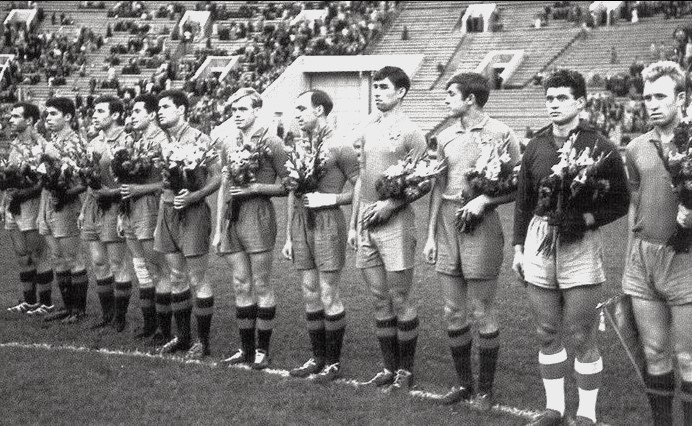
Thus, history is rewritten, and prudently and with a clear head, we must make important corrections in the future, in this case both for the National Team and for “Partizani”. Admiralteyets of Leningrad thus came to Albania precisely in this year of great sports “joy”: 1960. They played four matches with Albanian teams: on 30 October 1960, “Partizani” – “Admiralteyets” 2-2; on 3 November, “Skënderbeu” – “Admiralteyets” 0-1; on 7 November, “17 Nëntori” – “Admiralteyets” 1-1; and on 11 November, “Dinamo” – “Admiralteyets” 1-0. I was in the stadium for the three matches in Tirana.
We had never seen such a tall and physically powerful team. When they lined up, they looked fearsome. It is known, meanwhile, that coach Lyukshinov is to this day considered a great expert in physical preparation. In the three seasons that Admiralteyets played in the USSR National Championship, it was Lyukshinov’s merit that the Leningrad line-up was represented with dignity. Meanwhile, I say that the three matches in Tirana are worthy of study.
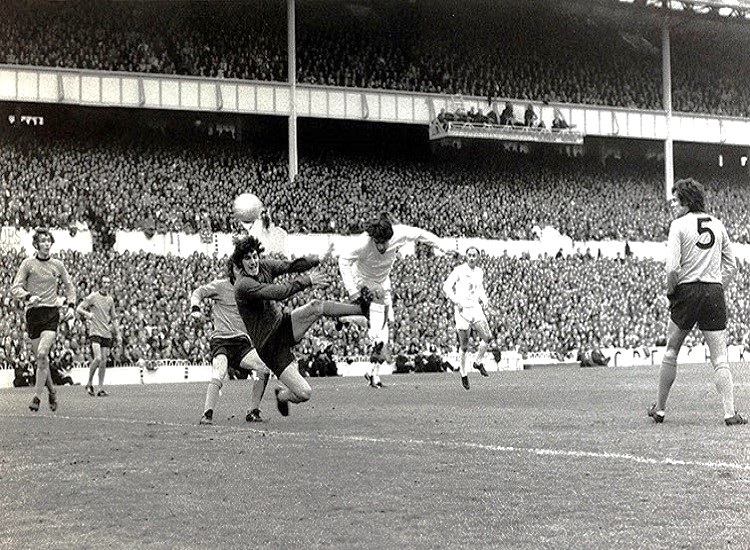
This is because facing a club that was among the top 10 in the Soviet Union of a 22-team championship, moreover of the state – current European Champion of 1960 – was too much for modest Albanian football. It was a highly telling test. And regardless of the results, which, nevertheless, were quite good, the four Albanian teams showed the growth of Albanian football. It must be mentioned, moreover, that the year 1960 for Soviet clubs remains one of the strangest years as far as friendly matches are concerned.
It may be a unique case to this day in the entire history of world football. Almost all the club teams of the all-union Soviet championship, as is known, would play abroad in all four corners of the world. Even this Admiralteyets, which had played as far as Brazil, 1-4 against the famous “Gremio”! On average, in each month of this year 1960, one can find 15 to 20 friendly matches of Soviet clubs on all four continents. There are months that had up to 32 such matches of Soviet clubs.
It was not like today. The friendly matches of that time had an unspeakable value, reputation, or importance. With stadiums packed full and with unprecedented publicity. Not an empty seat in our stadiums for the Admiralteyets matches. Those would be the last matches of a Soviet club in Albania. And it would be an interruption that would last 36 years.
The first club after Admiralteyets from the former Soviet Union to come to Albania would be Bobruisk of Belarus in 1994, for the European Cup Winners’ Cup match against Sport-Club Tirana, 1-4 and 3-0, one of the most incredible comebacks in the history of Albanian clubs in European Cups. This was the return of former Soviet football to “anti-revisionist” Albania, which should have happened sooner if in 1979 and 1982 “Vllaznia” and Sport-Club Tirana had respectively agreed to face Dynamo Moscow and Dynamo Kyiv for the Cup Winners’ Cup and the Champions Cup.
The year 1960 would thus continue to remain the dividing line of demarcation with the Soviet Union for a full 34 years. Late, too late, after 43 years, we would arrive at the mythical match of Shkodër, that Albania – Russia 3-1 of 2003, precisely for the European Championship, now “forgotten” by today’s people who say that “life begins with me”!… / Memorie.al