





By DASHNOR KALOÇI
Part One
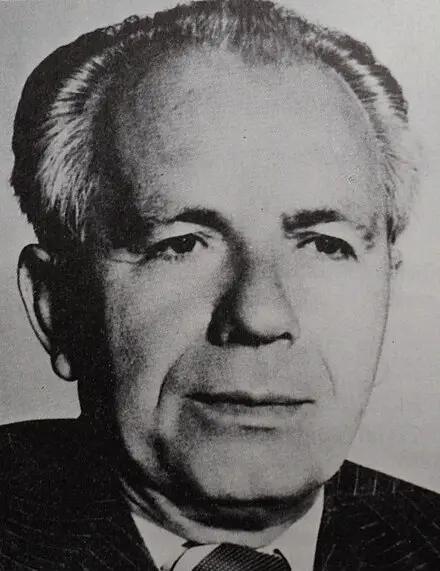
Memorie.al / About 20-odd years ago, in one of our conversations with the scholar and renowned historian Sherif Delvina (“People’s Teacher”), together with his two close friends, Professor Luan Malltezi and Gani Demiri Ratkoceri (“People’s Teacher,” originally from Kosovo, who came to Albania as a political emigrant in 1961, and a former inmate in the political camps and prisons of Enver Hoxha), Sherifi, who had spent the greater part of his life in the state archives and the National Library, told us that: “Enver Hoxha, not only never wanted Kosovo to have the status of a Republic within the framework of the Yugoslav Federation, but he fought with all means for that not to become a reality!” Explaining to us that; in the event that Kosovo were to enjoy the status of a Republic, just like the other six republics, Kosovo would receive great attention and become much better known on the international arena, thus eclipsing communist Albania led by Enver Hoxha, which would fall into the background as a state. Based on this, the “support” that Albania and Enver Hoxha gave to Kosovo after the demonstrations of March 1981, for Kosovo to be given the status of a Republic, was merely for public consumption.
To our request, (Professor Luan Malltezi and Gani Ratkoceri), to conduct an interview in “Gazeta Shqiptare” (where at the time I covered the historical dossier rubric), where he would publicly explain to us in more detail what he was telling us, Sherifi categorically refused, telling us that: “What I am telling you, I have by hearsay and I still haven’t found the archival documents in the Central State Archive, or the Ministry of Foreign Affairs, but I assure you, that these documents are there and if you ever find them someday, you will prove me right. I cannot speak without documents”!
Naturally, we did not pester him further to tell us those things publicly in the press, since Sherifi was adamant and we knew his nature well. Sherifi told us many events and stories of various kinds, mainly concerning Enver Hoxha, whom he had known since childhood, (during the War period, 1939-1944), when he would go to the house of his maternal uncle, Esat Dishnica, where Enver, as his very close and highly confidential friend, was often there for lunches and dinners.
Likewise, many of the events and stories that had to do with Enver Hoxha, Sherifi knew from the former Prime Minister Ibrahim Bej Biçaku, (the maternal uncle of Sherifi’s mother), or his father, Neki Delvina, a former member of the High Court during the period of the Zog Monarchy and the first post-war years, who was sentenced to political imprisonment. Sherifi “took all these events and stories with him to the grave,” and never agreed to make them public in the media, even though his close friend, Professor Luan Malltezi, (or the author of these lines), would occasionally beg him, saying that they needed to be published in the press, as they were of public interest!
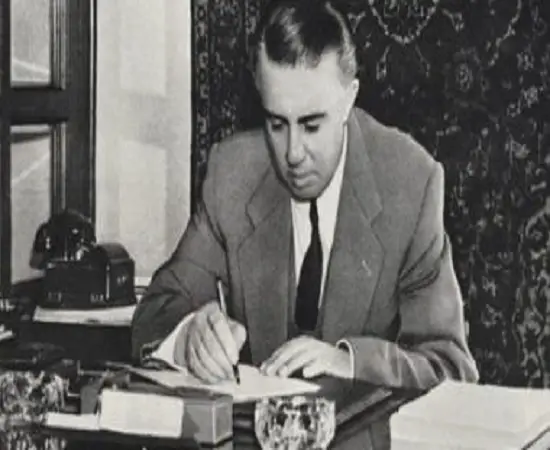
But, returning to the main topic of this writing, we emphasize that the scholar and renowned historian Sherif Delvina was completely right regarding what he told us, namely: that Enver Hoxha never wanted Kosovo to gain the status of a Republic, a fact which has been made known from several archival documents recently brought to light from the Central State Archive, (the fund of the former Central Committee of the PPSH), with the classification “Top Secret” (now declassified), which belong to the year 1970, where there is also a minute of the meeting of Enver Hoxha with the diplomat Lik Seiti, the Chargé d’Affaires of the People’s Republic of Albania in Belgrade.
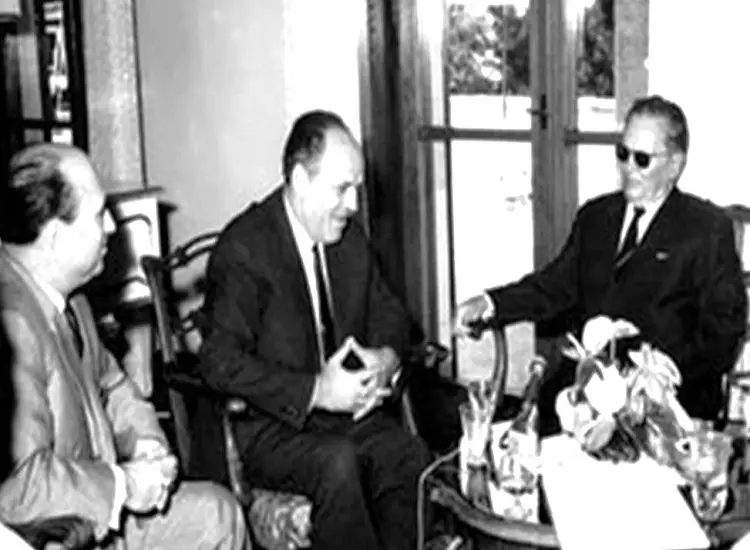
In all these documents, where for the first time light is shed and it is made officially known what has been rumored orally for years about the occult connections of Enver Hoxha with Josip Broz Tito, (the messages they sent to each other through Fadil Hoxha), as well as the aforementioned minute, it is written in black and white, that; Enver Hoxha never wanted Kosovo to have the status of a Republic, and indeed he made every effort as much as he could, for that thing to never happen. Regarding this, etc., the documents in question inform us, which are published for the first time and in full (along with the respective facsimiles), by Memorie.al
ARCHIVAL DOCUMENT WITH THE MINUTES OF THE MEETING OF ENVER HOXHA WITH LIK SEITI, THE CHARGÉ D’AFFAIRES OF THE PEOPLE’S REPUBLIC OF ALBANIA IN BELGRADE
MEETING OF THE FIRST SECRETARY OF THE CC OF THE PPSH, COMRADE ENVER HOXHA, WITH THE CHARGÉ D’AFFAIRES OF THE PEOPLE’S REPUBLIC OF ALBANIA IN YUGOSLAVIA, LIK SEITI, IN TIRANA, ON DATE 19.9.1970
This meeting is also attended by the Secretary of the C.C. of the PPSH, Comrade Ramiz Alia. Comrade Enver, after receiving and getting acquainted with Comrade Lik Seiti, asks him whether he has learned the Serbo-Croatian language and, when he receives the answer that he does not know it that well, he instructs Lik to learn it, since it is necessary for our diplomat to learn well the language of the country where he is assigned to serve, all the more so in a state like Yugoslavia, where a treacherous clique of Marxism-Leninism is in power, otherwise he cannot fight. In general, you diplomats, Comrade Enver continued, do not make the proper efforts to learn foreign languages. It is not at all good that you always work with interpreters. Such a practice does not take us far. To serve in a country and not know its language, you cannot even utilize the press. It may happen that the other party asks you for an urgent conversation, but if you don’t have the interpreter there, telling him to wait because there is no one to do the translation, is not proper. Many of you got used to working with interpreters, but this should not continue in the future. What does Fadil Hoxha say, does this man have any ounce of Albanianism, because as for being a Marxist-Leninist, that is another matter, he is far from being one.
COMRADE LIK SEITI: From the meeting I had with him, he gave me the impression of what you said earlier, i.e., that in him the feeling of Albanianism exists. To tell you the truth, I was impressed by his great preoccupation with the youth, regarding the keeping of photographs. Here he emphasized that as far as the feelings of older people are concerned, we are able to dominate these. As for the youth, who are a wider mass and who openly manifest their love for Albania and Comrade Enver, we find it harder to restrain them in this fervor, not that I am against love for Comrade Enver and the keeping of his photograph by the Kosovar youth, on the contrary, I am the first who loves Comrade Enver more than anyone, but because this ruins our work. You know that even during the war, when Comrade Enver’s photograph began to be displayed among us, I informed Comrade Enver and he rightly advised me to raise this issue in the Provincial Committee of the party of Kosovo.
COMRADE ENVER HOXHA: Does Fadili mean by this that the youth should not get too exalted, which is why he raised the issue that the young men and women should not keep Enver’s photograph?
COMRADE LIK SEITI: He implied that, if it’s a matter of keeping Comrade Enver’s photograph, I will keep it first, then others. When the subject of a possible aggression against Albania came up, Fadili emphasized that he personally would be a loyal soldier of Comrade Enver and that Kosovo would never oppose the People’s Republic of Albania. Then he spoke to me about the efforts he makes for Kosovo to gain autonomy. These efforts, as he told me, he has been making since the time when Ranković was in power, which is why he was targeted by him. Fadili had found opponents on this issue at that time, among who was Petar Stambolić.
COMRADE ENVER HOXHA: What is Stambolić doing now?
COMRADE LIK SEITI: Now he is sidelined, but not to the same extent as Tempo and his comrades have been sidelined. It’s different with Stambolić; they activate him somewhere to deliver some decoration on behalf of Tito, or to cut the ribbon on the occasion of the inauguration of some project, etc.
COMRADE ENVER HOXHA: Does Tempo do any work, does he appear at receptions?
COMRADE LIK SEITI: No. Apparently, he is writing his memoirs now.
COMRADE ENVER HOXHA: And Koča Popović?
COMRADE LIK SEITI: Not him either. He is like Stambolić.
COMRADE ENVER HOXHA: Do they have a Vice-President now?
COMRADE LIK SEITI: No, with the new organization, the Yugoslavs do not have a Vice-President at all. The President of the Federal Assembly, in form, simultaneously performs the function of Vice-President. In this post is Milentije Popović. When work was being done for the preparations of the 9th Congress, for some time in Yugoslavia there were attempts to put forward Kardelj as Tito’s deputy in the presidency of the League of Communists, but there was a reaction from the others. Thus, when the function of Vice-President of the League of Communists was learned of, all the others said, what is this unknown thing? Therefore, at the 9th Congress of the League of Communists of Yugoslavia, they removed all the old ones from the leadership. Tito kept only Kardelj and a few others, but emphasized that between them and the young people who entered the leadership, there is no first or second, they are all equal.
COMRADE ENVER HOXHA: How are the relations between the Kosovar leaders themselves? Are there quarrels among them? For example, what are the relations like between Fadil Hoxha, Veli Deva, Ali Shukriu, etc.?
COMRADE LIK SEITI: So far, we haven’t heard anything serious that has caught our attention; however, there are small things among them. From what we know, it seems that Fadili and Veliu are one, while Xhavit Nimani and Ali Shukriu are somewhat different. When Ranković was in power, Ali Shukriu had stronger positions than Fadili and Veliu. In any case, even these small things they have among themselves, we still don’t have them very clear and substantiated. As for the activation of the Albanian leaders of Kosovo with important functions, on the part of the Yugoslav leadership, they act the same for one as for the other.
COMRADE ENVER HOXHA: Among the Albanian leaders of Kosovo, who shows themselves to be in favor of Ranković’s Greater-Serbian trend?
COMRADE LIK SEITI: There are suspicions about Xhavit Nimani and Ali Shukriu, despite the fact that Tito activates the latter quite a bit and has even given him popularity.
COMRADE ENVER HOXHA: Is Ali old in age?
COMRADE LIK SEITI: About 45-50 years old. He has been in Albania as well. Among all the others, Ali is the best-prepared man for government functions. Now he deals with economics; they activate him especially in Yugoslavia’s relations with the Arab countries.
COMRADE ENVER HOXHA: Do they have children and what stance do they hold?
COMRADE LIK SEITI: All the children of these men, during the patriotic demonstrations that were held by the Kosovar people, have been pro-flag and pro-a wider autonomy for Kosovo. Besides this, when our sports teams have come to Yugoslavia, all these young elements have shown them to be approachable and have shown interest in Albania. In this regard, the stance of Fadil Hoxha’s son is more pronounced. He is also more serious and constantly stays in Pristina with his mother. Even Fadil himself, except for cases when some meeting or conference is held in the center, when he is authorized to have some meeting, or when they send him abroad, he spends most of his time in Kosovo.
At the 9th Congress, the elections for the main leadership were carried out in such a way that all republics were represented in its composition in equal numbers. This was done for the purpose of balancing forces. Thus, two people were elected from each republic to the Political Bureau of the League and one from each of the two autonomous provinces. From what emerges from the press and from various data available to us, just as Fadili stays in Kosovo, Kardelj also spends most of his time in Slovenia. The leaders from the other republics act likewise, who also spend most of their time in their homelands and only go to Belgrade when they have meetings.
COMRADE ENVER HOXHA: How does Nikezić stand with the Albanians?
COMRADE LIK SEITI: We have heard that he supports them. He gave plenty of advice when he was in Kosovo.
COMRADE ENVER HOXHA: And Veselinović, Tempo, etc., are they with the Serbs?
COMRADE LIK SEITI: Yes.
COMRADE ENVER HOXHA: What do you think regarding the conversation you had with Fadil, is it worth giving some kind of reply? Where did he meet you?
COMRADE LIK SEITI: He met me one night at the reception given at the Sudanese embassy on the occasion of the visit to Yugoslavia of the President of the State of Sudan. Fadili was at that reception together with Ali Shukriu, but perhaps, because he didn’t know me well, or also to justify the meeting with me, they came together. But as soon as he met me, Ali left immediately, justifying himself that he had to meet someone else. Fadili, therefore, came alone and the meeting took place at a reception before the eyes of everyone else. When we were left alone, we both stepped aside and there Fadili found the opportunity to speak to me.
COMRADE ENVER HOXHA: And Velia, when did you meet him?
COMRADE LIK SEITI: I spoke with Velia at the first meeting with Fadili. The meeting with him took place while the diplomats were leaving the stadium and lasted a total of 2-3 minutes. Thus, as I was also leaving, I accidentally met Fadili, who said to Veliu who was behind us, come let me introduce you to the Chargé d’Affaires of the People’s Republic of Albania. After this short meeting, we parted immediately.
COMRADE ENVER HOXHA: Well, what do you think, is it worth responding to Fadil by sending him an answer from me through you?
COMRADE LIK SEITI: From the conversation I had with him, I have the impression that he expects an answer.
COMRADE ENVER HOXHA: Concretely, what was he asking from me, because from what I recall from the radiogram you sent us, he seemed to have directed the question to you, what does Comrade Enver think.
COMRADE LIK SEITI: He asked this question when he raised the problem regarding the movement of Rezak Shala, who was for the creation of a republic of the Albanians of Yugoslavia. Fadili told me that he had expressed himself against such a thing. I, for my part, he emphasized, know only one Albanian republic, the People’s Republic of Albania. Personally, I have been and am, he continued, for the full autonomy of Kosovo; therefore I don’t know what Comrade Enver thinks about this issue. I, he said, do not believe that he would be against it.
COMRADE ENVER HOXHA: Who is this Rezak Shala?
COMRADE LIK SEITI: He was a prosecutor. Now, after the attempt he made for the creation of the republic, they have removed him.
COMRADE ENVER HOXHA: And how does it seem to you, these views expressed by Fadili, does he have them with the knowledge of the Yugoslav leadership, or his own?
COMRADE LIK SEITI: I think he has them with the knowledge of the leadership, since he placed a lot of emphasis on Tito, when he wanted to tell me about any aggression, but also in the event that Ranković comes back to power, how much he (Tito) is interested in this and how he has constantly advised us to love Albania and Comrade Enver, because he is loved by an entire people and now the authority of the People’s Republic of Albania has greatly increased in the world. He emphasized this issue a lot. The other issue Fadili touched upon arose from a question I asked him regarding the prospects of events in Yugoslavia after Tito’s death.
COMRADE ENVER HOXHA: What did he say what does he think might happen in Yugoslavia after Tito’s death and how did he raise this issue?
COMRADE LIK SEITI: I asked the question when Fadili said that Tito is very interested in the Albanians in Kosovo. Our desire, he emphasized, is to raise our legations in both countries to the rank of embassy now, although it must be recognized that there are also opponents, such as the Greater-Serbian forces, who do not want this. In this case, I asked him the question and he replied that Tito, while he is still alive, is working so that the federation remains unchanged after his death, he is taking measures so that later Greater-Serbian chauvinism does not dominate, nor does the confederation arise, as there have been voices, but also that Yugoslavia is not a centralized federation dominated by the Greater-Serbian elements. And this is more or less being achieved. Raising the problem of the leadership of the League of Communists, he emphasized that this is now secured, although forces may arise to endanger the federation.
COMRADE ENVER HOXHA:Did Fadili say these things with conviction, or as if with a half-voice? How did it seem to you, did he say them with liveliness, or just as if to say that they had assigned him to transmit them? What impression did you get from him at this time?
COMRADE LIK SEITI: About Tito and his line, Fadili spoke with enthusiasm, in the sense that he favors the Kosovars, whereas about Ranković he spoke with hatred, at times even with nervousness, and declared that his time will never come again. But I didn’t quite understand his promise as to whether he would be a loyal soldier of Comrade Enver not only if Albania is endangered by some aggression, but also in the event that Ranković comes back to power, will he work so that Kosovo does not oppose the People’s Republic of Albania? This escaped me without clarification, because at that time there were many people walking around us, among them two Soviets, one of whom he knew. Fadili in this case said that in the end we will do our work, no matter how much these (about the Soviets), who are our enemies, may not want it.
COMRADE ENVER HOXHA: Did Fadili say anything about the anti-Serb feelings of the Kosovar people, when he mentioned those so-called exalted feelings of the Kosovar youth?
COMRADE LIK SEITI: He said nothing.
COMRADE ENVER HOXHA: Does the people love Fadil?
COMRADE LIK SEITI: They love him and he seems to have more trust among them than any other charlatan of his caliber. People speak better of him. There are also rumors that he was an opponent of the removal of Albanians outside Yugoslavia.
COMRADE ENVER HOXHA: Are there Kosovars returning now from Turkey to Yugoslavia?
COMRADE LIK SEITI: So far there are very few, a total of 3-4 people. This matter is being discussed between the two countries; they say the Turks do not allow them. However, there is nothing clear yet.
COMRADE ENVER HOXHA: When the opportunity arises, you must make our line clear to everyone, according to whom the emigrated Kosovars must return to their country and their homes, and efforts should be made in this direction so that obstacles are not put in their way. It must be made clear that our view is that the Yugoslavs should remove the obstacles they have placed by demanding as a condition from those emigrated Albanians who wish to return to Kosovo that they must possess a sum of money.
COMRADE LIK SEITI: Fadili is expecting an answer also regarding the return of our legation in Belgrade to the rank of embassy.
COMRADE ENVER HOXHA: Well, look, suppose I tell you some things which, to be more precise, I have written down. You may keep these with you, but you must tell them orally to Fadili, because he and his comrades are not trustworthy people. The ideas that I am going to give you in writing are quite concise and for both scenarios, both for Fadil himself personally, in case he wishes to keep them in mind himself, and even if it is so that he tells Tito, because we know that he is Tito’s man and that doesn’t bother us at all. Naturally, you must find the opportunity to tell him these ideas like this, in general. But it’s better if I read them to you once, and then let’s see what you think as well:
“Appreciating the conversation we had together, as well as the fact that you gave me to understand that you wanted to know Comrade Enver’s opinion on the issues you raised, while I was in Tirana, I requested a meeting with Comrade Enver and reported everything you told me. Comrade Enver instructed me to bring you his regards and to greet you for the pure patriotic feelings that are characteristic of Albanians, whether they are citizens of the People’s Republic of Albania, or of Kosovo. Comrade Enver was touched by what you said that in case of danger to the People’s Republic of Albania you will be by his side. Comrade Enver, who knows you personally, does not doubt this, because your stance on this issue is in line with the heroic war traditions of our people who have fought for centuries and in line with the high patriotism of the people of Kosovo.
We follow with attention the changes that have occurred in Kosovo, the rights that have been won in the matter of language, education, administration, etc. Undoubtedly, these are victories against the anti-Albanian, Rankovićist and Greater-Serbian currents. But, as you yourself say, this is not all. There are many other rights that the Kosovar brothers must win. We consider your opinion not to accept the creation of a second Albanian Republic to be correct. This is a correct and patriotic stance. An opposing stance the People’s Republic of Albania will fight with all its forces. We agree with your opinion that in the world there is only one People’s Republic of Albania.” / Memorie.al