By Enver MEMISHAJ
Part Three
Memorie.al / Many families, who, with dedication and love for their homeland and freedom, gave everything they could in very difficult times, were covered with the dust of oblivion during the communist dictatorship. One of these families that should be remembered and honored is that of Numan Lepenica. Numan was born in Lepenica, Vlorë, in 1892, and completed his higher education in Istanbul. He served his country for 32 years, from 1912, as an officer in Ismail Qemali’s government, was wounded in the Battle of Vlorë in 1920, served as mayor and sub-prefect until December 31, 1944, and, like his friend Ali Asllani, died without a pension, in misery. Numan married, for love, the teacher Zenep, daughter of Mustafa Xhomo, a destitute bey from Leskovik, and a granddaughter of the Vlora family.
Continued from the previous issue
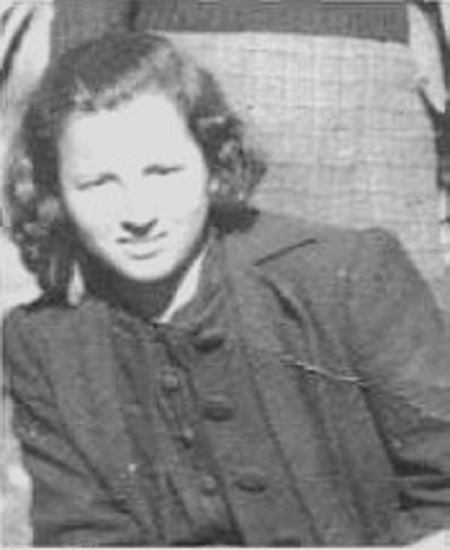
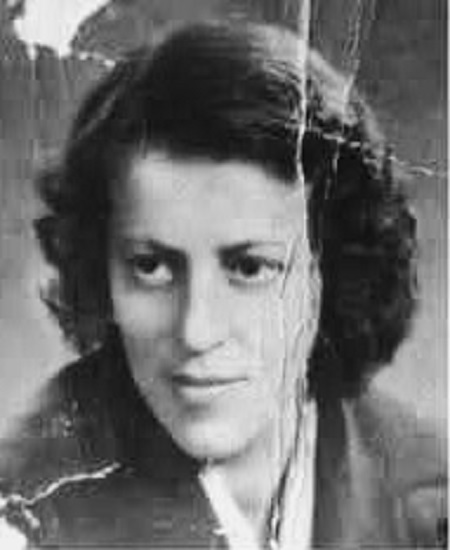
AFËRDITA LEPENICA
Imprisoned and interned by the Albanian communists
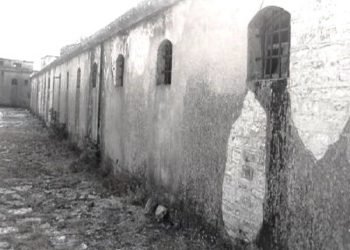
“Collaborators of the State Security: Xhemal Laçka, Sul Galla, ‘Sifoni’ and the resident ‘Medicina’, who worked together with me, reported on me, and based on their reports, I was arrested on April 17, 1950…! After 4 months of torture, without food and medicine, without any help from my family, I became seriously ill with tuberculosis. In my critical health condition, the Elbasan Investigation Office, with document no. 61/1 dated August 3, 1950, wrote to Tirana: ‘Reserve a suitable cell for Afërdita Lepenica as she is sick…’!
After 6 months of endless torture and suffering, the merciless Prosecutor, Captain Xhavit Struga, in his indictment accused me of agitation and propaganda, of being an Anglo-American agent, and demanded the death penalty. At that time I was only a 24-year-old girl. The court, composed of Major Rexhep Kolli, Major Pilo Shanto, Captain Manol Milo, and Secretary Braho Maliqi, showed ‘mercy’ and on October 1, 1950, sentenced me to only 10 years in prison!
On March 12, 1956, after 6 years of suffering in prison, I requested conditional release from the court, with the justification that: I was left without any help from my family, as both parents were unemployed, my older sister had died under unclear circumstances in 1947, my other sister was hospitalized in a sanatorium in Vlorë, and because I suffered from lung disease, heart problems, and asthma.
The State Security Directorate, with document no. 990 dated January 13, 1957, wrote to the Supreme Court: ‘During the time she is serving her sentence in prison, she does not maintain good conduct, does not show remorse for the crime committed, and her early conditional release presents a social danger. Also, the family’s conduct is not good. This Ministry gives the opinion that she should not be released from prison.
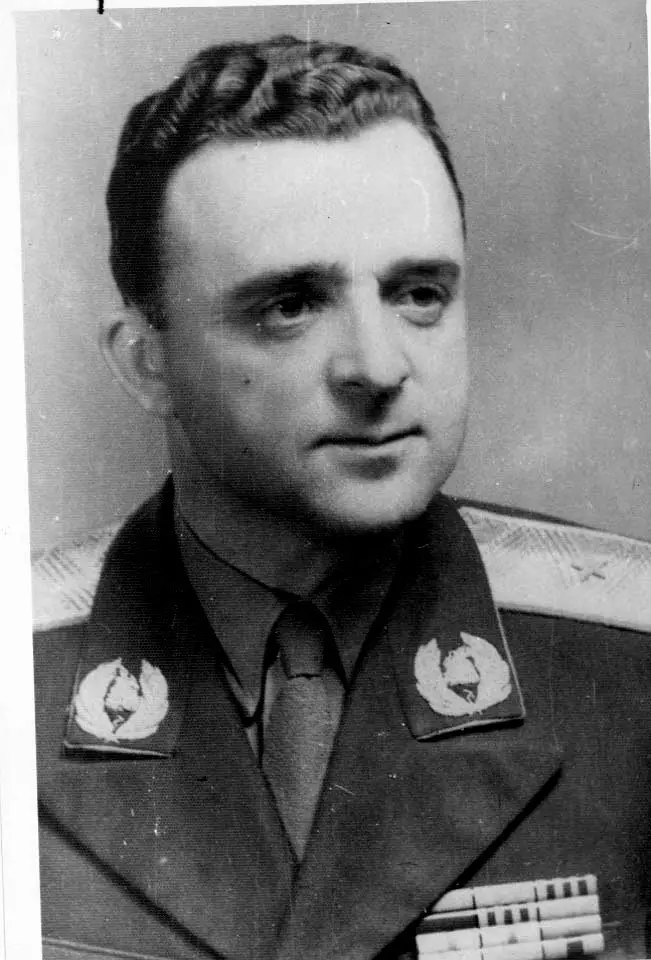
Deputy Minister of Internal Affairs, Major General Mihallaq Ziçishti…!
I was released conditionally from prison on December 15, 1957…! In my home, where I had mostly been a guest, I found only my mother without a pension and my sister Elisabeta ill with tuberculosis, which died two years later, in 1959.
Left unemployed, I went to the Ministry of Health and asked to practice my profession as a midwife wherever needed. I was appointed to Hotolisht in Librazhd. I took my elderly mother with me there; she died in 1963, and I came and buried her in Kuzumbaba in Vlorë, where the family cemetery was and where my father was also buried.” (Archive of the Ministry of Internal Affairs, F. 1, D. 5575 and Operational File 5706.)
Birth of her daughter
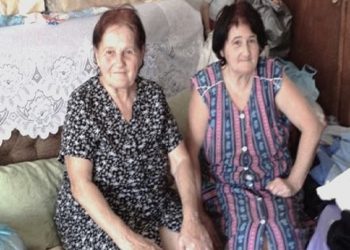
In Hotolisht, Librazhd, I married Eqerem Hysenbegasi, and after the birth of our daughter, on July 22, 1961, we separated. I named my daughter Donata, which in Italian means ‘gift from God.’ Donata completed her secondary education in Prenjas. The writer Zyba Hysen Hysa describes Afërdita Lepenica with these words: “I cannot forget Afërdita Lepenica, who lived for years and years in Hotolisht, my birthplace. Oh God, how I was shaken when even the local people would cast contemptuous glances at her. And her daughter? Donata! A goddess!
She dressed simply, but reflected noble nobility in her face, so much so that to this day I have never encountered such human beauty. She ate like others, dressed like others, but she shone, because she had a noble bearing that stemmed from her origin. Blessed be the Albanian noble mothers and women! Only those mothers give birth to and raise sons and daughters to take the reins of leadership of our nation, humiliated by the ignoble.” (Zyba Hysen Hysa, “Sharrajt në jetën e kombit” [Scratches in the Nation’s Life], “Maluka”, Tirana 2012, p. 171)
Donata married in Tirana, Petrit Guri Selmanaj, originally from Lapardhaja, Vlorë, with whom she had two daughters: Artemida, born on June 24, 1987, graduated in biology, and Alma, born on February 28, 1992, graduated in Switzerland in law and international relations.
Donata completed her higher education in law in Tirana and was a legal officer at the Tirana Court for a long time. In 1997, she refused to retake the exam organized by the government and became a self-employed lawyer, a profession she practices to this day with complete success.
I found the accuracy of Afërdita Lepenica’s memoirs and her activity reflected also in contemporary documents. I quote some of these documents:
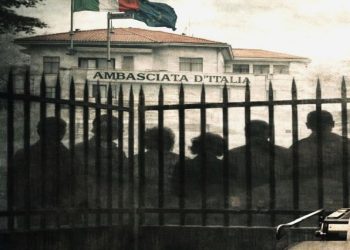
“The aforementioned Afërdita Lepenica… have appeared in various rebellious forms, e.g., they did not want to wear a ribbon with the colors of the Italian flag, together with those of the Albanian flag, and when forced, they showed their contempt in the dormitory by writing in Albanian on the doors: ‘Albanian girls, rise up to defend the homeland from the enslavers. We want freedom! etc.'” (Central State Archive [AQSH], F. 295, V. 1942, D.113, p. 239)
“We add that the five mentioned female students are members of the Albanian Communist Movement, because there have been terrorist manifestations here as well…! In our communication above, we ask you to closely observe the said young ladies.” (AQSH, F. 293, V. 1942, D. 367, p. 25)
“Ministry of Internal Affairs. Political Office. Tirana, March 26, 1943. We have the honor to inform you that the Directorate of the Public Assistance Institute in Camerino, where the scholarship holders for midwifery of this directorate continue their studies, informs us that for political reasons, the Italian Ministry of Internal Affairs, based on a proposal from the Local Carabinieri Command, has arrested the scholarship holders Mrs. Mila Paço and Afërdita Lepenica and interned them, the first in the municipality of Sant’Elia Fiumerapido and the second in that of Fiuminata.
The Directorate of the said Institute does not know the reasons for this arrest, therefore we kindly ask you to intervene where necessary to investigate the reasons for this arrest, kindly informing us of the outcome so that we may decide on their position as scholarship holders of this administration. General Director Dr. Hamdi Sulçebe.” (AQSH F. 152/2, V. 1943, D. 163, p. 1)
“Ministry of Internal Affairs, Political Office, Tirana, May 29, 1943. The Health Directorate, with its document dated the 22nd of this month, requests mediation for the release and return to the homeland of three girls politically interned in Italy who are continuing their studies at the University of Camerino for midwifery, whose names are: Hasije Janina, interned in Camerino, Afërdita Lepenica, interned in Fiuminata, Mila Paço, interned in Sant’Elia Fiumerapido in the province of Macerata.
We therefore ask, as they are girls, to mediate for their release and return to the homeland, as their families are worried, not having any news of their condition. We add that the Presidency of the Council of Ministers, with documents dated July 26 and 30, 1942, has requested mediation for their release, but until now no action seems to have been taken. We would like to have an assurance as soon as possible. The Minister.” (AQSH F. 152/2, V. 1943, D. 159, p. 35; AQSH F. 151, V. 1943, D. 21, p. 188)
The General Directorate of Health sent the same document to the authorities of Camerino regarding Afërdita Lepenica. (AQSH F. 152/2, V. 1943, D. 163, p. 1)
“July 15, 1943. The Directorate of Public Summits of this Kingdom communicates that the repatriation of the below-mentioned students has not been permitted by the authorities of Camerino: Naxhije Hila, Meropi Shuteriqi, Hasije Janina, Margarita Syko, Bukurie Muço, Afërdita Lepenica, Milla Paço. For those mentioned, the place of internment has been noted: Questura no. 390, at a later time the extension of the internment period will be considered.” (AQSH F. 153, V. 1942, D. 227, p. 173)
“General Directorate of Health. Tirana, July 19, 1943. Addressed to the Ministry of Internal Affairs, Political Office.
We have the honor to inform you those three years ago, this directorate sent 43 girls on its own scholarship to Bari to study midwifery. Later they were transferred to Camerino, where they continued until they completed the course, graduating within the following year.
After finishing their studies, these girls returned, with the exception of the young ladies Afërdita Lepenica and Milla Paço, who were detained by the local Questura and interned in that province four months earlier, while the young ladies Naxhije Hila, Meropi Shuteriqi, Hasije Janina, Margarita Syko and Bukurie Muço were prevented from returning to Albania by the local authorities.
Allow us to note that the above event places this administration in a delicate position towards their families, given that the selection of candidates was made based on reports issued by local offices regarding good conduct and their residence in Camerino was always in the boarding school designated in agreement with the school.
We therefore ask you to kindly make a favorable démarche for their release and return to the homeland. General Director Dr. Hamdi M. Sulçebe.” (AQSH, F. 149 V. 1943, D. I-449, p. 334; AQSH, F. 152/2 V. 1943, D. 159, pp. 14, 31)
“Ministry of Internal Affairs. Political Office. Tirana, July 30, 1943. Addressed to the Presidency of the Council of Ministers.
We have the honor to state that, with the exception of Hasije Janina from Berat, age 18, all the other female students mentioned in our above document have been released and returned to their homes.
Therefore, we ask you to make the necessary démarches for the release of Hasije Janina, a student in Camerino, Italy. Inform us of the outcome. The Minister.” (AQSH, F. 149 V. 1943, D. I-449, p. 335)
“Prefecture of Vlorë. Vlorë 1943. List of political internees in Italy from the district of the Prefecture of Vlorë.
Afërdita Lepenica, daughter of Numan, born and resident in Vlorë, student at the University of Obstetrics, interned in the municipality of Fiuminata, no. 13, via ‘Vittorio Veneto’, province of Macerata, Italy, or Camerino.
Qazim Kokoshi with his wife and daughter, born and resident in Vlorë, arrested by the Italian army in Mitrovica, Kosovo, in 1939. Recently they are in Bergamo-Gandino, Italy.
Sinan Gjoni, son of Islam, born in Tragjas, resident in Vlorë, student by profession, deserted from the Italian army in 1941.
Subi Hallo, son of Manxhar and Qafilesa, Ibrahim Shyti…, Mihal Birga…, Ksenofon Zani…, Petro Marko, son of Jani and Zoica, born and resident in Dhërmi. Arrested in 1941, located in Palermo, Italy, Grigor Strati…” (AQSH, F. 152/2 V. 1943, D. 159, p. 53)
In the anti-fascist propaganda she conducted at school, Afërdita Lepenica stood out together with Xhemile Gjinishi, who was encouraged by her brother Mustafa Gjinishi through letters he sent her. (Astrit Kaziu “Legjenda Gjinishi, përballë së vërtetës” [The Gjinishi Legend, Facing the Truth], Tirana 2004, pp. 56-59)
III. ELISABETA LEPENICA
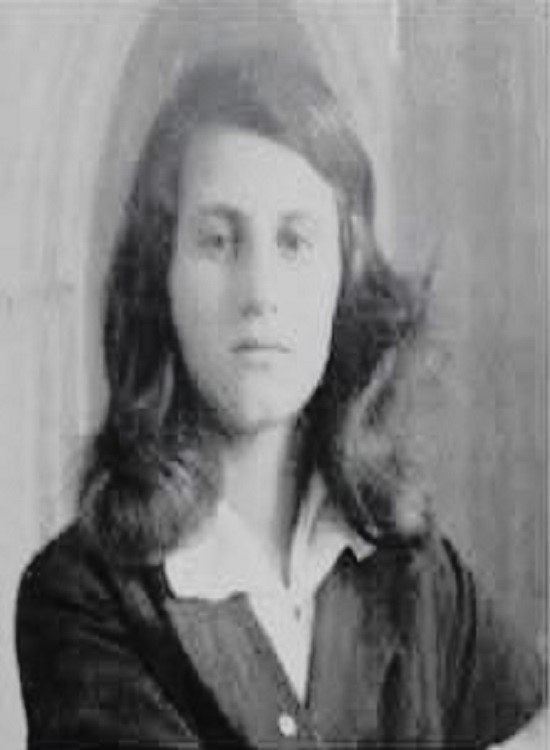
Elisabeta was born in Vlorë, on July 8, 1925, and was the twin of her sister Afërdita. Both sisters attended the Commercial School of Vlorë, and Elisabeta must have graduated in 1942 or 1943.
Family tradition and the patriotic spirit of the three sisters would throw the entire family into the war against the fascist occupier. While Tefta and Afërdita, during the years of occupation 1939–1944, pursued their studies abroad in Italy and Zagreb, the third sister, Elisabeta, lived in Vlorë. She was on the front line of anti-fascist propaganda. Her house in the city and in the village of origin, Lepenica, became a base for the struggle for freedom.
Her uncle, Xhelal Hoxhaj, was a well-known figure of the Anti-Fascist Movement in the Vlorë region. (“Historiku i Luftës Antifashiste Nacionalçlirimtare për Qarkun e Vlorës” [History of the National Liberation Anti-Fascist War for Vlorë County], Vol. I, p. 125; Shamet Gjika “Ditari i kohëve me gjëmime…” [Diary of Resounding Times…], Tirana 2005, p. 73)
Elisabeta was known in the city as an activist and standard-bearer of the city’s youth, for progress, to encourage and convince them to resist and fight against fascism by all possible means.
Liberation Day found Elisabeta in her hometown of Vlorë, with a desire to follow her mother’s path as a teacher. For this purpose, she attended a 9-month course in Tirana and graduated as an elementary school teacher. After completing the course, she was assigned to the village of Vajzë, and after one year she was transferred to the deep zone of Mesaplik, where she worked for two years.
The year 1950 would be fatal for the Lepenica family. Her sister Afërdita was arrested and sentenced as an “enemy of the Party and the People’s Power.” Now the State Security had the chance to destroy this reactionary family! Tefta, the older sister, had been poisoned in Durrës three years earlier; the other sister, Afërdita, was imprisoned. Her mother, teacher Zenepja, that patriot and dedicated teacher since 1917, was dismissed from her job.
Despite the respect the people had for Elisabeta Lepenica, for this educated, well-bred, beautiful girl devoted to children, she was dismissed from her job because she was the sister of an “enemy of the people”! Her father Numan, since January 1, 1945, had been left without work, without a pension, and without bread ration cards – meaning they wouldn’t give him his daily bread! Under these conditions of terror and persecution, his spirit could no longer endure; he died in 1953, at the still young age of 61.
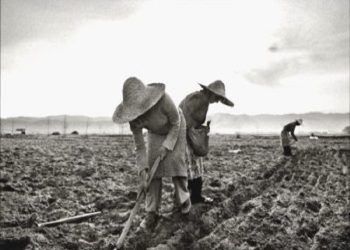
To earn her daily bread for herself and her parents, Elisabeta was forced to work in agriculture, alongside the mother of the author of this text. In 1956, Elisabeta was seen to be suffering from tuberculosis and was admitted to the Vlorë sanatorium. Under very difficult living conditions, three years later, in 1959, she would surrender her beautiful soul, still young, without having started a family or enjoyed life. Thus, without any guilt, the patriotic family of Numan Lepenica was extinguished by the communists of Vlorë. / Memorie.al