From MERITA SHKUPI
Part One
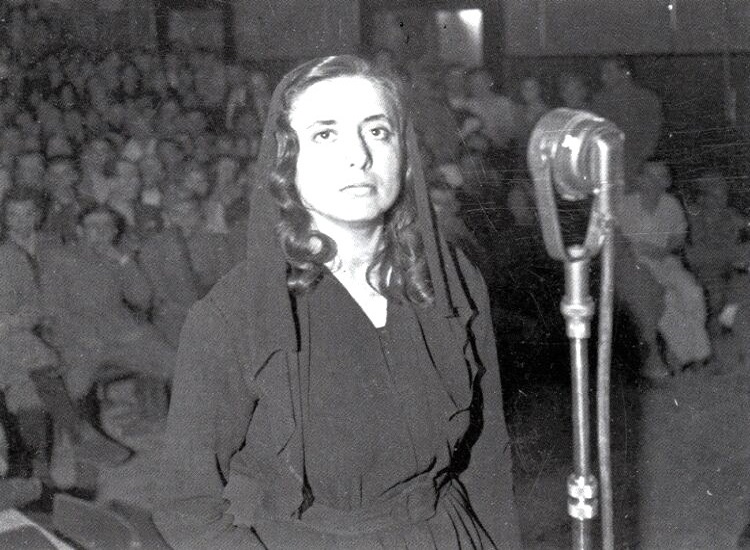
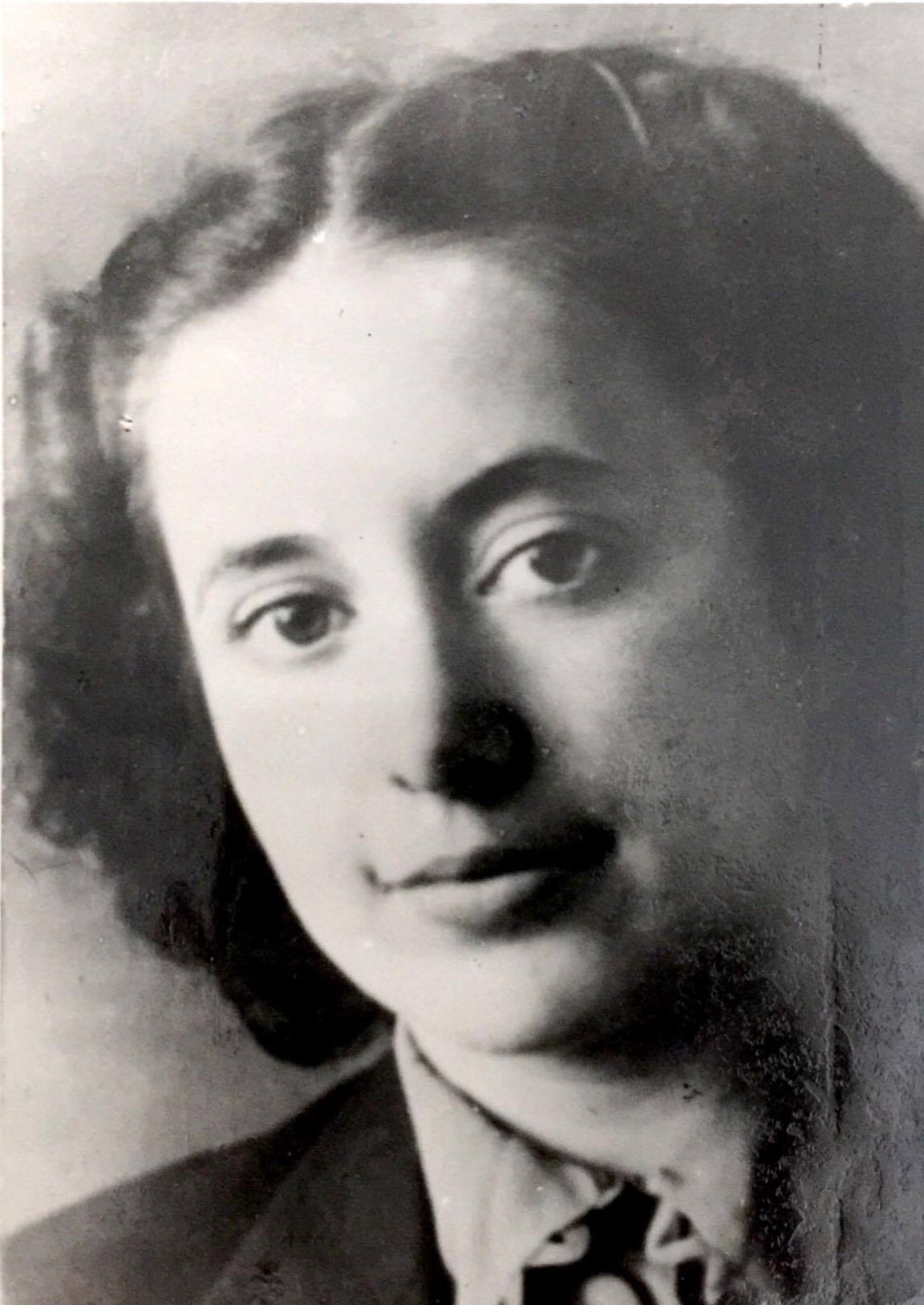
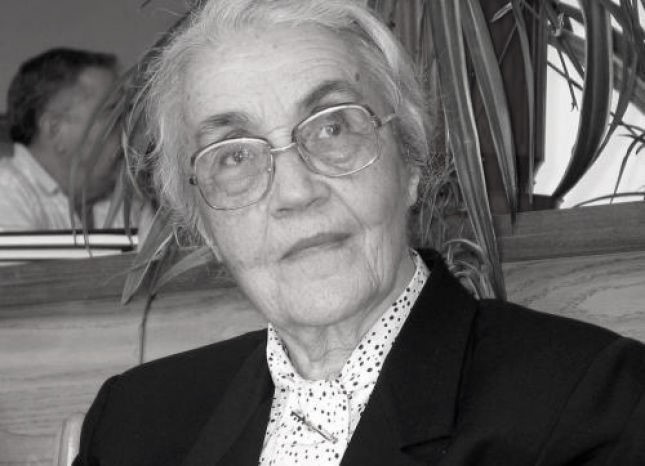
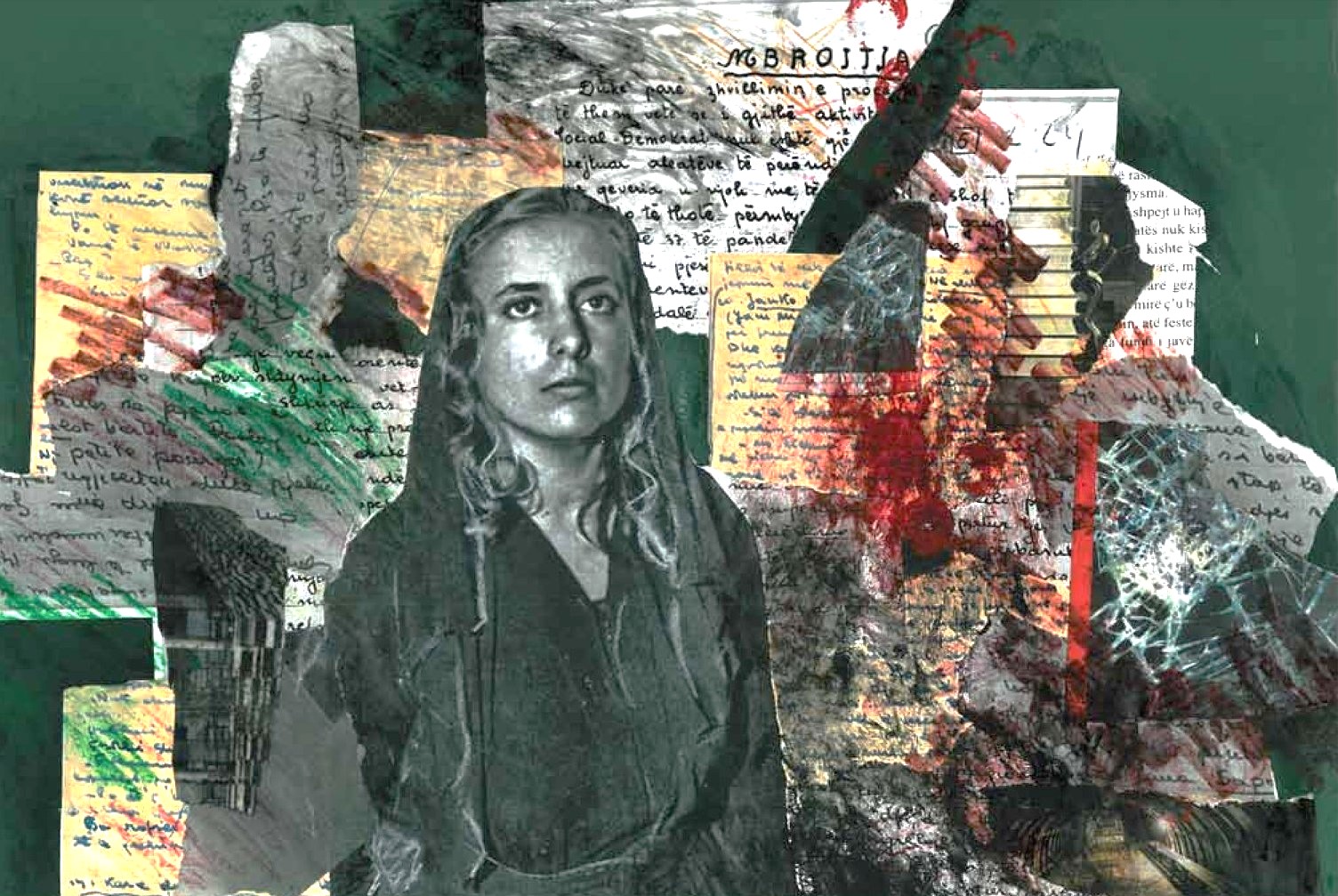
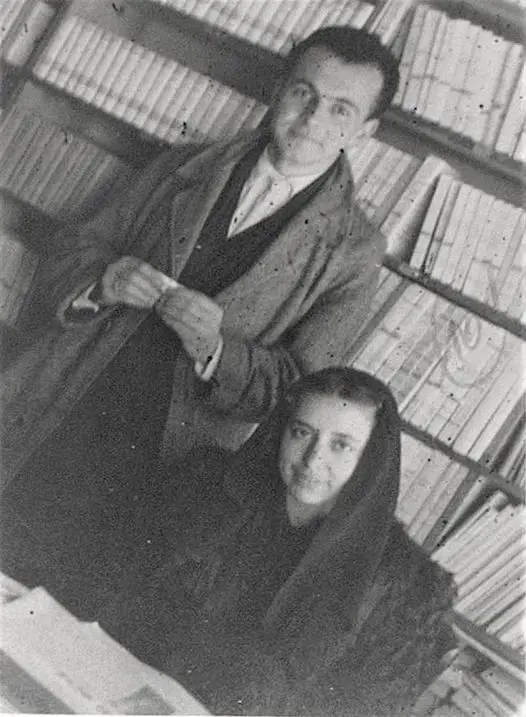
Memorie.al / 43 years ago, on August 13, 1983, one of the most distinguished fighters for freedom, democracy, and social emancipation closed his eyes forever—the publicist, writer, scholar, politician, and front-line activist against tyranny of every color and dimension, Musine Kokalari. Forgotten by acquaintances, disregarded by society, and condemned by the brigand state, she died in conditions of profound misery, in a lost room, interned in Rrëshen during the 1980s, with no one by her side and with the inconsolable fear of losing over 1,000 pages of studies on the folkloric riches of Mirdita and the surrounding highlands.
In a literary volume dedicated to the life of Musine Kokalari, the author, Eglantina Mandia, addresses the deceased with an imaginary letter, the introduction of which simultaneously characterizes Musine’s profile: “A person can be free, even while imprisoned. And can be imprisoned, even while free. This is the lesson I have drawn from your life. Sleep, you saint of the Albanian heavens!”
Musine Kokalari was born on February 10, 1917, in Adana, Turkey. Like many other Albanian intellectuals during the Ottoman period, Reshat Kokalari was also employed in that distant city of Anatolia. After three sons, Musine came into life as the fourth child of this civil servant, who, after the disintegration of Turkish holdings in the Balkans, had been left simply an exile on foreign soil. However, the powerful bonds with the land of his ancestors prompted Reshat to return to his birthplace, Gjirokastër, right after the end of World War I, in 1920.
On May 24, 1931, the 40th anniversary of the “Kyriaz” Institute was celebrated in Kamëz, Tirana, established in 1981 (translator’s note: obviously a typo for 1891) by Sevasti Kyriazi – an institute that had experienced a true adventure of uninterrupted displacement during the turbulent years of Ottoman rule, the dawn of independence, foreign occupations during World War I, and the Albanian political upheavals of the 1920s and 1930s, wandering from the Saint George neighborhood of Korçë to Kamëz in Tirana.
In the presence of over 800 selected guests from the capital, an impressive artistic program was presented, the climax of which was the performance of Beethoven’s “Moonlight Sonata” by the piano teacher, Afërdita Osmani. That sonata made a deep impression on the young Musine. It was this circumstance that prompted the scholar Eglantina Mandia to title her book dedicated to the life and work of Musine Kokalari, “The Moonlight Sonata.”
In that piece, Beethoven expresses with high notes how the human spirit ascends from beautiful feelings in moments of happiness, when two beings wish to unite as one, and how it crumbles with a sudden and merciless pianissimo, by the blow of fate, through deep hollows, while the sensory reverie, covered by the silver light of the moon, after rising high into the sky, descends down into the abyss.
She was in the spring of her 16th year of life and, like all young people of that age, she experienced these emotions intensely. She dreamed of weddings and of boys who would sweep her into their arms and lift her high into the moonlight. But in her dreams, she always saw herself without a crown.
And she writhed and struggled to express those surges and notes of the Moonlight Sonata of her own soul, while the verses of Naim passed through her memory:
God made man free,
But he must always do well,
And gave him reason to weigh things,
And to cast out injustices.
Thus she lives her youth, searching strongly even within herself.
And her soul fills and fills like buds in springtime. Those feelings and experiences she expresses simply and with surprising sincerity in the description “My Friend,” where a strong moral integrity stands out.
“It is beautiful, sweet, and pleasing to have a true friend, an inseparable friend. He loves you, accompanies you, does not leave you, and advises you; he speaks to you in silence and brings you joy. He does not forget you, does not deceive you, does not mock you, does not flatter you, he only accompanies you… …I look at my friend, I listen to him, I examine him, and I ask him: can he be called evil?
Speak the truth, seek the bottom of everything, present the reasons, distinguish good from evil, punch whoever seeks to oppress you, do good, help others, yet you are still called evil…”
It is the summer of 1937 when Musine begins to publish her first writings under the pseudonym “MUZA.”
In January of the following year, she leaves for studies in Rome. A new life began for her, full of many surprises, but also extremely interesting. She contemplated, amazed, the extraordinary artistic treasures of Italy. But simultaneously, she applied herself with great persistence to studies that demanded immense effort and sacrifices, sleepless nights, forgetting meal times, and an unusual nervous concentration.
Yet, faced with the difficult study of the great philosophers with whom she was obliged to engage as part of the academic program—such as Spinoza, Spencer, Rousseau, Kant, Schopenhauer—the encouraging verses of Naim came to her as inspiration:
You, Albania, give me honor,
Give me the name Albanian,
You have prepared my heart,
Filled with desire and fire.
She received the occupation of the country by Mussolini’s Italy with the deepest indignation, as her soul had been tempered with feelings of patriotism since her tenderest age.
She could not accept it; she could not conceive how a country far more advanced than her own could commit such a barbaric act. And chance had it that a few months after the occupation, a friend of hers introduced her to the young P.T., freshly graduated in archaeology. She, stressed by events, sought to convince her new friend of the cultural and moral values of small and poor Albania with her characteristic passion when defending great causes:
“It is true that it is one of the smallest countries in Europe, just as it is true that few European countries can claim such an ancient origin… My people have been prey to invasions, but by no means easy prey for the victors. It preserved and conserved its honor, dignity, and all the characteristics of its ancient race, despite centuries of enslavement, fluxes and refluxes.”
Although highly attracted and persistent in not accepting the affection of the Italian youth, his strong determination shook Musine, who nevertheless constantly sought to retreat, since: “I am Albanian – she repeated convincingly – and I will always remain Albanian. And don’t forget that there was an April 7th in Albania. Do you know what that means?”
Nevertheless, slowly but gradually, the two young people felt themselves fall in love. By a twist of fate, precisely at the peak of the feelings of both young people, P.T. is ordered to go to the war front, which had already broken out and would change the lives of hundreds of millions of people across the entire planet.
He wrote to her from North Africa, where his unit was operating, almost every day, with the solemn promise that he would return soon and they would never be separated again. And on a cold December day in 1940, Musine unexpectedly encounters P.T. on the street. Many things had changed. His mother had encouraged her son to flirt with other girls, thus ruining a love connection that seemed utterly unreasonable to her.
Despite P.T.’s justifications, it was Musine, the wounded one, who walked away first. She could not endure that masculinist violence according to which a woman is merely an object of pleasure and nothing more.
In her mentioned book about Musine, the author Mandija, while walking, decades later, through the streets of Rome, remarks: “I want to find this man now, now old, if he is alive, to look into the eyes of this man who held a rare jewel in his palm and who, through thoughtlessness, lost it forever.”
The separation from P.T. came right after some very shocking news for Musine.
She had had a very pleasant acquaintance from the very beginning of her studies in Italy with the Israeli Rashela, a very dear and sincere girl towards the young Albanian. They shared feelings, thoughts, and common judgments about the multitude of problems the world and European society faced at the turn between the 1930s and 1940s. Rashela became almost a sister to Musine.
Forced by the aggravated anti-Semitic climate in the Axis countries (Germany – Italy – Japan), Rashela set off for the United States, where her father lived, in Boston, Massachusetts. But she never arrived there. The Nazis captured her and, after tortures of all kinds, massacred her. This was not simply masculinist fury against a woman, but racial fury in the name of a perverted Nazi doctrine that worshipped violence to achieve any of their goals. This was an extremely painful event for Musine’s gentle soul.
This tragic episode made her even more determined and unwavering in the fight against violence. But life continued at its own pace. Musine was nearing the completion of her university studies and had chosen her favorite poet, Naim Frashëri, as her graduation thesis topic. During those tense days of work, she meets in Rome Andrea Varfi, who directed a literary periodical in Albania and who had published some of Musine’s creations several years earlier.
Simply and without compliments, Andrea Varfi spoke to her about one of these quality creations by the young graduate: “This is truly a manifesto. A spiritual manifesto, which you proclaimed four years ago… Musine, even when you started working in your brother’s bookstore, you broke a taboo. Perhaps you were the first woman to go out into a shop to sell books.”
After graduation, Musine Kokalari returns to Albania and begins to write and publish more and with higher quality than before. The philosophy of her life can be summed up in the maxim expressed by her:
“We seek freedom outside ourselves, while we have it within our soul.”
On September 29, 1942, she began work as a teacher at the “Nëna Mbretëreshë” (Queen Mother) institute. The world was at the peak of the inferno. Musine was tormented by the question: how was it possible that the very ones who listened to Beethoven and pleaded for the “Moonlight Sonata” were the arsonists?
Nexhmije Xhuglini (Hoxha) invites her to contribute to the National Liberation War, but she replies that she knew well what had happened in Russia, adding that she did not trust the Albanian communists who skirted around the issue of Ethnic Albania with vague phrases. She joined the Social-Democratic Party. In July 1943, Musine writes an editorial in the first issue of the magazine “Albanian Woman,” which was closely linked to the anti-fascist resistance. / Memorie.al