
By Enver MEMISHAJ
Part Two
Memorie.al / Many families who, with devotion and love for their homeland and freedom, gave everything they could, in very difficult times, were covered with the dust of oblivion during the communist dictatorship. One of these families that should be remembered and honored is that of Numan Lepenica. Numan was born in Lepenicë, Vlorë, in 1892, and completed his higher education in Istanbul. He served his country for 32 years, from 1912, as an officer in Ismail Qemali’s government, wounded in the Battle of Vlorë in 1920, mayor and sub-prefect until December 31, 1944, and like his friend Ali Asllani, he died without a pension, in misery. Numan married, for love, the teacher Zenepë, daughter of Mustafa Xhomo, a fallen bey (impoverished nobleman) from Leskovik, and a niece of the Vlora family.
Continued from the previous issue
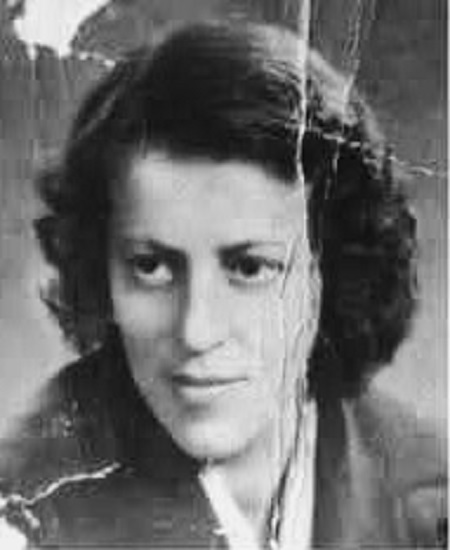
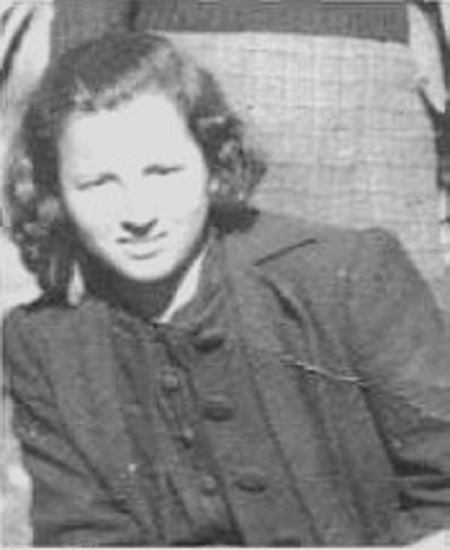
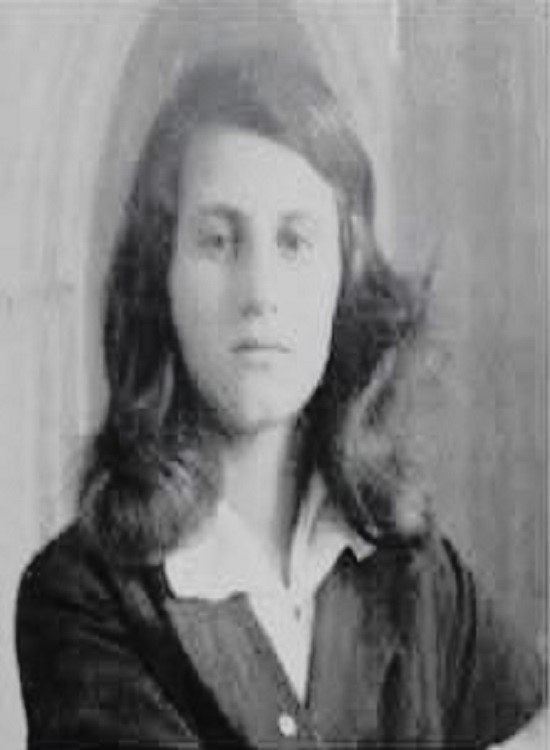
AFËRDITA LEPENICA
After leaving prison, Afërdita remained persecuted until the end of her life. She worked as a nurse in the small town of the sawyers, in Hotolisht, Librazhd, until she retired. Every year, she, together with Donata, her daughter, spent the summer holidays in the home of the author of this writing, in Vlorë. My mother, despite her own troubles, received and saw her off with love and respect and never tired of serving her.
Likewise, Gatua, my sister in Tirana, with sisterly love, opened the door of her home and heart to Afërdita and Donata. Afërdita would tell the author of this writing about her life full of ups and downs and endless suffering. After 1992, when I was given the opportunity to consult the archive of the Ministry of Internal Affairs, I harmonized Afërdita’s accounts with the documents of the time. Here is what Afërdita recounted, under torture, in communist interrogation:
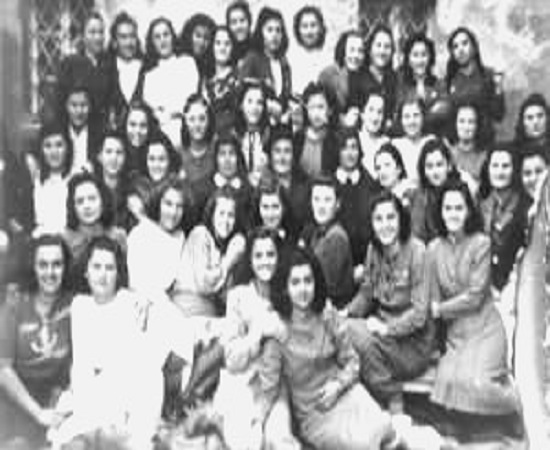
“I was born in Vlorë on July 8, 1925. After finishing primary school, my parents enrolled me together with my twin sister Elisabeta, in the Commercial School in Uji i Ftohtë of Vlorë, at that time a school with a very good reputation. In 1940, while I was attending the Commercial School, the Ministry of Health, through an announcement in the newspaper, asked for 35 girls to send to Italy for studies…! My father, after obtaining my consent, secured a scholarship for me through his friends.
On June 2, 1940, I set off together with my friends to Italy. On July 1, we arrived in Bari. There we stayed for 6 months, for nursing studies, but since Bari was a war zone and was being bombed by the English, they transferred us to Camerino. During the summer holidays of 1942, I came to Vlorë and went for a few days to my father’s ancestral village, Lepenicë. In the house of my uncles, which had been transformed into a war base, illegal partisans used to come, among them the son of our house, Sadik Premtja?
From him I received the first information about the National Liberation Movement, learned the first revolutionary songs, and at the end of the holidays I returned to Italy to continue my studies. In truth, I extremely hated fascism and the Italians. Among my fellow female students in Italy, I remember: Xhemile Gjinishi, the sister of Mustafa Gjinishi from Peqin, Nimete Luzati, from Luzat, Melani Kafeja from Shkodra, Aspasi Roshi from Kavaja, Lefteri Dhamo from Durrës, Nixhije Hila from Delvina and now resident in Tirana, Senka Andrea from Shkodra, now a nurse in Lezhë, Sofije Bejtja from Elbasan, now resident in Tirana, Bukurie Meçaj from Elbasan, now a nurse in Peqin, Hasime Janina from Berat, now in political prison, Milla Paço from Përmet, now residing in Tirana, Fahrie Deliu from Elbasan, now I don’t know where she lives, Evjani Ndija from Elbasan, now a nurse in Përmet, Eftiqi Noçka from Gjirokastra, now a nurse in Vlorë, Margarita Papleka from Elbasan, now a nurse in Tirana, Meropi Shyqyriu, now residing in Elbasan, married to Major Kopi Niko, Bepina Shala from Shkodra, Athina Marku from Elbasan. (The word ‘now’ refers to the year 1950, when Afërdita is speaking about her life.)
With these friends, in the hall where we gathered under the pretext of studying, we often talked about the war being fought in Albania. We decided to spread this spirit to all the friends in the boarding house. However, our activity was reported to the carabinieri by our friend Maria Bobe from Shkodra, who later married the carabinieri captain of Camerino.
Imprisoned and interned by the Italian fascists
Betrayed, on February 27, 1943, I was arrested by the local Questura as an anti-fascist, since in the boarding house we spoke about the Anti-Fascist Movement taking place in Albania and sang revolutionary songs that we had learned while on holiday in Albania. Often we would sing a tract that Sadik Premtaj – Xhepi had given me in October 1942, when I was on holiday in Albania. In this tract, the Communist Party called on the people to throw them into the fight against fascism.
I remember how they arrested me: The head nun in the boarding house, Ana Piaxha, told me I had to go to the Carabinieri. There, the Carabinieri Captain asked me that we should raise the Fascist Organization in the boarding house and take the Fascist triskelions. I opposed him, telling him that we had not come there to do politics, but to continue our studies. Then he told me that I had connections with Albanian partisans and that I had come there not only to study, but also to make propaganda against fascism, and that he had an order from the Albanian Foreign Ministry to intern me because I was against fascism.
So, my sentiments had been discovered and therefore, the next day at four in the morning, they took me and interned me in the Polence camp, three hours by train from Camerino. In that camp, 2,000 foreign and Italian women suffered. Two days earlier, my friend Milla Paço had also been interned. The fascists treated us very badly…, they gave us only 150 grams of bread per day, but my family helped me; each month I received 1000 lire or even more from her. There, my only close friend was a Turkish girl named Suela…! I stayed in Polence for a short time, as I fell ill from the suffering… and they transferred me to the village of Fiuminda, which the fascists called ‘campo libero’ (free camp). There I got to know some Italian families, but I don’t remember most of their names… Even here we suffered, as they gave us only 150 lire a month…!
I can recall Alberto Rossi, on a family basis. I associated with him, but it was forbidden by the carabinieri for us internees to have intimacy with Italians. I stayed here until November 15, 1943; from that date, they took us to another camp in Apiniano, where I stayed until February 1944. There, the questore (police chief) came to the command and, after complimenting me, wanted to know who the communists still in our boarding house were. I told him that none of us are communists, but we are just students who came here to complete our studies and return to our homeland. He did not believe me and told me: ‘Until the war is over, you will remain interned.’ On September 15, 1943, they transferred me to Ampinjero.
Before transferring me, I received a telegram from Eqrem Çabej, a person completely unknown to me, telling me to go to Rome… I did not know this man and did not know what his task was in Rome…! My two friends, Milla Paço and Hasije Janina, were released, but I was not released. I asked about this and they told me: ‘We have no order from either the Foreign Ministry or the War Ministry.’ So I remained interned and was transferred to Apijano, where a White Russian woman was also interned.
Imprisoned and interned by the German Nazis
As soon as the Germans occupied this village, they imprisoned me on the accusation that I was in contact with the partisans, which I persistently denied. I stayed in prison from February 7, 1944, until the end of June 1944, and I suffered from bad treatment and poor food: cabbage and 150 grams of bread per day. German officers, accompanied by Italians, demanded that I reveal the partisan bases. I told them I knew nothing; for this, twice they put me through torture of the ‘crown with electric current’ (likely a form of electric shock torture), and since I did not speak, they became convinced…!
Freedom from American forces and anti-communist ideas
They took me out of prison and sent me to the village of Karidone. There I stayed until the American forces arrived. Two months after liberation from the Germans, I went to Bari, to the Albanian Military Mission, headed by Lt. Colonel Kadri Hoxha, who assigned me as a nurse in the camp…!
In my first contact with the wounded partisans who had come to Italy, I learned about the desertion of Sadik Premtja – Xhepi, a man I had loved and admired immensely, as he did me. The great sympathy I had for him made me also change my opinion and my path, since I reasoned that as long as he lived and fought for the National Liberation Movement and then turned back, apparently this Movement is not right and good…!
My young age, 18, and the social circle I had frequented before coming into contact with the Albanian partisans had influenced the change in my thinking, and the news about Sadik Premtja – Xhepi mainly affected my revolutionary feelings, so that I came to believe in the Anglo-Americans. I stayed in the camp with the Albanian partisans for more than a month and a half.
Return to the homeland and anti-communist activity
On December 21, 1944, I returned to Albania, to my family in Vlorë. There I learned that an uncle, Xhelal Hoxha, had been killed in the war as a Balli Kombëtar (National Front) fighter, and also Hysni Lepenica, two people for whom I had great affection. Then they told me that the partisans had burned our house in Lepenicë and taken all the goods. These events weighed even more heavily on my soul. In the very first days of my return to Vlorë, I began friendships with some friends I had had before… They were dissatisfied and anti-revolutionary friends…! I had friendships with Jewish families who had a great hatred for the People’s Power. In these people, I found exactly what I was looking for…!
The place where we gathered was the house of Xhon Matathia. There came Rafo Jakoeli, Moisi Levi, now in Vlorë, Nino Ganiu, Xhakovino Matathia, now in Tirana, also came the son of Doctor Çupishti, Skënderi, with his sister Shukranja, now based in Skopje, and my Jewish friends Mini Jakoeli and Tuçi Matathia, and sometimes we gathered at the house of Mini Jakoeli. We gathered every Saturday and talked about the reforms, nationalizations, the regime we did not like. At their request, I explained to them about the Anglo-American army and the democratic regime that was in Italy, dedicated to the leadership of De Gasperi, etc.
I spoke to them about the Anglo-American army, which treated the Italian people well; I refuted the news in our newspapers. I told them that everything was available in Italy; I told them that the American Red Cross distributed food and helped the war-affected, etc. I told them that many American and English officers had told me that the day was not far off when they would come to Albania. I praised the Anglo-American order and discipline. In 1946, in Vlorë, I became friends with the daughters of the Risilio family: Diana Risilia, Rubie, and Nergjize Risilia, who had actively participated in the ranks of Balli Kombëtar.
In this group, Shukrie Çupishti was never absent; she had been in high school in Italy during 1940-1943, a very clever girl. Doctor Çupishti, Shukranja’s father, moved to Peshkopi, taking his family with him. On November 28, 1948, the family escaped to Skopje, Yugoslavia. Shukrania had even proposed that I escape together with them, but at that time I was arrested in Burrel, for agitation and propaganda.
We held our meetings at Diana Risilia’s house because her house was on the outskirts of the city. We also encouraged other friends to come to our meetings. Thus we became 11 girls in total: Afërdita Lepenica, Shukrane Çupishti, Diana Risilia, Rubie Risilia, Nergjeze Risilia, Nedime Kasëmi, Mimi Kasëmi, Nefrone Agalliu, Tahnime Mustafaraj, Mini Jakoeli, Tuçe Matathia.
This group was my work. We gathered four times in Diana Risilia’s house. In these meetings, we talked about the war and the role that women had played in that war, which according to our view had served men more than the war. Those who had lived the war spoke…! Nedime Kasëmi, who had been a member of the Balli Kombëtar cell in Vlorë, praised Balli Kombëtar and said that ‘we too have been many friends in the cell, but there was no degeneration…!’ These connections were interrupted from the end of 1946 until 1949, as life dispersed us.
In service as a nurse for Albanian women and as a volunteer on the railway
In January–February 1945, I was appointed as a nurse in Himarë, from Himarë I was transferred to Mesaplik and Drashovic. In Drashovic, I was given the opportunity to see my personal file, where it was written that I was an undesirable person and should not be trusted. This revolted me against the regime. I clearly understood that I was being followed by the police.
From June 1945, I was transferred as a nurse to Valias, Tirana. I stayed there for 4 months and in November of that year I returned to my family, as I had become very weak and my father told me to return home without the Ministry’s permission. I stayed with my family for 8 months without work, until I recovered.
In August 1946, I was appointed as a nurse in Kurvelesh.
In August 1947, I was a volunteer on the Peqin – Elbasan railway. Upon returning from the railway, I worked provisionally as an accountant in the Collection Enterprise in Vlorë, for about a year. In March 1948, I was transferred to Burrel, where I also created an anti-communist circle. On October 27, 1948, I was arrested in Burrel and accused of agitation and propaganda, but after three and a half months I was released for lack of evidence…!
I was released after the resolution of the First Congress of the Communist Party of Albania on December 22, 1948, and went to Vlorë where I stayed for 8 months without work, until August 1949, because I refused to go to work in the Maliq district, where the Ministry of Health had appointed me. On August 26, 1949, at my request, I went to the Gramsh district because my fiancé Hysen Dervishi was there.
There I got to know anti-communist clerks and peasants, who were introduced to me by my fiancé. Here too, and in every other place, I did not fail to continue my anti-communist activity…! All my close people are against the communists in power: Refati, Shaqia, Qemali, Imeri, Fetiu, Dilaveri, etc.”
My thoughts and ideas
In my social circle, I have held and defended these opinions: I have thought that this government will not last long. I have always thought that we too should fight against communism, and I have spoken about how one day the Anglo-Americans would come and overthrow the communists from power. I propagated that the communists acted like the fascists. The fascists put Duce’s swords on our flag, while the communists put the star of Russia on it. We should have a free, nationalist Albania.
For these opinions, I was encouraged by my uncle Refat Lepenica, the son of Uncle Qemal Lepenica, my cousin Perlat Selami, today (in 1950), deceased, and my friend from Vlorë, Athina Marku, who is a nurse in Elbasan. I thought that Albania should be free and develop on the democratic path, but not on the path of communism. I did not like the communist dictatorship; I liked Western-type democracy.
My sympathy for the Western type of democracy arose when the Allies came to Italy, by reading American and English magazines and newspapers written in Italian, by talking with military personnel of the Anglo-American mission, and the aid they gave to the people made a good impression on me about Western democracy. We have always spoken about nationalist ideas for a free Albania, for a flag without a star.
When I was working in Drashovic, Vlorë, together with a friend of mine named Liri, whose father had been executed, we prepared several tracts calling on the people to protest against the government, since the government had not yet been recognized, and we said that this government was imprisoning and executing us, but these tracts were seized by the Sigurimi (State Security).
I was interrogated in Drashovic; they advised me and released me. The people in power considered me an enemy and did not approach me. I have not stayed within my family, since returning from Italy, except as a guest, so my feelings continued to be against the power of the communists…”! Memorie.al