By Eugen Shehu
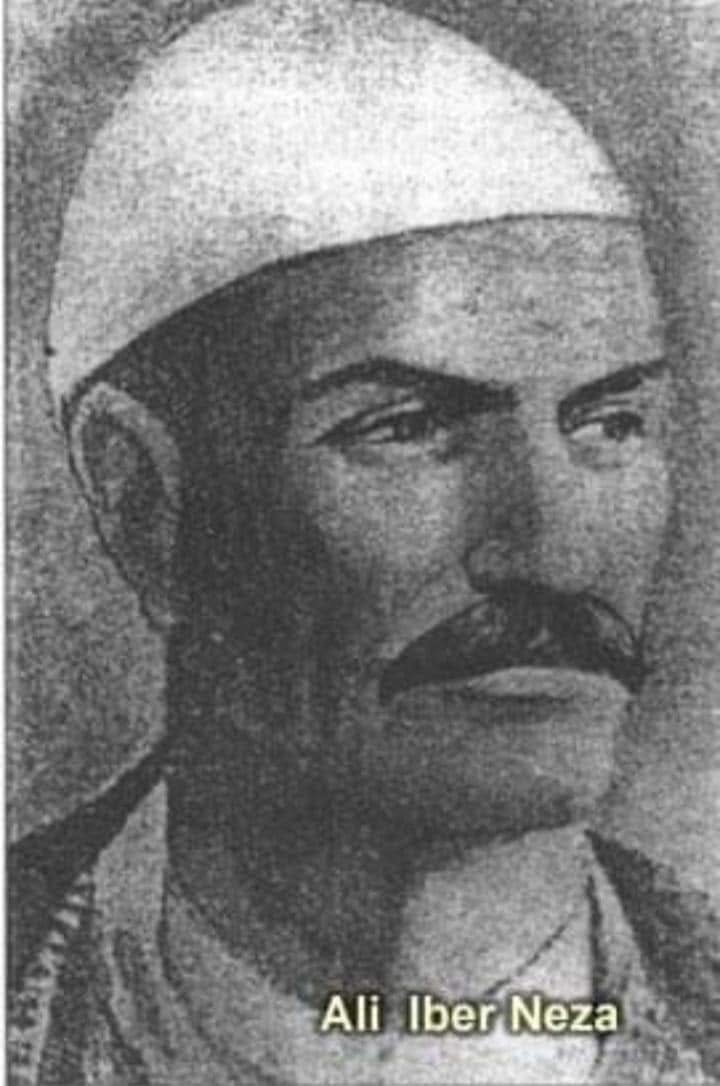
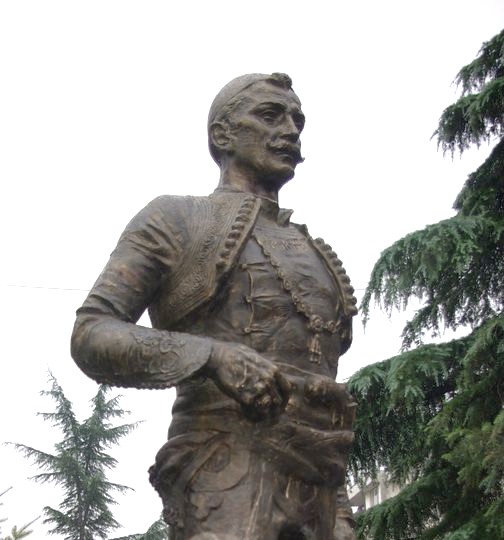
Memorie.al – The highlands of Tropoja have rocked in their wooden cradles hundreds of brave men. Those highlands taught these boys how to love their parents, brothers, sisters, the mountain streams, and the flowers of the meadows. But above all, across the centuries, they taught them how to love the most precious thing of all: freedom. Because upon the shoulders of these highlands, through the ages, countless tempests of wars were poured out; they passed on to their sons the knowledge that in their great love for freedom lay the very life and future of their homelands. Naturally, with such feelings, Ali Ibra would also grow up.
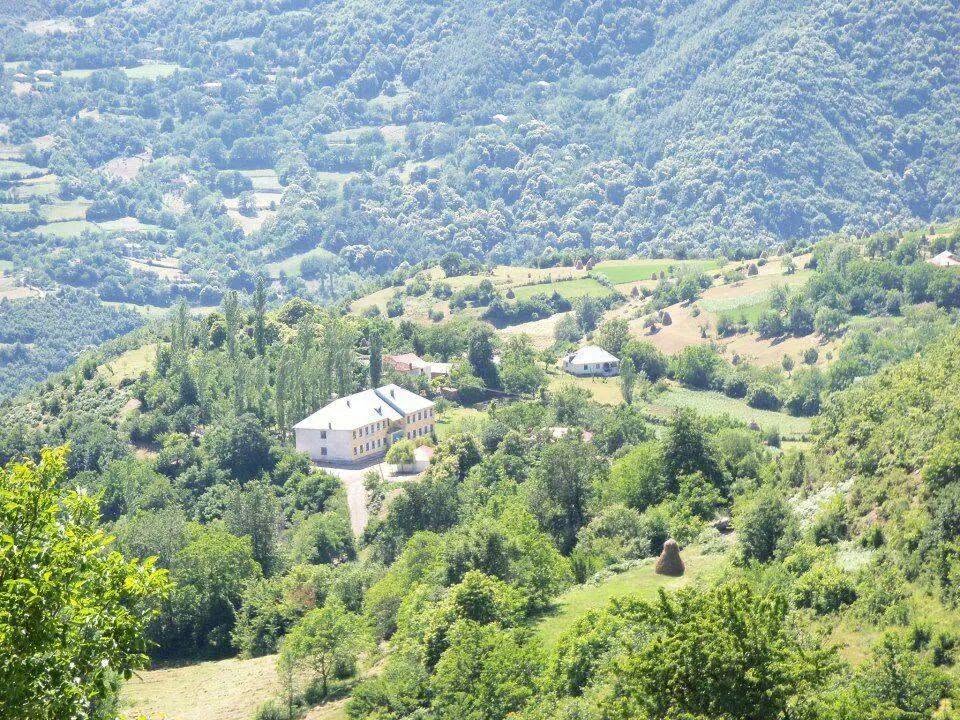
Born in the village of Shipshan, in Tropoja, in 1830, this boy would certainly bring joy to his father, Ibër Neza, for another man and another pair of working arms were being added to the household. The truth is that Ibër Neza owned little land and struggled to keep his doors open with the sweat of his brow, working day and night. Shipshan, due to its own geography—situated for centuries in the heart of the highlands – had excellent pastures. That is why Ibër Neza had acquired a few head of livestock, which he would entrust to his sons.
Raised in these surroundings (for schooling was out of the question in the Shipshan of those years), Ali Ibra stood out among his peers, especially for a wisdom and maturity somewhat rare for his age. He quietly carried out all his father’s orders and always distinguished himself by seeing every task through to the end. Although he could not learn to write, late at night, when friends or his father’s guests came to the kulla (tower-house), Ali, with his robust build, would listen intently to their conversations, and his memory would “record” every act of bravery.
The years 1840–1845 were years of deep poverty and harsh oppression by the Sublime Porte over the Arbëresh (Albanian) lands. In the warm chamber by the fire, there in Ibër Neza’s kulla, they now spoke openly against this regime, and thereafter they would give their besa (sacred oath) not to surrender a single kilo of corn, since there was barely enough even for the children.
Furthermore, Ibër Neza, at the head of several other brave men from the highlands of Tropoja (at that time called the highlands of Gjakova), resisted with arms in hand the tax collectors of the Ottoman government. The proclaimed Tanzimat reforms, which among other things demanded new taxes, were forcefully opposed in almost all four Albanian vilayets of the time. By then, Ali Ibra was a mature and brave young man. He was occupied not only with the great chores of the household but also with resolving issues that could arise in the Highlands.
His rifle shot true, and both the tax collectors and the local authorities of Gjakova feared his keen eye and steady hand. In the spring of 1866, a group of brave men from Shipshan protested against the oppressive measures of the Ottoman government. The Sublime Porte, sensing the dangers this protest could pose, sent several armed battalions to suppress it, commanded by Selim Pasha, the commander of the military garrison of Manastir.
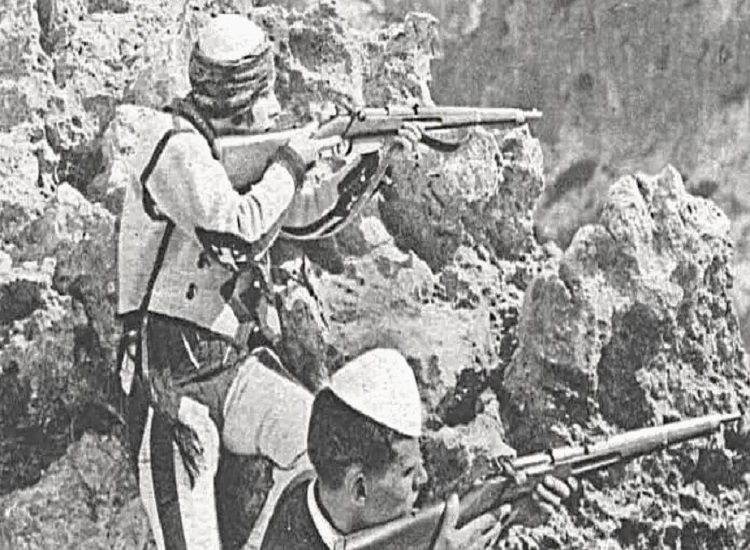
However, Ali Ibra, in close cooperation with Binak Alia, at the head of hundreds of men from the Highlands of Tropoja, ambushed these troops, thus signing a dignified resistance against Selim Pasha’s formations. After two or three days of battles, the insurgents withdrew to the highlands, as the Ottomans were ten times more numerous and far better armed. Nevertheless, the spread of this uprising all the way to Prizren reminded the Turks that they would not easily extend their yoke over the Arbëresh lands.
A year later, in March 1867, the Albanians of the Tropoja highlands, once again led by Ali Ibra, broke out in revolt. Then the besa was sworn, even in the surroundings of Gjakova, that they would fight with axes and knives if need be—only, “we will not send our boys to the nizam” (the regular Ottoman army). The truth is that in those years, Albanian boys were being forced into military service to fight in Asia, from where most of them never returned. The tragedy of their not returning was carried like a plague from kulla to kulla, where the forgotten names of the boys, the nizams, wandered like the cawing of crows.
In the case of this uprising, the Sublime Porte sent Mahmud Pasha at the head of two Ottoman battalions, but after two weeks of fierce fighting, he turned back in shame. The insurgent forces, led by Ali Ibra, carried out several very clever ambushes, trapping the Ottoman formations and inflicting heavy losses on them in both men and military armaments.
By now, Ali Ibra—this brave, taciturn man—was gaining the trust of a great mass of people. Even though he personally conceived the battles, he was always found at the most difficult front, where the danger was greatest, where the enemy had its strongest link. The battles that followed awakened among Albanian men the great idea of unity. Divided by blood feuds but also by Ottoman politics, these Albanian leaders had understood that all those great tempests of war could only be withstood if they united their weapons and their minds; otherwise, the very existence of Albania was at risk.
Ali Ibra is among the very first brave men who sought to break the custom of blood feuds. At the graves of Shala, in 1876, at a grand assembly, the hero of Shipshan declared that blood should be forgiven for the sake of the Highlands, and not for vengeance. Extremely bold for those times, this was well received by many brave men who swore the besa there to fight the Turk.
That same year, together with Mic Sokoli, Ali Ibra went to the region of Shenpali in Mirdita, where the besa was sworn and joint decisions were made to oppose the Ottoman regime.
The Treaty of San Stefano, of March 1878, would put the Albanian lands on the great bargaining table that Turkey had made with Russia. On May 30 of that year, the Committee of Istanbul, chaired by Abdyl Frashëri, addressed an appeal to all Albanian patriots, calling on them to rise and defend the Albanian lands by every means. Following this appeal, there were hundreds of letters, telegrams, memoranda, and protests that Albanian patriots sent to the chancelleries of Europe, striving to preserve the inviolable territorial integrity of Albania.
In one of them, the populations of Peja, Gjakova, and Guci addressed the French ambassador in Istanbul, stating, among other things: “The land in which we live is called the land of the Albanians. Why should we submit to the savage administration of the Bulgarians, or rather, to Russian slavery? Which conscience would accept this?… We will not cede a single inch of our land to the Montenegrins and Serbs.” (Acts of the Albanian National Renaissance 1878–1912, page 14).
Naturally, diplomatic efforts had to be intertwined with organizational efforts on the level of military actions. For this, the brave men of all Albanian vilayets took concrete steps, organizing the broad masses and making them aware of the battles that lay ahead. Thus, Ali Ibra and Sulejman Vokshi were now in the Highlands of Gjakova. They set the hearts of the people of Gjakova ablaze, showing that only the rifle would be able to protect the sacred borders of the homeland.
In this race towards freedom, it was Ymer Prizreni who warmed the spirits of his countrymen in Shkup, Tetovo, Dibra, and Manastir. Meanwhile, these great men had understood that the time demanded for Albanians a different, larger organization, one that could stand up to the savage campaign of dismemberment of their ancestral lands. Thus, the great hour of the creation of the Albanian League of Prizren was striking.
The truth is that the city of Prizren was chosen for the creation of this League for two reasons. First, because at that time, this city was among the largest in Albania. Second, because the centuries-old Serbian propaganda claimed it as their own, and the League, naturally, would shatter that false Serbian myth.
It was the beautiful morning of June 10, 1878, which opened the doors of the small house where the League of Prizren began its proceedings. Dozens of brave men came to this assembly from all Albanian vilayets, demonstrating not only the desire to preserve the borders of the homeland but also the love among themselves, regardless of regional divisions or religion.
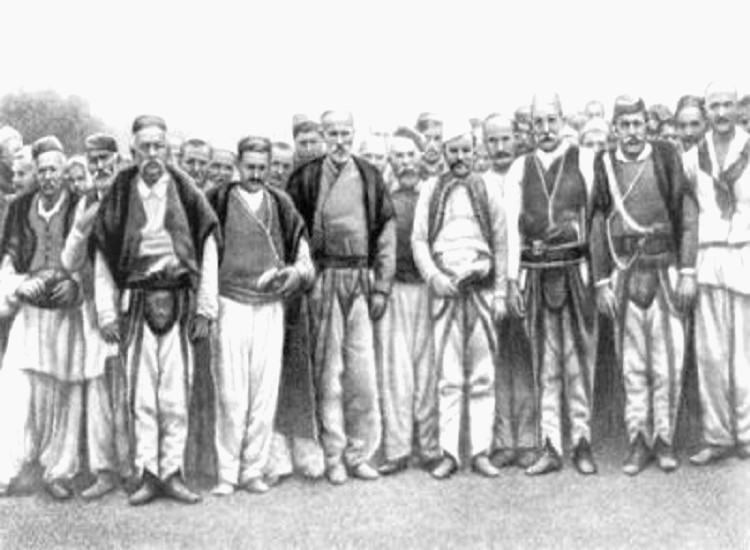
Among other things, at this assembly, the voices of the tribunes thundered: Abdyl Frashëri, Ymer Prizreni, Iljaz Pasha Dibra, Hasan Pasha Tetova, Haxhi Zeka and Sheh Mustafa Tetova, Sulejman Vokshi, Ali Ibra, Binak Alia, Ali Pasha Gucia, and others. On the first day of this historic Assembly, Abdyl Frashëri would announce to those present: “We Albanians descend from the Pelasgians. We are therefore the oldest people in the Balkan Peninsula, whereas the Slavs came late. But, being more numerous than us, they pushed us to the southwest of the Balkans, into this narrow strip where we find ourselves today. The robbery they committed against us then were not enough; even today they seek to tear other lands from us. Likewise, Greece wants a piece of the Vilayet of Ioannina, which is an inseparable part of our sacred homeland. The purpose of this gathering, for the time being, is to cut short the onslaught of the savage enemies, by swearing the Albanian *besa* and taking an oath to defend with blood our territories, left to us by our grandfathers and great-grandfathers.” (Xh. Belegu, *The Albanian League of Prizren*, page 20).
At the end of its proceedings, the Albanian League of Prizren elected its Central Committee with 13 members. Sulejman Vokshi and Ali Ibra were elected to the financial commission, but this commission would not only secure the League’s finances but would also be ultimately responsible for the Armed Forces of this League. From this moment onwards, and throughout the following years, we will always see these two men – Ibra and Vokshi – together, both in the councils of men and in the flames of battle. They would be the first architects of military organization in Kosovo, the first commanders of the victorious battles for the preservation of ethnic Albanian territories.
One can easily imagine the difficulties in which all the leaders of the Albanian League of Prizren found themselves. The Sublime Porte, even though forced to make some small concessions, would never accept this Albanian autonomist movement. And precisely in these moments, the patriotic vision of Ali Ibra shone once again. He managed to travel to many parts of Kosovo and raise a national army there, which would serve as the right arm of the Prizren Movement. Entire volunteer units were excellently organized, thus being ready to carry out any combat duty.
In May 1878, several preparations were set in motion by the Montenegrins, who had long-standing claims over the regions of Plavë and Guci. Furthermore, in June and July of that year, the Montenegrins also secured the backing of the Great Powers regarding their territorial claims. Thus, in August 1878, Jakup Ferri, Mulla Jahja, and Nuh Shahmani, at the head of several brave men, went to the village of Shipshan to see Ali Ibra. After meeting their friend and the deputy commander of the military forces of the League of Prizren, they informed him of the danger. Two days later, the son of Shipshan sounded the call to arms, and over 1,000 armed men gathered at the graves of Shala, on the banks of the Valbona River.
Among others, upon hearing Ali Ibra’s call, there came: Mic Sokoli, Qerim Delia, Binak Alia, Man Avdia, Halil Ibrahimi, Hoxhë Dollapi, Ali Hoxha, and dozens of other brave men with their bands.
“The assembly was opened by Ali Ibra, who, as we have characterized above, stood out for his oratory. With simple yet clever words, he spoke about the political situation, the current state of affairs, the Albanian League of Prizren, its duties and decisions, the danger of invasion by neighboring chauvinists, the resulting obligations, the unity and swearing of the besa to help the brothers of Plavë and Guci, and the setting aside, in those difficult times, of blood feuds, quarrels, and vengeances.” (Xh. Gosturani, Ali Ibra and the Albanian League of Prizren, page 42).
Then, at this assembly, other brave men also took the floor and fully agreed with the thoughts of the son of Shipshan. Meanwhile, a letter arrived at the assembly from Sulejman Vokshi, informing Ali that Maxhar Pasha (Mehmet Ali Pasha) was advancing on Gjakova. Immediately after the reading of this letter, all the brave men gathered there headed towards Gjakova. The truth is that Maxhar Pasha, upon arriving in Gjakova, took quarters in the kullas of Abdulla Pasha Dreni, with whom he had had long-standing friendly relations.
His mission was to suppress the Albanian national movement, go to Montenegro, and after handing over Plavë and Guci to Knjaz Nikola, return to the sultan’s palaces in high favor. The branch of the League in Gjakova designated the group of brave men who would lead the assault on the kullas of Abdulla Pasha Dreni. These were: Sulejman Vokshi, Haxhi Zeka, Jakup Ferri, Ali Ibra, Ali Pasha Gucia, and Ahmet Koronica. Each of these leaders took their own assignment and, at the head of their own band, explained the situation to the other fighters.
Maxhar Pasha was given only 24 hours to leave Albanian territories in peace; otherwise, the muzzles of rifles would decide. This situation was extremely challenging for Maxhar Pasha, who had arrived with grand plans, and in Istanbul, after this repressive mission, the post of Minister of War had been reserved for him. Twenty-four hours after the deadline expired, about 3,000 very well-armed Albanians, even with artillery, surrounded him.
In this battle, the bravery of dozens of Albanian leaders shone, including that of Ali Ibra. Although seriously wounded, on the battlements of the kulla, he did not weaken for a single moment; on the contrary, with his wound bleeding, he gave courage to his men. It is well known that Maxhar Pasha was killed by the brave men Çol Delia and Adem Selmani, who, heedless of danger, entered the courtyard of the kulla and shot dead the great Ottoman “strategist.”
After the killing of Maxhar Pasha, as well as several other treacherous leaders of the Albanian national movement, some Albanian volunteer formations wanted to take revenge against some Christians of Gjakova. It is believed that this act was instigated by someone, bought by Serbs or Montenegrins, to thus violate one of the points of the League’s agreement, which prohibited religious war. Assertions in foreign historiography testify that it was precisely the wisdom of Ali Ibra that averted this blind vendetta.
In connection with this, the English consul, Sir St. Johns, asserts that: “The distinguished leader Ali Ibra declared that the persecutions against Christians in Albania were carried out not by the Albanian League of Prizren, but by some irresponsible persons instigated by two fanatical functionaries of the Ottoman administration.” (Archive of the Institute of History, Document 71/3, Prizren, October 2, 1879).
In November 1879, Mark Milani and Teodor Milani were preparing to attack Plavë and Guci. Immediately, the branch of this League for Plavë and Guci notified Prizren, and almost all Albanian leaders were informed. There were thousands of brave volunteers of the League of Prizren from Dukagjin, Hasi, Shkodra, and then also Tetova and Dibra, who began marching towards Plavë and Guci. Ali Ibra, at the head of 1,000 men from Tropoja, set off like lightning and took the most difficult positions facing the Montenegrins.
It is now well known that from November 1879 until the end of January 1880, some of the fiercest fighting took place in the Albanian territories of Plavë and Guci. Hundreds of Albanian brave men fell dead, but thousands of lifeless bodies of Montenegrin soldiers, carried by the bloodied Lim River, drifted all the way to Bosnia. The battles of Plavë and Guci ultimately showed the Great Powers that Albanian nationalism, the national consciousness of our people—though in its early stages—were being forged in the fire of wars. Here too, the role of Ali Ibra remains indisputable.
In March 1881, the extraordinary assembly of the Albanian League of Prizren met again in Prizren. At this assembly, fierce debates took place between patriots with autonomist ideas and other Albanian leaders who still wanted the rule of the Ottoman Empire. After several debates, and in view of the work of each of the organizers of 1878, the extraordinary assembly elected the Provisional National Government. At its head was elected Ymer Prizreni, with Vice-President Shuaip Spahiu, Abdyl Frashëri for Foreign Affairs, Sulejman Vokshi as Minister of War, and Ali Ibra as his deputy. Immediately after this, Sulejman Vokshi and Ali Ibra conceived a new military organization, adapting it to the situations that all of Albania was going through, on every inch of its soil.
Now, heading towards Kosovo to suppress with fire and iron any idea of the Albanian League of Prizren, Dervish Pasha advanced at the head of 20,000 armed soldiers and officers. Following the call to arms by Sulejman Vokshi and Ali Ibra, about 4,000 brave men gathered, though they were poorly armed and without sufficient food. The wars of these three or four years had inflicted great damage on the Albanian volunteers.
The first clash took place at a place called Slivova on April 20, 1881. The Albanian brave men, under the command of Sulejman Vokshi, managed to halt the advance of Dervish Pasha, but only for two days, as the several-thousand-strong Ottoman formations broke through the volunteers’ positions, leading to hand-to-hand combat.
Two days later, the next great battle took place, that of Shtimje, in which the Albanian volunteer troops were commanded by Ali Ibra. On this terrain, Dervish Pasha arrived and tried to adapt the tactics of frontal warfare to the banks and rocky heights of Shtimje, as well as to confront the clever maneuvers of Ali Ibra. The battle was extremely fierce and lasted for 7 consecutive hours. Ali Ibra, mounted on his black steed, despite his advanced age, despite having been wounded 12 times already, threw himself uncontrollably upon the Ottoman battalions. Preserved to this day, the folk song says of him:
“Ali Ibra on the black steed,
His blood flows down to the stirrup,
Ali Ibra lets out a cry,
He cuts down seven or eight with his knife.”
At Shtimje, the man of Shipshan was seriously wounded. He did not show his wound to anyone but only sounded the call to arms. His close comrades-in-arms understood from his weakening voice and took him to be treated. This was the 13th wound of the son of Shipshan. But even this would not silence him on his deathbed. After the brutal violence of Dervish Pasha, the hero climbed back up to his own village, where he was born, where he grew up, where he learned to shoot a rifle, and where he came to know the besa of a man.
His kulla would always be raided by Sulejman Vokshi, Haxhi Zeka, Hasan Ferri, and other brave men. They would listen to his wise and prudent words; they would always respect the hero. But surely, the 13th wound, after five decades of war, would not be so easy to bear. He closed his eyes in December 1893, in his own kulla, in Shipshan, rocked by the hope of freedom. / Memorie.al