By NEKI KOTHERJA
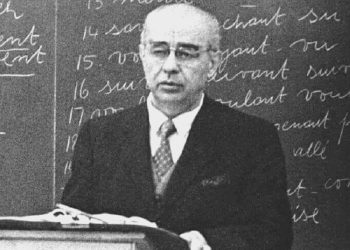
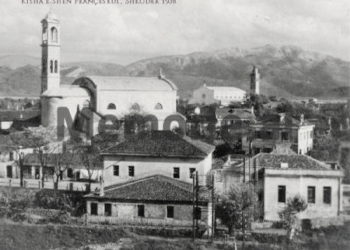
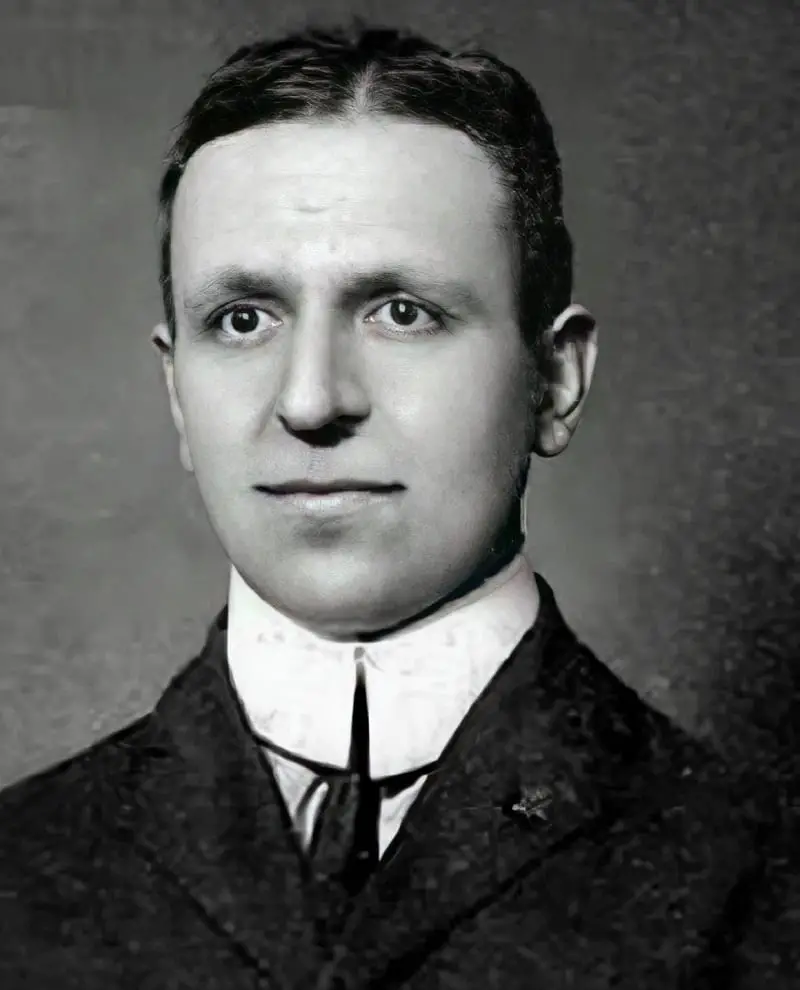
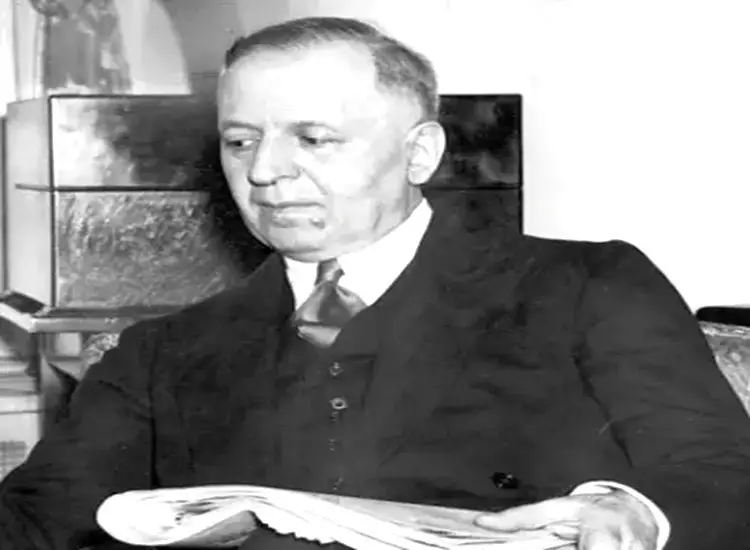
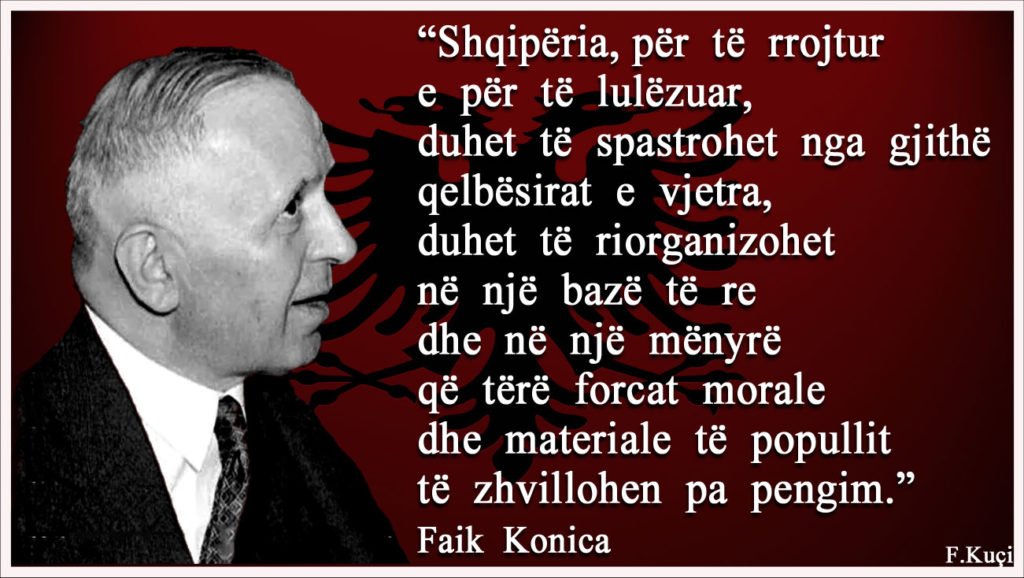
Memorie.al / Konica: “Albania is a wonderful and tragic country.” We find this phrase written among the notes that Konica has left us regarding culture. A son of this soil, which, according to him, wanders between the wonder and the historical tragedy of its fate, these extreme traits will often stand out in the character of our great Konica – traits which Koliqi has beautifully sketched in a statement about Faik: “A craftsman of writing, who turns words into diamonds.” Born into a large family on March 15, 1876, in the small town of Konitsa, near the Pindus mountains, not far from today’s Albanian-Greek border, Faik, the seventh child, about a decade later would head to the northern capital, Shkodër, where he would attend lessons at the Saverian College.
A rare cases this, when a Muslim child attends lessons at a Catholic college. Meanwhile, in 1890, he went to France to continue his studies at the Lycée, then in Carcassonne, and later he would enroll at the University of Dijon in 1895, which he completed in Romance philology. He finished his studies at Harvard University, having previously mastered medieval French, Latin, and Greek at the “Collège de France.”
Faik Konica is among the few, perhaps the unique case in the history of Albanian literature and culture, that although physically his life has ended, his work remains open. Even though he began publishing more than a century ago, a complete and accurate balance of his literary heritage has still not been achieved. While he was alive, he himself made no effort to collect his writings into a single volume. In a chronicle published in the newspaper “Dielli” (March 1909), he states that he will soon publish a collection under the title “The Red Candle.”
However, this book did not see the light of publication then or later. Unfortunately, today we do not know the contents of this volume that Konica intended to publish. Konica was astonishing in everything he did. As in this matter as well: a great personality, a living cultural and patriotic monument, Faik Konica left no work published during his lifetime, except for a volume containing translations of the Arabic tales “One Thousand and One Nights,” which he rendered in Albanian under the title “Under the Shadow of the Palm Trees.” In the bibliography of Albanian literature, Konica’s name does not appear with any original work coming from his hand.
Konica, unfortunately, wrote little genuine literature, but as a critic, essayist, publicist, and politician, he had a very strong influence on the development of culture among us. With his numerous writings published in various press organs and above all published in the magazine that he shaped and gave life to, “Albania,” he made Albanian culture and literature known and appreciated in various circles across Europe. Fan Noli wrote about the magazine “Albania”: “It is the encyclopedia of the rebirth of the Albanian nation.”
Faik Konica, in the present day, stands between the known and the unknown. We know almost nothing of Konica’s journalistic output. The comedy “Mustaqet” (The Mustaches), which was performed by a group of amateurs in Boston in 1923, is considered “lost,” as is his translation of Shakespeare’s “Twelfth Night,” as well as “Romeo and Juliet”; we do not know the story “Vallëzimi i shqiptarëve” (The Dance of the Albanians), the fragments of the “Iliad” and the “Odyssey” that Konica translated from ancient Greek, and many, many other writings, articles, and books that he published around the world or that perhaps still remain in stock in the archive of St. George’s Church or even in the offices of the “Vatra” Federation. But let us speak a little about Konica as a publicist.
Faik greatly valued the free exchange of ideas. On the pages of “Albania,” he had reserved columns, which he placed at the disposal of his opponents, whom he countered with wit and arguments. Konica criticized vulgar or unmotivated outbursts of nationalism and, being Western-educated, found it difficult to come to terms with the romantic Frashëri. Konica wrote about both the achievements and shortcomings of Naim’s oeuvre. Even though, according to Konica, Frashëri’s poetry was raw, Faik did not try to strip Naim’s creation of its values.
The fluent style he used, together with Noli, led to the perfection of the Tosk dialect prose, a spoken form that years later would become the basis of today’s literary Albanian language. The spontaneity and perfection of Konica’s prose are approved and liked by all. Among the volumes that bear Faik Konica’s name as author on the frontispiece, we mention “Shqipëria, kopsht shkëmbor i Europës Juglindore” (Albania, a Rocky Garden of Southeastern Europe), published with the interest of the publicist Qerim Panariti in 1957 in Boston; “Under the Shadow of the Palm Trees”; “Doktor Gjëlpëra zbulon rrënjët e dramës së Mamurrasit” (Doctor Gjëlpëra Uncovers the Roots of the Mamurras Drama), etc.
The work that can be considered representative of Konica’s style is undoubtedly the unfinished novel “Doctor Gjëlpëra Uncovers the Roots of the Mamurras Drama.” The event that prompted Konica to write this interesting work is the mistaken killing of two American tourists near Mamurras, in mid-1924. A diplomatic incident was also felt regarding this between the American government and that led by Fan Noli.
Taking advantage of the fact that Noli’s cabinet had been very lenient with Ahmet Zog (who was mistakenly thought to be the cause of the tourists’ killing), Konica began writing “Dr. Gjëlpëra…” and started publishing it in installments on the pages of “Dielli,” the largest newspaper of Albanians in America, of which he himself was a founder. After a year, when Konica regulated his relations with Zog’s representatives and with Zog himself, he stopped publishing the story, to which he had so interestingly given the pungent title “Doctor Gjëlpëra…”.
Valuable thoughts Konica gave regarding the Albanian language, its formation, and its characters (phonemes). As early as 1897, Konica thought about the formation of a codified and standardized national language, which would further serve the perfection of national culture and schooling. These interesting and valuable ideas, Konica conveys on the pages of his magazine “Albania,” in the article “For the Foundation of a Literary Albanian Language.”
Konica’s proposal for the standardization of the alphabet came naturally, according to him. He suggested the most understandable solution for everyone, the fusion and then gradual standardization of the Tosk and Gheg dialects. Faik Konica was a partisan of the idea that the Albanian language should be written with Latin letters and was against proposals for Arabic letters, etc.
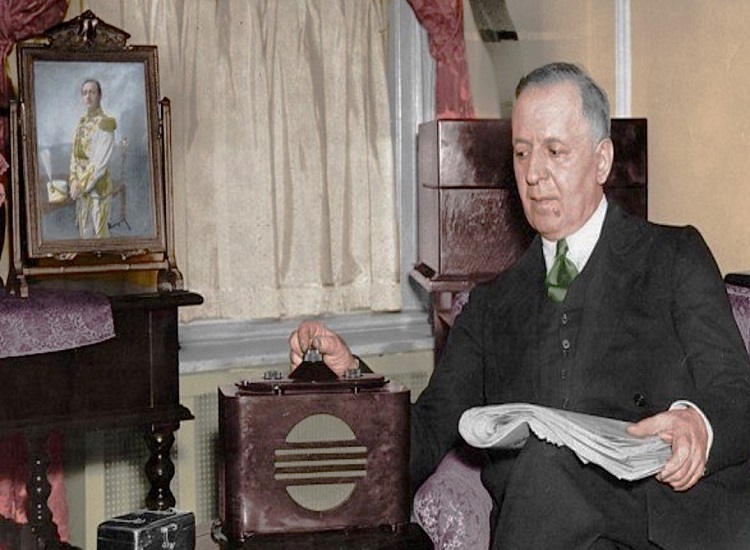
If we turn our eyes to Konica’s other profile, we will see that he has made an extraordinary contribution to the development of journalism and the publishing of periodicals in Albanian. Besides publishing the “encyclopedia of the Renaissance” – “Albania” – Konica has the merit of shaping and giving life to several other Albanian press organs, such as the supplement of the magazine “Albania,” titled “Little Albania,” “Trumpeta e Krujës” (The Trumpet of Kruja), “Dielli” (The Sun), “Shqiptari i Amerikës” (The Albanian of America), etc. Konica, winner of the laureate “The High Hat of the Learned Diplomat,” died in Washington on December 15, 1942, and was buried in Forest-Hills Cemetery in Boston.
This was the stern polemicist with clarity of thought unmatched in the Albanian world, the creator with an extraordinary intellectual baggage, but who, as Noli says; “every work he put his hand to, he never finished.” Nevertheless, this remains Konica, the colossus of Albanian letters, for as much as he contributed to them and for the valuable lessons he gave in the direction of writing and crafting the essay, a “new entry” in the course of Albanian creations. / Memorie.al