

By Shefqet Kërcelli
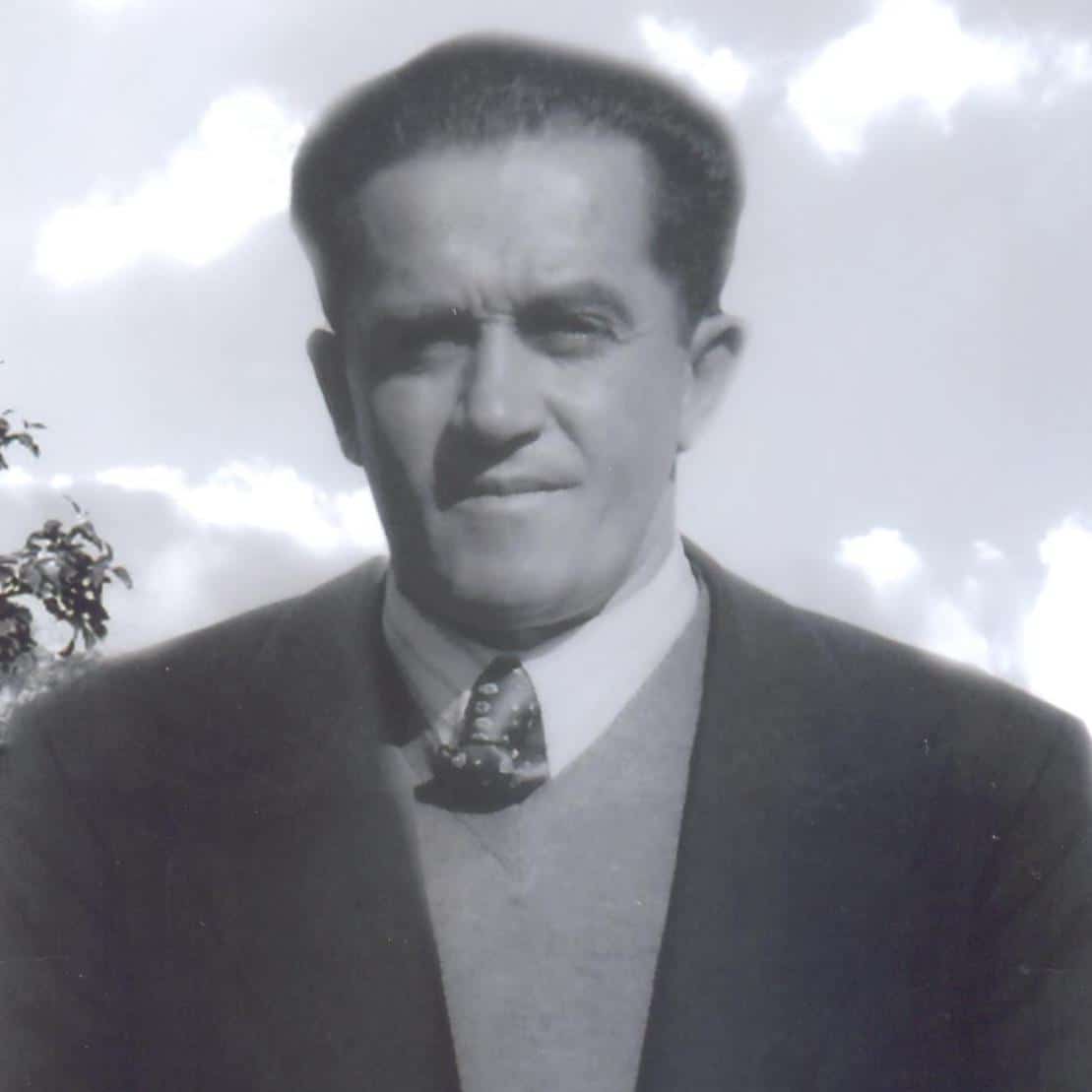
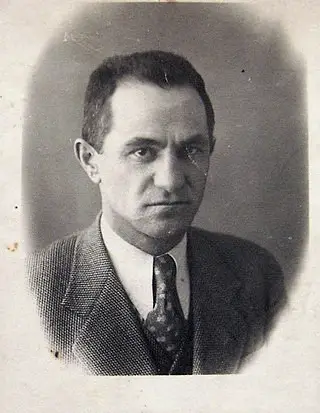
Memorie.al/ The intellectual Hasan Reçi is the only Albanian, and perhaps the only person in the world, to have been sentenced to death three times – a unique case in terms of worldview-political convictions. The first time, in September 1935, as a leader of the anti-Zogist uprising in Fier, a sentence which, due to popular pressure, was commuted to life imprisonment. The second time, he was sentenced to death by the Supreme Military Court in May 1942, after being caught red-handed in an attempt to carry out an action against an Italian military base near Kashar. This time, too, for reasons that will be explained below, the verdict was converted to imprisonment and internment on the Italian islands. The third time, he was sentenced to death by the Supreme Military Court of the communist regime in January 1948, on the charge of being an “enemy of the people and of the state.”
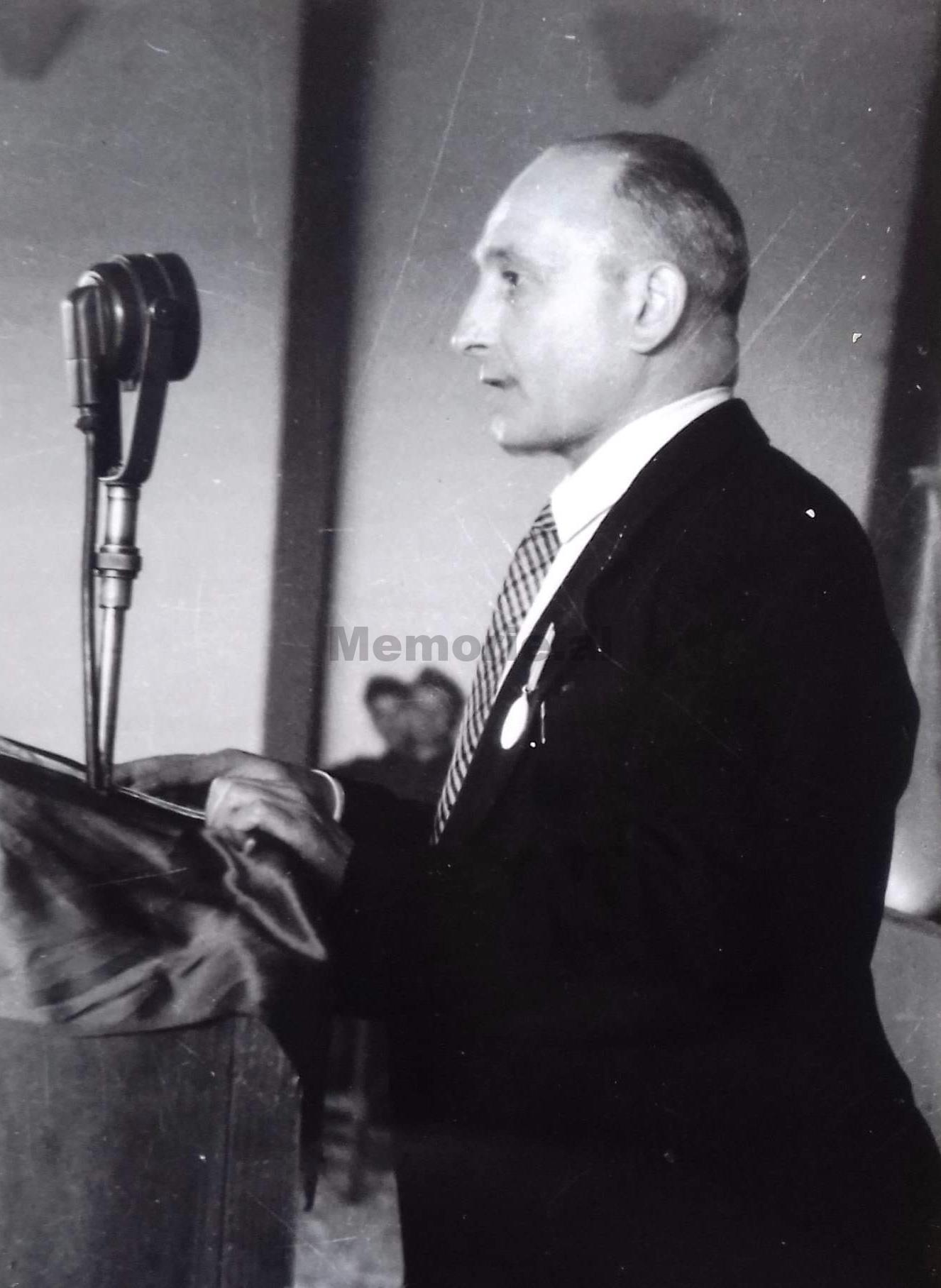
After Prosecutor Nevzat Haznedari requested his death penalty in his motion, the president of the court, Niko Çeta, asked the defendant, according to procedure, to speak his last words. Hasan calmly asked the court president: “I was sentenced to death under Zog’s regime as an anti-Zogist. During the Italian fascist occupation, I was sentenced to death as an anti-fascist. And today, under the Communist Party regime, I am being sentenced to death as an anti-communist. I ask you: What am I, then?”!…
President Niko Çeta was unable to give him any answer other than the stale phrase: “You are an enemy of the people”! But this time, as was said at the time, the third time was the real deal – the Slavo-communists do not forgive. Thus, Hasan Reçi was executed by firing squad, without receiving an answer to the question he had asked. Nearly 80 years have passed since then, and the question still remains unanswered. Through this historical dossier, we will try to give at least some answer to the question: Who was the Tirana intellectual Hasan Reçi and why was he shot by the communist regime?
Hasan Selim Reçi was born in Tirana on January 17, 1904, into a poor Tirana family that lived on its outskirts. His father, Selim, worked his entire life to secure food and schooling for his children. Someone from the elderly of the neighborhood says that Hasan left behind some writings about his family’s life—perhaps they are locked in the metal vaults of the Central State Archive. In any case, from the memories of his friends and colleagues, we have learned that after completing his schooling in Tirana in the early 1920s, Hasan attended the “Normale” of Elbasan, specifically a teacher-training course for Albanian primary schools.
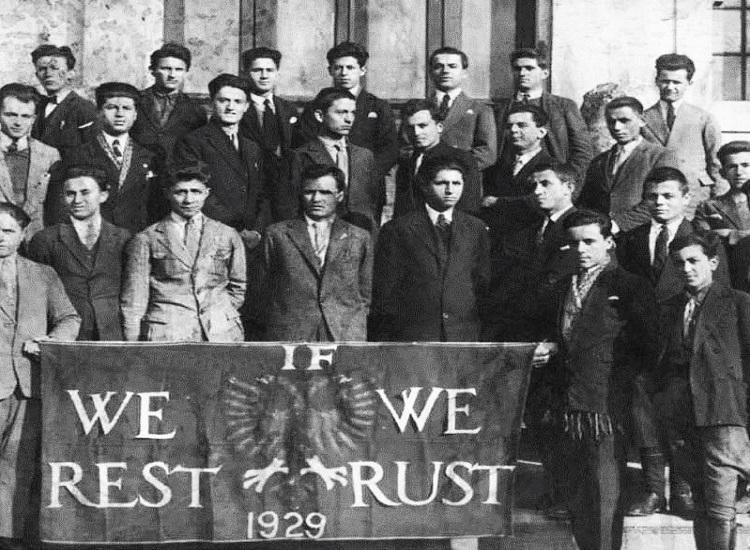
After working as a teacher for a short time, he interrupted that and attended the American Technical School of Harry Fultz, which opened its doors in 1922. At the age of 20, together with Reshat Këlliçi and other friends, he joined the society “Bashkimi” (The Union), founded by Avni Rustemi. After finishing the Fultz Technical School, Hasan was again appointed as a primary school teacher. In 1928, Hasan, with his friend Qemal Kadesha, took the first steps toward creating the trade union movement in Tirana. With their skill, commitment, and efforts, mostly outside working hours, the two Tirana contemporaries created two professional trade union associations: the “Teachers’ Association” and the “Tailors’ Association.”
Through these organizations, we emphasize the fact that Hasan Reçi and Qemal Kadesha are the founders and pioneers of the trade union movement in Albania. Meanwhile, Hasan did not give up on the problems of Albanian national education. One of Hasan’s close friends was Ramazan Jarani, also a teacher, who had graduated from “Robert College” in Istanbul (the pioneer of American schools in the Balkans and beyond), and had even served as vice-prefect of Durrës in the 1920s. Regardless of their political convictions, the two teachers agreed on the secular character that the Albanian school should have. In fact, to realize this agreement, it was decided between them that Mr. Jarani would undertake the publication of a pedagogical magazine titled “The Secular School” (*Shkolla laike*), while Mr. Reçi would direct its content.
In the 1930s, the communist plague had gripped Europe. Communist ideas also penetrated Albania and affected all strata of the population. As something new for the time, some wealthy intellectuals and representatives of the middle class fell prey to this plague and the poor part even more so. To judge anyone’s stance cool-headedly, we must place them in the time and circumstances they lived in, in the Albania of that era, and not with the howls and viewpoints of today, because that would lead us away from the truth. In the chaotic Albania of the 1930s, the protagonist of this dossier, Mr. Hasan Reçi, did not escape the influence of these revolutionary ideas. Thus, in 1931, Hasan contacted Hysni Lepenica and Skënder Muço, then members of the Committee of National Liberation, who had ties to Halim Xhelo, the head of the communist faction operating within the Geneva committee.
Also, Hasan Reçi led a communist cell in Tirana, composed mainly of young people who were students and former students of the American “Harry Fultz” School and who called themselves communists, such as: Xhevdet Doda, teacher; Mustafa Gjinishi, sub-employee; Mustafa Kaçaçi, sub-employee; Uan Filipi, nurse; Isuf Kambo, designer; etc. {How is it explained that these representatives of the Albanian left who knew English were all annihilated during the years 1941–1950???}. And the first proof of the future of the communist movement was given from its very first steps. In 1929, the Comintern, through the head of the Secretariat of the Communist Federation in the Balkans, Georgi Dimitrov, gave orders to establish an “Organizational Center” of three persons who would take on the burden of creating the Albanian Communist Party. Without prolonging this story, after several efforts, it was decided that the third member of this center, who had to be a native communist, was appointed as Hasan Reçi, and the Comintern’s approval was even obtained for this.
However, Hasan Reçi did not agree from the beginning with all the points of the communist movement’s program. What united Hasan with Ali Kelmendi was the same aspiration to liberate the country from backwardness and the poor strata from misery. The two pioneers of the communist movement in Albania had a great difference regarding the paths and methods for the triumph of the socialist revolution in Albania. First, while Ali Kelmendi equated socialism with the Dictatorship of the Proletariat, as implemented in the former Soviet Union, Hasan Reçi, on the contrary, conceived socialism as a democratic regime that would fight poverty not through the Dictatorship of the Proletariat, but through popular democracy. The second fundamental issue that divided Ali from Hasan was the path to be followed to realize the socialist ideal.
As early as 1932, within the Albanian leftist movement, both at home and abroad, two strategic-tactical programs were clearly outlined for implementation in Albania. These two lines were named the “Bolshevik” line and the “Liberationist” line. The first line had been adopted by the leaders of the “Communist Group of Albania” in the Soviet Union: Ali Kelmendi, Sejfulla Maleshova, Koço Tashko, Tajar Zavalani, Llazar Fundo, etc. According to this group, the Albanian Communist Party that would be formed in Albania should follow in the footsteps of the Bolshevik Party—that is, work to prepare the socialist revolution according to the example of the October Revolution, and with its victory, establish the dictatorship of the proletariat as in the Soviet Union.
This tactic started from the thesis that in Albania there existed a somewhat developed capitalist order and a working class capable of supporting the socialist revolution. Consequently, the CP of Albania should cooperate with all anti-capitalist and anti-imperialist leftist forces, on the condition that the CP of Albania would lead the Socialist Revolution, without making concessions to them. Meanwhile, the second platform, the “Liberationist” one, had been adopted by the leaders of the Committee of National Liberation {Halim Xhelo, Kostandin Boshnjaku, Omer Nishani, Lano Borshi, Riza Cerova}, etc.
Unlike the “Bolsheviks,” the “Liberationist” militants started from the thesis that Albania was a backward country, that it had not yet been freed from the chains of feudalism, that the capitalist order had not yet been fully established, that the working class was in its infancy, that Albania was a semi-colonial country, and that the main task of the leftist movement in Albania was the complete victory of independence, the progressive democratic revolution, the overthrow of the Zogist totalitarian regime, the elimination of feudal remnants, and even the realization of the national unification of the ethnic territories.
And which Albanian, with today’s mindset, would not embrace this program of an Albanian left?! And when?! In the turbulent years of 1930–1940! Let us carefully follow these developments of the communist movement in those years, to distinguish the “angel” from the “devil,” to see how this left that Hasan and his comrades aspired to suffered continuous blows for three-quarters of a century, culminating in the physical elimination of the pioneers of these ideas.
In fact, when we speak of the beginnings of social democracy in Albania, its founders are the aforementioned men of the “Liberationist” group. Mrs. Musine Kokalari, etc., in my opinion, mark the second generation of these ideals. To achieve their goal and program, the “Liberationists” sought an alliance with all anti-Zogist, anti-fascist, and progressive democratic forces, to jointly overthrow the Zogist regime and establish not a dictatorship of the proletariat, but a progressive democratic regime, within which the Communist Party would exercise its influence.
According to the “Liberationists,” the weight of the communists in the democratic regime would be determined by the popular vote. These ideas, programs, and positioning of the communist movement in Albania are strongly emphasized by the late Professor Doctor Kristo Frashëri in the monograph dedicated to the life and work of Hasan Reçi, published in 2005. Both currents of the Albanian leftist movement had been accepted by the Comintern as two possible and suitable paths for the conditions of backward Albania. In fact, the Comintern pressured these two currents to cooperate with each other. This is why Ali Kelmendi became closely linked with Hasan Reçi, also seeing his influence in Tirana as a native of Tirana. Because Hasan led a communist cell that also included Anastas Plasari, sub-employee; Kolë Berisha, journalist; and Pjetër Deda, translator.
The Zogist regime, seeing the influence of this cell, tracked it down as early as 1933. Despite the fact that their activities did not pose an immediate danger to the Zogist regime, the members of the cell, including Hasan, were arrested, but due to lack of evidence, they were released after a few months. In the report he sent to the Comintern in December 1936, Ali Kelmendi, among other things, proposed that Hasan Reçi be a member of the center, together with Selim Shpuza, Demir Godelli, Ali Kelmendi, and Ymer Dishnica. In August 1934, a conference was held in the city of Korçë, attended by two members of the Korçë center, together with Demir Godelli, Selim Shpuza, and Hasan Reçi.
At this meeting, it was decided to work on organizing the communist movement among centers and prefectures where there was currently no communist organization, such as in Shkodër and all of Northern Albania, as well as in Vlorë, Gjirokastër, and elsewhere, and also to prepare the ground for calling a constituent congress of the Communist Party. When they moved on to various points, Hasan Reçi announced that in Tirana there existed a secret nationalist organization, whose aim was to overthrow the Monarchy and replace it with a democratic republic—a proposal that was opposed by the other participants.
The First Death Sentence
Despite this opposition, Hasan Reçi strengthened his ties with the Korçë Group and mobilized for the anti-Zogist uprising. To organize the uprising, the Center of the “secret organization” had created three commissions, whose task was to deal with the preparation of the armed uprising in three different sectors: the civilian population, the army, and the gendarmerie. For mobilizing the civilian population – citizens and peasants – the Center of the “secret organization” had appointed two main coordinators: Kostë Çekrezi for the right-wing anti-Zogists and Hasan Reçi for the left-wing anti-Zogists. In implementation of this plan, Hasan Reçi, together with Tajar Zavalani, Demir Godelli, Riza Cerova, M. Gjinishi, Uan Filipi, M. Maçaci, Isuf Kambo, etc., engaged seriously in expanding the network of participants in the Fier uprising.
The leaders of the “Secret Organization” decided that the armed uprising should erupt in the autumn of 1935, after the Italian invasion of Abyssinia had begun. According to them, fascist Italy, engaged in the military campaign in East Africa, would not be able to intervene militarily in Albania under the Treaty of Tirana signed with the Zogist government in 1927. But events did not unfold as planned. On August 14, 1935, as soon as the first shots rang out in Fier and Skrapar, the uprising was crushed. In Fier, the revolt was suppressed that same day, while in Skrapar it continued for a few days, until its leader, Riza Cerova, was killed. The police carried out mass arrests. Not only were the participants in the armed revolt imprisoned, but also ordinary citizens and peasants.
Among them, the sympathizers and members of the leadership of the “Communist Group of Tirana” were also arrested. The Zogist police had prepared their list in advance. Thus, on the day after the failure of the uprising, August 15, 1935, among the hundreds of arrestees was Hasan Reçi, along with 92 leftist members. On August 16, 1935, Hasan Reçi was brutally tortured in interrogation until he had no strength to speak. He did not accept the accusation. The interrogators obtained no information from him about the other participants. The trial against the defendants took place from August 22 to September 17, 1935. It handed down death sentences to all those considered leaders of the “Secret Organization”: Ali Shefqet Shkupi, Ramiz Dibra, Nuredin bej Vlora, Ahmet Shehu, Bektash Cakrani, Neki Starova, Muhamet Këlcyra, Pilo Papa, Gegë Marka Gega, Mustafa Kaçaçi, and Jahja Baçe.
Similarly, the members of the communist group of Tirana – Hasan Reçi, Mustafa Gjinishi, Uan Filipi, and Kostë Kolumbi – were also sentenced to death. Among the court’s verdicts, the one that left the deepest impression, especially among the citizens of Tirana, was the death sentence of Hasan Reçi. Dozens of petitions signed by Tirana citizens flooded Zog’s Palace, requesting the annulment of the death sentence for Hasan Reçi. The Committee of National Liberation in Geneva also protested, and there were also protests from European leftist intellectual circles. In fact, one of the protests bore the signature of the famous French writer Henri Barbusse. Western diplomats in the League of Nations also reacted to these severe sentences.
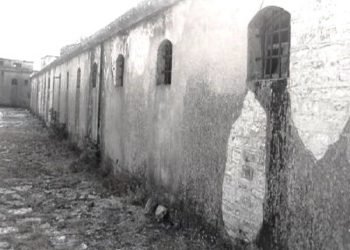
Under internal and external pressure, King Zog backed down and decreed, for all the leaders of the “Secret Organization,” the commutation of the death sentence to life imprisonment, with the exception of 11 gendarmes who had directly participated in the uprising and were executed by firing squad. Hasan Reçi was sent to the castle-prison of Gjirokastër, a high-security prison, where he remained for 5 years, until April 7, 1939, when, after the fascist invasion, he escaped from this prison to Yugoslavia. There he joined his close friend Mustafa Gjinishi, and later they met Myslym Peza and Haxhi Lleshi, with whom they also forged friendships. The four returned to Albania in 1940, where Myslym stayed in Pezë, Haxhi Lleshi in Dibër, while Hasan Reçi and Mustafa Gjinishi re-established themselves in Tirana. We emphasize that despite all these events, Hasan did not change the convictions he had shaped over the previous decade. / Memorie.al