

By Auron Tare
Part One
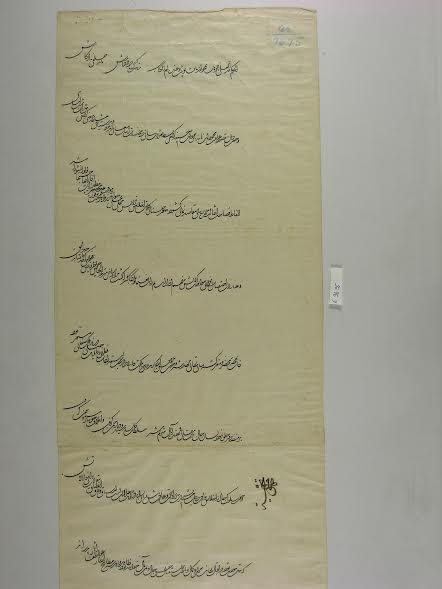
Memorie.al / A few years ago, from the Topkapi Palace Archive in Istanbul, the response finally came that document E 9695, which I had long sought, had been approved for publication. First mentioned by the Turkish scholar Tahsin Öz in writing on the period of Sultan Mehmed II, unfortunately, this Persian document had never been translated. Dr. Öz mentions that in the document he had been able to distinguish the word *Akhisar* but without providing any further explanation. It was this clue that led us to believe that this document might be related to Skanderbeg’s Kruja. The document that came from Istanbul is written in Old Persian and, to this day, has not been translated by any scholar in the field.
Interesting is the fact that, for various reasons, the document has escaped the attention of historians of the period of Sultan Mehmed II, as well as of his relations with Venice, particularly regarding the Albanian territories.
In the long journey of translating this document, a number of orientalists from some of the best universities in America have been involved. Starting with my old friend, Viktor Freedman, from the Institute of Oriental Studies at the University of Chicago, who recommended several scholars in the field, all the way to some Iranian professors at the University of California. Unfortunately, they all gave up, defeated by the difficult style of this unusual document.
The request for help from the Iranian Embassy in Tirana bore no fruit, and perhaps the plea for the translation of a document from medieval Persian may have been lost in the channels of Iranian bureaucracy. After 8 months of efforts, by chance, my request for help was answered by a name totally unknown to me, but one of the most important global names in Oriental studies, Prof. Wheeler Thackston from Harvard University, known particularly for his monumental translation works in Farsi, Classical Arabic, as well as the memoirs of the Mughal Emperors, known as the Babur Name and the Jahangir Name.
His deep knowledge of Levantine Arabic, Ottoman Turkish, Uzbek, and Kurdish has given him great fame in the field of Orientalism. And yet, even Prof. Thackston initially found the translation of this rare document difficult. For several weeks in a row, we communicated mostly at night until morning, as the professor, apparently, sat down to work in the late afternoon, which was nearly morning in Tirana.
– “Auron – the Professor wrote – the calligraphy of this document, called Nasta’liq, is a form of medieval Persian script, but this document is that calligraphy which we call Ta’liq, a devilish form of Persian writing. Repeatedly, the old scribes would place dots which you should not read and leave out those dots which you should read.”
In fact, the identification of this document by Prof. Wheeler as a document written in the Persian calligraphy Ta’liq was an important step in determining its authenticity as a document produced by the Sultan’s royal scribes. This medieval Persian calligraphy was used mainly in the official correspondence of the Sublime Porte in the early days of the Ottoman state.
Document E 9695 consists of 22 verses written in the most elegant manner possible. At the top, it must have had the Sultan’s Tughra (seal), which is missing, as well as the name of the Ruler to whom this document must have been addressed. There are several different ideas as to which figure this document might have been addressed to. At the beginning of the work on translating this document, Prof. Thackston distinguished that it concerned the conquest of a fortress called Akhisar.
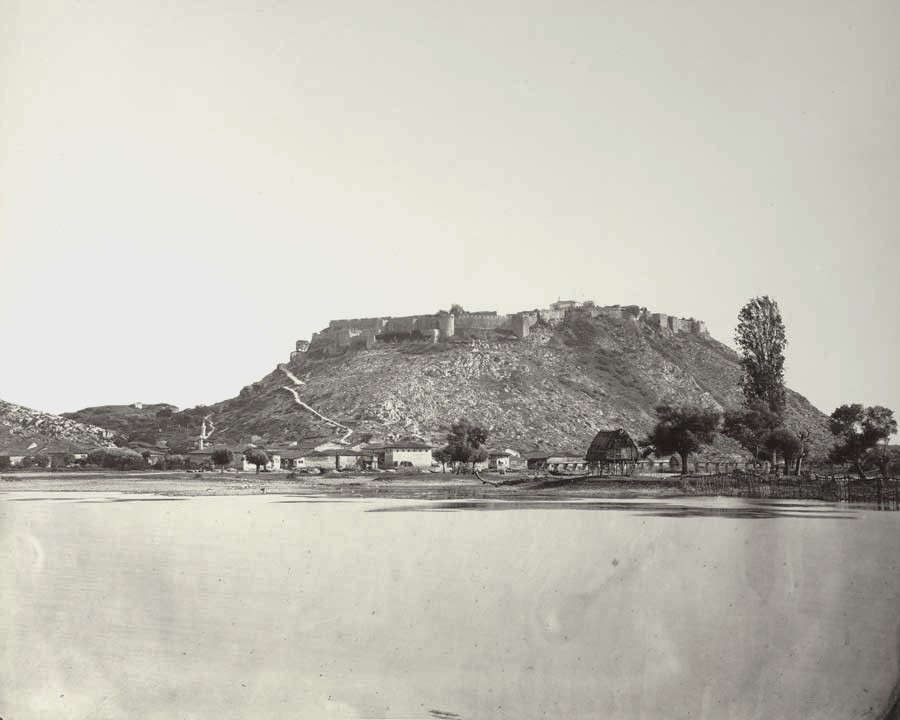
“At first glance, I think it is a way of high Persian rhetoric to say almost nothing except the fact that a mighty Fortress has been conquered. I distinguish the word Aqcha Hisar and Mevlana Murad Celebi,” – the Professor wrote. In fact, the first data from Prof. Thackston were very interesting, since Akhisar, or the White Castle, was the name by which the Ottomans called the mighty fortress of Kruja, which, with its resistance, had left deep traces in the Sultan’s Court.
Meanwhile, Mevlana Murad Celebi is a highly intriguing name, as we might have an important historical clue regarding the participation of a descendant of the family of Jalal ad-Din Rumi in the siege of Kruja. The title Mevlana, in general, was held by the descendants of Rumi. From consulting the sources of the time, we believe that our document should refer to Karaman Mehmed Pasha, a descendant of Jalal ad-Din Rumi, who rose to the rank of Grand Vizier during the period of Mehmed II.
According to Dr. Mehmet Tutuncu, a specialist in Old Ottoman Turkish, the document is dated according to the Arabic system, 4 Rebiul Sani (July 5), but without giving a specific year. However, from the content of the document (the fall of Kruja), we can conclude that it was written in Hijri 883, or in the Gregorian calendar, 1478. The Persian document can be said to bear the date of July 5, 1478.
Below, we are providing an approximate translation with the transcription made by Prof. Thackston Wheeler of Harvard University.
The content of the document begins with the first 10 lines, which are a courtly language filled with words that essentially say nothing.
Excerpt from the document
“Let it be made known that among the fortunate events with the arrival of the Grand Vizier is the coming of the news of the conquest of the Fortress of Kruja, which was besieged by one of the servants of the Court. Although a mighty fortress, with high Towers that the imagination cannot conceive, from which the streams of the celestial seas drink, its foundations are not compared to the Pyramids, and the height of the walls is equal to the height of the peak of Saturn.”
Verses 15/16:
“Although this Fortress, as well as the others around it, is merely branches of the Empire, its conquest will bring peace to the other people and will stop the flourishing of the enemies of the faith. We are determined with all our attention to achieving this goal.”
Verse 18:
“We have hoped that with the continuation of these great victories, this conquest will be the source of our other achievements and goals.”
Verses 19-21:
“At this time, for the conclusion of agreements and pacts for laying the foundations of love and mutual respect. His Excellency, the Grand Vizier, Mevlana Murad Celebi, an important servant of the Court, has been sent to bring you details from up close.”
Verse 22:
“With the hope that this will be the page of history forever. Since the reason for this letter was to send you news, we hope we have not been too lengthy.”
4 Rabi II (year missing)
Signed
In Iskanderie (Shkodra), conquered by the conqueror of Constantinople.
According to Prof. Tutuncu, this document can be classified as a FATHNAME – otherwise known as a Document of Conquest (an official declaration of a victory). These rare documents are quite important as they give descriptions, albeit brief, of historical battles.
Historical Analysis
“We have done nothing against the enemies of the Cross” – Pope Pius. When Venice declared War on the Ottoman Empire in July of 1463, perhaps the Signoria had not foreseen that the War, which would last for nearly 16 years, would bring them the irreversible loss of Albania and the Peloponnese.
The loss of a series of strategic fortresses along the coast would bring great consequences for Eastern trade, while also reducing Venetian prestige in the region. Meanwhile, the strategic importance of Albania in the Ottoman expansion westward explains why Mehmed II, one of the most renowned Sultans of the Empire, personally participated in the Albanian campaign. In this historical context, the importance of document E9695 should also be viewed.
From the sources of the time, it seems that Mehmed II, although he had provoked some incursions into the Peloponnese area against Venetian possessions, sought peace with the Venetians. Most likely, he did not want a second front of conflict with the Venetians, as for the moment he was engaged in the hinterlands of his domains, where Uzun Hasan, Sultan of the White Sheep Turkomans, had begun a series of provocations.
Uzun Hasan, incited by the Signoria, was provoking Mehmed into a frontal clash, but it seems that the Signoria, to be sure, was plotting the assassination of Mehmed through secret assassins. In this context, we can view the embassy sent by Mehmed II to the Doge of Venice, Cristofero Mauro, where he seeks peace from the Signoria and the maintenance of territories by each party, with the exception of the return of the island of Lesbos and “the return of Kruja, held by you since Skanderbeg’s death, into our hands.”
But with the severe defeat of Uzun Hasan at Konya, Mehmed II now had his hands free for his Balkan campaign. Mehmed, who in his father’s campaign against Kruja had actively participated and knew the Arbëresh territory best, was well-informed. One of his most successful generals, Gedik Ahmet Pasha, came from these territories. Distinguished in several decisive campaigns of Mehmed, Gedik Pasha had been against marching towards Shkodra. Isolated for a short time in the Imperial Prison, he was freed through the mediation of the Grand Vizier and was appointed Pasha of Vlora, actively participating in the siege of Shkodra.
The epic of Kruja and Shkodra comes down to us, among other things, through the work of the friar Barleti, who in De Scodrensi Obsidione describes with vivid colors and full of exaggerations the clashes between the defenders of the fortresses and the Ottoman army. According to Barleti, Mehmed, after taking possession of the Fortress of Kruja and massacring all its defenders, headed North towards Shkodra, where the Ottoman troops had already positioned themselves around the Buna River, led by the Albanian Daut Pasha, Beylerbey of Rumelia, and Evrenos Oglu Ahmed Pasha, Sanjakbey of Albania.
Our document supports Barleti’s chronicle regarding the time of the fall of Kruja. Kruja fell in 1478, a fact also confirmed by Venetian sources. But the document we present today explicitly states that Iskanderie (Shkodra) was conquered by Mehmed II, a fact not confirmed by the sources of the time, as it is known that Shkodra fell several months after Mehmed had left its siege. Meanwhile, the authenticity of this rare document makes us think that Shkodra theoretically fell earlier than is known to this day.
In Bombaci’s publication “La collezione di documenti turchi dell’Archivio di Stato di Venezia”, we learn that the Signoria, upon receiving the news that the Ottoman troops were marching towards Arbëria, sent the Proveditor of the Fleet, Tomaso Malpiero, to the Albanian coasts with the decision to accept the Sultan’s terms for Peace. Initially, the Sultan had demanded the surrender of Kruja without a fight. For this, he had sent a Jew as a negotiator (most likely his personal physician Maestro Jakopin) to Kruja, which was besieged by Ahmed Bey, Sanjak Bey of Albania.
The Ottoman Ambassador, who from Kruja traveled with a galley of Admiral Loreto towards Venice, died suddenly, leaving the negotiations in the middle, but which, due to their importance, could not be delayed further. For this reason, the Signoria sent Ambassador Malpiero, who, traveling via the Via Egnatia, arrived at the Sultan’s camp, located somewhere near Kusendil. In this meeting, he learns that Sultan Mehmed now demands not only the surrender of Kruja but also of Shkodra, Drisht, and Lezhë.
The Venetian Admiral, feeling powerless to negotiate with the Sultan over the new demands, returns to the Fleet positioned in the Adriatic to wait. After Mehmed takes Kruja and heads towards Shkodra, Malpiero returns to the Albanian coasts and arrives in Shkodra immediately via the Buna River to reach the Sultan’s Camp only a few days before the troops of the light cavalry of Mihal Oglu Ali Bey and Davud Pasha the Albanian arrived in the nearby villages. / Memorie.al