Part Two
Memorie.al/ The Operational Staff of “Kosmet,” ordered by the General Staff of the National Liberation Army of Yugoslavia, with the aim of breaking the nucleus of Albanian resistance in Kosovo, during March–April 1945, forcibly mobilizes Albanians to send them to the so-called second “Adriatic” front in the northwest of Yugoslavia. The screenwriters of the Tivar Massacre had chosen the route for sending the Albanian conscripts to the northwestern parts of Yugoslavia: Prizren – Kukës – Shkodër – Tivar – Dubrovnik – Rijeka. For this front, they mobilized Albanians from Vushtrria, Besiana (formerly Podujeva), Prishtina, Kaçanik, Ferizaj, Gjilan, Lipjan, Shtime, Theranda, Burimi, Peja, Gjakova, Rahovec, Sharri, and Prizren.
Continued from the previous issue
The journey (Prizren – Kukës – Shkodër – Tivar), the ease with which the Yugoslav forces passed through Albanian territory undisturbed…!
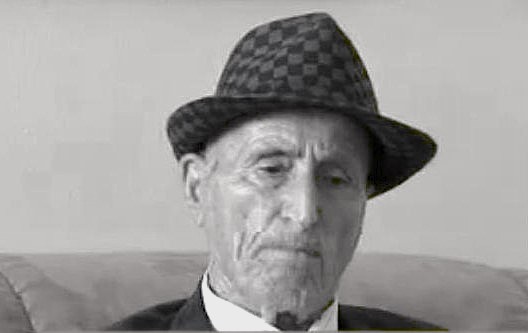
The Testimony of Azem Hajdini, survivor of the Tivar Massacre
A shocking testimony would be recalled by Azem Hajdini many years after the Tivar Massacre, from which he, by luck, survived. Here is how Hajdini remembers that march that would lead thousands of Albanians to their deaths: “Exhausted as we were, we continued the road to Pukë, where we arrived that day around 19:00, and they placed us in a valley surrounded by forests, while rain constantly poured down on us in torrents. Under these conditions, we spent the night on the outskirts of Pukë.
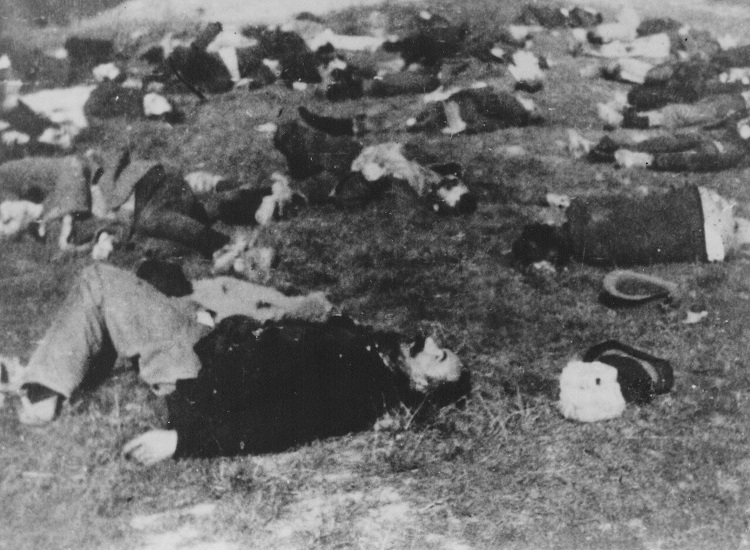
The next morning, many people could not continue the journey, and over a dozen were found dead at dawn. Thus, our ranks were constantly diminishing, because a number of our comrades could not endure the tortures, the poisoning, the hunger, the poor clothing, and especially the fear of physical liquidation. As the number of the sick increased, simultaneously the number of the dead also grew, because we, exhausted as we were, were no longer able to carry them in our arms, as we had done the day before.
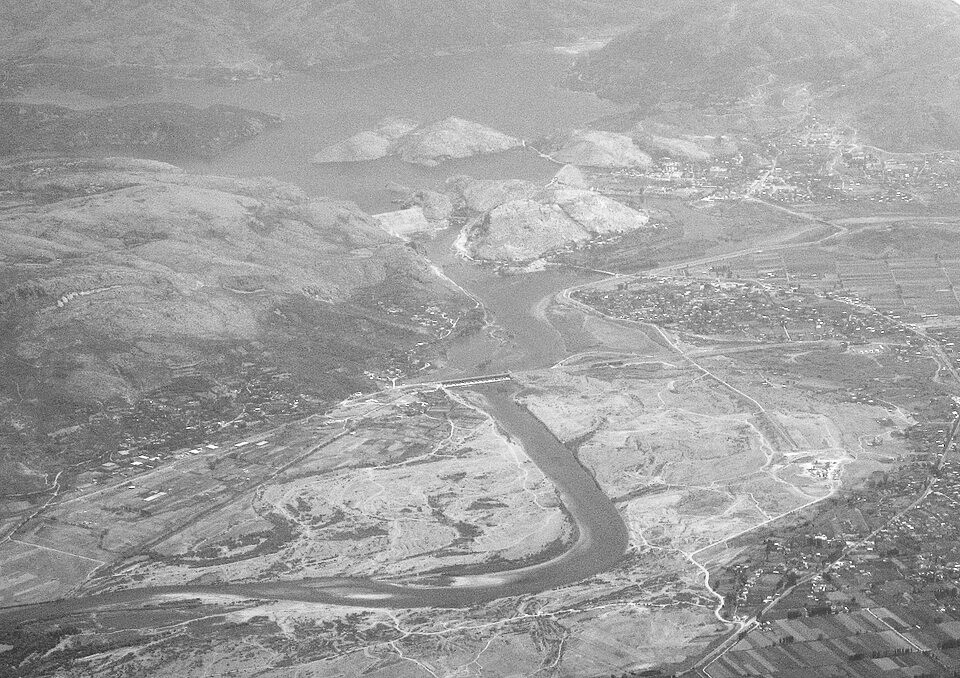
From Pukë, under circumstances similar to those so far, we continued on our way, and around 20:00 we arrived at the place called “Zog’s Bridge,” at a deep canyon through which very little water flowed. Since the bridge had been destroyed by the Italian fascists, they tried to organize our transport to the other side of the canyon via a beam and a sort of makeshift wagon. They deliberately loaded more than 50 people onto that wagon, and naturally the improvised cable-car snapped, so they all fell into that deep abyss.
Some of them died, while others were seriously or lightly injured. We immediately tried to help them, but the escorts prevented us, telling us that the army would take care of them, and that we had to continue crossing via that improvised beam. However, knowing the fate that awaited us, we refused to get onto that makeshift wagon, and after much persuasion and resistance, they were forced to send us on foot through the canyon, to reach the other side. But as soon as we crossed the canyon, they again ordered us to go back down and spend the night under the open sky.
Even though we were exhausted and drenched by the rain, we spent the whole night trying to help the comrades who had survived and were injured from the fall off the beam. We also took care of some comrades whom we had carried all day on makeshift stretchers, in our arms, or on our shoulders. Sometime around midnight, they communicated the order that we had to identify all the sick and carry them about 50 meters away, supposedly to send them to some hospital in Albania for treatment.
However, guided by the bitter experience we had gained throughout the entire journey, we categorically refused this order from the headquarters. In the morning, we noticed that a number of the comrades we had carried, and most of those who had suffered injuries after the fall from the beam, had died, and we were unable to carry even some of those who were languishing from illness. As soon as we left that place, they gathered them onto carts and took them in an unknown direction. The rest of us continued on our way and arrived at a place near Shkodër, where we had to cross the so-called “Vau i Spasës” (The Spasa Ford).
Here too, since the bridge was destroyed, our transport began with an improvised boat. Having learned from experience with such improvisations, we refused to board that boat without the presence of an officer and at least two or three soldiers who were escorting us. The headquarters, which still hadn’t crossed the “Vau i Spasës,” accepted the requests we presented, so the crossing was made without any major difficulty. However, even here on the other side, several comrades who were seriously ill remained, and we were never informed of their fate. We arrived in Shkodër around 16:00 on March 30, 1945.
On both sides of the roads, thousands of people awaited us, most of who, while greeting us, were crying and whispering: “Where are you going?!” “Surely to some place from which there is no return”?! Many of them offered us bread and especially water, and here for the first time we quenched our thirst. This did not last long, because very quickly they placed us in barracks on a fairly high hill, the name of which I do not remember, but I know that there was no drinking water there.
But, surprisingly, here we felt a little safer. Unfortunately, however, they did not let us stay there long. Sometime after midnight, we set off in the direction of Ulcinj, leaving the sick behind at the mercy of the Serbian and Montenegrin soldiers. On the way, not far from Shkodër, our column, around 03:00 after midnight, encountered an explosive laid along the roadside, over a length of 10 to 20 meters. When the explosive was detonated, a great panic broke out among us, but immediately followed the order not to move from our places.
However, out of fear, many of us rolled off to both sides of the road, and then the military opened fire, during which many of our comrades were killed and wounded, and among them I recognized Tafil Shabani from Kozhica. After about 30 minutes, they informed us that our lives were no longer in danger, saying that: “what happened is the work of Albanian reactionaries or saboteurs from Albania, who were taking revenge on the Kosovar Albanians for the massacres and tortures that Xhafer Deva and the so-called Kosovar regiment allegedly committed.”
All of this was certainly done to hide their own intentions and to incite fratricidal hatred among Albanians. After many threats to silence this situation, we were forced to set off and continue on our way. Apart from three wounded men that they allowed us to carry, the other sick and wounded were not allowed to be taken with us, but were loaded onto various transport vehicles and sent in the direction of Tivar, in order not to attract attention.
We carried the wounded comrades on our shoulders until we reached a village, the name of which I do not remember, but it had stone roofs and very little arable land. There, the villagers gave us some cart frames made of twigs, to carry the wounded and the sick. From these tortures and reprisals inflicted on us along the way, those at the end of the column certainly had it harder.
They also had the opportunity to count the victims of the road more accurately, but certainly in these circumstances few people thought of doing so, because at any moment there was the possibility that they themselves would become victims of the enraged escorts. The instinct of self-preservation and the danger that at any moment one could be liquidated left no room for thinking about anything else but how to save one’s own life.
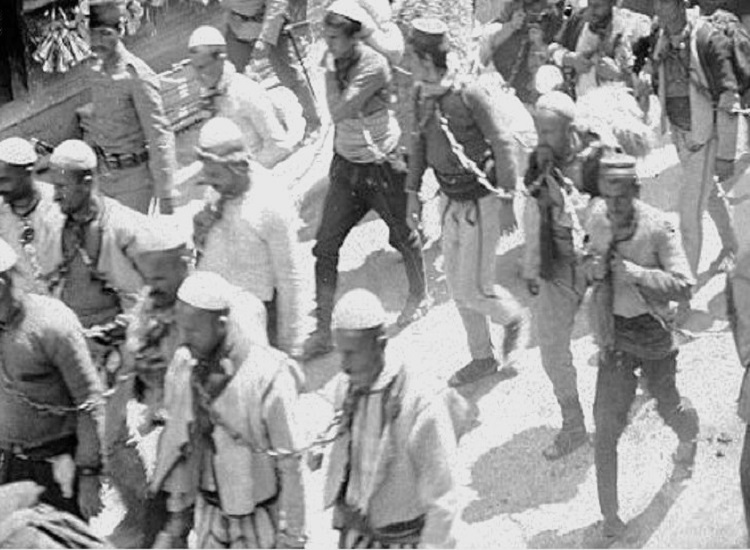
This psychological state was made even more terrifying by the encounter along the road with the corpses that fell at the head or from the middle of the column. On this part of the road, insults and offenses such as: “viste zarobljeni, vodiqemo vas u llogor na prinudni rad” (“you prisoners, we are taking you to a forced labor camp”), “shoptarsku vam majku” (“you Albanian/Shiptar mother”), “osvetiqese crnogorska omladina” (“Montenegrin youth taking revenge”), etc., were the most frequent “greetings” directed at us by the crowd and our escorts, constantly provoking us and increasing the reprisals against us.
Even if anyone was ready to react out of revolt, knowing that they might pay with their head, they did not do so, because they knew that besides themselves, many others would also suffer. The Serbian and Montenegrin soldiers, after all, were just waiting for the slightest reaction from us to open fire. Thus tired and exhausted from the road, from hunger and thirst, and even more from insecurity, in a state of high psychological tension, we traversed the entire territory of Albania.
Upon entering the border of Yugoslavia, near Ulcinj, they ordered the column to stop for a rest, supposedly, while all the sick and wounded that were with us were to be separated in a designated place, supposedly to avoid any possible epidemic. They also said that they would be transported to some hospital in Montenegro for treatment, but by all indications they met the same fate as our previous comrades, while we continued on the road to Tivar.
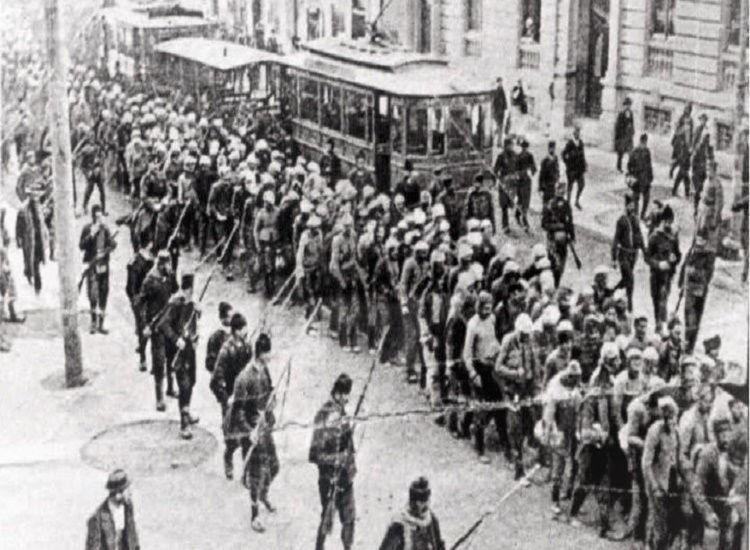
Upon arriving in Tivar, sometime between 12:00 and 13:00, in every corner of the city one could sense a great mobilization of the army and the population, who, with weapons in hand aimed at us, looked at us with great contempt. We clearly sensed the conspiracy and the trap that had been set for us. Our virgin souls found themselves in the crosshairs of rifles and machine guns placed on every corner of the streets, windows and terraces of houses, and among the rocks on the surrounding hills.
One got the impression that from this blockade, not even a bird could fly out alive. In the center of the new Tivar, they ordered us to stop and sit down in the middle of the street, supposedly to rest. Nearby there was a fountain from which water flowed continuously. Since we were very thirsty, we agreed that three of our comrades, led by Sylë Gllobari, would stand up and appeal to an officer who was near the fountain, to allow us to drink water.
But, as soon as the appeal was presented, we immediately sensed that the officer became enraged and started shrieking and threatening us with offensive words: “shiptarsku vam majku” (“you Albanian/Shiptar mother”), etc. At the moment when Syla and his companions tried to reason the request, the officer immediately ordered the soldiers to rush at him and open fire with firearms. Besides the killing of these three, some of our comrades and one Montenegrin soldier were wounded by stray bullets.
After this tragedy, we remained petrified in the middle of the road, without daring to move or speak, and we waited in fear for what would happen to us, since many gun barrels and bayonets were pointed at us. For a moment, the army withdrew about 50 meters away from us and took up safer positions – some behind rocks, some behind houses, and some even inside them. Ten or fifteen minutes later, three high-ranking officers arrived from the local command, along with many other officers and soldiers.
We welcomed their arrival with a faint glimmer of hope that among them there would be some revolutionary or communist who would put an end to these tortures. However, the hope was in vain, because one of them took a position at a height and began to attack and threaten us with the words: “shiptarsku vam majku” (“you Albanian/Shiptar mother”), “sve qemo vas ubiti” (“we will kill you all”), “samo minuti su u pitanju” (“only minutes are in question”), etc.
It was not long before, through a loudspeaker, we were told that supposedly one of us had attempted to snatch the revolver from the wounded Montenegrin soldier, and that, together with the organized request for water, served as a pretext to label it as an attempted uprising, for which they threatened us with drastic retaliatory measures. / Memorie.al
Prepared by Kreshnik MERSINLLARI