Memorie.al / Who didn’t become a CIA agent, joined the KGB, the East German Stasi, or other secret services. It was confirmed in 2014 by the German magazine Der Spiegel. Some declassified documents confirm this truth: the “father” of post-war Germany and a united Europe – the Christian Democratic leader Konrad Adenauer – was aware of the recruitment of Nazis by post-war German and American secret services. As Lenin often said, “cynicism is not in the words that describe reality, but in reality itself.”
In the spring of 1945, in Europe, the gods had recently crumbled. Those who had aspired to take their place – Hitler and Mussolini at the forefront – were preparing to meet the same end. Berlin was burning under the blows of the Red Army, and Milan was “capitulating” to the Allies and partisans. And while Germany was reckoning with the ordeal of defeat, the rest of the world was reckoning with the savagery of the Holocaust.
The footage from war reports was unmistakable: people like cattle, locked in extermination camps. Cities covered by tons of bombs. Entire nations on their knees paid the price of bloody ideologies. And in those early months of 1945, many Nazi hierarchs tried to escape, going underground and making efforts to flee.
The Exodus
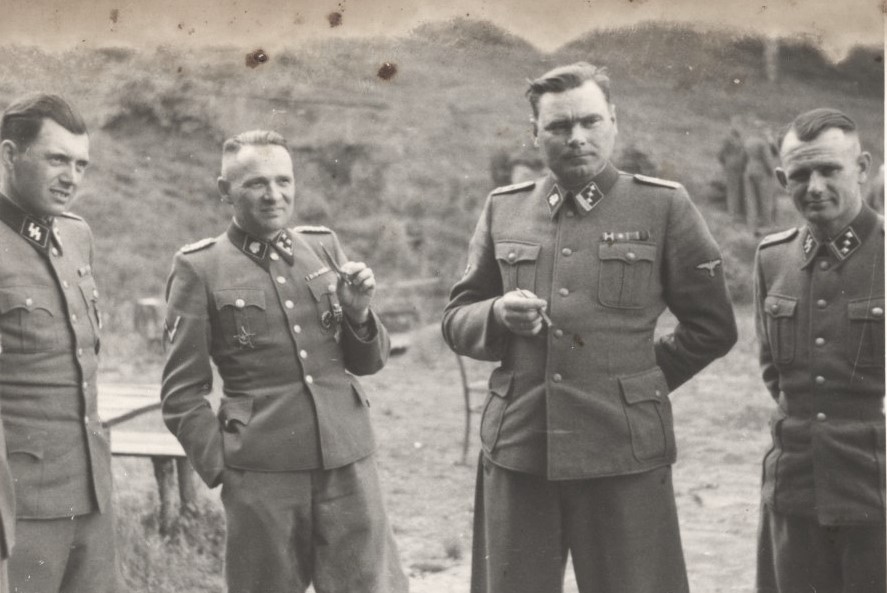
From Central Europe and from Croatia, hundreds of thousands of refugees descended, as if in a biblical exodus, towards Italy and Spain – strategic routes for escape. Many Germans with blood on their hands joined them: at least 50 war criminals and more than 300 military cadres of the Reich escaped. Their names are known: Ante Pavelić, the head of the Croatian Ustashas; Erich Priebke, the Butcher of the Ardeatine; Josef Mengele, the “Doctor of Death”; Adolf Eichmann, the organizer of the “Final Solution”; Klaus Barbie, the Butcher of Lyon; and many others.
All of them began a new life – some in the Middle East, some in Australia, and even some in Europe or the USA as collaborators of the CIA, the KGB, or the Stasi. How was that possible? The archives opened in recent years have made it possible to shed light on this.
Operation “The Truth”
But the answer is not unambiguous. And it is good, before delving into this matter, to clarify some of the biggest misconceptions still circulating on this topic: No top Nazi leader in ’45 left aboard improbable submarines across the Atlantic. Even less so Hitler. Chests full of gold stolen from Jews never reached the beaches of South America, nor were secret settlements built in the Andes.
Even the famous “Odessa Plan” – the supposed operation to facilitate the escape of criminals in anticipation of the rebirth of a neo-Nazi state – should be treated with caution. In fact, no such thing existed. On the contrary, based on reconstructions, it was a network of escapes, made possible by the turning of a blind eye by state officials and the Church.
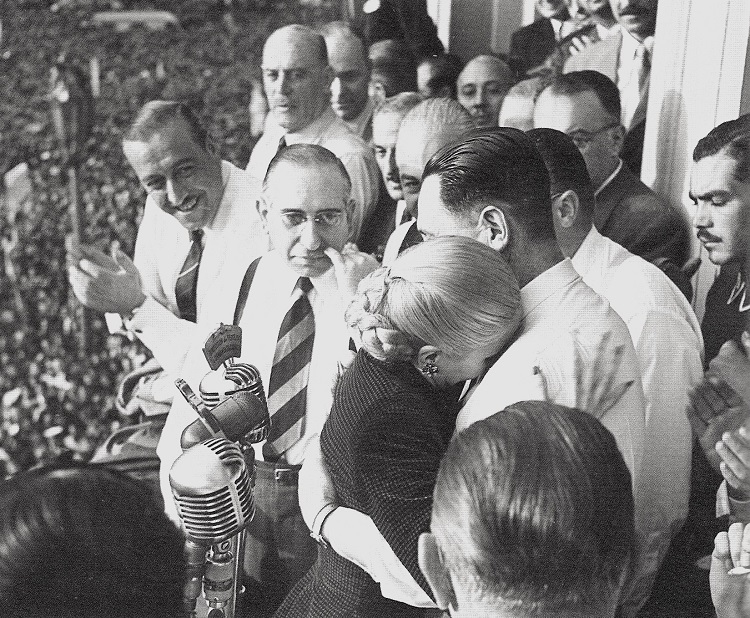
Many of them acted out of fear of the so-called “red danger,” the new communist enemy. Others acted out of electoral affinities with the Nazi-Fascists, established during the 1930s. The very same affinities that made them willing to welcome the Germans and reject the Jews. The “champion of hospitality” was Juan Perón of Argentina, who accepted up to 5,000 Nazis. He was followed by other heads of state in South America: Brazil hosted nearly 2,000. Chile a little over 500, followed by Uruguay and Paraguay. And those who did not cross the Atlantic went to South Africa, the Middle East, and Australia.
The Network
American secret services called it the “Rat Line,” the escape system through European routes that Nazis and Fascists traveled to save themselves. The technique was this: in the weeks of the Reich’s fall, whoever could went underground. Then, over time, they made contact with collaborators, through whom they reached safe bases, often with the support of monasteries, from Austria to Italy. Meanwhile, the fugitive leaders obtained a new identity and, with the support of foreign intelligence services, immigrated to countries with right-wing and anti-communist regimes.
The traffic was controlled by many people: state officials, Church figures, and the Red Cross. The most active was a Croatian priest, Father Krunoslav Draganović, who, since 1945, was employed at the Institute of the Croatian College of St. Jerome of the Illyrians in Rome. His activity was known to the Americans, and the escape routes he guaranteed were safe and efficient. “The flow peaked in the middle of 1948 and 1949, and involved about fifty military personnel, plus a large number of high-ranking Reich cadres, as well as thousands of French, Belgian, Croatian, Slovenian, Ukrainian, and Hungarian collaborators, as well as the Fascists of Salò,” explains Matteo Sanfilippo, professor of modern history at the University of Tuscia.
All of this happened in a chaotic environment. “Italy, exhausted by the war and in no condition to face the new emergency, found itself after the war with about 12 million refugees, seeking a home and an identity.” In June 1945, in Brennero, for example, local and state governments, together with international associations and organizations, sought solutions. Identification camps were opened, in places that had previously been Nazi-Fascist concentration camps. Many refugees remained there for years, waiting for a secure identity.
“Many of them were suspected of being fugitive Nazis,” says the historian, “or spies for communist regimes, considered potentially dangerous, but also parasites. To address the situation, the International Red Cross and the Papal Commission for Aid intervened. The latter dealt with the spiritual support of Catholics, while the Red Cross dealt with the material support of all refugees, which included a generalized lack of documents.” The problem, however, was whether aid was given to everyone indiscriminately – criminals or not.
Hiding
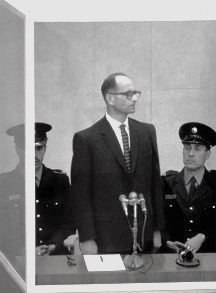
Thus it happened that one of the main perpetrators of the Holocaust, Adolf Eichmann, dressed in mountain clothes and a Tyrolean hat on his head, managed to cross the border at Brenner with the help of border “smugglers.” They handed him over to the pastor of Sterzing. Here, with the approval of the vicar general of the Diocese of Bressanone (a pro-German who had never quite digested the annexation of South Tyrol by Italy), he was given a new name. His shelter was later a Franciscan monastery in the province of Bolzano, until, in Merano, he secured fake documents and, in Genoa, a landing permit – a “free disembarkation permit.”
Josef Mengele, the sadistic doctor of Auschwitz who ended his days in South America without ever answering for the severe tortures inflicted on women and children did not fare much better. His escape methods were similar to those of Adolf Eichmann: after a few years in Bavaria, he secured, through means never clarified, fake documents under the name Helmut Gregor, born in the town of Termeno (Bolzano), with profession as a mechanic.
Erich Priebke, the executioner of the Fosse Ardeatine, was provided with new identification documents, becoming Otto Pape, a “Latvian hotel manager,” with dual residence in Rome and Bolzano. He spent nearly half a century in San Carlos de Bariloche (Argentina) with his wife and returned to Italy several times before being arrested. The escape system for him and others was always the same: finding “friendly” figures that possessed fake passports, and then fleeing with them.
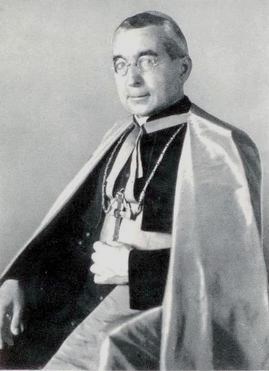
Recently declassified documents have made it possible to reconstruct the typologies and even the prices of passports: the Nazis paid up to 1,000 Austrian schillings to get away as quickly as possible, but there were also those who obtained them for free. The archives have also made it possible to understand who covered for the war criminals: besides the aforementioned Draganović and the vicar general of the Diocese of Bressanone, Alois Pompanin, the Austrian bishop Alois Hudal, spiritual leader of the German community in Italy, was also active. He collaborated with the Argentine bishop, Agustín Barrere.
But was the head of the Catholic Church, Pius XII, aware? The issue has been debated: “In fact, beyond individual priests, who did not work for the Vatican, but for other associations and committees of the Catholic Church, there is no evidence of a Vatican strategy to save high-ranking Nazi officials,” replies Sanfilippo. “In general, it was German priests who helped the escape of the Nazis. Networks of pre-existing personal relationships and feelings of political affinity were at play: Let us not forget that many priests had supported Fascism and Nazism.”
The Holy See would later spend itself to secure a means of escape for displaced refugees – not for Nazis, but for refugees. The Red Cross did the same. This is the dominant view, though not everyone shares it.
Winners and Losers
Meanwhile, everyone agrees that none of the expertise of the Nazis in the field of torture and psychological pressure was ever wasted. The men of the Gestapo, immediately after the war, were secretly recruited by many states. Whoever didn’t become a CIA agent joined the KGB, the East German Stasi, or other secret services. It was also confirmed in 2014 by the German magazine Der Spiegel.
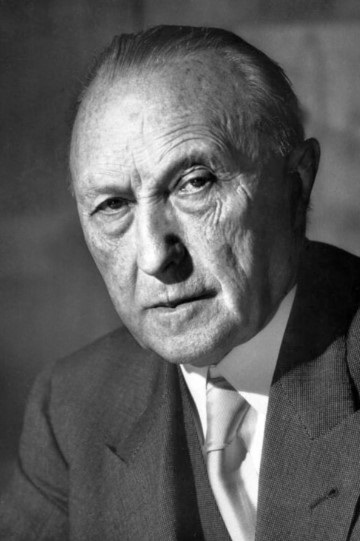
The weekly published the contents of several declassified documents that confirm this truth: the “Father” of post-war Germany and a united Europe – the Christian Democratic leader Konrad Adenauer – was aware of the recruitment of Nazis by post-war German secret services and by American ones. As Lenin often said, “cynicism is not in the words that describe reality, but in reality itself.” / Memorie.al