By Sheradin BERISHA
Part Three
Memorie.al – It is estimated that during the war in Kosovo (1998-1999), Serbian military and paramilitary forces killed, executed, or massacred in the most brutal ways around 15,000 Albanians, 90% of whom were unarmed civilians…! During this period, nearly 20,000 Albanian women were raped. Furthermore, it is reported that over 3,000 Albanians were abducted, with some of them found after the war in mass graves in Serbia, while the fate of another 2,087 individuals remains unknown. According to calculations, during the period from March 1998 to June 1999, Serbian criminal units and heavy artillery partially or completely destroyed and burned around 1,100 Albanian settlements, looted, burned, and destroyed over 200,000 houses, residences, commercial premises, craft workshops, factories, schools, libraries, cultural-historical monuments, cultural, scientific, religious facilities, etc.
Continued from the previous issue
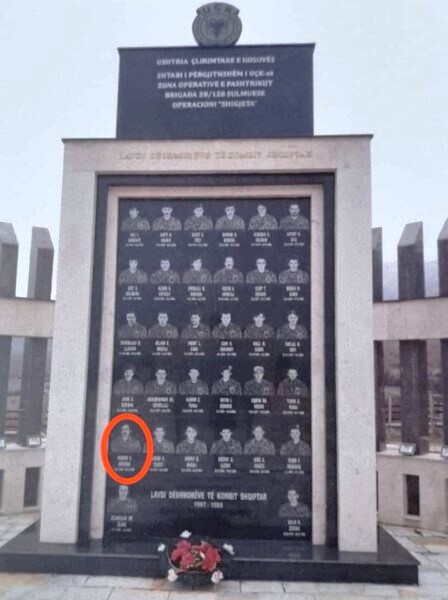
Under what circumstances was Prof. Ruzhdi Berisha massacred?
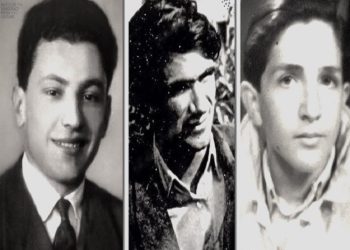
Prof. Ruzhdi Berisha was born in 1952 in the village of Buçe, in the municipality of Sharri. With the beginning of the liberation war in Kosovo, Ruzhdi (although a member of the Presidency of the LDK in Sharr (former Dragash)) actively participated in the expansion and organization of the KLA in these areas. For this purpose, Prof. Ruzhdi Berisha (without the knowledge of his “colleagues” in the LDK) traveled to Albania several times to establish cooperative contacts with some of the KLA leaders.
To learn more extensively about Ruzhdi’s activity and the ill-intentioned games played against Ruzhdi Berisha by two LDK officials in Sharr – Halim Shemsidini, Chairman of the LDK (currently also the mayor of Sharri Municipality), and Shaban Halimi, Secretary of the LDK (currently a deputy of this party in the Kosovo Parliament) – and to learn about the odyssey leading up to his murder, read the writings of journalist Bedri Halimi: RUZHDI BERISHA: A LIFE FOR KNOWLEDGE AND FREEDOM + TRULY, WHO LEFT RUZHDI BERISHA ALONE IN OPOJA?!
Meanwhile, to teach who Shaban Halimi, Halim Shemsidini… we’re during the time of the Milošević regime…, read the article “The Continuity of Serbian Power in the Municipality of Sharri”!
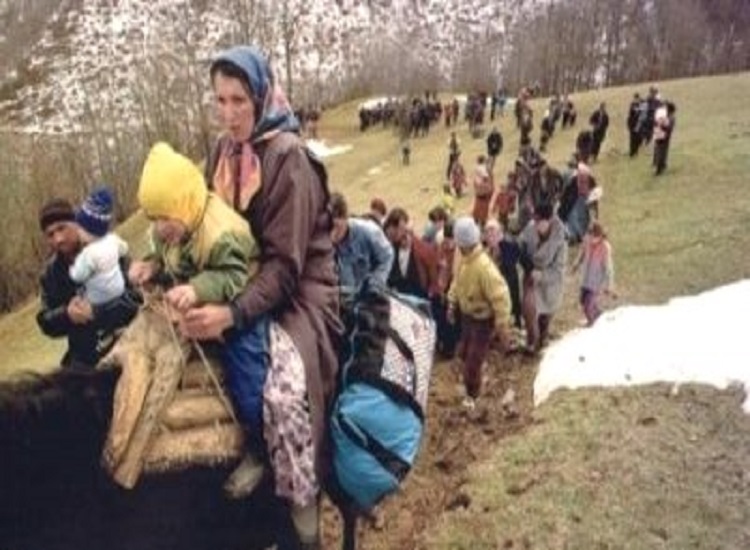
It is well known that after the start of the NATO bombings against Serbian forces in Kosovo (March 24, 1999), Serbia intensified its campaign of expelling Albanians from their ancestral lands, and amid these developments, the Albanian population in Opoja was also forced to leave their homes. This event occurred on March 31, 1999, when the Serbian police ordered the Albanian population of Opoja to abandon their homes within two hours and be displaced to Albania.
Just two days earlier (on March 29), the Presidency of the LDK branch for Sharr (former Dragash), at a meeting held at the home of Shaban Halimi in Buzez, took the decision that: “if it comes to the displacement of the population from Opoja, we, as the LDK Presidency, must absolutely not be displaced but must stay here.”
Prof. Ruzhdi Berisha, taking this decision very seriously, did not leave for Albania, while the other members of the LDK Presidency, including the Chairman of the LDK for Sharr, Mr. Halim Shemsidini (currently the mayor), and its Secretary, Shaban Halimi (currently an LDK deputy in the Kosovo Assembly), did not respect this decision and, before everyone else, crossed over to Albania.
Thus, on this occasion, it appears that Ruzhdi was betrayed by his LDK “comrades,” and this betrayal would cost him his life. During Ruzhdi’s stay in Buqe (his birthplace), the Serbian criminal forces (through Albanian-speaking informants) tracked him down, and after being horrifically physically tortured, he was killed and massacred in the most brutal manner.
In June 1999, when KLA units entered Opoja, their first task was to determine the whereabouts and fate of Prof. Ruzhdi Berisha and several other persons considered missing. The KLA Military Police received the first information regarding the murder of Prof. Ruzhdi Berisha in the village of Krushevë in Gora, from the person Sadik Idriz – currently the Minister of Health in the Government of Agim Çeku.
Sadik Idrizi – Minister of Health in the Çeku government!
Sadik Idriz, born on February 28, 1954, in the village of Krushevë, declared that at the end of April 1999, in a café/pastry shop in Dragash, which was owned by a villager from Zlipotok in Gora, he spoke with a Serbian superior named Mitojević Dragutin, who confidentially told him that Ruzhdi Berisha had been killed at the Stojanović checkpoint (on the border with Albania).
The criminal Dragutin told Sadik Idriz that: “After Ruzhdi Berisha was killed, he was covered with soil and branches (wood), and when we passed by there the next day, we saw that wild animals had uncovered his corpse and had eaten one of his calves.” At the end of the conversation, the barbarian Dragutin told Sadik Idriz: “after the war, I will go to Slovenia, because I come from a Serbo-Slovene family,” and on this occasion, he gave him his address and telephone number.
His address is: Mitojević Dragutin – Rusianov TRG-3. Tel. no. 99386-61-263-632.
After this bitter information, the KLA Military Police began searching for Ruzhdi’s corpse and his personal belongings. Initially, it was learned that Prof. Ruzhdi’s ID card was at the construction depot of the owner Taip Sadiku from the village of Bellobrad (Taip Sadiku was a collaborator of the UDBA and one of the main collaborators of the Serbian police superior Gradimir Zekavica).
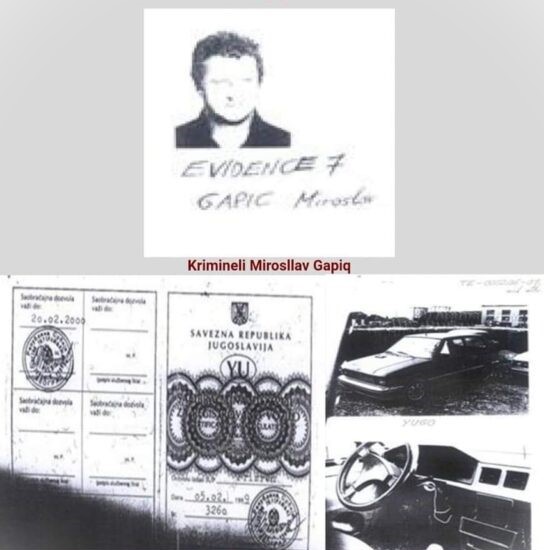
The ID card, along with a written statement, was handed over to the Military Police station by Kujtim Neziri – brother of the federal inspector of the Serbian state security, Lulzim Neziri, from the village of Kuk. During field investigations, the following were found in the house of the criminal Miroslav Gapić in Prizren: a flag, a driver’s license, and a military booklet belonging to Prof. Ruzhdi Berisha, as well as a bloodied knife, suspected to have been used to massacre Prof. Berisha.
Meanwhile, his car was found in Lipjan. After many efforts, on September 19, 1999, several KLA soldiers under the leadership of Zahadin Krasniqi found the massacred corpse of Ruzhdi Berisha near the Albanian-Albanian (Kosovo-Albania) border.
After a few days, all the found documentation was handed over to the investigators of the Hague Tribunal, with the aim of arresting and bringing to justice all those who participated in the murder and massacre of Ruzhdi Berisha, but unfortunately, everything ended with the submission of this documentation, because to this day, no one has been arrested, even though the first and last names of those involved in the murder of the intellectual Ruzhdi Berisha are well known.
After the end of the war, in this same region, the shepherd of the village of Brezne, Hasan Kadri Krasniqi, at a place called “Fusha e Hutit” towards the Gjeraçina Gorge, found six female corpses. He informed the KLA command in Opoja, who immediately deployed a military unit for this purpose. UNMIK, KFOR, and local media were informed about this crime, and all went to the scene (in Brezne), where they collected all the data and recorded the corpses.
These massacred women were from two villages in the municipality of Theranda (former Suhareka): 1. Rafije Krasniqi – from Studençani (aged 49), 2. Behare Krasniqi – from Studençani (aged 22), 3. Bahrije Gashi – from Terjna (born 1938), 4. Rahime Voci – from Terjna (born 1947), 5. Ajmone Gashi – from Ternja (born 1966), 6. Besarta Gashi – from Terjna (born 1985).
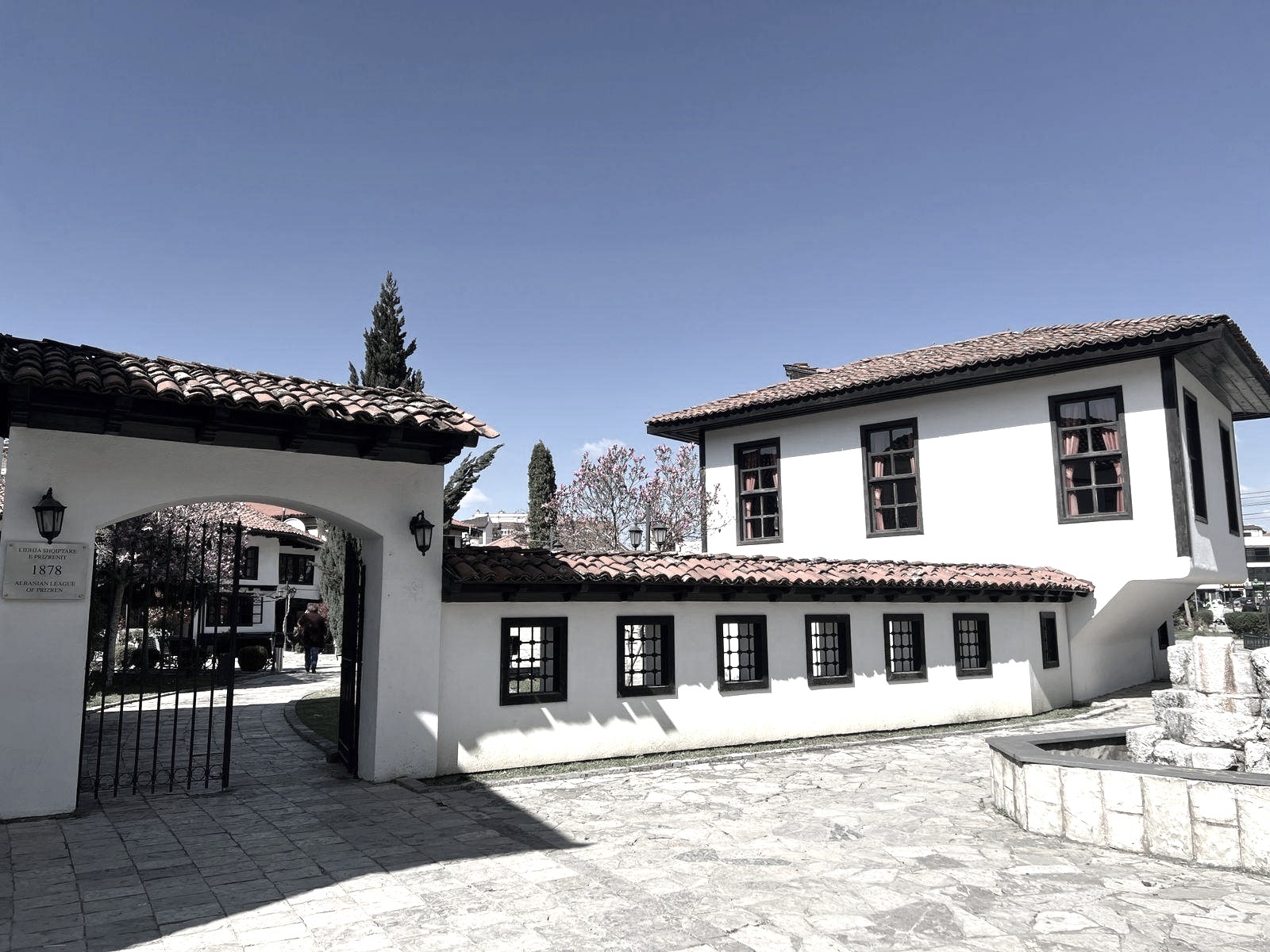
How was the memorial complex of the Albanian League of Prizren burned?
Three days after the start of the NATO bombings against Serbian forces in Kosovo, precisely on the evening of March 27, 1999, Serbian criminals entered the premises of the memorial complex of the Albanian League of Prizren, and on this occasion, they burned the museum house of the League, which contained around 11,000 historical exhibits. Furthermore, the lapidary monuments of two great personalities of our nation – Abdyl Frashëri and Haxhi Ymer Prizreni – were removed from their common base and, after being damaged, were thrown outside the Memorial Complex.
For this barbaric act, there is documented material with numerous pieces of evidence (photographs and other documents), as well as the names of the 11 Serbian criminals who were involved in the burning and destruction of the Memorial Complex of the Albanian League of Prizren. This material was also submitted to the International Tribunal in The Hague, but (based on the practices followed by this tribunal), like many other pieces of evidence, this material has ended up in the prosecutors’ drawers and therefore will never be taken into consideration.
Who are the Serbian barbarians who committed crimes in the village of Kishnicë and several other places in Kosovo?
In November 1999, in the village of Kishnicë (near Prishtina), at the house of Sabit Krasniqi, a list with 20 names of Serbian barbarians was found. They had established an operational paramilitary headquarters there, and it is testified by many sources that from this base, they went out and committed crimes against the Albanian civilian population in many parts of Kosovo.
Based on the list of first and last names and their addresses, it appears that these barbarians are from Kosovo, with the exception of one who was from Kuršumlija. Some of them also committed crimes in the village of Kishnicë itself. Musa Gashi and Bajram Gashi, who escaped the knives of these criminals, have testified about these crimes. (*Ekskluzive* no.1, January 2000, p. 101)
The following names are inscribed on the found list:
Berisha Ruzhdi – Bekim, Roma
Iliq Stalin – Velko
Paniq Pavli – Sinisha, Prelloc i Prishtinës
Cvejiq Lubisha – Lan, Hallaq i Madh – Lipjan
Vukadinoviq Jovan – Njegosh, Kurshumli
Andriq Mirko – Drashko, Prishtinë
Dikiq Branko – Nebojsha, Prilluzhë
Krastiq Rade – Svetisllav, Skullan i Lipjanit
Selishnik Jelica – Tomisllav, Kishnicë
Sinisha Jovanoviq, Kishnicë
Jovan Karaxhiq, Kishnicë
Goran Trajkoviq, Kishnicë
Boban Trajkoviq, Kishnicë
Dejan Trajkoviq, Kishnicë
Predrag Gjorgjeviq, Kishnicë
Petar Saveliq, Kishnicë
Mile Bulajiq, Kishnicë
Gjorgje Bulajiq, Kishnicë
Zhivorad Mitiq – Zhiko, Kishnicë
Dragan Mitiq – Burdo, Kishnicë
Dragan Miliq, Kishnicë
Zoran Trajkoviq, Kishnicë
Mike Iliq, Graçanicë
Dushan Iliq, Graçanicë / Memorie.al