By ANA LALAJ
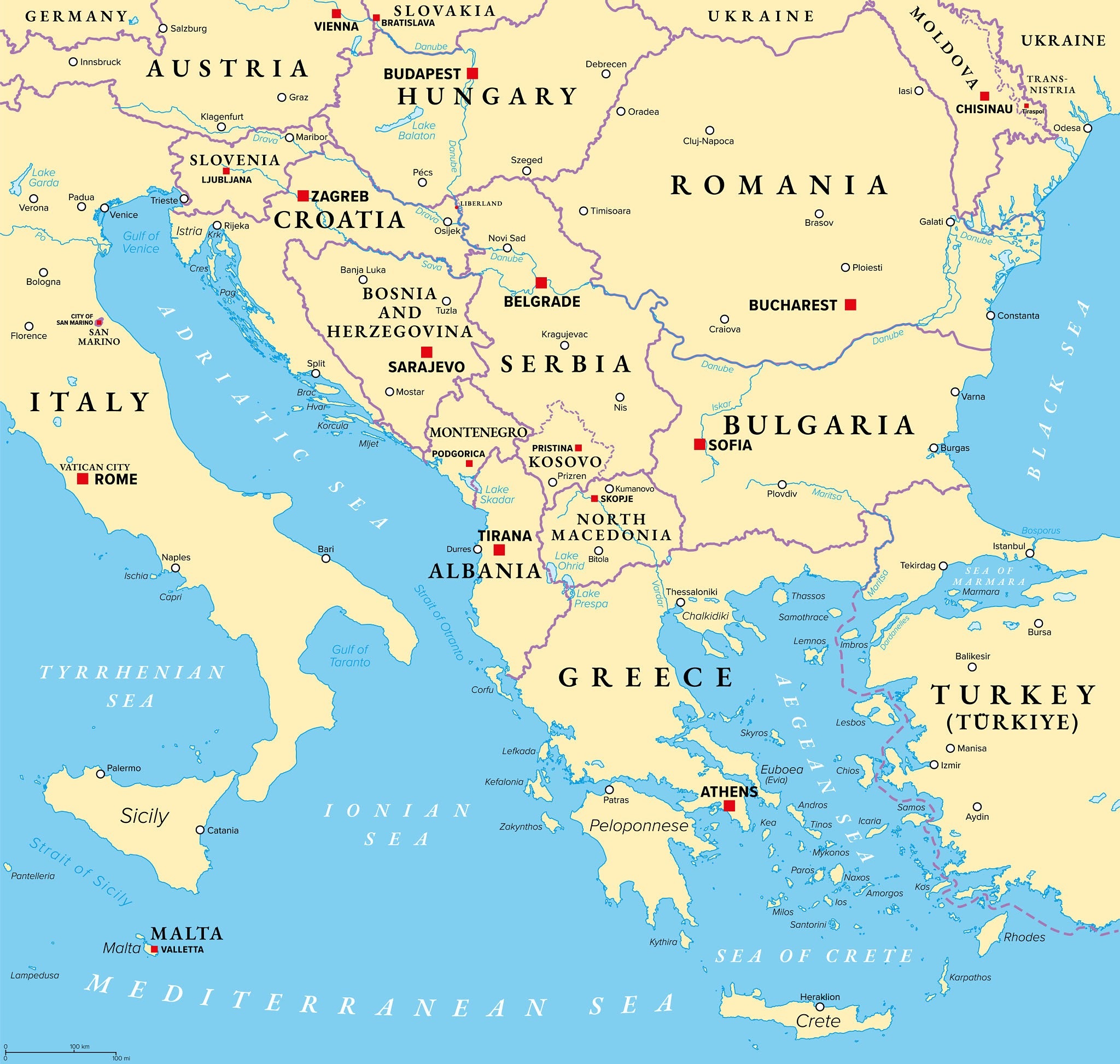
Memorie.al – It is interesting to observe the approach of the British Foreign Office (hereinafter: FO) towards Albanian-Yugoslav relations, the place of Kosovo within them, as well as towards the future of Albania, Yugoslavia, and Greece, in light of British interests in each of them. Informed of the frequent visits of Albanian communist leaders to Belgrade at the end of 1944, senior FO officials viewed the Yugoslav-Albanian rapprochement with concern. Their premise was the danger that Greece faced in this case, as “Yugoslavia could hope for Albania’s support regarding Macedonia and South Slavic claims in general against Greece.”
Following British logic, the Yugoslav goal would be fully realized only in the event that a federation was created between Yugoslavia and Albania. In examining this political equation, senior FO officials singled out the issue of Kosovo as a key element. According to them, Kosovo, with its abundant surface and subsurface resources, would enable Albania “to stand on its own feet,” but on the other hand, a London-oriented Albania united with Kosovo did not provide certainty for a federation with Yugoslavia.
Meanwhile, the separation of Kosovo would create problems in Serbia, and consequently in Yugoslavia, therefore the aforementioned alternative was set aside by FO officials. The Yugoslav-Albanian federation could only be realized if the Yugoslav political leaders offered Kosovo to Albania, but on the condition that the latter considered it “as a reward for Albania to enter, in some form, into the Federation of South Slavs.” And according to the political director for Albania at the FO, Denis S. Laskey, “such a price was worth paying.”
These hypothetical analyses and assessments did not converge with the interests of the Albanians. For Albanian nationalists, the Kosovo issue should not be made a means of pressure for Albanians to enter the federation. According to them, “first” Kosovo should naturally unite with Albania, and “then” the united Albanian people should decide on their future status. However, the priority of British interests was not the endorsement of Albanian interests, but those of the Greeks.
At the FO, they calculated that “if the federation happens, we may have to consider giving more support to Greek demands for Northern Epirus.” Thus, the union of Kosovo with Albania would cost the latter a future fraught with many unknowns within the federation of South Slavs, as well as a new partition – the separation of Southern Albania. Consequently, in the variants that were put forward, the interests of Albania and the Albanians remained marginal.
But while the British adopted a wait-and-see position regarding the Albanian-Yugoslav Federation, they were staunch opponents of the Yugoslav-Bulgarian Federation. The creation of the Yugoslav-Bulgarian Federation was inevitably linked to the old and complex problem of Macedonia. The union of Bulgaria with Yugoslavia would also bring about the union of Pirin Macedonia with Vardar Macedonia, but this union was not the end of the Macedonian problem. According to Orme Sargent, one of the FO leaders, this union “transformed the Macedonian question into something very dangerous, into a combined Yugoslav-Bulgarian expansion towards the South.”
Bulgarian irredentist demands for Western Thrace, which Yugoslavia had previously opposed, would, after the Yugoslav-Bulgarian union, become “Slavic demands.” As such, they would be presented with all the added force that the union would give them and would end up reaching Thessaloniki. Thus, the capture of Thessaloniki would be considered “either as the fulfillment of the natural aspirations of the newly created autonomous Macedonia (from Vardar Macedonia and Pirin Macedonia), or as a general Slavic interest.” The British assumed that these Slavic expansionist aspirations “could also be sponsored by the Soviet Union, which had strategic interests in the Aegean Sea.”
The emergence of Macedonia or the Bulgarian-Yugoslav Federation onto the Aegean would mean a strengthening of the Soviet Union’s position in the Aegean. Meanwhile, Greece, which was in a critical moment and incapable of defending its interests, “would be further weakened,” would be isolated from Turkey by a Yugoslav-Bulgarian strip, and the latter “would be eliminated as a European and Balkan power and from any kind of regime for the Straits.”
Therefore, according to this analysis, the creation of the Slavic ethnic bloc, although it had the advantage of securing a solution to the Macedonian problem, would be accompanied by a series of disturbances in the Balkans that would upset the balance of power among the Balkan states – a balance which, as temporarily distributed, maintained a kind of equilibrium. Ultimately, the Deputy Under-Secretary of State, Sargent, concluded that these developments “would negatively affect British interests.”
On January 2, 1945, an Aide-Memoire containing the above assessments was delivered to the Soviet government and the State Department. The British government sought to learn the views of the Soviet and American governments on the issues raised. The State Department joined the British view that same day, asserting that “the Federation of South Slavs under the current circumstances would only be a destabilizing factor in Southeastern Europe, because the non-Slavic states of the Balkans, including Turkey, would consider it a threat to their security.”
It is understandable that on January 9, 1945, when Stalin was holding talks with Hebrang, he had on his table both the British Aide-Memoire and the American assessment, where the ‘against’ stance towards the Yugoslav-Bulgarian Federation was categorical. It must have been precisely this stance that influenced Stalin to adopt a new tactic – not an agreement for unification into a federation, but a treaty of alliance and mutual assistance between Yugoslavia and Bulgaria. This tactical change could avoid some of the disadvantages caused by the federation.
Furthermore, Stalin was aware that the British had ready the variant of a politically diverse Balkan federation, which they could oppose to the communist Yugoslav-Bulgarian Federation and thereby paralyze it. Stalin deemed it expedient to hasten in informing them of the new situation and dictating the new tactic, both to Hebrang in early January 1945, and to the two delegations, Yugoslav and Bulgarian, which he summoned to Moscow at the end of the same month.
Following this tactical change, the Soviet government responded to the British Aide-Memoire of January 2. In its reply on February 2, 1945, the Soviet government “considered that the question of a Balkan federation, and in particular of a Yugoslav-Bulgarian federation, is not currently topical and has no practical significance.”
Senior FO officials assessed that the Treaty of Alliance between Yugoslavia and Bulgaria removed from British hands the political card of defending Greece, as the latter’s integrity was not jeopardized by any concrete union of Macedonia. However, according to the British, the danger was not eliminated; it was merely postponed to a more opportune time. In conditions where a political argument was lacking, the FO found a legal formula that prevented the Bulgarian government from doing as it wished. According to this formula, Bulgaria had only signed an armistice agreement and had not yet concluded a peace treaty with the Allies.
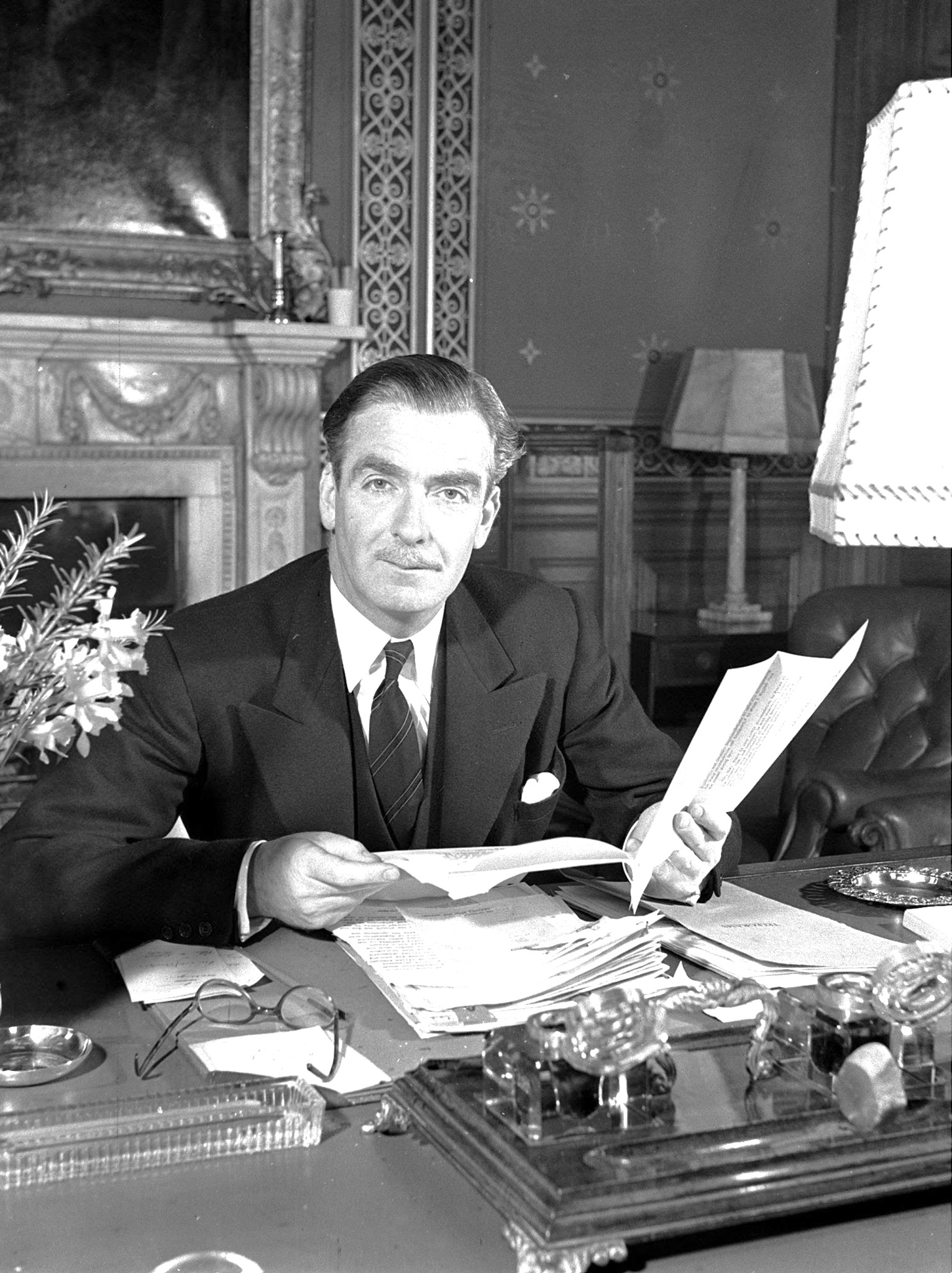
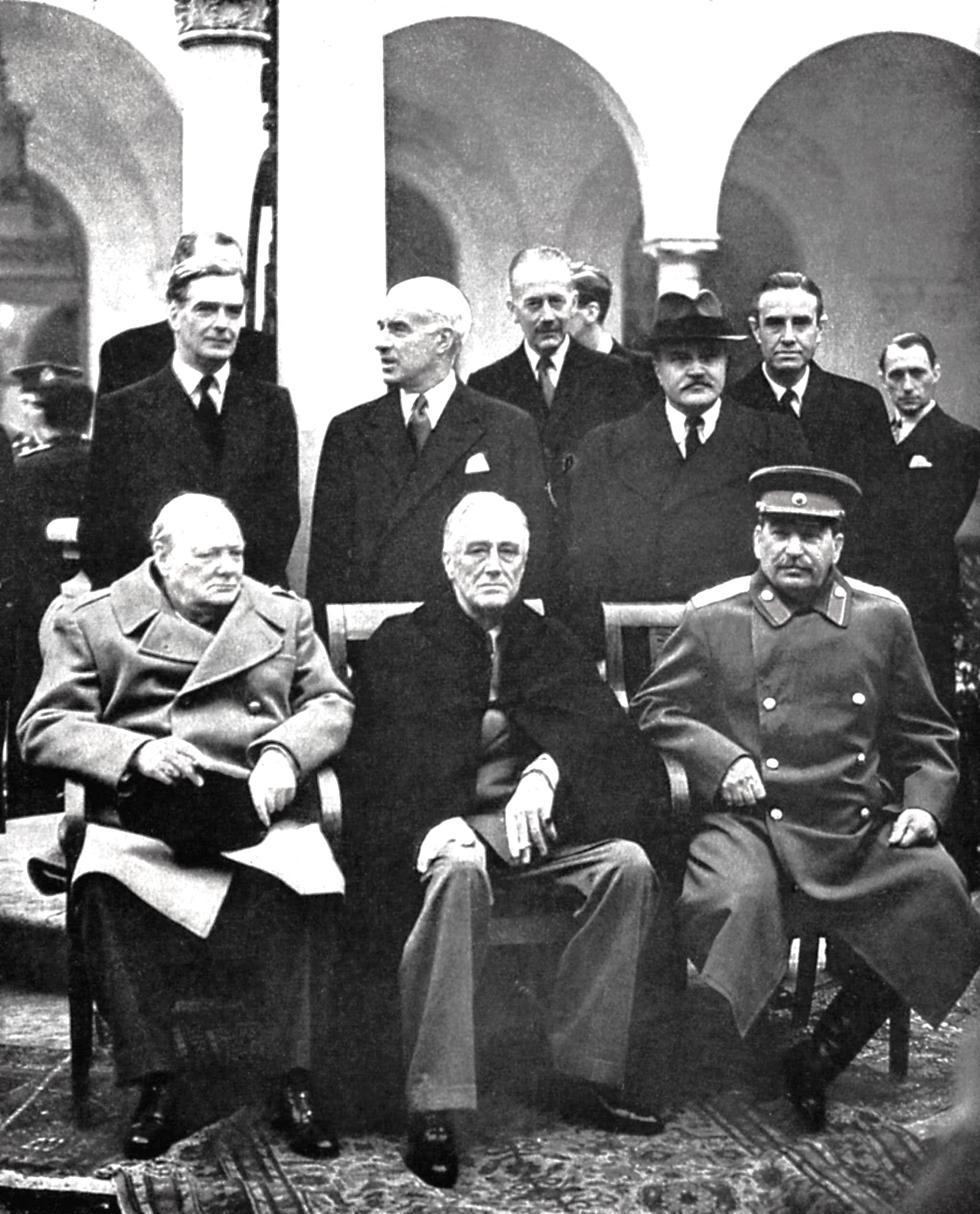
At the Yalta Conference, British Foreign Secretary Eden adhered to the view that states under an armistice regime could not be permitted to make a peace treaty without the permission of the Allies. He further added that the British would not allow a Balkan Federation before the armistice period had ended. After aligning views with the US and Soviet Foreign Ministers, the Yalta Conference also put an end to the first phase of efforts to create a communist federation in the Balkans. The Yalta decision also meant that the Treaty of Alliance between Albania and Yugoslavia did not enter into force.
That treaty had been signed by two governments without international recognition. It was drafted and signed as a preliminary treaty for the future communist federation in the Balkans and, as such, lost its value when the projects for the federation themselves were canceled. However, London did not feel secure about Tito’s moves towards Albania and vice versa. Tito himself had declared to General Fitzroy Maclean that “he was much more inclined to have a federation with Albania first.”
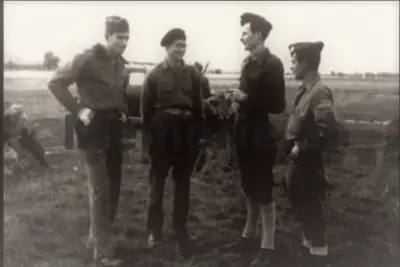
On March 20, 1945, the FO requested its minister in Belgrade, Ralf Stevenson, any possible information proving that the Yugoslav government was considering a Yugoslav-Albanian Federation and what conditions it offered. The FO requested a similar report from the British Military Mission (BMM) in Albania. A few days later, General Edward Hodgson, head of the BMM in Albania, stated in his report that there were many signs proving that “the Albanian administration strongly aims to unite in a federation with Yugoslavia.”
He mentioned newspaper comments “inspired for cooperation with Yugoslavia,” the “numerous” praises for the war in Yugoslavia, “Hoxha’s morbid admiration for Tito,” the Serbo-Croatian language being taught in all Albanian schools, the statement of the secretary of the Anti-Fascist Women’s Union of Albania, who, upon returning from Belgrade on March 24, 1945, declared that “Albania would welcome incorporation into a federation with Yugoslavia,” etc.
General Hodgson found it difficult to discover under what conditions Albania might join the Yugoslav federation, but he was convinced of Tito’s strong positions regarding the determination of the terms of union. Whereas what Albania might seek, according to him, was “autonomy for Kosovo and a guarantee that Yugoslavia would help it in holding onto Vorio-Epirus (Southern Albania).” Time proved that the British general was right in his predictions. / Memorie.al