
By Shkëlzen Gashi
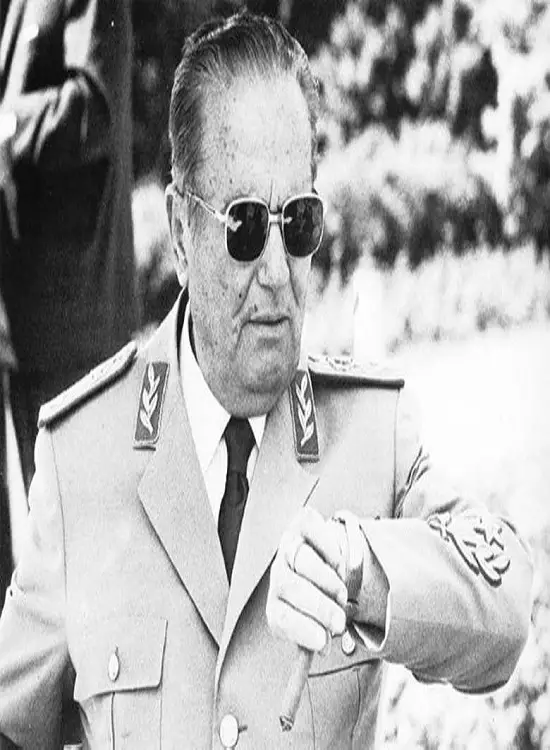
Memorie.al / After the approval of the Resolution at the Bujan Conference, held from December 31, 1943 – January 2, 1944, which stated, among other things, that Kosovo wished to unite with Albania, there were indications from the Yugoslav partisans that this point of the resolution would not be realized. This is confirmed by a letter that Milovan Djilas, Josip Broz Tito’s right-hand man, sent in March 1944 to the approvers of this resolution, in which it is stated: “raising the issue of border changes helps the Germans to incite peoples against one another.” Also in March 1944, Josip Broz Tito wrote that: “Vojvodina and other similar areas will gain broad autonomy, and the question of which federal unit these areas will join will depend on the peoples themselves, through their representatives, when that is decided with a final decision after the war.”
Likewise, in February 1945, Edvard Kardelj, one of Tito’s closest advisers, said in the Central Committee of the Communist Party of Yugoslavia that: “the best solution would be for Kosovo to unite with Albania, but because neither external nor internal factors favor this, it should remain a compact province within Serbia.” Also in February 1945, when Kosovo was placed under ‘military administration’ commanded by Savo Drljević,
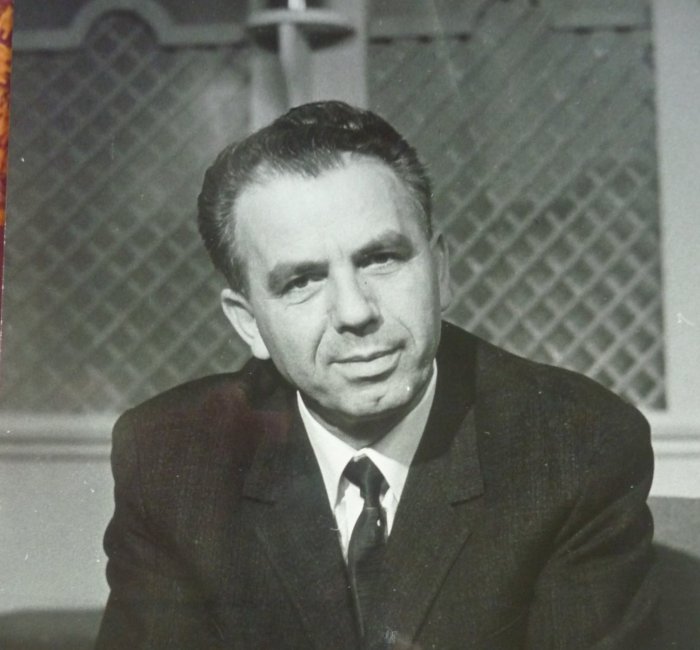
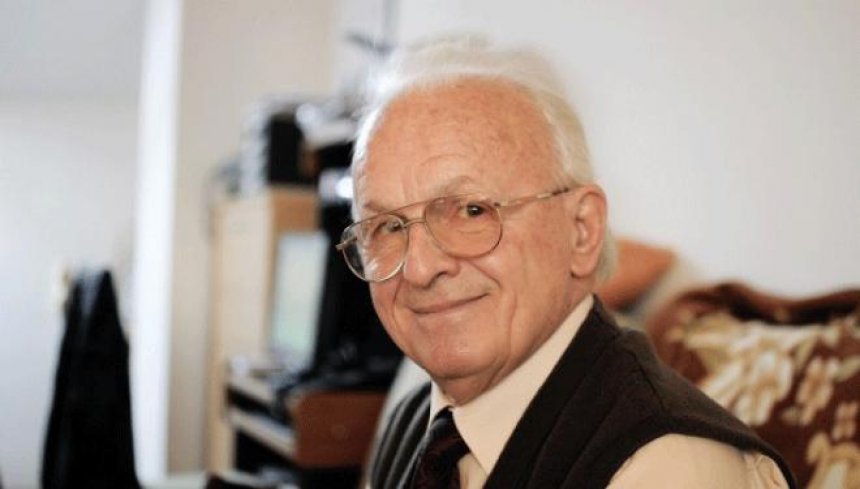
Fadil Hoxha agreed to become his deputy commander. Worse still, he agreed, within the framework of this military administration, to participate in combat actions against Shaban Polluzha and his fellow fighters, who were opposing the crimes of the Yugoslav regime against innocent Albanian civilians. This is one of the biggest stains on Fadil Hoxha’s biography.
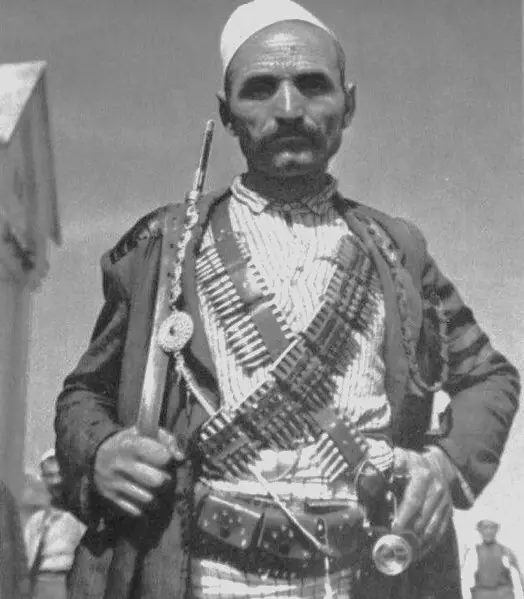
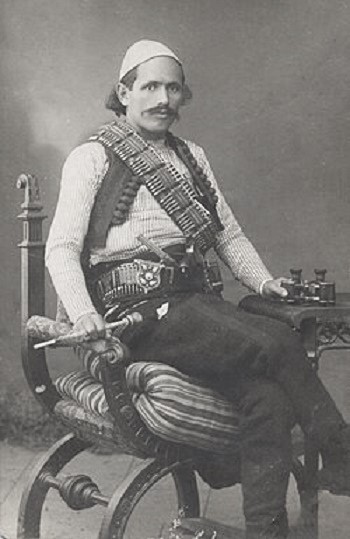
From 1912 onward, whenever the territory of Kosovo fell under the rule of some empire, it suited Serbia—and indeed it even encouraged—the uprisings of Kosovar Albanians against these empires, in order to then occupy Kosovo more easily. This happened with the Albanian uprising of 1912 against the Ottoman Empire, which Serbia supported by giving payments and weapons to Isa Boletini, and when the troops of the Ottoman Empire withdrew, it occupied Kosovo, committing horrific crimes against Albanian civilians.
But Isa Boletini resisted the Serbo-Montenegrin forces and, after several years, was killed by them. Similarly, in the years 1915–1918, when Kosovo was under Austro-Hungarian rule, Serbia supported Azem Bejta to fight against this empire, and when its troops withdrew from Kosovo, Serbia occupied it, committing terrible crimes against Albanian civilians. However, Azem Bejta resisted the Serbian forces and, after several years, was killed by them.
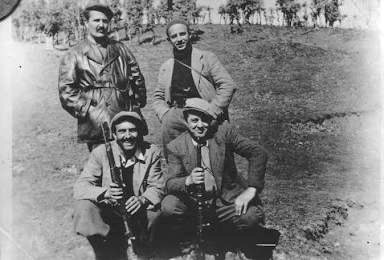
The situation was similar in 1941–1944, when Kosovo was under Italian and German rule. Serbia supported Fadil Hoxha to fight against the Nazi-fascists, and when the troops of these forces withdrew from Kosovo, Serbia occupied Kosovo, committing terrible crimes against Albanian civilians. But Fadil Hoxha did not resist the Serbian forces and consequently was not killed, unlike Isa Boletini and Azem Bejta.
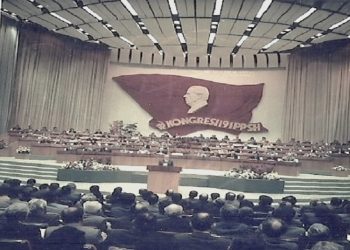
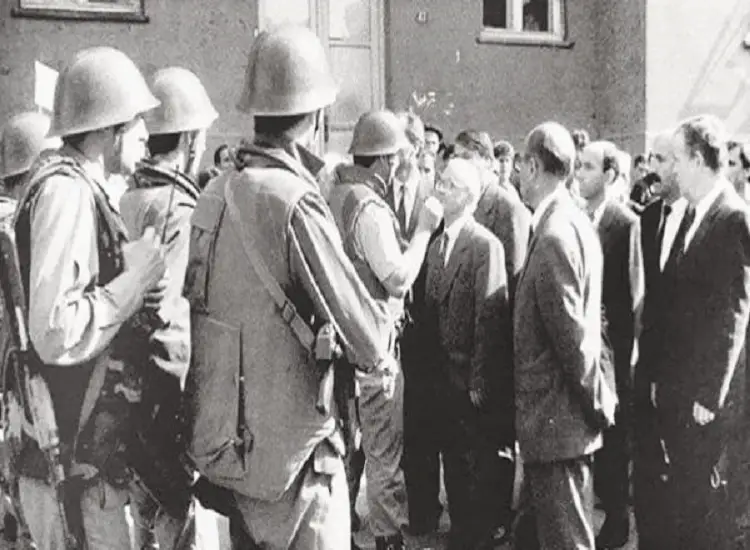
In April 1945, when two fellow fighters of Fadil Hoxha – Dušan Mugoša and Mehmet Hoxha -participated in the Anti-Fascist National Liberation Assembly of Serbia and declared that Kosovo wished to become part of Serbia, Fadil Hoxha did not say a single word. Worse still, when 142 representatives of the Communist Party in Kosovo – one third of whom were Albanians, many of them participants in the Bujan Conference – approved in July 1945 in Prizren a resolution for the annexation of Kosovo to federal Serbia, not only was there no discussion, but the resolution was even approved by acclamation.
Fadil Hoxha was among the participants in this Assembly. In the years 1945–’46, the gymnasium hall at the “Sami Frashëri” high school in Prishtina had been turned into a courtroom. Here, Fadil Hoxha’s fellow fighters – Ali Shukria as prosecutor and Xhavit Nimani as judge – were sentencing Albanian patriots from the opposing camp. At the end of the “Çeklik” neighborhood, then a peripheral area toward Tauk Bahçe and Germia, at the place now known as “Strelishta,” the partisans had dug a pit, into which they threw the executed activists of the Albanian national movement who had opposed the Yugoslav regime.
Where was Fadil Hoxha when these things were happening? What was his reaction? In his war diary for the period 1941–1943, titled “When Spring Is Delayed,” he himself admits to having given orders for the killing of political opponents. Likewise, where was Fadil Hoxha when the Tivar Massacre occurred, when show trials were held against innocent Albanians, such as the Prizren Trial of 1956? Unfortunately, many times more innocent Albanian civilians were killed in the first four years of ‘liberation’ (1945–1949) than during the ‘occupation’ (1941–1944).
During interrogations in the first prison in the years 1958–1959, Adem Demaçi confessed to the investigators that he had openly declared to his comrades the need to liquidate the main leaders of Kosovo, from Dušan Mugoša to Fadil Hoxha, and that he had suggested to them that after the assassination, a flyer should be placed on each corpse, containing the accusation: “Where were you while Albanians were being displaced to Turkey?
Where were you during the state action for collecting weapons?” Two decades after his release from the third prison, Demaçi denied this claim. Nevertheless, the reason I bring this detail here is that during the time Fadil Hoxha was in power, Demaçi was in one prison or another.
While Demaçi supported the demonstrations of Kosovar Albanians in 1968 and 1981 for a Republic of Kosovo, Fadil Hoxha condemned them with the harshest epithets – nationalist, separatist, secessionist, irredentist, and chauvinist. However, during the war in Kosovo in 1998–1999, Fadil Hoxha was among the few political figures of the Albanians in Kosovo who visited Adem Demaçi at the Office of the General Political Representative of the KLA in Prishtina and publicly supported him.
After the war, Demaçi said that Fadil Hoxha, under extremely difficult conditions and circumstances, had tried to extract the maximum for Albanians, and that unlike others, he was a master because “publicly he spoke against me, but in internal meetings in Serbia and Yugoslavia, he insisted on rights for Albanians.”
The contribution of Fadil Hoxha and of the representatives of the loyalist current among Kosovar Albanians to the rights of Albanians in Kosovo cannot and should not be denied. For instance, right after the Second World War, during the first and only meeting with Enver Hoxha, Fadil Hoxha managed to secure for Kosovo 200 teachers from Albania, as well as school textbooks in the Albanian language. Above all, the contribution of Fadil Hoxha and of the representatives of the loyalist current among Kosovar Albanians to the advancement of the position of Kosovar Albanians during the 1970s cannot and should not be denied.
However, this advancement is also the result of several other factors: the activity of the illegal current, which organized the 1968 demonstrations; then the intervention of the USSR in Czechoslovakia, which influenced the improvement of relations between Yugoslavia and Albania, out of fear on both sides of a similar intervention—an improvement that also affected the betterment of Kosovo’s position. Kosovo might even have achieved the status of a Yugoslav republic, had its leadership during the 1970s been more insistent.
There are other factors that influenced the portrayal of Fadil Hoxha’s personality as not entirely negative, as with many Albanian politicians in Kosovo who were his contemporaries. One of these is that after the 1981 demonstrations, Serbia’s propaganda campaign against Kosovo was concentrated mainly against Fadil Hoxha.
It culminated in 1986 with the affair that in the Serbian press of the time was labeled “Fadilgate,” according to which, in order to stop rapes, Fadil Hoxha proposed that – since Albanian women could not – women of other Yugoslav nationalities should come to the cafés of Kosovo, so that the rapists could vent their lusts on them.
Hoxha later apologized to non-Albanian women and resigned from his government post, but he was also sued for inciting national, religious, and racial hatred, for division and intolerance. Another factor that may have influenced the ‘rehabilitation’ of Fadil Hoxha’s figure is the fact that after the war, when the KLA leaders founded the Democratic Party of Kosovo (PDK), they declared Fadil Hoxha an honorary member, and upon his death, they organized his burial with military honors from the Kosovo Protection Corps (TMK).
Unfortunately, we have no biographies for any political figure of Kosovo from the last century. Therefore, the life and work of Fadil Hoxha should be studied based on archives and the contemporary press locally, regionally, and more broadly, and not only on the testimonies of his associates and opponents, or even worse: only on Fadil Hoxha’s memoirs.
We must definitively put an end to the practice of writing hagiographic historiographies about our political figures and begin to research and study these personalities professionally, with all their lights and shadows. A professional biography should be written for Fadil Hoxha, and even his house in Prishtina – since there, besides the furniture, his library is also preserved – would be well suited to be turned into a museum, where all his political (in)actions would be reflected. / Memorie.al