
By Alain CHARBONNIER
Memorie.al – Failures are an integral part of the history of espionage. Some are known, others have been hidden for years, despite having cost the lives of men and women, of entire families. As happened in Albania, between mid-1949 and 1953, when the Americans and the British, in an attempt to overthrow Enver Hoxha’s communist regime through subversive operations carried out by Albanians trained abroad, after the establishment of the Stalinist regime. Betrayed by Kim Philby, “burned” by the shallowness of those who organized the missions, the Albanians were captured, imprisoned, and killed by the Sigurimi, Tirana’s secret police. Some details of the precious operation are still hidden to this day.
When, in April 1954, in Tirana’s prison, Hamit Matjani climbed the gallows, a red line was drawn in Washington and London on Operation “Valuable.” It had lasted five years, trying to incite a revolutionary war in Albania, to overthrow the communist regime installed by Enver Hoxha. In five years, about a hundred “anti-Albanians” had died – loyal to the monarchy, republicans, liberal democrats, ready to fight courageously against the oppression that surrounded the “Land of the Eagles.”
At the outbreak of the Cold War, the United States and Britain had as a problem the ways to take revenge against the Soviet Union, which had supported coups d’état in Czechoslovakia, Romania, Hungary, Poland, Bulgaria, and was a supporter of the communist partisans in the Greek civil war. The choice fell on Albania for a number of reasons. First of all, the length of the coastline, right in front of Italy, and the proximity to Greece. Then, the poverty of the country, made even poorer by the communist regime. Many exiles were determined to fight Hoxha’s regime and return to Albania as liberators.
Moreover, during many World War II missions of the Special Operations Executive (SOE), they had cooperated with the partisans, even though Hoxha had repaid this with ingratitude. And the British had “tied this fact around their fingers.” In Operation “Valuable,” several elements stood out: the professionalism and experience of the SOE, the shallowness combined with the amateurism of the newly created CIA, the almost always unrealistic voluntarism of the Albanian refugees, among whom the “freedom fighters” were recruited, and the human factor that was not anticipated: the betrayal of Kim Philby, of the British Secret Intelligence Service, agent and British liaison with the American Office of Policy Coordination (OPC), created to organize overthrows in European countries hostile to the United States.
On the evening of October 3, 1949
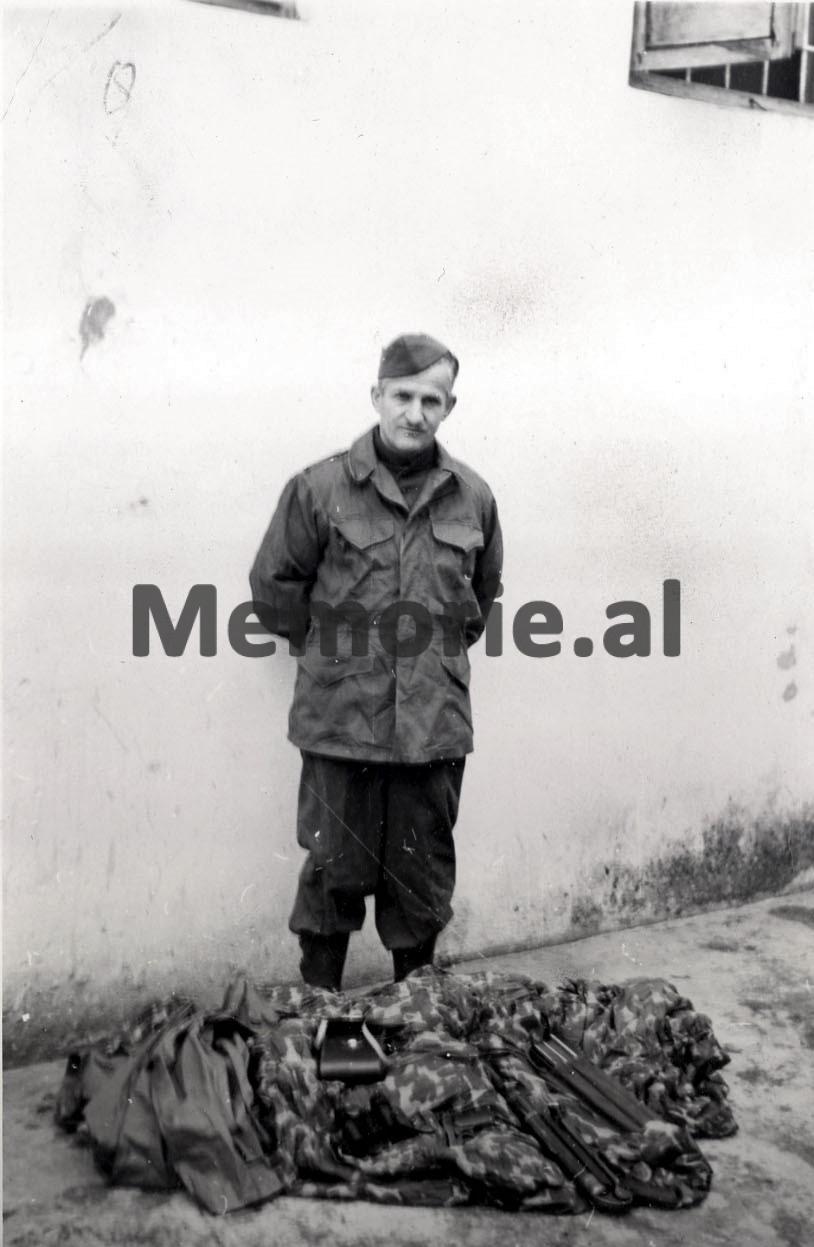
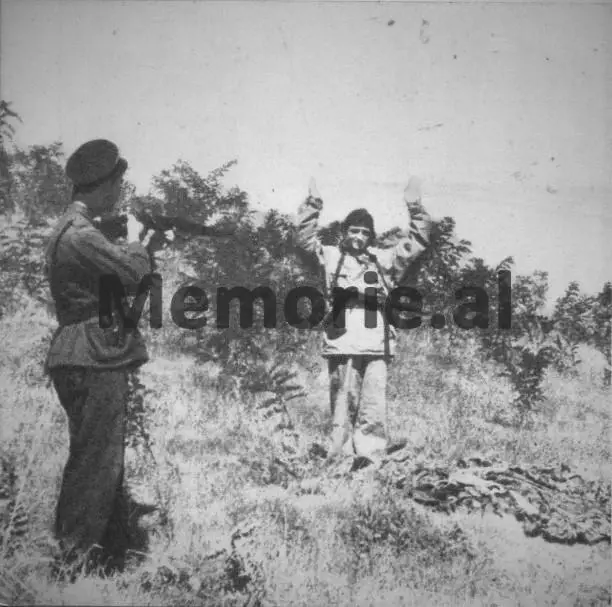
On the evening of October 3, 1949, a beautiful ship painted blue and gold, with orange flags, called the “Stormie,” dropped anchor half a mile from the Karaburun Peninsula. From a superficial examination, it had all the characteristics of a cruise ship. In fact, it was the ship from which the “lugats” (as the anti-Albanian partisans were called) disembarked. And that night, the first nine “lugats” returned to their homeland to set fire to the powder keg of revolt. The “lugats” had completed several days of training in the art of guerrilla warfare and sabotage in Malta, at the Bin JEMA fortress. They had as official instructors British SOE officers who had fought against the Germans in Albania. When they touched ground, the “lugats” could not know that their mission was destined to fail.
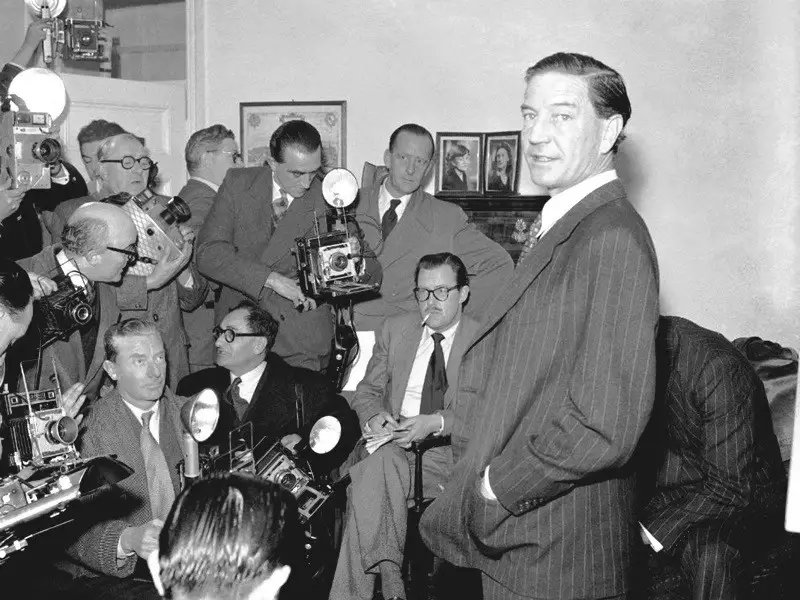
Kim Philby, at that time, was traveling to the United States aboard the transatlantic liner “Caronia.” He enjoyed the voyage, drinking champagne and engaging in friendly conversation. But just before departing, in London, he had met his Soviet “handler” and had shed light on the actual functioning of Operation “Valuable,” about which he had knowledge thanks to his new post in Washington. Avoiding heavy steps and water sources – ideal places for ambushes – the group, in uniform, with weapons, explosives, gold coins, and radios, began their march toward Mount Tragjas.
Four men, led by Bido Kuka, set out for Kurvelesh, and four others set out for Vlorë. As soon as Bido Kuka’s group reached the village of Gjorm, they learned that their comrades had been captured and that they had fallen into an ambush in which the cousins Lepenica and Zogoll Sheno had been killed, while the fourth had disappeared. A girl told Bido Kuka that units of the Albanian army had surrounded the entire coast several days earlier. Of the nine “lugats,” four were killed, one disappeared, and four escaped.
The second mission was again divided into two:
The “Korça” group, led by Sefer Musho, and the “Gjirokastra” group, commanded by Bardhyl Gerveshi. Unlike Bido Kuka’s group, they escaped the pursuit of the army and police. But they quickly realized the distrust that surrounded them, even though Hoxha’s regime was unpopular among the population. All those who returned to Greece made a detailed report on the situation. It was time when an anti-government movement was born; some Albanians were arrested, tortured by the Sigurimi (Tirana’s secret police) and eliminated; people showed interest, but first they wanted to see the direct and concrete commitment of the Americans and the British. The OPC and SIS assessed that overall it was not so bad. With better training and better political preparation, it was possible to reach the only communist country that was not close to the Soviet Union.
A mission that seemed easy, but was complicated by the competition between those who had ambitions for Albania, or a part of it, such as Greece and Yugoslavia. They aimed to make it a zone of direct influence, with the United States aiming to eliminate Great Britain. Finally, and not least, Italy – the Albanian point of emigration and arrival, with at least a large community in Sicily, and its never-hidden interests in the “Land of the Eagles,” which had even led to occupation, shortly before World War II. Moreover, the Italian secret services had trained Albanian agents during the war and continued to use them afterward, especially if they were Catholics or linked to the party of the Independent National Group.
Moreover, Rome did not like the Americans and the British using Italian territory as a base for operations to overthrow the regime. As a result, “information leaks for various reasons,” “spites,” and “intrigues” were orchestrated, but the outcome cost the lives of people of good faith, ready to sacrifice themselves for the freedom of their country. The leakage of information went hand in hand with Philby’s double game and was placed at the heart of Operation “Valuable.” Just to mention a few: on September 14, 1949, the London “Chronicle” wrote: “The Albanian volcano is ready to erupt.” Cyrus L. Sulzberger, correspondent for the “New York Times,” had previously written that “the weakening and subsequent overthrow of the Albanian regime was a fundamental goal of the West.” Then he spoke of the anti-communist resistance and the recruitment of guerrilla bands.
March 27, 1950
Finally, on March 27, 1950, Sulzberger revealed information about two groups of agents who had landed on Albanian territory, with the aim of organizing communication with the anti-communist movement. “Meanwhile, Kim Philby was building contacts and gathering sympathy. After his betrayal was discovered, many people remembered his colossal drinking bouts, preceded by long conversations about covert operations; the double agent always ready to make available to Anglo-American ‘intelligence’ and to his friends information, with a request for reciprocity. Philby went so far as to share with James McCargar, one of the first men recruited into the OPC – the office where operations in Albania were analyzed and then carried out, and where final information and reports were processed as a completed mission – details of the operations.
It was precisely in that office, with Philby, that concerns were expressed about the end of Lepenica’s group in southern Vlorë and the fact that the cleansing operation was directed directly by the Chief of Staff of the Albanian Army. Despite the failures, the obstacles, the loss of men and material, entire families exterminated in reprisals, the missions of the “lugats” continued until 1953. Philby had come under the surveillance of Counter-Intelligence, after Guy Burgess and Donald MacLean, his drinking buddies, betrayed and fled to Moscow. He had left his office in Washington for a month when it was decided to predetermine three groups. Twelve people in total, in three different areas of Albania, were considered “safe.”
They did not even have time to touch the ground. The army, the police, and the Sigurimi agents were waiting for them. Those who were not killed immediately were tried, even if the trial did not have the powerful resonance of other “Stalinist” trials. Not all of those arrested were sentenced to death. But no one was ever seen alive again. But the final blow would come later. The Korean War imposed not stopping subversive operations. But no one was aware of the level of improvisation, dilettantism, and shallowness with which they were conducted. Philby was a minor damage by then, removed from important decisions, but what the Soviet secret services and the Albanians had learned from the prisoners, before executing them, had allowed them to reconstruct the entire disjointed conversation: from the recruitment of fighters, the training, the infiltration techniques, the transmission systems and the corresponding codes.
Hamiti
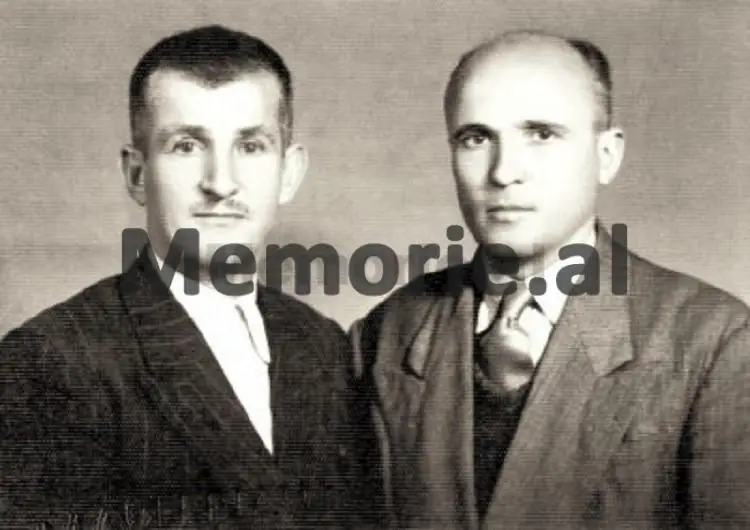
While all this was happening, CIA agents realized they had found the right man in Hamit Matjani. He was considered a kind of “Robin Hood,” capable of entering and leaving Albania, contacting resistance groups, establishing relationships, and recruiting new fighters. On April 28, 1952, Hamit Matjani, Xhelo Tresova, Zenel Shehu, Haxhi Gijle, Halil Branica, and Tahir Prençi crossed the border from Albania to Greece in the Korçë region. Branica fell ill and had to return. The others reached the Mat area, where they met with anti-communist groups recruited by Matjani. With them were Prençi and Shehu, monarchists of proven faith and members of the King’s Guard. The others returned to Greece.
During the summer of 1952, the OPC could not receive timely communications about the progress of subversive operations in Albania. Tahir Prençi transmits regularly, has requested materials, money, weapons, and even a can of beige paint. He indicated the points of departure and the invoices for the materials. Too bad he was a victim of an injury: he had a broken right arm and transmitted in Morse code with his left hand; as a result, the signals were not perfectly accurate. The circumstance was no small matter and undoubtedly provoked more than a few questions. But how to determine whether the one transmitting was Prençi, or another operator?
Queen Geraldina suggested how to solve the problem. “It occurred to me – said the sovereign of Albania – that Zenel Shehu had given me custody of his monetary valuables. I told the Americans to ask Zenel where he had left his personal belongings. He would have to answer: ‘With the Lady of the House’ or ‘with Mother.’ But the Americans received a different answer from the agents in Albania, something like: ‘Enough with these stupid questions.’ This was enough and they switched to a coded communication. And this was the disaster. Branica was the first to parachute down. Then Matjani touched ground, with Naum Sula and Gani Malushi. They all landed in the places indicated by Prençi and were captured.
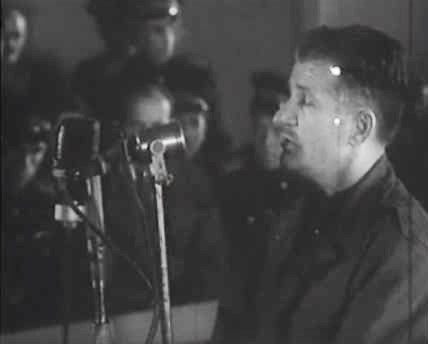
Only at the end of 1953, when none of the planned operations had materialized, did suspicion about the radio transmissions become overwhelming. On the eve of the New Year, the final blow was dealt. Radio Tirana announced that Matjani, his comrades, and their friends recruited in Albania had been captured. The trial of April 1954, in addition to numerous death sentences, revealed the magnitude of the disaster and, above all, that for 18 months, the Sigurimi agents, with the help of their KGB colleagues, had processed and transmitted the messages on which American decisions were based.
A “checkmate” which also allowed Enver Hoxha’s macabre irony in his memoirs:
“We forced the captured agents to make radio contact with their espionage centers in Italy and other countries, thus playing our game and shamelessly turning around their masters, who had proven to be incompetent and shortsighted. We went so far as to have them drop everything that their captured agents dictated. The bands of criminals were parachuted in or infiltrated across the border, based on our messages, and let themselves be led by us like sheep to the slaughter. The weapons and other materials dropped or taken from them were in our name.
Thus the espionage networks dropped what they had to drop, and we were the ones waiting for it. Their agents were sent to trial and then received their deserved punishment.
It was our famous radio deception, intelligence, good law, the revolutionary vigilance of the Albanian people, and not the merit of a Kim Philby, as some might believe, that caused the plans of external enemies to fail shamefully.” In truth, especially the Americans never gave up until the end on the Albanian overthrow. And above all, they created an operation sensitive to “plausible denial.” Even today, despite the archives being opened and many documents declassified, some details of Operation “Valuable” remain covered by secrecy. / Memorie.al