Part Twelve
Memorie.al / The CIA has shown the great role that the Soviet Union played in communist Albania. In several documents labeled “Top Secret” but declassified for years, it is shown that the USSR built several important military bases, especially in the south of the country. There, details are given about the submarines that Moscow had on the island of Sazan and in the Bay of Vlorë, as well as air bases such as those at Rinas, Kuçova, etc. Then a panorama of political developments is given, mentioning the dismissal of the Minister of Defense Beqir Balluku in the summer of 1974 from all his functions in the army and the party. Likewise, a special place in the declassified CIA documents is given to those dealing with Albanian political emigrants in Yugoslavia, who were incorporated into the Committee of Prizren, initially led by Apostol Tanefi, and under pressure from the UDB, which recruited them with coercive measures, such as returning to Albania, etc.
Continued from the previous issue
April 1949
Yugoslavia Creates Committee Against Cominform Communist Countries
In November 1948, Edvard Kardelj, on the recommendation of Marshal Tito, organized the Anti-Cominform Propaganda Committee. Since its creation, the organization has expanded greatly and today numbers around 500 members, including journalists, Yugoslav diplomats, and government and police officials.
The organization of the committee is kept secret, while its policies include the fight against Soviet propaganda by sending capable agents to the satellite countries of the USSR to launch anti-propaganda campaigns.
From its creation until March 1949, the committee sent 11 agents to Albania, 27 to Bulgaria, 32 to Hungary, 20 to Czechoslovakia, 51 to Poland, and 14 to Romania. Of these, 29 were arrested or forced to seek shelter in Yugoslav embassies in the respective countries.
The agents are both men and women and are instructed in advance on the dissemination of propaganda. They operate under various pretexts, including diplomatic cover. Those who do not have diplomatic cover are supplied with ample funds and have their own lines of communication with Yugoslavia, through independent couriers.
The committee has recruited about 270 foreign agents who have produced excellent results with their work in Albania, Bulgaria, and Czechoslovakia. Meanwhile, operations in Romania, Hungary, and Poland have proven more difficult.
In Bulgaria and Albania, agents are reported to have successfully created anti-Soviet factions within the higher ranks of the Communist Party. The techniques used by them include inciting discontent mainly by promoting nationalist sentiments.
They emphasize the inconsistencies of Soviet policies and criticize the plundering by Soviet troops in various countries, further highlighting the inevitability of a war between East and West in the event of continued support for the USSR. For Greek and Bulgarian Macedonia, the Committee has secured the assistance of a certain Mihajlov, former leader of IMRO.
The Yugoslavs are reported to have promised Mihajlov full independence for Macedonia after the unification of the country. Mihajlov is more hostile toward the Soviet Union than toward Yugoslavia, and he is convinced that his cooperation with Tito can bring about the independence of the Macedonian state.
On the other hand, the Yugoslav government believes it can neutralize the Macedonian independence movement sponsored by the Soviets, by recruiting Mihajlov and his followers. Expenditures for the Yugoslav Propaganda Committee have already exceeded $1 million. Part of the expenses has gone toward training schools and the production of printed materials.
July 1950
Economic, the newspaper “Bashkimi”
Enver Hoxha Blames Sabotage for Failure of Oil Plan
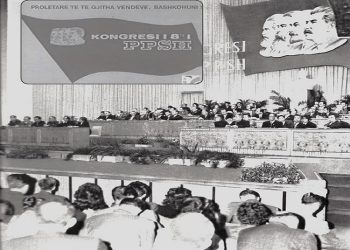
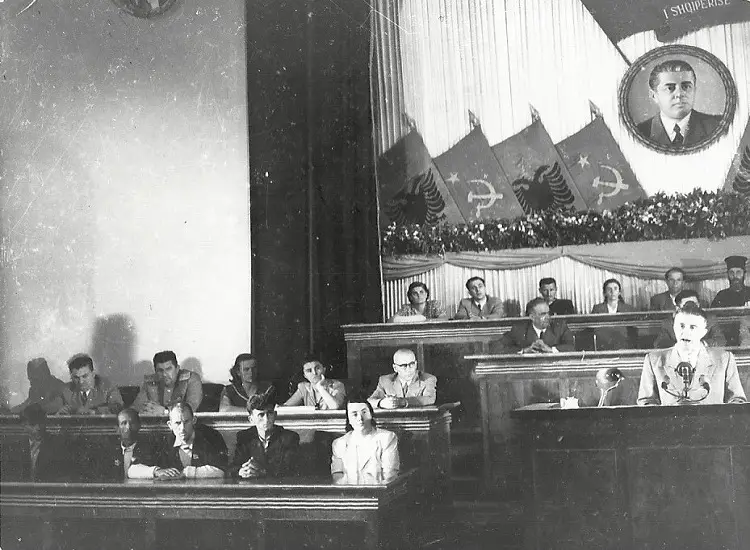
In his speech at the Second Congress of the Party of Labour, held in Tirana on April 10, 1950, President Hoxha admitted that the economic plan for 1949 had not been realized, but praised the Soviet Union for its economic aid and the extension of interest-free loans.
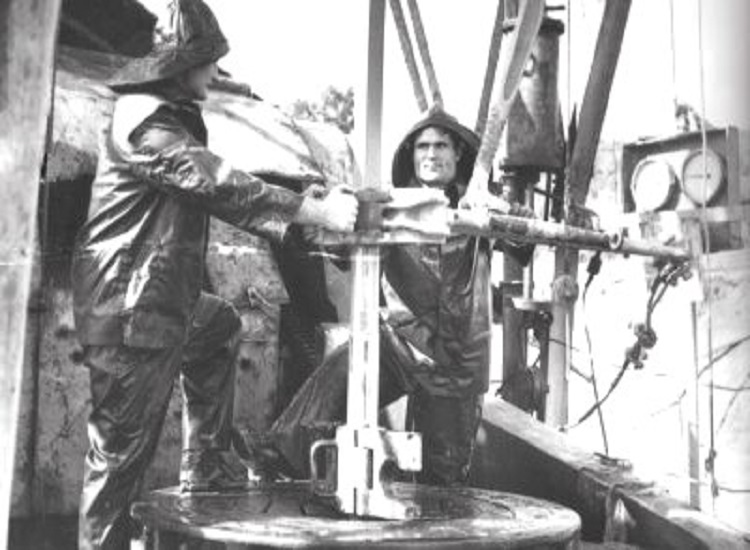
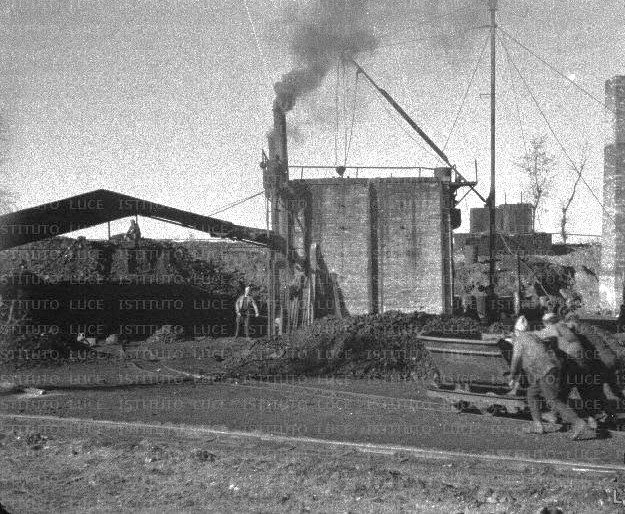
For the failures, he blamed sabotage at industrial installations by enemies of the regime. Hoxha emphasized the failures in industry and mining, which are the most important sectors of the economy. He mentioned the oil industry, especially the wells in the Patos area, which he criticized for deficiencies.
Enver Hoxha said that the oil plan for the Kuçova area was fulfilled at 91.2 percent in 1949, compared to only 62.7 percent realization in Patos. Nationwide, the crude oil plan was realized at 83.7 percent, while the bitumen plan was achieved at only 35.6 percent.
The President reported that the bitumen production plan at Selenica was exceeded by 114 percent, and that the coal and iron plan had also been achieved, despite great difficulties such as deficiencies in transport or in high-quality equipment.
According to Hoxha, oil is the only industrial sector that has not seen significant and consistent growth, and this indicates insufficient mobilization and numerous sabotages by the enemy, especially in Patos, which also had the largest share of the plan.
In addition to sabotage by Yugoslav agents, Hoxha claimed sabotage by enemy groups such as Abedin Shehu, Shyqyri Këllezi – who had previously been director of the Oil Factory – Nasi Marjani, director of Patos operations, and other enemy technicians and leaders who had worked there and enjoyed the trust and protection of the authorities.
Hoxha said that oil production as a whole and for Patos in particular, was now based on past outputs. Accurate calculations are not possible, he said, because geological studies of reserves had not yet been completed. He further accused that saboteurs like Shyqyri Këllezi and Abedin Shehu had tried to shift the blame onto shortages of technicians and materials.
“It is true that there are shortages of materials and technicians, as there are not many trained oil technicians in Albania, but the industry has the valuable assistance of the Soviet Union and its engineers,” Hoxha said, adding further that when Shyqyri Këllezi was called before the Central Committee six months earlier, he admitted that the failure of the oil plan was not due to technical shortcomings but to shortcomings in effort, and he had promised the Central Committee that the plan would be fulfilled.
According to Hoxha, Abedin Shehu, Shyqyri Këllezi, and their associates had deliberately sabotaged the production plan by implementing anti-socialist work methods and softening the measures and directives set by the labor organizations.
They had lowered production plans three times, and if the government had not taken its own measures, they would have lowered them even further. In Patos and Kuçova, the materials made available were not being used properly. Drilling equipment and other materials had been ordered, yet the maintenance of wells and tractors had not been regular.
Furthermore, the required studies for the oil fields had not been conducted. Hoxha stressed that the plan for the first quarter of 1950 would be exceeded in all sectors of the economy except the oil industry. Although oil production had been continuously increased thanks to the technical and material assistance of the USSR, the deficit from the previous year could no longer be recovered, Hoxha said.
He added that there is hope for recovery of the deficit in liquid bitumen production, for which technical materials had now been secured. Also, a new method of extracting fuel from natural bitumen was being perfected by the Soviets for the Albanian industry, he said.
The President suggested that significant improvements were already in progress and cited the following figures for the first quarter of 1950: oil 85 percent, processed bitumen 103.5 percent, and coal 107.3 percent. Hoxha said that although the oil plan for 1950 was expected to be realized, the two-year plan would not be fully met due to the failures of 1949. / Memorie.al