


Part Eleven
Memorie.al / The CIA has given great importance to life in the concentration camps built by Enver Hoxha’s communist regime, located mainly in Central and Southern Albania, where the families of political opponents of the regime in power served their sentences, mainly the elderly, women and children, of those who had left Albania in November 1944, or of others who escaped later. Through several declassified documents, the misery in the concentration camp of Tepelenë and that of Maliq is shown. The conflicts and clashes among the leaders of the nationalist organization of the “National Front” in emigration are also shown. For more on this and other matters, the following article, published as part of a series of articles with CIA secret documents, informs us.
Continued from the previous issue
May 1953
The Tepelenë Concentration Camp
In the Tepelenë concentration camp there are about 1,500 prisoners, the vast majority relatives of persons who escaped to Yugoslavia. Besides Albanian prisoners there are also some Yugoslavs, who are treated differently from the Albanians.
About 70 percent of the prisoners are women and children, while the other part are active males arrested for political motives or because they are relatives of those who escaped abroad. The prisoners in the camp come from all over Albania, but the larger part comes from the Northern provinces.
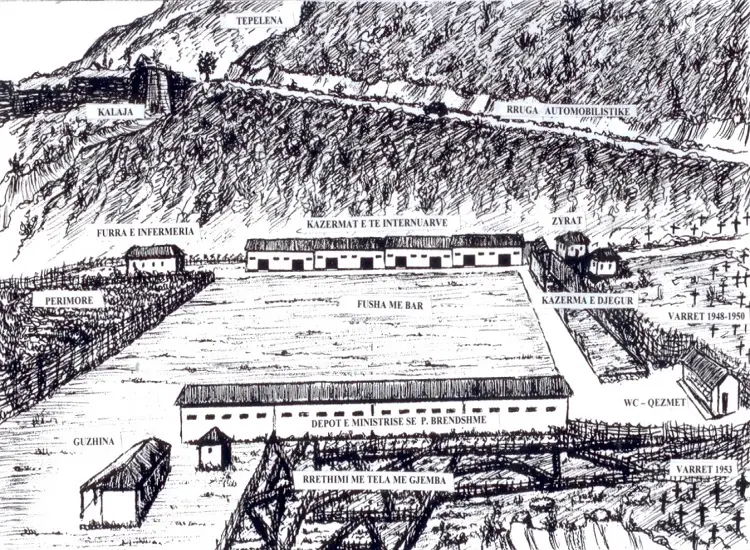
The camp is located about two kilometers north of Tepelenë, near the point where the Bënça River flows into the Vjosë River. The camp consists of one-story wooden buildings. They usually have four rooms measuring 5×20 meters.
Inside the rooms there are four rows of bunk beds, placed along two walls and two other rows in the middle of the room. The building itself is made of a strong material and has tiles on top but no ceiling. The prisoners live in this building grouped by families. About 300 persons live in each room.
The building has no insulation and no heating, therefore during winter the living conditions are very difficult. Besides the sleeping rooms there is also an office building where the prison director and his assistants stay, as well as the living quarters of the police. There is also a warehouse where the camp’s food reserves and some animals are kept. There is also a small medical building with four rooms, used for visits of the sick, and it has some beds. Other structures include the kitchen with two small rooms, one for cooking and one for storing food.
Security
The camp is guarded by five policemen, who are on duty mainly during the night and one during the day. One of the prisoners stands guard at all times in the prisoners’ barracks. In the Tepelenë camp the treatment is reported to be not as bad as in the other camps and there are no frequent beatings or mistreatment.
Punishments are carried out by means of verbal insults, especially for women and children, while foreign prisoners receive heavier punishments such as isolation or deprivation of food.
Each prisoner must have his own sheets since the camp does not have such. It is not unusual for prisoners who have no blankets or people to bring them things to sleep in bed without any clothes. Each must also have his own clothes and shoes, since the state does not provide such replacements.
Therefore most of the prisoners are dressed in rags, since clothes and shoes wear out quickly during the heavy forced labor. The only thing the state provides besides food is a piece of soap per month.
If they have people to help them from outside, prisoners can receive money to buy extra food or other supplies in the town. The food is prepared by the prisoners themselves. Each of them can receive 600 grams of bread per day. There is tea in the morning, while at lunch macaroni, bean or potato soup, and the same for dinner.
The food is cooked badly and in conditions of filth, therefore it is tasteless. The food is also insufficient; therefore when the prisoners receive their daily ration of bread in the morning, no bread remains for the other meals.
Prisoners are allowed to receive food packages from relatives from outside after they are first inspected by the police. Those who have no relatives to help them are in a more miserable condition. Food is served in the dining room for individuals and families.
Glasses and eating utensils must be brought by the prisoners themselves. Some vegetables and fruits grown in the camp garden are used by the police and the administration, and are not given to the prisoners.
Also other quantities of food that come from outside such as flour, beans and macaroni are not stored in the camp. There is no political indoctrination of the prisoners in the camp, but they must participate by obligation in the daily reading of the press. There are no films or cultural activities.
Meetings
Visitors are allowed to meet the prisoners but are not allowed to enter inside the camp. In meetings with visitors there is always a policeman present who listens to the conversation, but there are no time limits.
The sanitary condition in the camp is very bad and most of the prisoners are sick with tuberculosis, which is worsened by the lack of heating, food and sanitary means. The sick are mostly adult males and children.
Children are affected because they are not strong and must perform heavy work. Health care in the camp is poor, while a doctor from Tepelenë comes here only twice a month. Usually he sends the more seriously ill patients to the hospital of Gjirokastër while the others are treated in the camp.
The diseases that affect the prisoners most are malaria, which is chronic in many prisoners, and dysentery, which spreads epidemically. During a dysentery epidemic in 1950, about 100 prisoners died in the camp within three months, as long as the epidemic lasted.
The diseases are worsened by the fact that there are no hygiene measures by the administration and no set days for washing clothes or the body. No measure is taken against parasites and the numerous insects such as fleas, bedbugs, lice that infect the rooms and beds of the prisoners. The camp has no brooms and the rooms are sometimes swept with tree branches, while the floors are washed once a week.
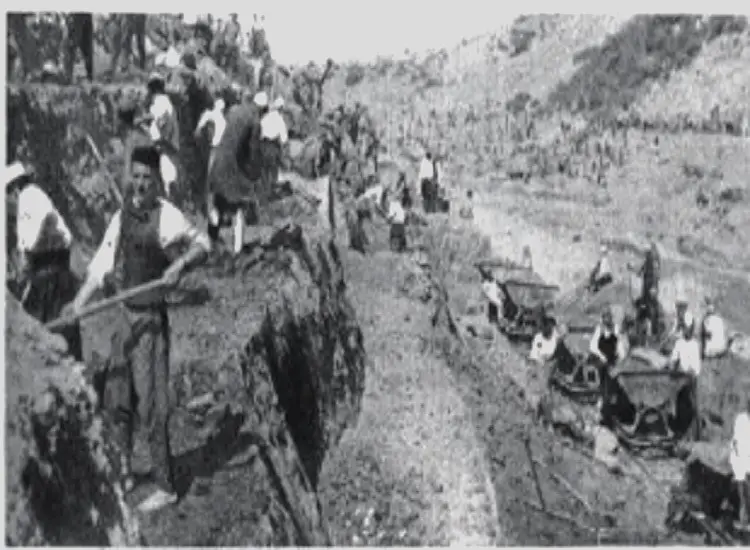
The main work of the prisoners is the cutting of trees on the mountain above Tepelenë. Each prisoner has his work quota to fulfill, which is 1 cubic meter of wood to cut per day. Other prisoners work inside the camp in new constructions, or are sent to other work sites, such as on railways or factories in other cities.
For example in November 1950, a part of the prisoners were sent to work on the Elbasan-Peqin railway, while others went to the construction of a factory in Vlorë. All physically capable prisoners, men and women, must work. Only old women and small children and some of their mothers are allowed to stay in the camp.
Usually the healthier males are chosen to cut wood, while the women of the camp are used to transport wood and do housework. There is no set work schedule and work is carried out from dawn to sunset, for six days of the week, sometimes also on Sundays.
To eat lunch the prisoners have one hour of time and usually receive the food at the workplace. The groups of prisoners who work are usually from 20 to 100 people. From them the leader is chosen who is responsible for the work of the whole group. Besides the group leader there is also a policeman who supervises the group. While the work of the prisoners is not supervised since each has his own quota to fulfill.
The groups that have not been assigned a specific task are notified of the work in the morning. The work may change from time to time. If a prisoner feels sick, he reports to the administration and requests lighter work. If he is very sick, he may be allowed not to work, while those who pretend to be sick to avoid work are severely punished.
From time to time amnesties are given to the prisoners, as in the case of November 29, 1950, when a member of the Ministry of the Interior came to the camp and declared that on the occasion of the holidays of the liberation of Albania, comrade Enver Hoxha decided that some families with children of the camp be released.
The released prisoners were warned that when they return home, “they must remember to respect and carry out the orders of the authorities; otherwise they will be returned to the camp.”
The Maliq Concentration Camp
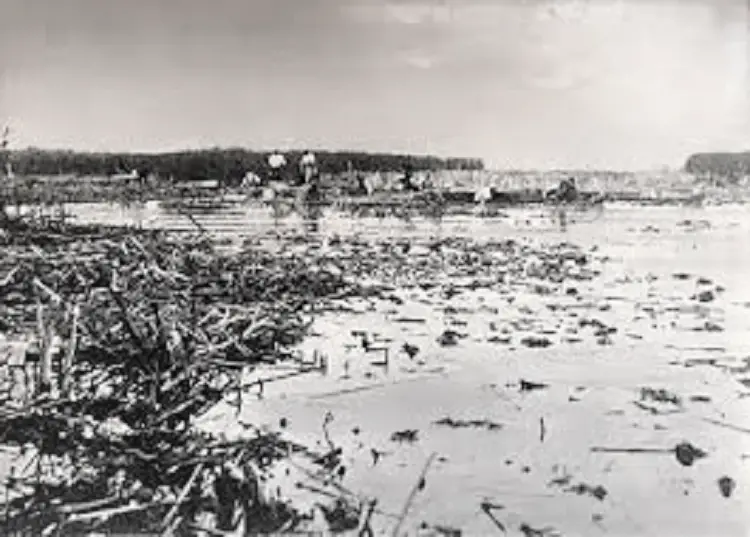
The camp is located about two kilometers northeast of Lake Maliq between the shores of the swamp and the road to Pogradec. The camp has about 1,500 prisoners who come from smaller prisons such as those of Elbasan, Tirana, Korçë and Vlorë.
The prisoners are both for political reasons and ordinary criminals. But in this camp they are not separated according to these categories, as happens in some other internment camps.
Among the prisoners there is much discontent, especially among the political ones, since most of them are innocent and were imprisoned only on suspicion, or because a relative of theirs escaped abroad.
The camp is directed by commissioner Xhorxhi … and his deputy Çeli. Director of supplies is captain Laze. The camp also has a warehouse director, and in the secretariat two police officers who do the administrative work.
The camp leaders behave very badly with the prisoners and often beat them, mistreat them and give the heaviest punishments for the smallest violations. The punishments include confiscation of packages from family members outside, prohibition of visitors, solitary isolation, deprivation of food and water, or exposure of the prisoner to the sun.
The prisoners of the camp are organized into twelve work brigades, each with 100-120 people. Each brigade consists of three companies and each company of three squads.
The prisoners who command the various units are chosen by themselves, while the leaders of each brigade are under the supervision of the police. In 1951 the commander of the prisoners’ brigades was the prisoner Hamdi Lena, who had previously been a captain in the police of Korçë, but was sentenced to ten years in prison after killing his wife.
The prisoners live in wooden barracks, each brigade in one building. The barracks are not divided into rooms, but on both sides of the walls rows of bunk beds are placed, where the prisoners sleep.
The state does not provide bedding and the prisoners who have no sheets and blankets sleep on the bare wooden bed. The buildings are not insulated from the weather. They are lit by electric power. Each prisoner is given a work outfit of trousers, jacket and coat, since the work of drying Lake Maliq requires them to be in water most of the time.
This means that if they do not have their own clothes to change into after work, they must stay in wet clothes, therefore many get sick. Besides work clothes the prisoners are also given a pair of sandals, but not water-proof clothing.
The Work
The prisoners work about 10 hours a day and in some cases even longer. They are opening canals for the drying of Lake Maliq and usually work in water up to their knees, or up to the middle. The work continues regardless of dry or wet weather or the season of the year.
Another danger is the large number of leeches that attack the workers in the lake. Many of them get sick and require daily medical care. The camp doctor Isuf Hysenbegasi is also a prisoner with life imprisonment.
He was born in Starovë of Pogradec and is a good doctor, but have no instruments or the necessary medications. The waking of the prisoners is at 03:00 in the morning, while work starts at 05:00 and ends at 14:00. From 15:00 to 16:00, the prisoners have returned to the camp and eat lunch.
After that they have free time until 21:00, when the lights are turned off and curfew is imposed. A prisoner receives 500 grams of bread per day, which is of poor quality and not well baked. The cooked foods are macaroni, bean or pumpkin soup.
Each prisoner must receive 100 gr of meat per day but this happens rarely. They are allowed to receive food packages from outside the camp. Many of the prisoners plan to escape but the camp is well guarded. And in fact only six people escaped from the camp in 1951.
In cases of escapes the border guards are informed immediately. Usually after several days the camp leaders announce in the camp about the capture and killing of the escaped prisoner, to discourage the others from attempting to leave for Yugoslavia or Greece./ Memorie.al
Continued in the next issue