
By Mark Brunga
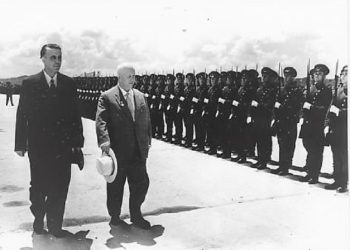
Memorie.al / Enver Hoxha claimed that the Titoists were trying to overthrow his regime, and requested protection from the Soviet Union. The latter responded to the request. A squadron of warships from the Black Sea Fleet visited Albania in 1956 and 1957. The second time – just one month before the fateful flight. That same year, a visit to Albania by Soviet Defense Minister Zhukov was planned. Based on witness accounts, the Russian writer, translator and journalist Vladimir Dobrin described a highly unknown event in the former Soviet Union and Albania: “My good old friend, Mikhail Vasilyevich Nefedov, told me a most impressive story. And I decided to write an account based on that story. As I worked, questions arose that I directed to the one telling it, but after his answers the story became even more mysterious and frightening.”
Through the Storm
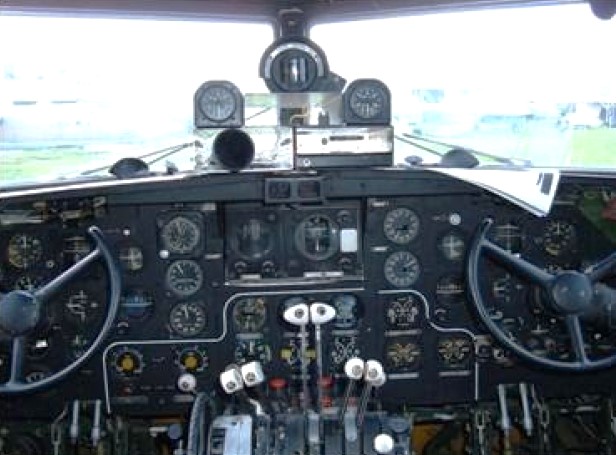
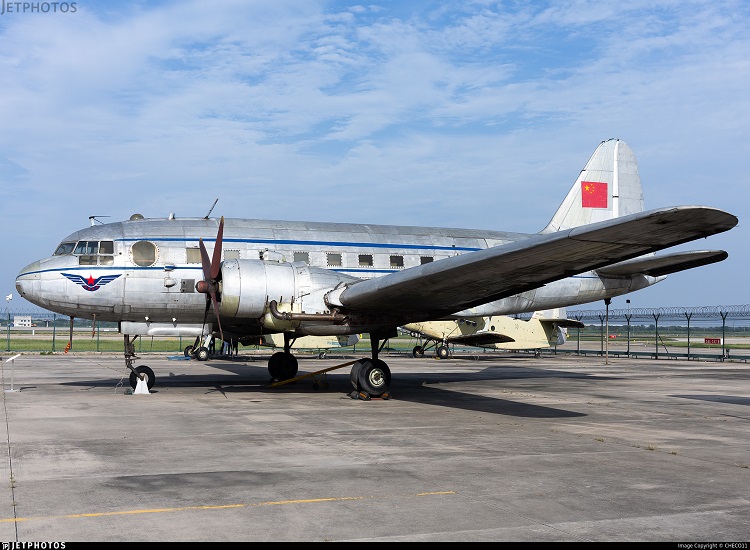
In the distant year 1957, in September, the crew of squadron no. 63 of the civil aviation directorate of the former USSR in Moscow carried out a route with passengers Moscow–Tirana. They were flying an IL-14 – an aircraft, at that time, for regional flights, equipped with two piston engines. The commander – Boris Devyatov, the second pilot – Yuri Gribanov, the flight mechanic – Mikhail Nefedov, the radio operator – Sergey Deshko, the stewardess – Vera Starikova.
On board were 26 passengers, among them women and children, even a nursing infant. The last transit landing was made in the capital of the former Yugoslavia, Belgrade. It was refueled, received a meteorological bulletin for the route to Tirana. In the bulletin there was no dangerous or at least suspicious weather data. And almost nothing remained – four hundred kilometers.
Then a strange circumstance surprised them: the Yugoslav air traffic organization service was doing everything possible to speed up the aircraft’s departure for Tirana. Even without giving any explanation. In their words, impatience and nervousness were noticeable. Nowhere and never had the crew encountered such treatment? But this absurd behavior was soon forgotten, but as it approached the mountains, the IL-14 found itself in an extraordinary storm. The crew could not believe their eyes.
Massive gray-leaden clouds, occasionally split by lightning, stretched across the entire horizon, cutting off the aircraft’s path. How was it possible that the Belgrade meteorological service had not noticed such a powerful and wide storm right under its nose?! Climbing above the cloud mass was not possible: the upper limit of the clouds was too high for this type of aircraft. The instructions prohibited flying through it.
All that remained was to request permission from the Yugoslavs to return to Belgrade. That is what was done. The dispatcher was silent for a long time, which again astonished the crew, then suddenly answered: – “Return is prohibited. Go to Tirana.” And again no explanation. And that same nervousness in his voice. This order no longer seemed so strange; it was nothing other than an abuse of duty. Nevertheless, they had to obey, and the crew directed the aircraft toward the storm, trying to find a gap in it.
Meanwhile, this behavior was a copy of the poor relations between the Soviet Union and Yugoslavia. They flew for a quarter of an hour but found no window. This storm could extend more than a hundred kilometers, and the amount of fuel in the tanks was small. The situation was complicated also by the fact that strong turbulence and anoxemia (insufficient oxygen in the blood) over the high mountains began to affect the passengers’ condition. Two nursing infants caused particular concern.
On board were five one-liter oxygen cylinders, intended for use in such cases. But no one had imagined that flying at this altitude would last so long. The stewardess had to use all the cylinders immediately, giving them in turn to the infants, their mothers, and other passengers suffering from hypoxia (reduced oxygen content in the body or particular organs).
The aircraft had already deviated substantially from the itinerary, and a dispatcher from Titograd (now Podgorica, the capital of Montenegro) periodically gave a bearing to indicate where they were. The signal was not of great importance to the crew, but it was touching that at least one person in the Yugoslav traffic service was trying to help them. He, of course, had heard their radio communications with Belgrade and was undoubtedly worried about the people in a difficult situation. This dispatcher said nothing, but the crew was deeply moved by his noble act.
Nevertheless, the fuel was running out. There was still not much left, but it would not be enough not only to reach Tirana, but not even to reach Belgrade, where they needed to return urgently. The crew contacted the dispatcher. He again was silent for a long time, and then repeated that return was prohibited. Desperate, the commander reported their hopeless situation and requested permission to return or to land at any airport. But the dispatcher, in a sharp tone, made it known that the airspace over Yugoslavia was closed to flights and, without explaining the reason, cut off communication.
What was happening seemed to the crew like some frightening phantasmagoria. It was absurd to penetrate through the storm because of the lightning, the air currents that emerged and disappeared in the rumbling storm clouds, not to mention the mountains hidden in them with heights up to 4 km. There were no locators on the aircraft and they would have to fly by guesswork. Climbing above the mountain peaks was impossible due to insufficient oxygen. While negotiations were taking place, precious time was being lost. Now the fuel was not enough to reach Belgrade, nor Tirana, nor any other aerodrome they knew. And all around there were only mountains. Only the road to hell remained.
The Unexpected Way Out
At that moment the clouds covered the aircraft like a shroud. The crew commander had turned white as foam and had frozen in his seat, not reacting to shouts. His petrified face, distorted by suffering, indicated a man who was parting from life. The mechanic Nefedov shouted to the second pilot that he himself should take control of the aircraft. But the young and still inexperienced pilot had lost his composure. Not knowing what to do, completely dazed, he put his chin on the yoke and, bewildered, stared ahead.
Red in the face from shock, the radio operator continued to take bearings, but it was clear that he too was in the same state and was performing his work purely mechanically. They were all experiencing that moment when one’s whole life passes before one’s eyes and close and beloved people come to mind. Here Nefedov suddenly felt his hair stand on end – so strong was the nervous tension. At the same time his brain was working with fantastic intensity. The gathering of forces and the desire to act lifted him to his feet with a start.
Mikhail grabbed the commander by the shoulders and shook him: – “Boris! Boris! Pull yourself together! We must save ourselves! The people must be saved! Fly the aircraft! Look for a place to land”! In the first seconds the pilot did not react. His face remained motionless, and he only repeated unconsciously: – “Yes… yes…”! And suddenly in the impenetrable gray clouds a window opened! Small, unclear, but through it a valley was visible, at the end of which shone a blue lake, surrounded by high mountains.
Nefedov shook the commander even more forcefully:
– “Boris! Look! Land”! The pilot came to and straightened his back in the seat. His eyes began to shine, they became conscious, and the pale color was replaced by red. He took the yoke without speaking and directed the aircraft with confidence. A few more seconds and they were under a clear, sunny sky. It remained to find a place to land the aircraft before the fuel ran out.
The stewardess began to prepare the passengers for an emergency landing. Difficulties arose: the seat belts on the chairs were twisted and wrapped with strong threads. It is not known why they were not used at that time. In her haste the bloodied girl had cut her hands, but managed to untie or break the cursed threads. The adult passengers, who had not lost their self-control, helped her with this.
Fortunately, the crew immediately saw a field where the aircraft could land. Cows and sheep were grazing on it! Collision with them would lead to dangerous damage. Meanwhile, on the instrument panel the red light was flashing, signaling that little fuel remained. They had to land urgently. The flight mechanic reminded the commander that during full turns, only a minimal bank could be made – otherwise the fuel residues would return from the pipe and the engines would stop. But the herd also had to be cleared away!
The aircraft passed over it at a very low altitude. The animals took off running, but were not leaving the field. Fortunately, the shepherds guessed what the pilots wanted and led the herd elsewhere. The commander was trying to land. The red fuel light meanwhile was no longer flashing, but was shining continuously. This meant that the fuel was running out from moment to moment. The landing of the aircraft went splendidly. Bouncing over the broken terrain, the aircraft continued to move at speed for several hundred meters and stopped. From the cabin came shouts of joy from the passengers. God had mercy on the innocent.
After an hour the Yugoslav border guards arrived. They explained that flights over the country’s territory were prohibited because at this time (on September 10, 1957) the head of Poland, Władysław Gomułka, had arrived in Belgrade by plane, and that the Yugoslav authorities feared air incidents. But this did not sound convincing. After some time a bus came and took the long-suffering passengers to Tirana. A cargo that had remained on the aircraft also had to be dispatched. The field where they landed was also suitable for takeoff.
This took place the next day, after the crew rested in a tourist hotel, while the border guards brought fuel. Due to the extremely rarefied air, the second half of the takeoff run was made with reheating (injection chamber). From the valley they rose into flight as from a deep well, gaining altitude in spirals.
In Fact, They Had Been Sentenced to Death
In Tirana they were received as heroes – music, flowers, embraces, tears of joy and gratitude! The whole city had poured out. The passengers who had just arrived told how they managed to survive and to whom they owed their rescue. Many years later, Mikhail Nefedov and the stewardess Vera Starikova wrote an article about that flight and published it in the Russian magazine “Pyatiy okean.” In this article they explained the actions of the Belgrade dispatchers only as a consequence of political conflicts between the Soviet Union and Yugoslavia. But it turned out that Belgrade’s relations with Tirana at that time were even worse.
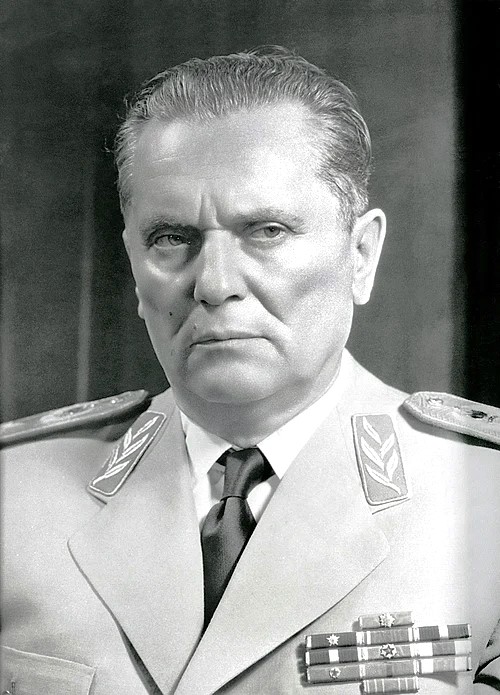
Meanwhile, the plane was carrying mainly Albanians. A few years earlier Tito had aimed to annex Albania within Yugoslavia, but Stalin said “no,” and on his recommendation Tirana tore up all economic agreements with Belgrade. Their diplomatic relations were also cut, and mutual provocations began at the border. Both in Stalin’s time and in Khrushchev’s, the Soviet Union gave Albania intensive economic and financial aid.
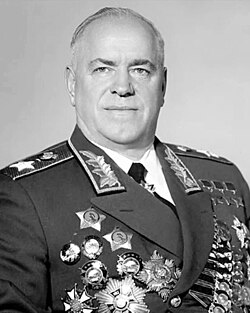
Its leader Hoxha claimed that the Titoists were trying to overthrow his regime, and requested protection from the Soviet Union. The latter responded to the request. A squadron of Black Sea warships visited Albania in 1956 and 1957. The second time – just one month before the fateful flight. That same year, a visit to Albania by Soviet Defense Minister Zhukov was planned.
Of course, Belgrade did not want such a military alliance. But is this sufficient to send the Soviet crew and thirty Albanian passengers probably to their deaths? Did they forget the storm? Were they expecting the arrival of an important person? Fine, but why did they not propose to the crew and passengers to wait, but instead hurriedly and insistently drove their aircraft from the airport? Why were they silent for so long when permission to return was requested?
Why did they not allow landing at any of the nearby airports, which were numerous in this area? The landing would in no way have hindered Gomułka’s plane. All this resembled not so much irresponsibility as a premeditated massacre. At the same time a mysterious and terrible accident also occurred, with which the crew became acquainted after their rescue. When they asked the Yugoslav authorities to express gratitude to the dispatcher from Podgorica who had given them the bearings, they answered that he had been killed by lightning during a communication session in that same storm. And they had not even informed his family. This was now serious…!
I am not confirming anything, but do people often get killed by lightning while sitting in a closed radio equipment building? Personally, I have not heard of any such case. But to kill a man with electric current and present it as a lightning strike is not complicated. This has to do with the fact that the dispatcher was a witness to what happened and that he had the sympathy of the Soviet crew. In my soul I hope that he was nevertheless alive and that they had simply hidden him in some deeper place, to thus quietly close the matter.
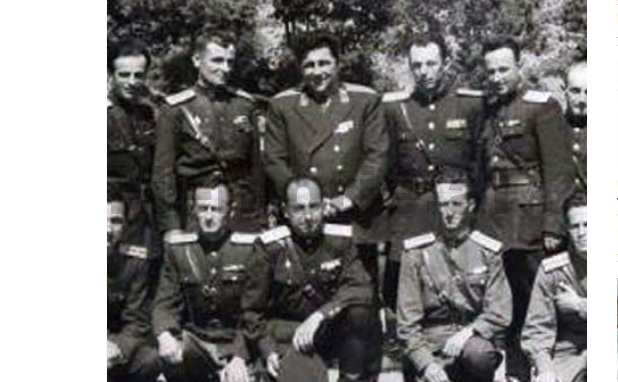
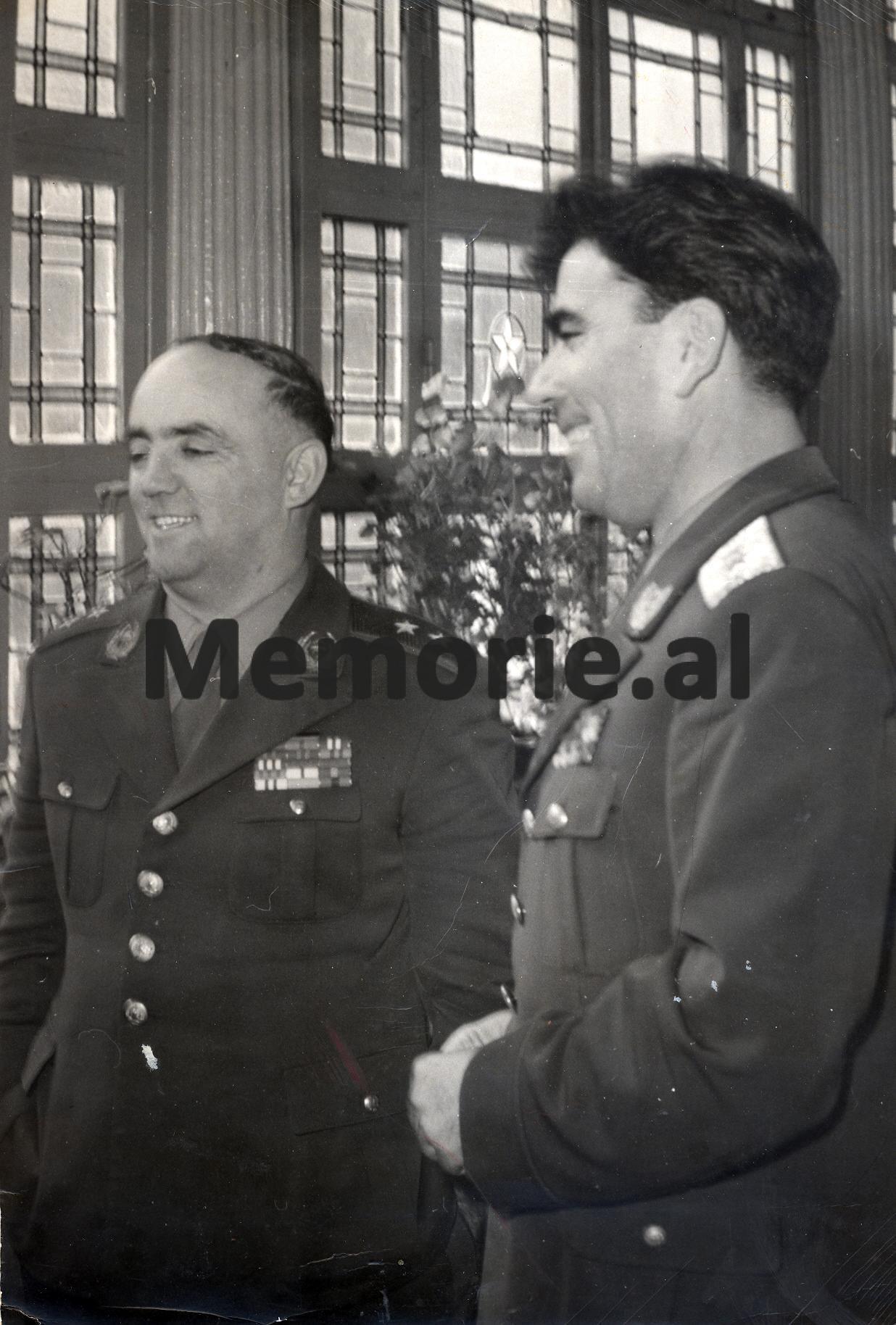
And here I thought: “Could it be that some important person who had strongly irritated the Titoist regime was traveling on that flight?” Again I turned to Mikhail Vasilyevich and, apparently, he found something. It turned out that seven Albanian generals were traveling on that flight! I think it was the entire general staff of that country, considering the population at the time and its armed forces.
And could not some hot-headed and not very wise person from yesterday’s Titoist partisans have been using the created situation to somehow prevent military cooperation between Albania and the Soviet Union, or simply to annoy the hated neighbor and its protector? I leave it to the reader to answer this question,” Dobrin concludes the article./ Memorie.al
IL-14 (according to NATO codification: Crate) – Soviet aircraft for medium-distance flights.
It was designed and built in the late 1940s to replace the aging Li-2 aircraft as a further development of the technical solutions applied in the IL-12.
The first flight of the IL-14 took place on July 13, 1950.
Crew: 4 (flight crew)
Capacity: 24-28 passengers
Length: 22.30 m
Wingspan: 31.70 m
Height: 7.90 m
Wing area: 99.7 m²
Empty weight: 12,600 kg
Takeoff weight: 18,000 kg
Aircraft engine: 2 × Shvetsov ASh-82T 14-cylinder, air-cooled, radial engine, 1,417 kW each
Maximum speed: 417 km/h
Range: 1,305 km
Maximum flight altitude: 7,400 m
Rate of climb: 5 m/s