By Lura Limani
Part Three
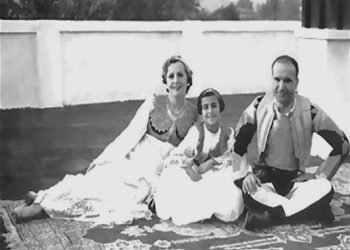
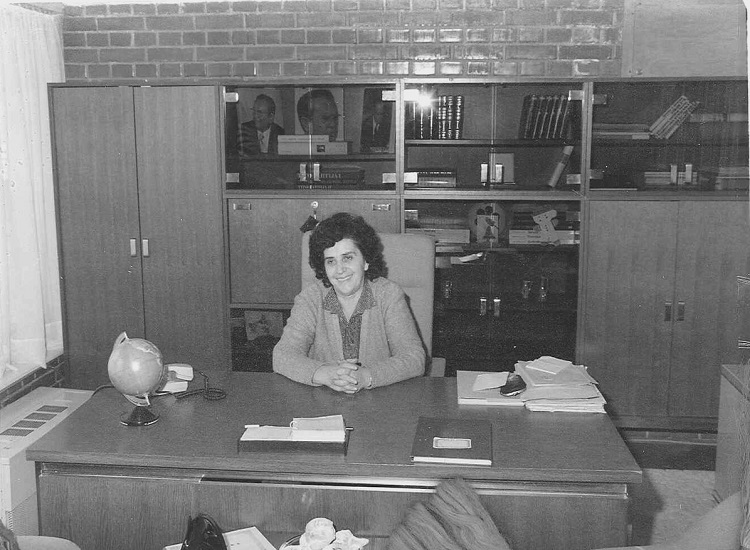
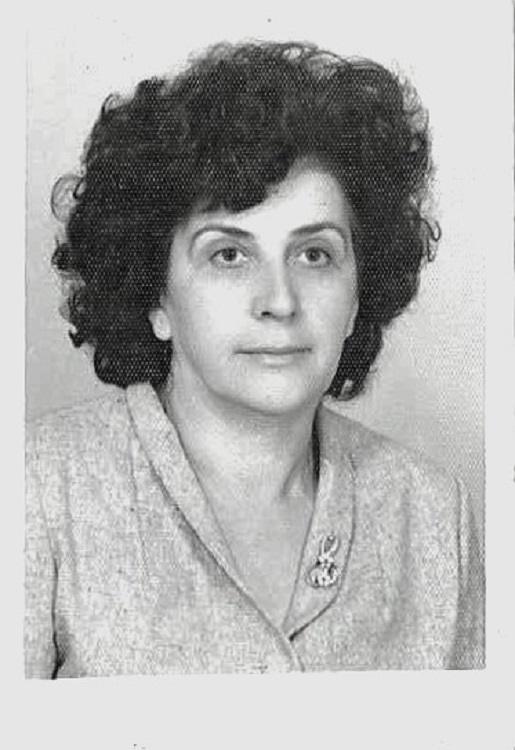
Memorie.al / Raised in postwar Yugoslavia, my grandmother saw herself as an inseparable part of the socialist social structure. How are we to make sense of her world today? By the time I came to know her, my grandmother had become a difficult woman. She seemed stern: she had a serious gaze; she was not a woman you wanted to mess with. In Albanian we have the expression “zonjë e randë” – a heavy lady. That is what my grandmother was like: difficult, dignified, proud; well-groomed and with her hair done even when she was shut in at home. In my eyes, she was larger than life. There seems to have been some truth regarding her youthful, robust body, since today her old clothes hang loose on my slender frame, three sizes too big. She had a presence that demanded attention and respect every time she entered a room.
Continued from the previous issue
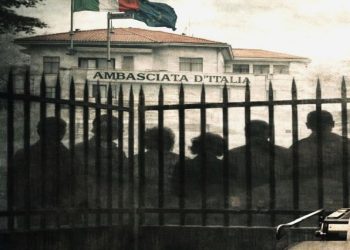
“Our house was the first to be attacked. A hail of gunfire began; we were in the room getting ready for bed [when] boom boom boom. Father tells our older brother, ‘Fahri, run!'” my grandmother recalled. Fahri escaped, and according to Fadil’s account, he arrived in Pristina that same evening, where he later rejoined the partisans. The rest of the family, thinking they had done nothing wrong, decided to stay. At first, the children were sent to the neighbors, while the father and mother stayed behind. They even planned to go out and open the front door to tell the Italian soldiers: “Come, see for yourselves, there is nothing to see.”
Holding a kerosene lamp, Halim and Nakija managed to get halfway down the hallway toward the door before Nakija changed her mind. “You don’t go out to face these people, they look very angry,” my grandmother recounted her mother as having said. So they left the kerosene lamp in the middle of the yard and ran to the neighbors where the children were hidden.
Not long after the Hoxha family’s house caught fire, the flames also reached the neighbor’s house. In the panic, as the two families were trying to save the neighbor’s furniture and clothes from the flames, Halim turned to another neighbor asking for shelter. The family refused him. “How can you?” Halim pleaded: “I have nowhere to go; the army is in my yard.” But the neighbors, who undoubtedly feared they would be caught by the fire themselves, would not budge, and when Halim tried to climb the wall separating the yards, they pushed him back.
He fell and broke his leg, my grandmother would tell us, laughing at the tragicomic situation. Now, the Hoxhas had nowhere to turn, and Myrvete’s older sister, who was “strong, young, and robust,” was forced to carry her father and go out into the street. “We go out into the street and follow [my sister with my father]. My uncle was nearby; he was very helpful to us throughout the war. We went to his house and stayed there,” my grandmother would often recount. “The greatest misfortune of that time came after our house burned down and we were looking for a place to rent. Everywhere we went; the neighborhood would rise up and say: ‘No, you cannot come here.’ ‘Why?’ ‘Because they will come to get you and we will suffer too, the whole neighborhood will be burned down.'”
Although they rebuilt the house after the war, it was never the same for her. Eventually, other neighborhoods, less fearful about the arrival of a partisan’s family, and which were already providing illegal shelter for meetings of armed rebels, took the family in. The Hoxhas finally settled in the “Mullah Jusuf” neighborhood. This episode was deeply traumatic for my grandmother; although the house was rebuilt after the war, it was never the same for her. She often spoke of the old house with its gleaming wooden shelves in the family room, filled with leather-bound books with hard covers.
By the following year, the Hoxha family’s resilience was tested again. Two of the older children, Fahri and Sani, both at one time or another connected to the anti-fascist movement, moved for work to Tirana, hoping to escape possible persecution. Kika, as my grandmother called her mother her entire life, stayed with Halim and the younger children in Gjakova. One night, after the Germans had occupied Kosovo following Italy’s capitulation and fighting between the Axis powers and the partisans had intensified, Halim, who was not himself a communist, was arrested and sent to a labor camp in Austria.
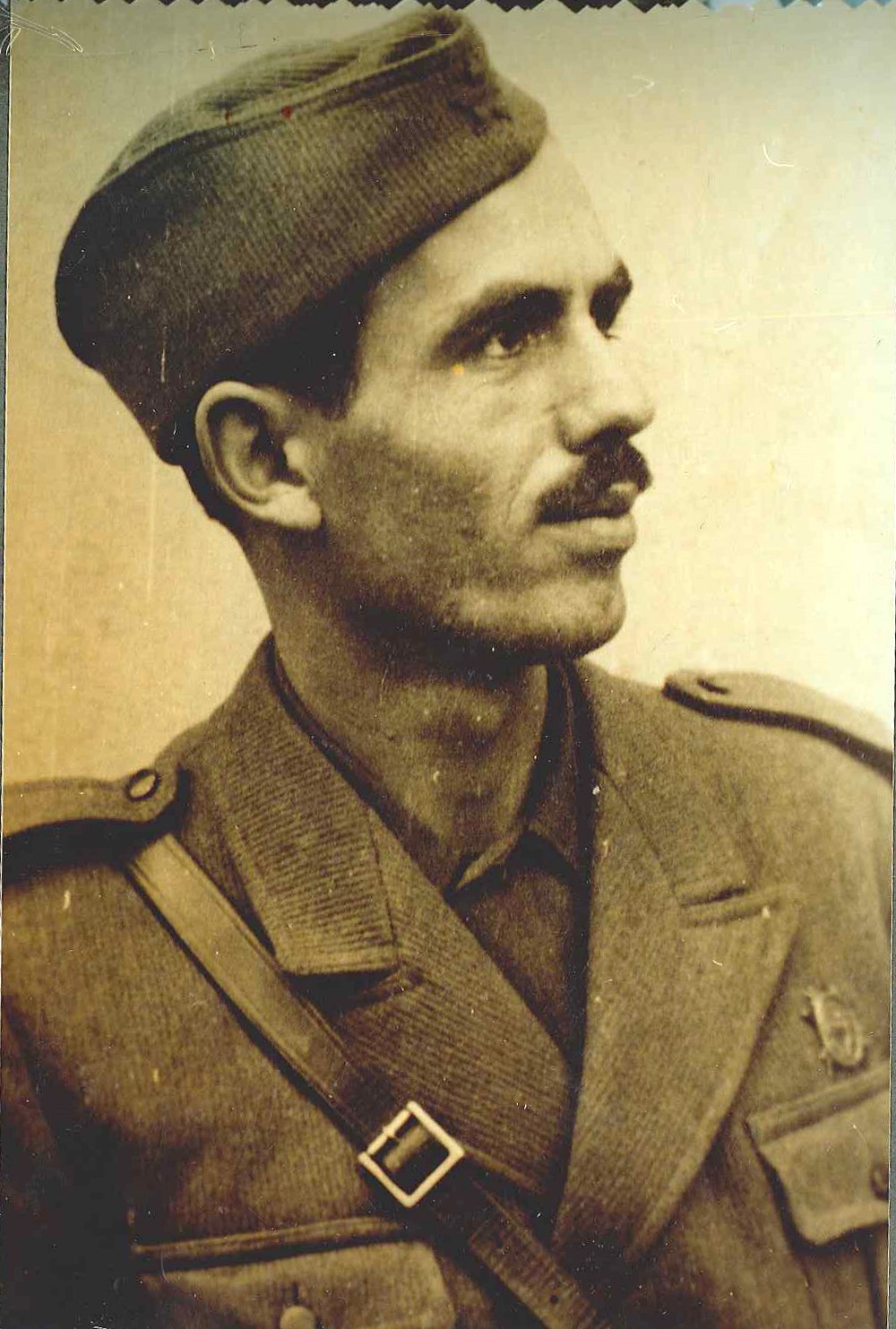
He returned after the war to a new reality: his firstborn son, Fahri, had been hanged by the Nazis in the city’s main square along with 10 comrades, including 17-year-old Ganimete Tërbeshi; his other son, Fadil, having emerged victorious from the war, had been appointed deputy commander of the Operational Staff of Kosovo, a region that would soon become a province of the Federal People’s Republic of Yugoslavia.
The End of the War
When the Italians entered Gjakova in 1941, my grandmother and the other children had gone out to join the crowd cheering the marching soldiers, welcoming them with songs and applause. Dressed in national costumes, waving the red-and-black Albanian flag, through the city center teeming with people shouting “Long lives Albania,” “Down with Yugoslavia,” “Long live Father Hitler,” and “Long live Mussolini.”
When the partisans liberated Gjakova from the Nazi forces in November 1944, the cheers and celebrations exploded once more. But my grandmother was not there to see it in person, as her family was hiding in the highlands of Gjakova in Albania. At the beginning of 1944, after Halim’s arrest, my grandmother tells us, Fadil had written a letter to his stepmother, Kika: “I cannot take any action. You are hostages, they will kill you,” urging her to hide with the younger children. The two oldest children, Sani and Nexhmija, had already joined the partisan forces.
“I didn’t go because I was too young, they didn’t take me,” my grandmother told me. Secretly, the partisans had taken Kika and the younger children across the border into Albania, passing through Tropoja to leave them in Dushaj, in the house of a man named Zenel Ahmeti. The partisans had strong bases in the highlands, with many houses that took in partisan families when they fled the city, Fadil recounted. “All night long, the villagers came to [Ahmeti’s] house to protect us,” my grandmother told us years later.
The family returned to the city after it was liberated from the retreating Nazi forces and with the arrival of the communist partisans as victors. For my grandmother, the war ended then, although fighting continued throughout Kosovo, as the partisans fought to quell anti-communist national resistance. In December, a group of hundreds of Albanians attempted to take Ferizaj, without success; about a month later, a similar action was organized in Gjilan. In retaliation, “a Serbian partisan brigade,” as Fadil Hoxha later acknowledged, entered Gjilan and killed many civilians, “many innocent people who had no connection to the Ballists.”
Meanwhile, fighting continued further north, on the Syrmian Front, northwest of Belgrade, where retreating Axis forces had established a defensive line against a joint effort by Yugoslav partisans and Soviet and Bulgarian forces, aided by Allied air power. In Kosovo, which was under Yugoslav communist command, the partisans tried to mobilize as many men of military age as possible to send to the front, but faced an uprising.
Despite the partisans’ efforts, including Fadil Hoxha himself, to persuade Shaban Polluzha and his brigade of about 8,000 men to join the partisan forces fighting against the Germans, Polluzha decided to stay put and defend his region, Drenica. Fighting ensued between the partisans and Polluzha’s forces, and according to historian Noel Malcolm, about 20,000 Albanians joined the uprising. By March, the uprising had been completely suppressed; 44 villages in the area had been destroyed. Meanwhile, the Syrmian Front was finally broken by mid-April, and on May 9, Soviet forces declared victory in Berlin against Germany, which surrendered. The world war was truly over.
The Age of Maturity
For most of the war, the question of Kosovo’s status remained unclear. Despite the Bujan Resolution of 1943–44, in which the National Liberation Council for Kosovo and Dukagjin made it clear that the majority of Kosovo’s population was Albanian and that they wished to unite with Albania, after the war ended, the province remained under Serbia. Initially, for the Albanians of Kosovo, who had again been left outside the Albanian state, the border was insignificant. Right after the war, Yugoslavia and Albania had excellent relations, and Enver Hoxha wholeheartedly supported the idea of uniting the two countries.
In 1945, when the newly established institutions were trying to expand the educational system in Kosovo, Albania sent 50 teachers. “As soon as schools in the Albanian language opened, we began to open our eyes, and we must thank Albania, which sent teachers immediately,” explained my grandmother, who was just a high school student after the war. “Once it gained momentum, it never stopped.” After the war, the Communist Party of Yugoslavia (CPY) undertook a massive educational campaign to eradicate illiteracy. Education was given great importance by the communists as a means to foster a Yugoslav patriotism as well as to combat “backwardness.”
The newly established authorities organized literacy courses and expanded the network of primary and secondary schools. The Normal School, which conducted classes in the Serbian language, was founded in Pristina in 1945, while its Albanian-language counterpart was founded almost a year later in Gjakova, in October 1946. According to Qazim Lleshi’s book “The Gjakova Normal School,” the school in Gjakova was organized on the spot to prepare teaching staff: the first day of classes was held on a Saturday.
According to the 1948 population census, 62.5% of Kosovo’s population was illiterate. The illiteracy rate among women was 78.4% – although historian Isabel Ströhle suggests that the actual figures may have been higher. The CPY claimed that in just one year – between 1947 and 1948 – 40,000 people in Kosovo had attended literacy courses, and in the first 10 years of the new socialist order, the number rose to 270,000.
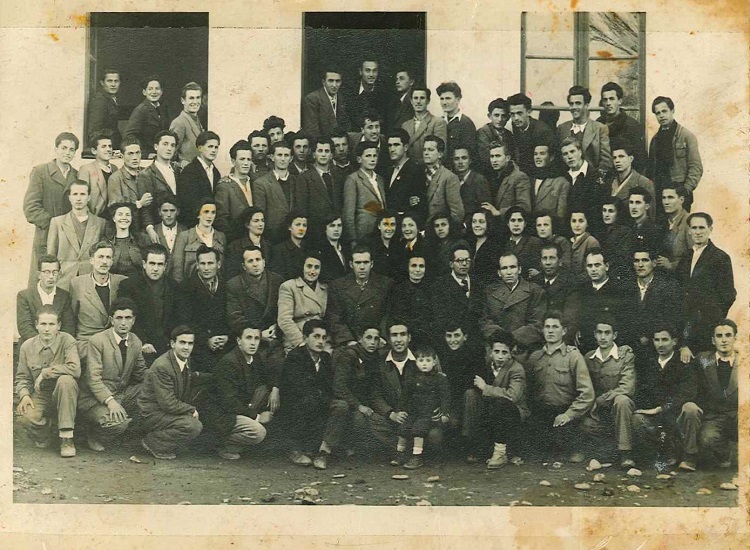
In 1947, my grandmother joined dozens of young men and women at the “Normal School” who wanted to become teachers. When we interviewed her, she insisted that she had been in the first graduating class, but according to a book about the “Normal School” published by Qazim Lleshi in 1987, she appears to have been in the second generation. Coincidentally, my grandfather Xhahit Limani, originally from Prizren, met my grandmother while attending the Normal School, as a student of the first generation that graduated in 1948.
The Normal School was very prestigious. My grandmother often equated graduating from the “Normal School” with graduating from university. The school itself was housed in the Institute of Industry, which had operated during the war period and prepared students to become educators. Students attended classes in subjects such as Albanian language and literature, Serbo-Croatian, Russian, mathematics, geography, physics, history, music, and drawing. The first generation of students had no textbooks, which meant that the only way to retain knowledge was through rote learning.
Excellent students would repeat the lessons to others. My grandfather, whose academic progress is well documented in his classmate Lleshi’s book, likely excelled in gymnastics and singing. While all graduates of the “Normal School” went on to become teachers and were posted wherever the Communist Party needed them, some, like my grandfather and grandmother, continued their education in Belgrade. “Going to Belgrade was a wonderful feeling. It was like going to a European country, a great life achievement. We were flying, we were flying when we went to Belgrade,” my grandmother recounted during the interview.
In a photograph with classmates in Belgrade’s central Terazije Square, my grandmother, dressed in a dark dress with a jacket over her shoulders, looks toward the camera as she stands among three peers. She looks happy. Myrvete with classmates from the ‘Normal School’ in Belgrade, 1952. From left to right: Qazim Lleshi, Ibrahim Zherka, Myrvete Hoxha, and Hasim Binishi. “We were flying, we were flying when we went to Belgrade,” my grandmother said. “They welcomed us well. Later, relations [with Serbs] began to hurt, but they did appreciate us,” she said in the interview.
During this period, my grandmother, who had a lifelong weakness for fashion, went shopping at one of the shopping centers in downtown Belgrade. Looking for a size for herself, she turned to a woman for help, addressing her as was customary at the time, simply as drugarica – comrade, in a sisterly manner. It is very likely that, noticing her poor Serbian and the accent that most people from Gjakova never managed to lose, the Serbian woman turned to her and without a second thought told my grandmother contemptuously: “Nisam ja tvoja drugarica!” (I am not your comrade!).
It was a cold shower for my grandmother’s political naivety and a crack in her belief in the party line of brotherhood-and-unity. Yes, all animals were equal, but some were more equal than others. / Memorie.al