• Rreth Nesh
  • Kontakt
  • Albanian
  • English
Monday, September 7, 2026
Memorie.al
No Result
View All Result
  • Home
  • Dossier
  • Interview
  • Personage
  • Documentary
  • Photo Gallery
  • Art & Culture
  • Sport
  • Historical calendar
  • Others
  • Home
  • Dossier
  • Interview
  • Personage
  • Documentary
  • Photo Gallery
  • Art & Culture
  • Sport
  • Historical calendar
  • Others
No Result
View All Result
Memorie.al
No Result
View All Result
Home Personage

“As the procession flowed through the old Pristina cemetery overgrown with bushes and wild plants, Zija Mulhaxha, the 80-year-old president of the Veterans’ Organization, said…”/ Memories of Fadil Hoxha’s granddaughter

“Në mjedise private të Kosovës, Schwandner-Sievers kishte ndeshur një Tito-nostalgji të ngjashme me atë të kombeve dhe etnive të tjera, ish-jugosllave…”/ Refleksionet e mbesës së Fadil Hoxhës
“Edhe foshnjat në Gjakovë e njihnin Ali Bokshin, spiunin dhe Fadili, Boro Vukmiroviç, Ramiz Sadiku dhe Ymer Pula, vendosën që ta vrisnin…”/ Dëshmia e rrallë e mbesës së ish-udhëheqësit të Kosovës

From Lura Limani

Part Four

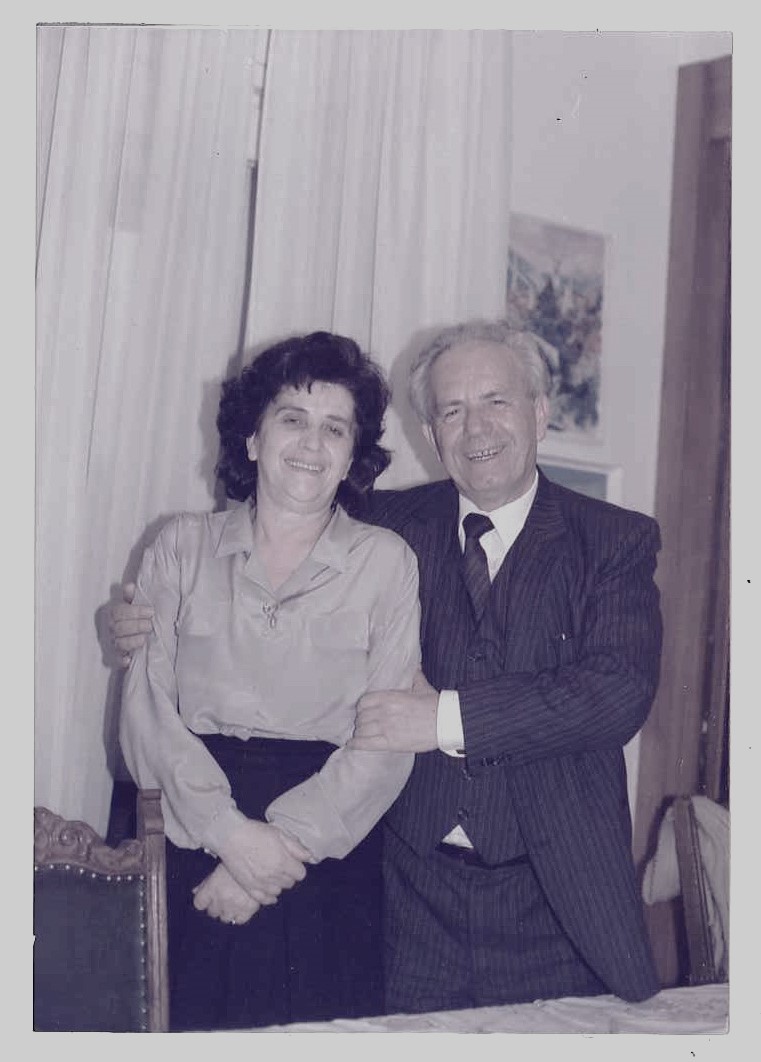
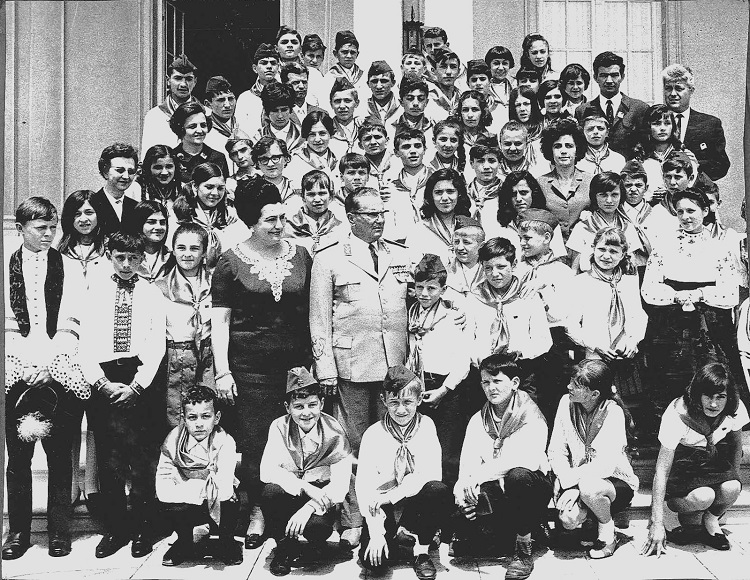
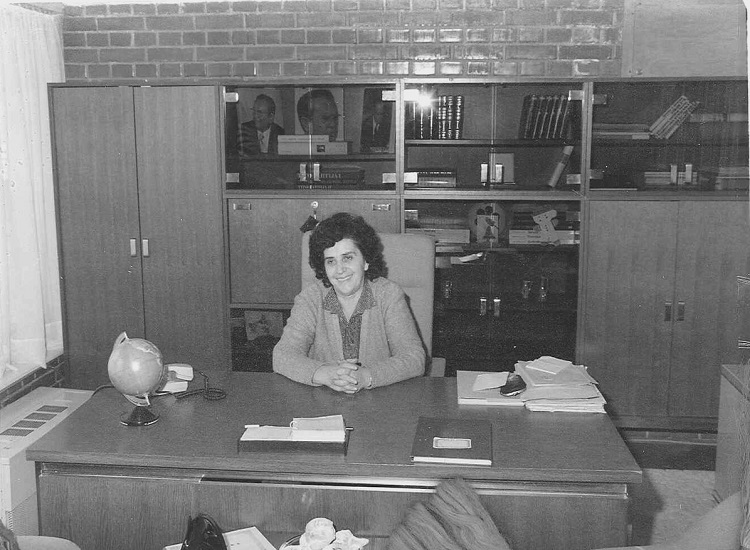
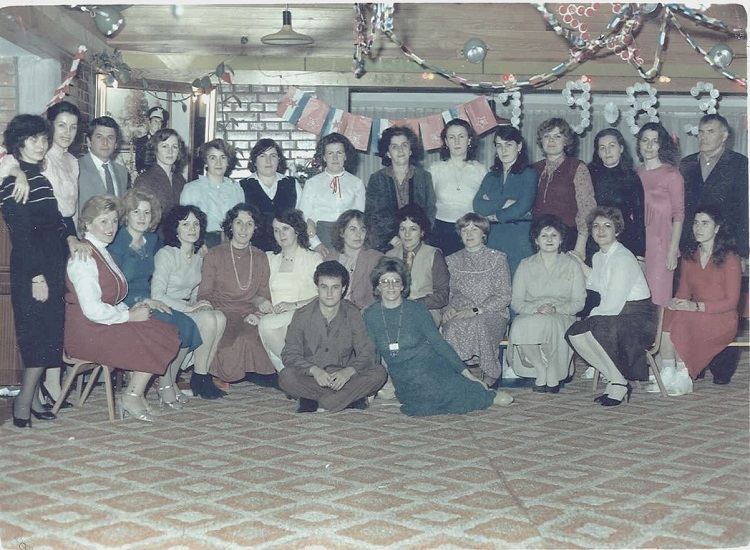
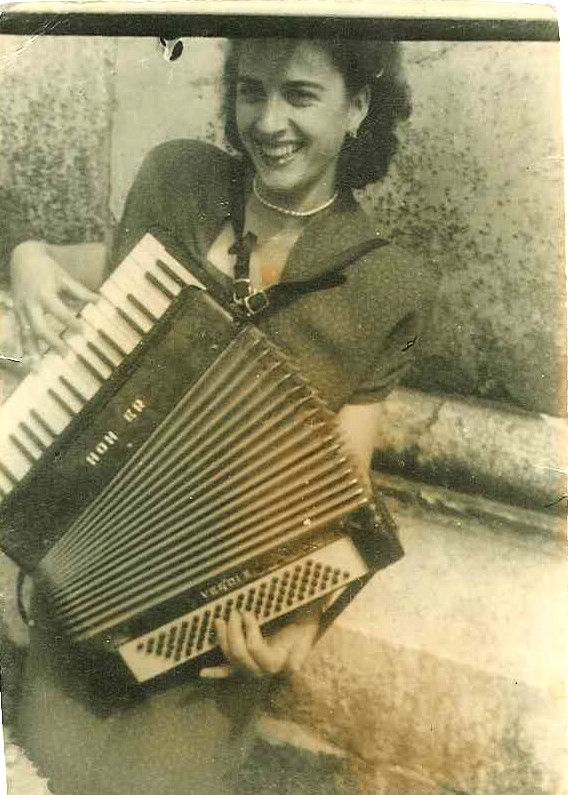
Memorie.al / Raised in post-war Yugoslavia, my grandmother saw herself as an inseparable part of the socialist social structure. How can we make sense of her world today? By the time I came to know her, my grandmother had become a difficult woman. She seemed stern: she had a serious gaze; she was not a woman you would want to cross. In Albanian, we have the expression zonjë e rëndë—a “heavy lady.” That’s what my grandmother was like: difficult, dignified, proud; well-groomed and combed even when she was shut indoors. In my eyes, she was larger than life. There seems to have been some truth regarding her youthful, buxom body, because today her old clothes hang loose over my slender frame, three sizes too big. She had a presence that demanded attention and respect every time she entered a room.

                                              Continued from the previous issue

Gjithashtu mund të lexoni

“In ’41, when the Italians entered Gjakova, my grandmother and her children joined the crowd that chanted ‘Long live Albania’, ‘Down with Yugoslavia’, ‘Long live Hitler’, ‘Long live Mussolini’…”/ Memories of Fadil Hoxha’s granddaughter

“Even babies in Gjakova knew Ali Bokshi, the spy, and Fadili, Boro Vukmirovic, Ramiz Sadiku and Ymer Pula, decided to kill him…”/ Rare testimony of the granddaughter of the former leader of Kosovo

Instant Emancipation

My grandmother was a pioneer of her kind: pleased with her own youthful courage, she often told us how she wore a swimsuit to swim in the Erenik River. “In the 1950s,” she would say, widening her eyes. “Times were changing, especially for women. Women had played an integral role in the liberation of Yugoslavia, and the party understood the importance of women’s emancipation.”

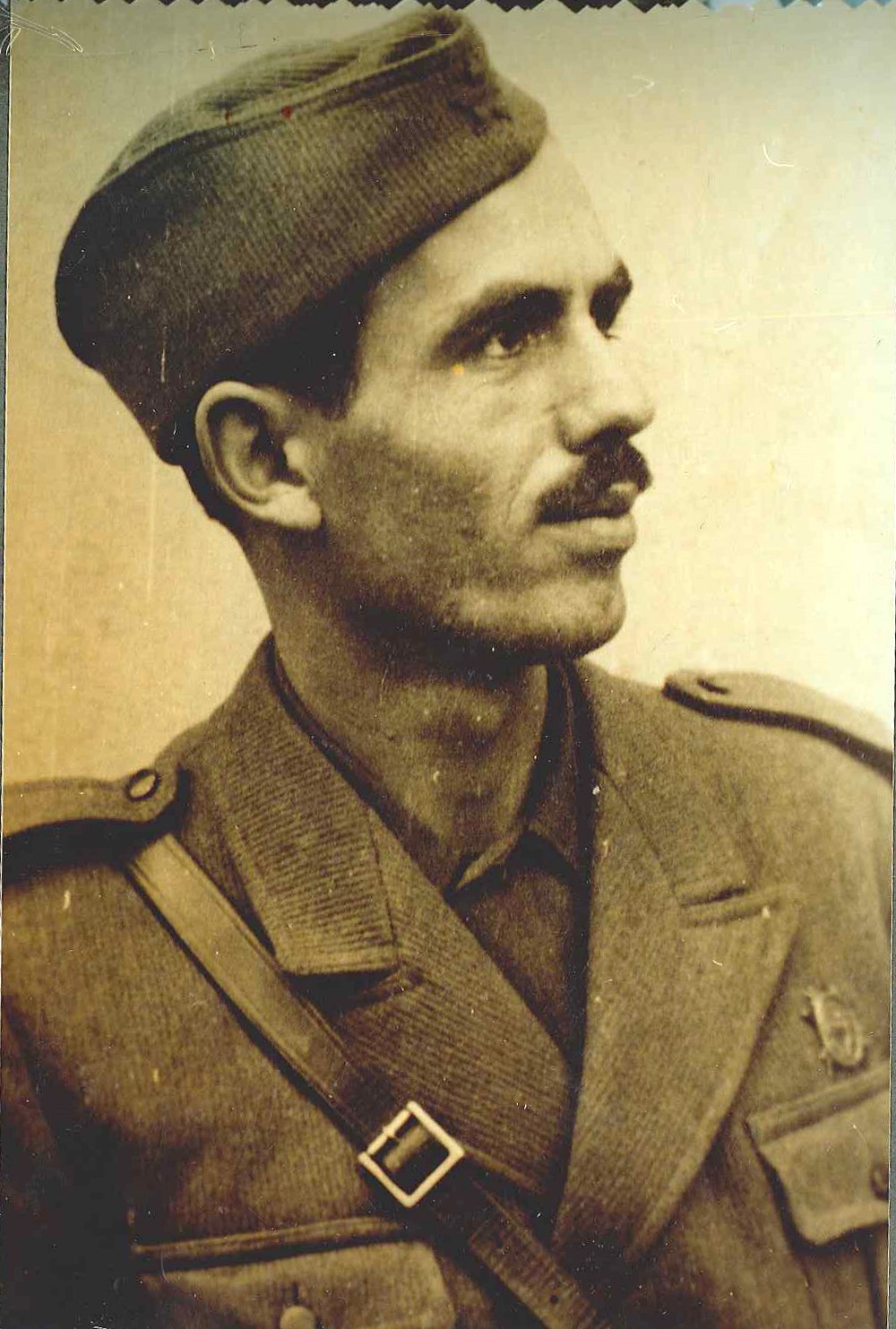
The Anti-Fascist Front of Women of Yugoslavia (AFW) was founded in 1941, with the sole purpose of organizing and mobilizing women in the war effort against occupation. Women’s participation in Yugoslavia’s anti-fascist efforts was unprecedented: according to official statistics, 100,000 women fought as partisans, and about 2 million contributed to the movement in various ways.

In Kosovo, the AFW’s cells, called aktiva (activists), organized women to collect weapons, food, clothing, and medical supplies, and mainly engaged them in carrying news and letters for the partisans. The AFW grew in this part of Yugoslavia, especially after the end of the war, and was vital for propagating women’s participation in voluntary work and organizing literacy courses.

In 1947, the local branch of the organization began publishing the Bulletin, a magazine in Albanian, through which it called on women to take care of their homes and “gardens” (meaning the public sphere), emphasizing the importance of women becoming educated as educators of children, society, and the state. “Every mother has the sacred duty to send her children to school,” said one such propagandistic article in the second issue.

One of the AFW’s main tasks in Kosovo was the campaign against the veil, which was worn by the majority of adult women in Kosovo. A series of articles in the *Bulletin* were devoted to this issue, clearly marking the veil as an obstacle to women’s participation in the public sphere and as emblematic of the region’s “backwardness.”

Removing the veil was supposed to “open new perspectives for work and economic protection” and was especially necessary now that women were expected to contribute to the overall development of society by working in factories, among other things, as one article in issue no. 5–6 of the Bulletin shows.

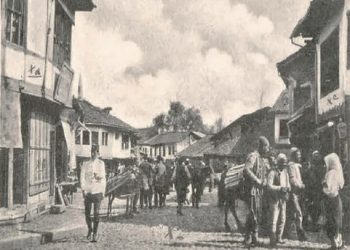
My grandmother Myrvete was also active in the campaign, as a member of the party and of the women’s auxiliary organizations. “All the women of Gjakova – and not just them, but all of Kosovo – were covered with the çarshaf  [veil]. Young and old – all covered with veils,” my grandmother used to say. Young Myrvete and her friends went door to door in Gjakova to persuade families that mother and daughters should remove the veil. “This was the main task: to remove it… We told them openly: ‘It’s time to take off the çarshaf.'”

Initially, the campaign was not successful, as it faced resistance from both men and women, but in 1951, the veil was made illegal. Every member of political and social organizations had the duty to implement the campaign, starting with their own families.

“My own mother also wore the veil – I remember her well, just like that. When the time came to remove the veil… because they organized rallies, as we do now in the square. All our women – there are photographs of it, you know,” she told us, “they would go out to the square to take off the veil. Some would take it off abruptly, others slowly. My mother was ashamed. She would say, ‘How can I, an old woman, take off the veil?'”

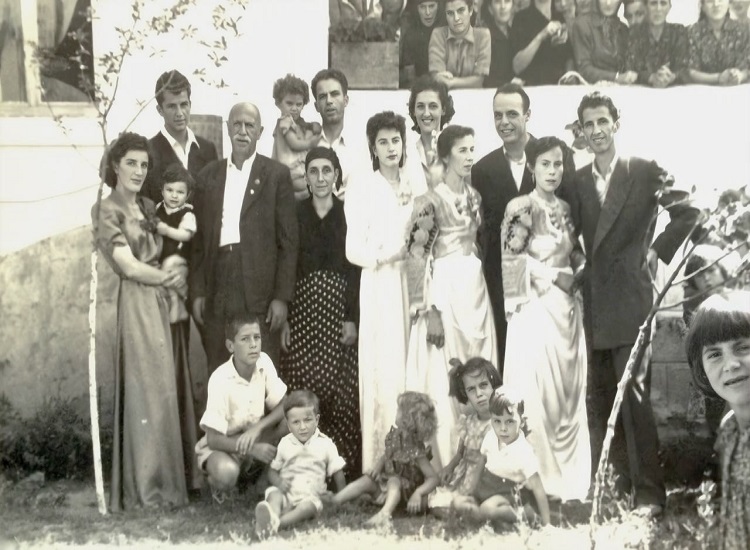
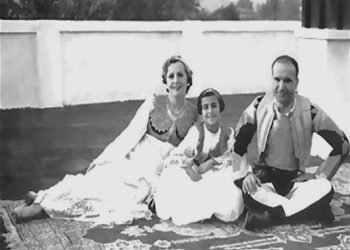
But Kika [Myrvete’s mother] did remove the veil – or at least the çarshaf worn as an overcoat. In later family photographs – either in front of the house or on my grandmother’s wedding day – she can be seen wearing shallvare (traditional puffy trousers with pleats), with a black scarf tightly wrapped around her hair, so that her soft face and deep-set eyes were visible to everyone.

Untied Knots

I cannot finish my grandmother’s story – there is so much to say, and all of it would be of little use. The map is the territory. Just like Borges’s “On Exactitude in Science” – a map that once coincided point-for-point with the territory itself – my grandmother’s life story, in its infinite totality, would become useless.

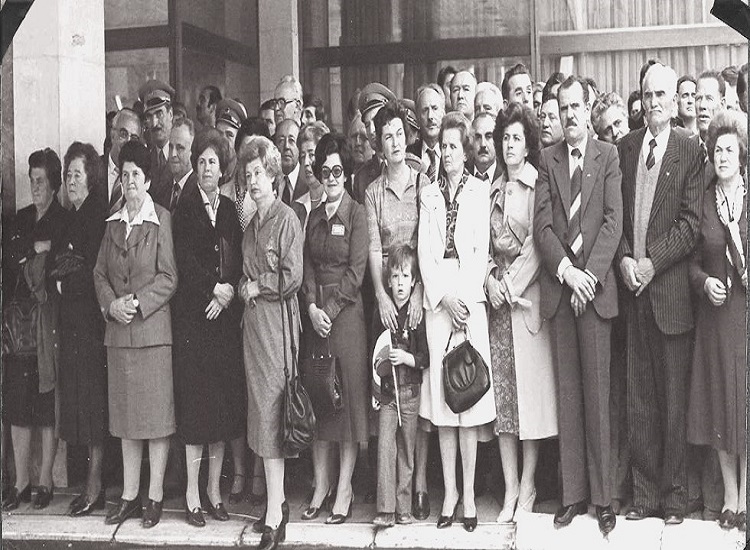
I said goodbye to my grandmother on a cold December day, as her funeral cortege coursed through Prishtina’s old cemetery, desperately searching for paths that had been overgrown with bushes and wild plants.

Zija Mulhaxha, the 80-year-old chairman of the Veterans’ Organization, said a few words about the deceased as relatives, family friends, and a small number of colleagues gathered around the open grave. I don’t remember the speech, but it must have begun with, “Myrvete Hoxha Limani was born into a generous, patriotic family…”? / Memorie.al

*This article is supported by the Rosa-Luxemburg-Stiftung Gesellschaftsanalyse und politische Bildung e. V. – Office in Bosnia and Herzegovina.*
ShareTweetPinSendShareSend
Previous Post

Calendar 7 September, 2026

Next Post

"On October 24, 1950, the Greek newspaper 'Le Messager d'Athenes' wrote that the Soviets wanted to replace Enver Hoxha with Mehmet Shehu, because..."/ Secret CIA documents revealed

Artikuj të ngjashëm

“In ’41, when the Italians entered Gjakova, my grandmother and her children joined the crowd that chanted ‘Long live Albania’, ‘Down with Yugoslavia’, ‘Long live Hitler’, ‘Long live Mussolini’…”/ Memories of Fadil Hoxha’s granddaughter
Personage

“In ’41, when the Italians entered Gjakova, my grandmother and her children joined the crowd that chanted ‘Long live Albania’, ‘Down with Yugoslavia’, ‘Long live Hitler’, ‘Long live Mussolini’…”/ Memories of Fadil Hoxha’s granddaughter

September 7, 2026
“In private settings in Kosovo, Schwandner-Sievers encountered a Tito-nostalgia similar to that of other nations and ethnicities, former Yugoslavia…”/ Reflections of Fadil Hoxha’s niece
Personage

“Even babies in Gjakova knew Ali Bokshi, the spy, and Fadili, Boro Vukmirovic, Ramiz Sadiku and Ymer Pula, decided to kill him…”/ Rare testimony of the granddaughter of the former leader of Kosovo

September 4, 2026
“In private settings in Kosovo, Schwandner-Sievers encountered a Tito-nostalgia similar to that of other nations and ethnicities, former Yugoslavia…”/ Reflections of Fadil Hoxha’s niece
Personage

“In private settings in Kosovo, Schwandner-Sievers encountered a Tito-nostalgia similar to that of other nations and ethnicities, former Yugoslavia…”/ Reflections of Fadil Hoxha’s niece

September 5, 2026
“Kostë Çekrezi wrote a letter to his friend, the nephew of the American president, Wilson, in which he said…”/ renowned researcher from the US publishes rare document
Personage

“Kostë Çekrezi wrote a letter to his friend, the nephew of the American president, Wilson, in which he said…”/ renowned researcher from the US publishes rare document

August 29, 2026
“Thanks to the care of our renowned poet Xhevahir Spahiu, who brought us a copy of this book from Iran during a working visit to Tehran, it became possible…”/ The unknown book for Abaz Ali
Personage

“Thanks to the care of our renowned poet Xhevahir Spahiu, who brought us a copy of this book from Iran during a working visit to Tehran, it became possible…”/ The unknown book for Abaz Ali

August 25, 2026
“Faced with the Albanians of Plav, Gucia, Rugova and Gashi, led by their leader, Ali Pasha Gucia, the myth of Montenegrin bravery…”/ Unknown Austro-Hungarian documents
Personage

“Faced with the Albanians of Plav, Gucia, Rugova and Gashi, led by their leader, Ali Pasha Gucia, the myth of Montenegrin bravery…”/ Unknown Austro-Hungarian documents

August 23, 2026
Next Post
“At the Congress of the Communist Party of the Soviet Union on October 27, 1961, Khrushchev exacerbated the conflict with Albania by demanding…” / The unknown history of Moscow’s clash with Enver Hoxha.

"On October 24, 1950, the Greek newspaper 'Le Messager d'Athenes' wrote that the Soviets wanted to replace Enver Hoxha with Mehmet Shehu, because..."/ Secret CIA documents revealed

“Historia është versioni i ngjarjeve të kaluara për të cilat njerëzit kanë vendosur të bien dakord”
Napoleon Bonaparti

Publikimi ose shpërndarja e përmbajtjes së artikujve nga burime të tjera është e ndaluar reptësisht pa pëlqimin paraprak me shkrim nga Portali MEMORIE. Për të marrë dhe publikuar materialet e Portalit MEMORIE, dërgoni kërkesën tuaj tek [email protected]
NIPT: L92013011M

Na ndiqni

  • Rreth Nesh
  • Privacy

© Memorie.al 2024 • Ndalohet riprodhimi i paautorizuar i përmbajtjes së kësaj faqeje.

No Result
View All Result
  • Albanian
  • English
  • Home
  • Dossier
  • Interview
  • Personage
  • Documentary
  • Photo Gallery
  • Art & Culture
  • Sport
  • Historical calendar
  • Others