BY DASHNOR DERVISHI
Part Two
Memorie.al / We arrived in Rome on 14 September 1988. The four-year period of my stay in Italy would turn out to be the most difficult and most important test of my activity in foreign relations. Rome, in the years that would follow, would become the main center of reference for the entire social, economic, and political spectrum of Albanians in foreign relations. Italy became the “Far West” of Albanians. More than ever before, in that period the expression became reality that “all roads lead to Rome.”
Continued from the previous issue
Meanwhile, after I notified the Ministry of Foreign Affairs about the content of the conversation, the next day, at the morning meeting with the embassy staff, which we held every day for a kind of reporting and organization of affairs, I also informed them in general terms.
After two days, I learned that another parallel notification had arrived in Tirana, which stated that, according to information received from internal sources, there is evidence that within the framework of efforts being made to destabilize the situation in Albania, Bettino Craxi had planned to make a visit to Albania in order to realize these aims.
However, from Tirana came positive approval for Craxi’s visit. But that visit did not take place. After a few days, Craxi sent one of his collaborators to the embassy, who gave me several arguments for postponing the visit to another time.
I do not know what caused the non-realization of this visit, but one thing I understood: that the time and conditions for a solution had not yet come. On the other hand, after this event, I reduced the morning meetings at the embassy, and when we did meet, I gave entirely general and worthless notifications.
Meanwhile, developments in Albania and events in various countries of Eastern Europe followed one after another. In Bucharest, the bloody overthrow of 25 December 1989 of the regime in Romania would take place, which was accompanied by television images of the execution of the Ceaușescu couple.
On 19 December 1988, at an official reception, I happened to meet Flaminio Piccoli. The first meeting and acquaintance with Piccoli would be followed by many others, creating not only a mutual sympathy, but also a very close friendship, both on a personal level and in terms of cooperation.
The starting point was the fact that before the Second World War, Piccoli had done his military service in Albania, on Mount Tomorr in Skrapar, and he remembered Albanians with sympathy.
Flaminio Piccoli was an authority in the traditional opinion of Italy; he had been twice secretary of the Christian Democracy Party, President of the party and president of the Christian Democratic International, deputy, senator, minister, Euro-parliamentarian, and had connections in the high spheres of the Vatican; most recently he was the chairman of the Foreign Commission in Parliament, in the Chamber of Deputies.
After several meetings and receptions at the embassy, Piccoli took up with passion his commitment to the Popaj case and in general the desire to promote relations between our two countries. He undertook many meetings with authorities of the country to inform him about the situation, organized several meetings of the Foreign Commission where I was also invited, where we presented the situation and gave alternatives…!
In these debates there were opposing viewpoints, lack of information, but also expressions of positions according to the parties that the deputies represented. After receiving the approval also of the majority of the Foreign Commission, Piccoli decided to make direct contact with the Albanian government, in order to unblock the situation. At that time, the most authoritative representative in Albania for foreign policy problems was Sofo Lazri, advisor to President Ramiz Alia.
On 17 January 1989, after Piccoli and I agreed to enter into direct talks with Professor Lazri, on 17 January, I made an appointment with Enzo Perlot, director general at the Ministry of Foreign Affairs for Southwestern Europe, with the aim not only of informing him, but also of sensitizing him and organizing several other meetings on this occasion.
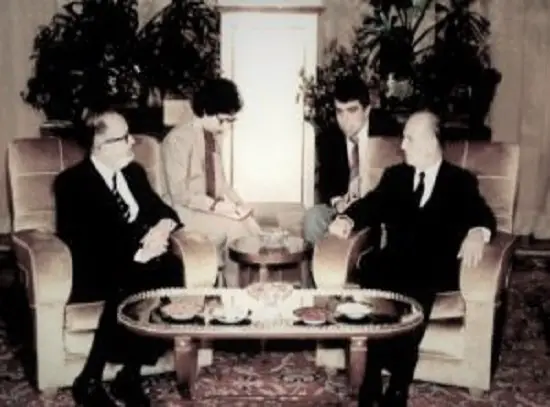
The first meeting between Sofo Lazri and Flaminio Piccoli took place on 1 February 1989, during a lunch, in a private room of one of the oldest hotels in Rome, near the Vatican. The seating at one table of the two elderly men, as the most typical representatives of the two opposing systems, which for more than 50 years had polemicized from the two extremes of the Adriatic, had its own significant content.
This time, it was noticed that they sought mutual respect and reconciliation. The meeting was cordial. With gentle tones and with the desire of both to find a solution, they reached a compromise on acceptable formulas, also defining the final modalities of the procedures.
Furthermore, the date was set for when the special plane of the Italian government, in whose composition there would be a delegation from various Italian parliamentary forces, would land at Tirana airport; the manner of equipping the members of the Popaj family with passports, their conduct and accompaniment from the embassy to the airport, and their departure.
During the conversation, the issue of the risk of the precedent that would be created in this case was also treated, as well as the problems that would be created for both sides. I got the impression that both were aware of this, but they ignored it.
Two days before the fixed day for the departure of the plane, an urgent telegram from the Ministry of Foreign Affairs in Tirana notified me that the operation had been cancelled, since in the agreement made between Lazri and Piccoli there were several protocol violations, as Lazri was not the counterpart of Piccoli, with the attributes of the chairman of the Foreign Commission.
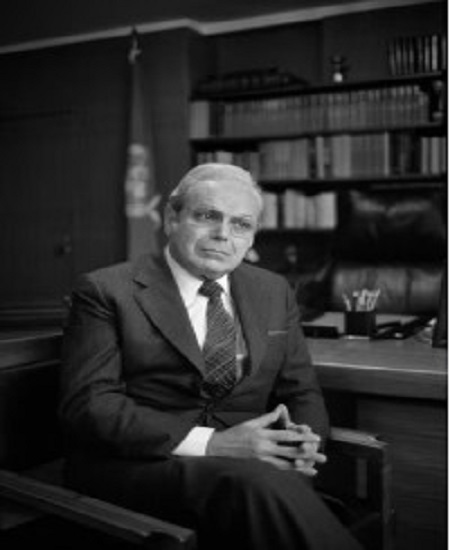
In one breath I arrived at Piccoli’s office in Parliament. He too had been informed of the cancellation. In two words he told me: “Apparently, my son, this is not a job for us.” Later, on 16 May 1990, the Secretary-General of the UN, Perez de Cuellar, would land in Tirana with a plane bearing the UN flag, to take the members of the Popaj family and remove them permanently from Albania.
It seemed as if after five years of a painful odyssey for the Popaj family, the story was closed. But their Calvary of sufferings would not end with that. At Rome airport, where they landed, no one was waiting for them; journalists were kept away. With a minibus with dark windows, they were first taken to a hospital, where they underwent medical and psychological examinations.
Later they were distributed to various places near relatives, securing a suitable arrangement for them, within the possibilities and conditions that were practiced for political asylum seekers. Later, nothing more was heard about the Popaj family, but we also learned about their tragic end.
After two months, their story would be definitively forgotten in our opinion; it would be taken over by the story of the massive attack on embassies and the spectacular emigrations by ferries in the Adriatic, the images of which would fill the pages of newspapers and television screens around the world. The fate of the last totalitarian socialist regime remaining in Europe had been determined.
In the analyses that have been made and continue to be made from time to time on commemorative occasions regarding the democratic processes in Albania, the origin is focused on the massive crossings of the walls of the embassies in Tirana, as the first gesture of the explosion of Albanians’ desire for freedom, which would open the way for all further processes, which ultimately brought the coming to power of a democratic regime, on 22 March 1992.
The first spark, the one for which six members of the Popaj family sacrificed themselves, has been left in oblivion. The friendship and cooperation with Flaminio Piccoli continued and strengthened throughout the time I stayed in Rome. He continued to be active in problems that had to do with Albania. In one of the meetings of the Foreign Commission that he chaired, after I had expressed some remarks about the MFA, he took them well and directed very harsh criticism against the MFA and the minister who was at that time, Gianni de Michelis, for apathetic actions and shortcomings in following the tasks that had been left.
Flaminio Piccoli would be the guest of honor also at the farewell lunch that the Ministry of Foreign Affairs hosted on the occasion of my departure from Italy. His last words that he addressed to me were: “You have kept notes, my son, for I have kept…! If one day you intend to publish them, please give them to me too, so that we can compare them.”
Flaminio Piccoli died on 11 April 2000. And I did not have the opportunity to compare my notes with those he kept. But one thing is certain: all the notes have been set down just as they happened, also in the memory and respect that I preserve for him.
As was felt by everyone, but also foreseen by anyone who closely followed the processes of change in Albanian society, the dramatic event of the Popaj family in the Italian Embassy, which would be followed by the massive crossing of the walls of the embassies by 5,500 citizens and their departure with six ships toward the coasts of Italy, would give way to the history of the crossing of the Adriatic by ferries and by whatever floating vessel was found on the Albanian coast.
At the foundation of the risk for adventure, by entering a foreign embassy or by crossing its walls, in the fury that seized people’s minds for escape through the sea, lay the inspiration for freedom and the dream for a better life, a dream that unfortunately continues even today.
Although it was expected, the Italian government found itself unprepared to cope with such a large flux of emigrants, from all points of view. Shortcomings of organization began to appear in the administration of capacities for accommodation.
The enthusiasm and propaganda in Italian and Albanian opinion for hospitality and a better life began to fall and be replaced by casting doubts, by dissatisfactions and by calls for stronger measures from the Italian government to block the continuation of this process. The opinion began to circulate that this was an undertaking organized by Tirana, to let the balloon burst, which was expected to explode in Albania. / Memorie.al