From Lura Limani
Part Two
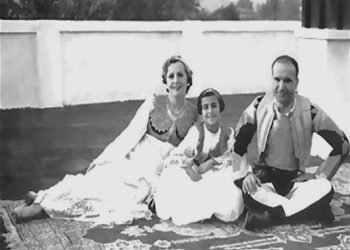
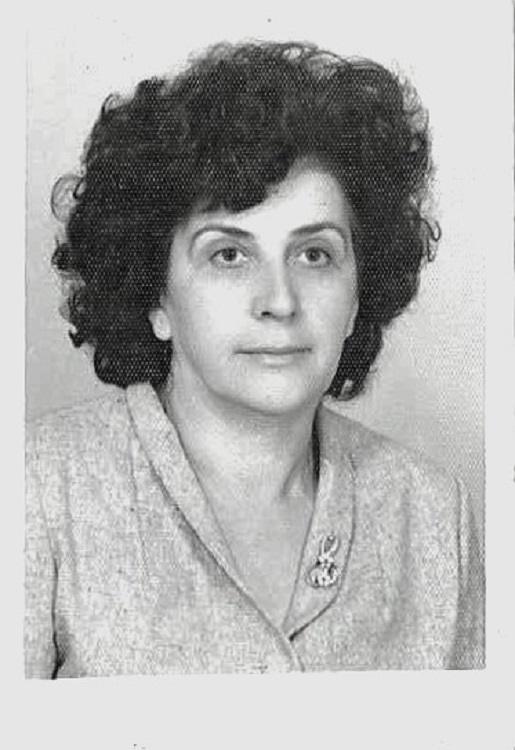
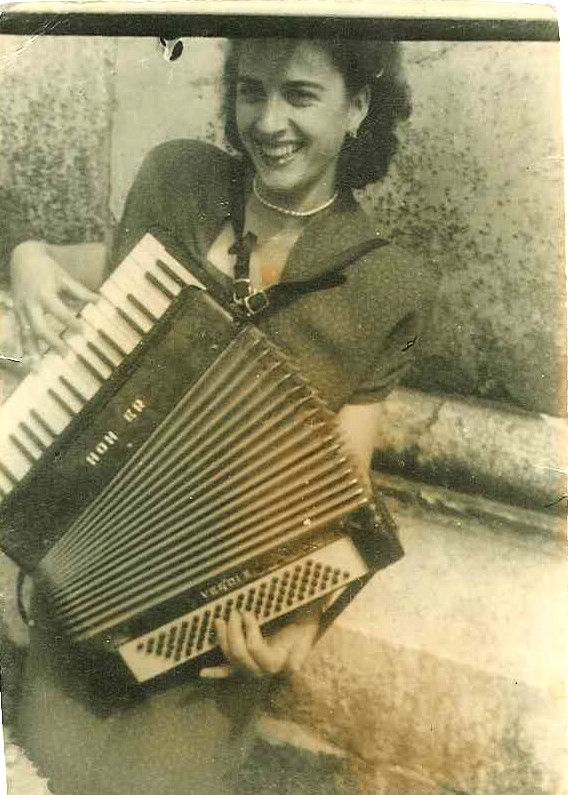
Memorie.al / Raised in postwar Yugoslavia, my grandmother saw herself as an inseparable part of the socialist social structure. How are we to make sense of her world today? By the time I came to know her, my grandmother had become a difficult woman. She seemed stern: she had a serious look about her, not a woman you would want to tangle with. In Albanian, we have the expression zonjë e randë – a “heavy lady.” That was my grandmother: difficult, dignified, proud; well-groomed and with her hair done even when she was shut in at home. In my eyes, she was larger than life. There seems to have been some truth to her youthful, robust build, because today her old clothes hang loose on my slender frame, three sizes too big. She had a presence that commanded attention and respect every time she entered a room.
Continued from the previous issue
Throughout this time, Myrvetja was an active member of various party committees and secretariats in Gjakova, Prizren, and Prishtina. Due to her pronounced activism, she was appointed a member of the Provincial Presidency of the Socialist Alliance of the Working People (SAWP). Between 1974 and 1986, she was director of all preschool institutions in Prishtina, where she actively worked to expand the number of kindergartens and improve the condition of the facilities under her supervision. Due to political pressure, she was forced into early retirement – but not before being decorated with two Orders of “Merits for the People” and with a “Ganimete Tërbeshi” plaque for extraordinary contribution to “socialist education.”
Seen from this perspective, one can easily conclude, as the title of a 1974 Rilindja article put it, that “Myrvete Hoxha Limani had been ‘Active since childhood.'” But in another tradition of biographical writing – one in which people’s portraits emerge from clusters of apocryphal stories and difficult memories – my grandmother’s life cannot be summed up by a résumé of ‘harvested successes’ of an educator in socialist Yugoslavia. To understand my grandmother, one must understand the stories she liked to tell, those she hesitated to tell, and those she deemed worthy of being documented.
Cut
Wanting to record the richness of my grandmother’s stories – undoubtedly for personal reasons as much as for the sake of public history – in 2015 I finally managed to persuade her to give an interview for the “Oral History Initiative,” a project I was involved in at the time.
My grandmother, who had been sharp her whole life, had begun to repeat stories, insistently searching for things she had forgotten but knew had once been there. She grew anxious when she couldn’t remember everything, or when memories overtook her when she least expected them, but she was also full of urgency to recount everything while she still could. The result was an imperfect interview, in which her deepest pains nonetheless managed to surface.
Through this interview, I came to understand that despite all the manifold abundance in my grandmother’s life – an abundance of brothers and sisters, cousins, grandchildren; an abundance of opportunities and experiences – it was all anchored in loss. First the loss of her home during the Second World War, then the loss of her brother; later the loss of her youngest son, and, after that, the loss of her husband. At the time we were interviewing her in the guest room at home – a room kept clean for visitors who rarely came – she was the oldest person in the family and among her peers, and she had almost nothing left to lose.
Elementary Lessons
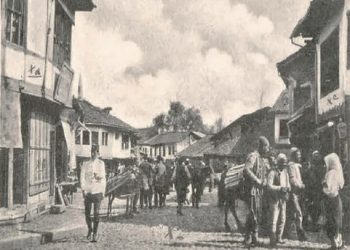
When Myrvetja was born to Nakije and Halim Hoxha on March 22, 1930, Gjakova was a small but lively town in the Kingdom of Yugoslavia, ruled by the Karađorđević dynasty. The Hoxha family was a feudal family that had fallen on hard times at the beginning of the 20th century, and like other landowning families in Gjakova, they hated the tax collectors – the porezxhi. “The family was very wealthy, everyone in Gjakova knows that, but there was no money at that time,” my grandmother would say with a sneer. “The worst butchers who tortured people were the porezxhi who collected taxes door to door. When you didn’t have money to pay, they would take things from the house and take them away because the payment had to be made.”
Myrvetja’s grandfather, Haxhi Emin Efendiu, who had earned the title Haxhi after making the pilgrimage to Mecca, was a learned and educated man, versed in Arabic, Persian, and Turkish. He had been a teacher and led the ruzhdije of Gjakova, a type of secondary religious school. Myrvetja’s father, Halimi, likewise an educated man, was a merchant. In “Fadil Hoxha as I Knew Him,” Ekrem Murtezai writes that Halimi owned many shops, possessed land, supervised workers, and taught at the mejtep, an Ottoman religious school. He had married three times – a fact my grandmother does not mention in our interview; nor has she ever mentioned it to me privately, or on any other occasion, that Fahriu and Fadili were born from Halim Hoxha’s first two wives, and that both women had died while the children were still very young.
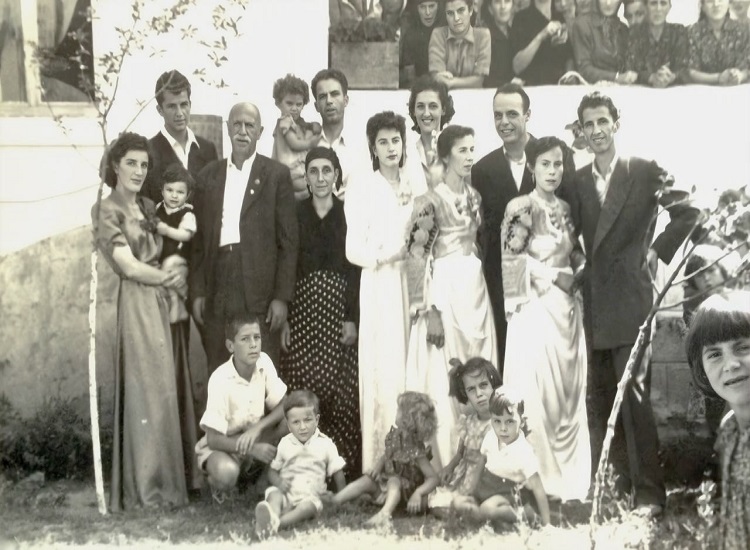
The family was large: Halim Hoxha had eight children; all of them, including the girls, were sent to school. Initially, my grandmother and her sister Nexhmija were educated at the mejtep before being sent to schooling in Serbian (to the so-called Građanska škola – the civic school), just as their brothers Fadili and Fahriu had been before them. “Who cared back then [which language], as long as you could go to school,” my grandmother would say, but people actually did care, and most did not go. Throughout her life, my grandmother would occasionally joke about how the people of Gjakova could barely speak Serbian.
The fact that the family insisted on education was a great point of pride for my grandmother throughout her life, although it was probably more a function of privilege. Given that, since it’s founding in 1918, the Kingdom of Yugoslavia had denied Albanians the right to education in their native language – and before that only a small number of schools had functioned in Albanian – the native population was largely illiterate. According to the 1931 census, the three territorial units, banovinas, into which present-day Kosovo was divided, had among the lowest literacy rates in the Kingdom of Yugoslavia. In Gjakova, 84.2% of the population was illiterate – only 5% of women of all ages knew how to read and write. The figures were even grimmer for Drenica, where 86.4% of men and 98.6% of women were illiterate.
These figures stood in diametrical opposition to the Belgrade district, where, almost inversely, only 10.9% of the population was illiterate. The fascist regime granted Albanians many rights that the Kingdom of Yugoslavia had denied them. When fascist Italy annexed most parts of Kosovo in 1941 during the Axis occupation of Yugoslavia, it joined them to the Kingdom of Albania, which it had invaded two years earlier. Unlike Germany and Bulgaria, which occupied other parts of Kosovo, the Italian protectorate opened Albanian-language schools in towns and villages inhabited by Albanians.
Teachers from Albania, as well as Kosovars, who had studied in Albanian licet, came in droves to teach in the native language. Even Fadil Hoxha, upon completing his schooling in Elbasan, returned to Gjakova as a teacher in 1941. My grandmother and her sister Nexhmija, three years older, enrolled in the Albanian school in Gjakova as soon as the opportunity arose. As a girl, my grandmother, who had loved school, was a well-behaved student. Cheerfully, she would go to school with her sister and friends; both boys and girls walked together in a group: “We protected one another.”
Fadili, just returned from Albania, had come as a buntovnik – as my grandmother called him, a rebel. In Elbasan, he had joined communist groups, and immediately upon his arrival in Kosovo he began organizing anti-fascist activities. It was difficult to propagandize against the Italians in Kosovo. The fascist regime had granted Albanians many rights that the Kingdom of Yugoslavia had denied them, most notably by allowing instruction in Albanian and the use of the national flag. In photographs from 1941 or 1942, the prefect of Gjakova, Sylejman Beg Kryeziu, can be seen dressed in national costume, accompanied by a column of Italian officers and religious leaders, as they marched through the city on Flag Day.
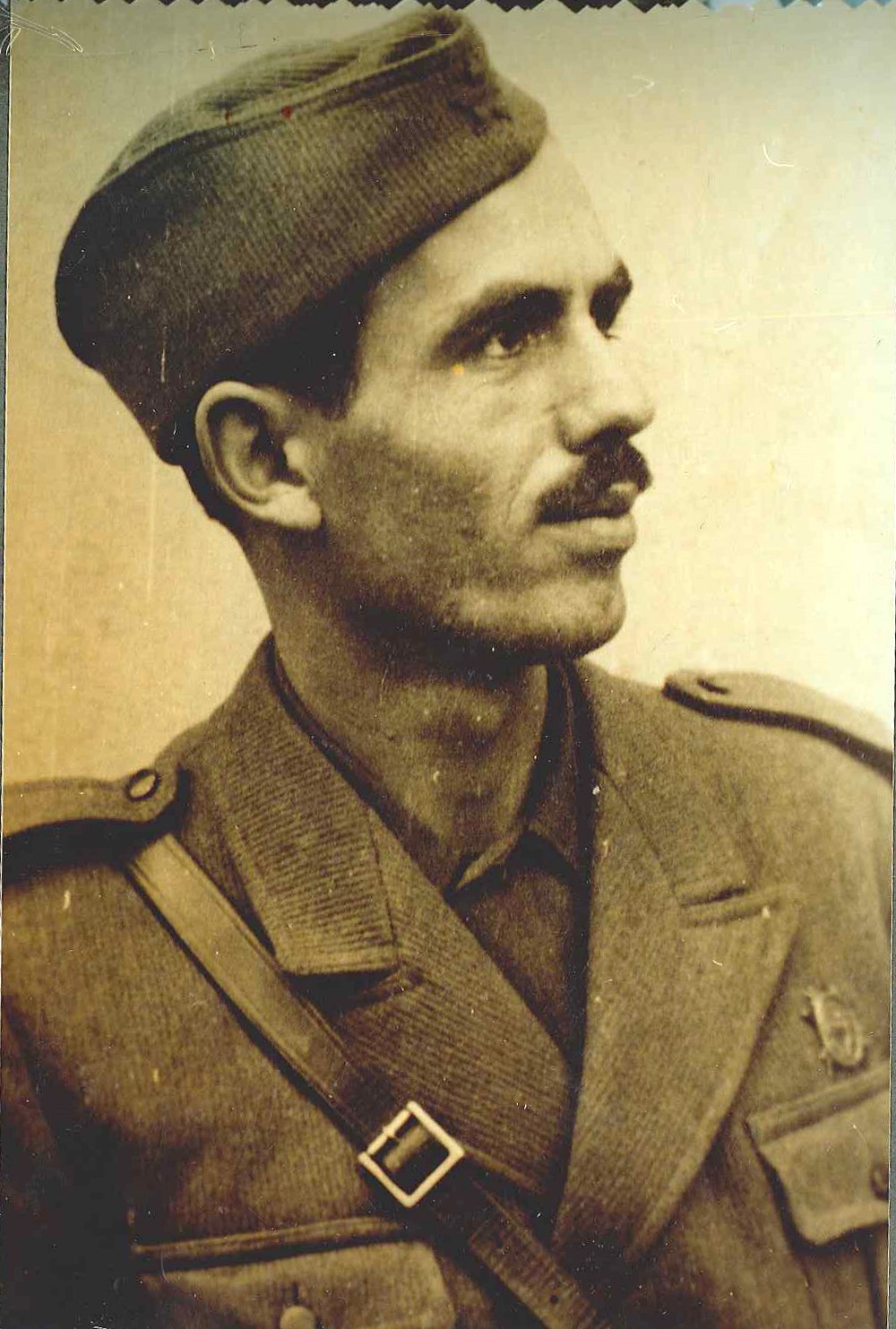
On Flag Day – November 28, 1941 – Fadili and his comrades organized an anti-fascist protest just as people had gathered to celebrate the national holiday for the first time in their lives. After delivering a rousing speech that supposedly “exposed the occupier’s policy, which pretended to be the savior of the Albanians,” Fadili tore the Albanian flag of the Italian protectorate to pieces. After this episode, Fadili was briefly arrested and then released, before finally moving on to bolder guerrilla actions. In her mind, the partisans were more right than the Albanian nationalists who fought the Serbs, because they wanted liberation from everyone.
The war unfolding in the adult world also colored the world of children. One day, after the bell rang, the children lined up as usual in front of the school, waiting for the teachers to let them in. But that day, as my grandmother waited in line with her friends, she noticed that one teacher had put on a plis, the traditional white woolen Albanian cap. Although she was no more than 10 or 11 years old, she knew that the plis was worn by sympathizers of the Balli Kombëtar, who, as she put it, “were more nationalist than Albanians today” and wanted the unification of the entire Albanian nation.
She also knew that the Ballists were “in the service” of the Germans and Italians, of the occupation, and that they were against the partisans, among who, naturally, was her brother. In her mind, the partisans were more right than the Albanian nationalists who fought the Serbs, because they wanted liberation from everyone – including the Italians and Germans. Even as a child, my grandmother had understood that she and the teacher represented different ideological “currents.” In a small act of rebellion, my grandmother cursed the teacher. After 75 years, when we interviewed her, she was still ashamed to tell us what she had called him. “I can’t say it, because you’ll record it…! Basically, I let him know that he was serving the occupiers,” she told us, laughing heartily, but her cheeks flushed slightly.
After she had used profane language, the teacher had dragged her out of the line of students and put her in “prison” – an improvised storage space under the stairs, where the school kept firewood. “I was just a child, come on, a child… I was afraid there might be mice under the stairs,” my grandmother told us. The teacher showed mercy and did not keep her in “prison” for long, but my grandmother regretted the curse until she died. “I remember that I did wrong. What I said to him was wrong,” she told us, full of guilt.
Contorno
My grandmother was a strange creature with interesting habits. Very rarely, she would allow herself a sip of rakia from a čokan glass – “to keep my heart healthy.” She liked shira and would drink it from a small wine glass to accompany okra stew. She made the best krelanë, crumbling the pieces by hand as soon as the dough came out of the oven. Deep down her was romantic: we both went to see Pearl Harbor at the renovated ABC Cinema, and she greatly enjoyed the love triangle between Ben Affleck, Josh Hartnett, and Kate Beckinsale. To this day, I still grimace at that foolish and anachronistic line from Josh Hartnett, when he shouts at a crucial moment in the film, as Japanese bombs are hitting Pearl Harbor: “I think World War Two just started!”
On Birds and Fires
One spring evening in 1943, as darkness had fallen and the Hoxha family was going to bed, a black bird crashed against the window of the living room of the two-story Ottoman-style house. “It’s a bad omen,” my grandmother would say whenever a crow landed on our windowsill, still deeply convinced of her superstition. It was the end of March or the beginning of April – depending on the account – and a few streets away, Fadil Hoxha, who was roaming the mountains of Kosovo as a partisan, had gathered a small group of his best subordinates to kill an Italian collaborator who was endangering their bases. His name was Ali Bokshi, and with 30 others they were “bandits serving fascism,” says Fadili in an interview with Veton Surroi published in “Fadil Hoxha in the First Person” in 2010.
Bokshi’s men would go out at night with the carabinieri and attack the partisans. He must have been so notorious that my grandmother would later say with contempt: “Even the babies in their cradles in Gjakova knew Ali Bokshi, the spy.” The partisans – that is, Fadili, Boro Vukmirović, Ramiz Sadiku, and Ymer Pula – after assessing that Bokshi was “the greatest threat,” decided to eliminate him “at all costs.” Ten partisans positioned themselves around Bokshi’s house, guns and grenades were fired, but the action nonetheless failed. “Mal Sadiku threw a grenade, but the roof of a house got in the way and the bomb did not explode inside the house,” Fadili had told Surroi.
Instead, as it exploded, the grenade had illuminated the partisans, and Bokshi’s men saw the attackers. The target himself managed to escape unharmed, while during the action only his brother, Ganiu, was wounded. Having failed in their mission, the partisans withdrew, leaving the city at the mercy of the enraged Bokshi, who likely, in a frenzy of revenge, set fire to many houses and killed the men of the Grezda family, including Ferid Grezda, still a child. / Memorie.al