By Msc. Kristinë Dedaj
Part Two
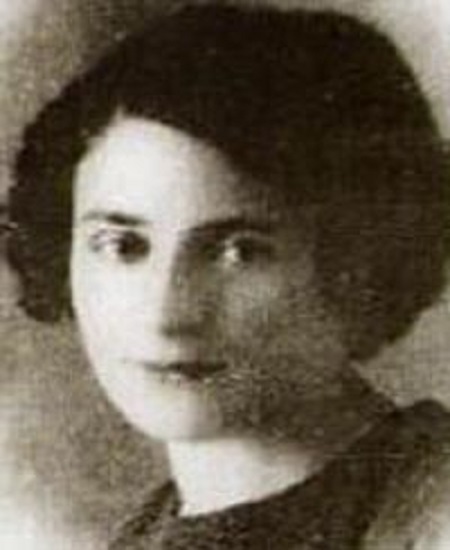
Memorie.al / Marie Shllaku left indelible marks on the life and mind of the Albanian people. This emblematic icon remains one of the irreplaceable figures in the history of our nation, from the time she acted until today as a fiery patriot whose aim was ethnic Albania. Her work, life and activity as a patriot left traces, enriching the bright epoch of the history of the Albanian woman in the struggle for freedom and national liberation and unification. History is the teacher of life, therefore life speaks of the person, time speaks of the years, and the person through work and sacrifice leaves traces in history. Such was also Marie Shllaku, who even though young in age, found herself everywhere where necessity demanded, to carry out the duties she had given herself alongside the patriots of our national cause. The courageous heroine, through her work and contribution, showed us that she was a brave woman, strong and unconquerable, who did not fear even death.
Continues from the previous issue
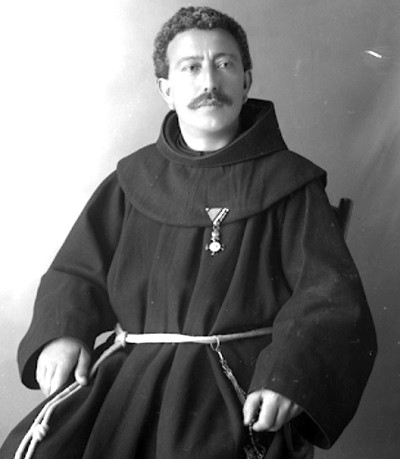
Marie Shllaku and Father Bernard Llupi had the same nationalist ideals and for this purpose the communists executed them together with the same bullets and on the same day by the Slav-communist executioners and Albanian traitors. One of the questions that the communist investigator asked the courageous and fearless heroine was: “When did you begin to engage in politics”? – “Since my young age I have engaged in politics, if the love for my country can be called politics, my effort for an Ethnic Albania united with its severed parts such as Kosovo with Çamëria.”
Marie Shllaku was accused by the communist Ali Shukriu for: “She was a secretary of the Minister of Internal Affairs, Iljaz Agushi and ing. Xhafer Deva and had remained in Kosovo to work against the new social system; She together with some peasants had organized them and had gone out to the mountains to fight against the partisans and against the new system, preventing the NLA from building people’s power and from settling the situation in Kosovo; At the end of 1944, knowing the people who were connected with ing. Xhafer Deva, she made their mutual connection with Ismail Gorani and Ukë Sadiku, who then attacked Gjilan, Ferizaj and other places;
In January 1945, after going out to the mountains, she made propaganda that Albanians should not line up in the Yugoslav army but should go out to the mountains to fight against the partisan-communist forces; In January 1945 she took part in the Assembly of Drenica, together with well-known leaders such as: prof. Ymer Berisha, Mehmet Gradica, Major Qinsi, Major Kutova, Ahmet Shala, Ukë Sadiku, Shaban Polluzha, Metë Dina, etc., where it was decided to attack the NLA units in Drenica; When the Battle of Drenica ended and until she was imprisoned in the autumn of 1945, she continued her activity in the mountains, inciting the fighters of anti-communist resistance, took part in many gatherings where decisions were made to continue armed resistance and convinced the people to go out to the mountains and join the fighters of Ethnic Albania;
That she took part in the Assembly of Dobërdol, or as it was otherwise called “Besa Kombëtare,” in August 1945, where it was decided that prof. Ymer Berisha would be political leader, Ukë Sadiku military leader of all resistance fighters in Kosovo; She maintained continuous and uninterrupted connections with prof. Ymer Berisha and with other leaders; She was a participant in battles against Yugoslav military units twice in a row, while in the Battle of Siqeva, around the middle of September 1945, 11 officers and soldiers of the Yugoslav Army were killed, and she herself was wounded in several places; She maintained connections with Father Bernard Llupi and from him received money, food, letters and other orders; Marija, even though she was wounded, took care that the bands withdraw outside the borders of our country according to the previously approved decision.”
For the legendary heroine who left a name in our national history, as painful but also proud at the same time, verses have also been woven:
“But finally in that assembly
After they spoke much in turn,
A young girl rises to her feet,
Takes the word as if burning,
The whole assembly thus watching her,
As this girl at that age she has,
Her figure not yet fully grown,
So mature, so prepared!…”
Shefqet Kelmendi had the fortune to know the brave heroine and felt that Kosovo and the beautiful city of historic Prizren itself would be grateful for what she did for these lands, where among other things we quote:
“Summer of the year forty-six…
Today Prizren in its bosom,
Jealously guards a secret.
We are indebted to you our sister,
O Marije, O eagle”
The fearless heroine died in the flower of youth, but lived with much intensity and bravery, where she placed her life and work in the service of the homeland and freedom, and thus through her sacrifice, kept alive in the soul of the nation the freedom-loving wishes and hopes until victory. The last days in prison the martyr of Dardania spent singing, so that whoever heard her singing thought either that she was not mentally well, or that she had some information that she would be pardoned because she was a woman. “She calmed them with the words that in just a few days I am getting married, therefore start singing too, you Kosovars, because never has Kosovo received a Shkodran bride more songful than me…!”
The legendary patriot, Marije Shllaku, was proud that she gave her life to heroic Kosovo. The last words of Marie Shllaku before being executed by the communists were: “My beloved Kosovo, with how much hope I found you, and with how much bursting heart I am leaving you! Even in these my final moments, I pray to God that my blood may become light.” The heroine Marije Shllaku in the thoughts, memories and opinions of others
Tomë Mrijaj, publicist and researcher, writes: “Whoever takes upon themselves the noble mission or thinks to study and write about the figure of the unconquered Shkodran heroine Marie Shllaku, does a great service to the ethnic lands, culture and all-Albanian historiography, which has left in oblivion for many decades this distinguished personality of patriotism. In the intellectual and patriotic portrait of the young girl, throughout her short life, several very special qualities stood out, such as: intelligence, wisdom, bravery, courage, self-sacrifice, farsightedness, which she used unified with the great love for the ancient lands of heroic Dardania, with which she was closely connected until she sacrificed her life.
The fearless girl Marie Shllaku deprived herself of her love in order to have a new family, children and a future husband, only and solely to marry Kosovo, with which she was very connected. Today you cannot find a single case in the history of Kosovo or Albania, where a young girl deprives herself of youthful dreams, family, political, economic, cultural career, etc., as Marie Shllaku has done. The bright figures of our nation should be valued for the message and the great contribution they have given with their lives, for the beautiful days that descendants enjoy in Kosovo and Albania. In the foundations of freedom and independence are the bloods of thousands of martyrs, who through the centuries have built the glorious all-Albanian national history.
She was the only educated young girl at that time who fought with arms in hand in Kosovo, who came from a famous ancient city like Shkodra, with ancient historical, cultural and patriotic traditions, where distinguished personalities have always emerged, who are and remain today the honor and pride of all ethnic lands. Maria was the brain of the organization of anti-communist and anti-Serb resistance in Kosovo. She was the only educated girl who was at the head of 50 nationalist detachments, which operated in Kosovo, where the Yugoslav communists and Albanian traitors were at the peak of their anti-Albanian activity.
Ali Meta, cousin of Ukë Sadiku, participant of the great massacre in Çelë of Jellovc, recounts: “Xhafer Deva told me about the qualities of Marije Shllaku. She was an irreplaceable woman. Polite, sharp, a rare brave woman, a rare heroine. She carried out very great works. I remained indebted, I had told her that I would return quickly to Kosovo, but the course of events left me indebted to her.” And he added: “The little lady of Shkodra gifted Kosovo this heroine of heroines as a martyr. In the Albanian world until today, there has not been born an intellectual so sokoleshë, capable, brave and intelligent as her.”
Emil Kastrioti: “Marie Shllaku was one of the co-founders of what was then called: the Organization ‘Besa Kombëtare,’ which was founded on September 12, 1943 in Peja of Haxhi Zeka, by the honored prof. Ymer Berisha, while in that constituent meeting, Marie Shllaku also took part, who during the bloody war as well as the mountain resistance after the end of the Second World War, developed and took on the dimensions of an all-national anti-Slav movement, with a truly democratic character and program. The LDNSH besides losing tragically its creators: prof. Ymer Berisha, Gjon Serreqi, Ajet Gerguri, Shaban Polluzha, Ahmet Selaci, Haredin Vidishiqi, and the most courageous Shkodran fighter, the orator, the strategist and the ‘Shkodran Queen,’ as her fighters called her, Marie Shllaku.”
Jetish Kadishani, researcher: “The oratory of Marie Shllaku was fiery, so that the population’s patriotic feelings were ignited and many of them were ready to join many groups and detachments of Albanian insurgents in various regions of Kosovo, which for many years had been moving now on one terrain, now on another, fighting with the newly formed partisan units, which behaved quite badly with the innocent civilian population in villages and cities. Marie Shllaku won over men and women, young and old, in short, the entire population, for she was a pure Shkodran patriot, whom everyone loved and supported.”
Ibrahim Metaj: “In the war for the liberation of the homeland from the Slav-communist reoccupier, Marije Shllaku found herself in legendary Drenica, where, two decades earlier, the heroine of the people Shote Galica fought and stayed for 12 years in a row…! Marije Shllaku even in the most decisive moments, in the most tragic time of the war against Serbo-Slav reoccupation, joined the most patriotic wing of that time, around 100 intellectuals who engaged in the last Albanian resistance of the Anti-Fascist War.”
Pren Nikolla, Klina: “Marije Shllaku was a Shkodran brave woman, a beautiful and educated girl. She had just entered the Detachment of Ndue Përlleshi, when a handsome girl came to the mountain, pedantic, with an automatic on her arm and a revolver in a holster. There was also a person with her, none of us knew except Ndou. He told Ndou to take Marina into his detachment, but Ndou refused telling him: – It is difficult for a single woman to stay among these males. I don’t want to have words afterward! and Maria returned with that person who came. It is said that by that route she had gone to Drenica to Professor Ymer Berisha.”
Shefqet Klemendi: “Today, gray-haired, and quite tired, I often recall my early past. And when I recall it, she comes before me, my sister and ours, the heroine with whom I had the honor to sit in court with: Marije Shllaku. In fiery days, at the head of the fortune, the Shkodran girl gave her life to martyred Kosovo.
Your pain – my pain
“Your road – my road.
You have led my life
In difficult days you have given me strength!
In ancient Prizren history rumbles.
In young Prizren Marija also lives”!
These lines in a camp near Saranda, in 1987. I have always felt myself indebted to her, may she have light. She has been and is for me a sister of the soul.”
Engjëll Berisha: “Five years after the trial and execution of the Albanian heroine Marije Shllaku, in 1951, nurturing an infinite love for her bravery and a moral and human debt for the young life that she gave to the nation, I sat down and made one of my first watercolors. Although I called it Nora, it is in reality Marije Shllaku, 24 years old, which the chetniks liquidated. For over forty years I kept hidden, within myself, the true inspiration and the real name of this watercolor, whose identity I revealed only now, late, in 1995.”
Rushit Ramabaja: “Our daughter and sister Marije Shllaku was a bright, farsighted, dignified and heroic figure. She came to Kosovo and entered the historical scene when she was no more than 22 years old. So, precisely then, when our ancient invaders, now dressed in red rags and disguised as knights of freedom, savage scorners, with the stormy yoke as they had fallen upon us a thousand and four hundred years without interruption, were again hurrying to place our freedom and our homeland on the Pan-Slavist altar of invasions, Marije Shllaku rose to defy them with her war and her life.”
Ramiz Kelmendi: “We do not have Marije Shllaku, not that we do not have her present anywhere to see her, like some others that we have in monuments, but we do not even have a commemorative plaque for her. What kills me the most, grieves me much, kills me much, is that I cannot reconcile with such an unreasonable oblivion, so un-national, I do not reconcile that we are forgetting our most meritorious people.”
Mehmet Aga of Rashkoc: “When the name of Marije Shllaku is mentioned one should rise to their feet. In my life I have not seen nor will I see or hear of a girl like her. A mother does not bear such sokoleshë. Beautiful, polite, with an iron character, as smart and brave as her. She is the pride of our race.”
Demë Ali Pozhari: “Marije Shllaku…! Her name is immortal. In the Assembly of Dobërdol, with the speech she held, she made us all cry. She left us speechless. A rare, strange and unrepeatable case. She did not know what the rifle releases. And, most strangely, the daughter of the kind comes from Shkodra to Kosovo and dies for the freedom of Kosovo. We owe her…!”
Gjergj Dedaj, political leader of the PLK: Marije Shllaku is the first Albanian woman politically imprisoned and sentenced to death. Marije Shllaku is the Shkodran heroine who left her studies in Italy, joining the anti-communist war in Drenica and Kosovo in 1946, when Kosovo was betrayed by the Yugoslav, Serb and Albanian communists, who had promised a joint anti-fascist war and at its end Kosovo would join Albania, and Shkodra would voluntarily join Albania. This only turned out to be a lie and the next betrayal, but they persecuted every individual, group or movement that was for the idea and the right of the unification of Kosovo with Albania.
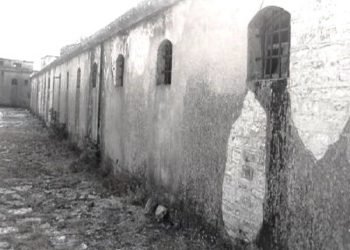
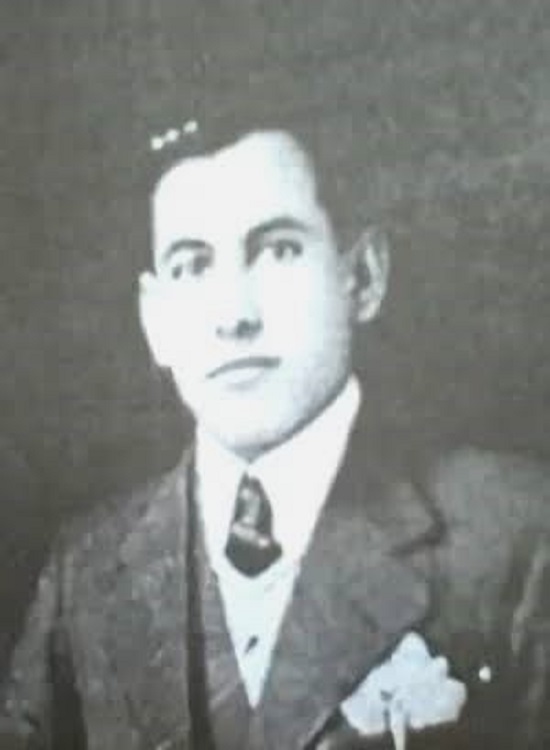
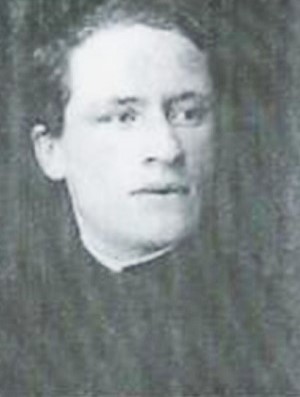
In the years 1945-1946 Shaban Polluzha, Xhafer Deva, Ukë Sadiku, Ymer Berisha, Shaban Dema, Ndue Perlleshi and many other patriots continued the active resistance for the realization of natural Albania and the right to self-determination of the people of Kosovo. To this group which was active in Drenica and other regions of Kosovo, four Shkodrans also joined: Marije Shllaku, Father Bernard Llubi, Kolë Parubi and Gjergj Martini. They came from Shkodra to Drenica, joining the anti-communist liberation detachments, and the young student of philosophy Marije Shllaku was wounded in Drenica and arrested by the pro-Yugoslav communists and together with Father Bernard Llubi, Kolë Parubi, and Gjergj Martini, was sent to the prison of Prizren where the prosecutor was the infamous communist Ali Shukriu.
Together with the four Shkodrans, dozens of Kosovars were also imprisoned. In a staged political trial, the four Shkodrans: Marije Shllaku, Father Bernard Llupi, Kolë Parubi and Gjergj Martini were sentenced to death and executed somewhere in the surroundings of Prizren, where even today their grave is unknown. The others were sentenced to prison. The Liberal Party of Kosovo, seeing this sacrifice and immolation of the Shkodrans for Kosovo, in 1994 published the book: ‘The Albania of Marije Shllaku – the four Shkodran martyrs,’ by authors Ramiz Kelmendi and Viktor Gashi, who were also arrested in 1946, with the group of Marije Shllaku.
The PLK since then has established this party’s Recognition, “Marije Shllaku,” which is awarded to meritorious personalities and institutions such as: the Municipality of the city of Shkodra, Ibrahim Rugova, Adem Jashari, Pjetër Arbnori, Metush Krasniqi and many others, for their contribution to the freedom and democracy of Kosovo. The figure of Marie Shllaku constitutes an emblematic figure of the war for freedom and unification, because she with desire and unprecedented patriotism comes from ancient Shkodra to join the fighters of Kosovo to unite the nation and to make ethnic Albania. For many years this heroine remained in oblivion by the rulers both in Albania and in Kosovo, for which Maria also fought and was sacrificed. We must bow before the work of this bright figure of our national cause and by no means should the heroine and distinguished intellectual of our nation be left in oblivion any further.
Marie Shllaku is among the fighters who should have their deserved place in the history of the Albanian people, therefore this great fighter of national unification should be immortalized in the lapidaries of freedom in many cities and, especially in the city of Shkodra where she was born and educated and in the beautiful city of Prizren, where she gave her life for the freedom of Kosovo. The lapidary of freedom for this heroine should be erected as a sign of respect and gratitude and especially now when Kosovo is free and with pride should keep in its bosom the martyrs of the nation.
The patriotic activity of the young and fearless sokoleshë will remain a rare example of patriotism where she worked, fought and was sacrificed with heroism in our national history and will have a special place in our hearts. To the question that the communist prosecutors and judges of the time asked in the trial in Prizren: ‘Do you know that for these crimes execution awaits you’? Marie Shllaku answered: ‘Kosovo will never lack flowers to bring upon my grave.’ Whether Kosovo has fulfilled its debt to Marie Shllaku truly, is a great question that requires a studied answer.
Several books have been published on the initiative of patriotic intellectuals, several streets bear the name of Marie Shllaku, but a special lapidary is missing in Prizren of the Albanian Leagues, and in her Shkodra. Therefore Kosovo still remains indebted to Marie Shllaku, to bring the delayed flowers to her grave, whom even though many decades have passed we still do not know where that grave is. Maria was among the few women who lined up in the national movement of that time where with a rare bravery she was against the partitioning of Albanian lands.
The heroine Marie Shllaku will always be commemorated as one of the devoted nationalists who gave her life to Kosovo. The ideal for which the distinguished patriot of the ethnic lands Marie Shllaku worked, fought and was sacrificed, was and is national unification, therefore her blood and that of other freedom fighters coincides with the testament that the time has come for unification in a single state, that is, in Ethnic Albania. The beautiful and special flower Marie Shllaku left traces in our national history and every time will be remembered as a heroine and martyr of ethnic Albania.
Therefore we must bow before the name of the legendary heroine. Marie Shllaku and all her fellow fighters who were sacrificed for our liberation from the wild Serbo-communist claws and whose aim was our national unification. Glory to the name and work of the Shkodran martyr Marie Shllaku, who was sacrificed so as never to die! An author said: It is not terrible to die, terrible is not to live”! / Memorie.al