By PASKAL MILO
Part Two
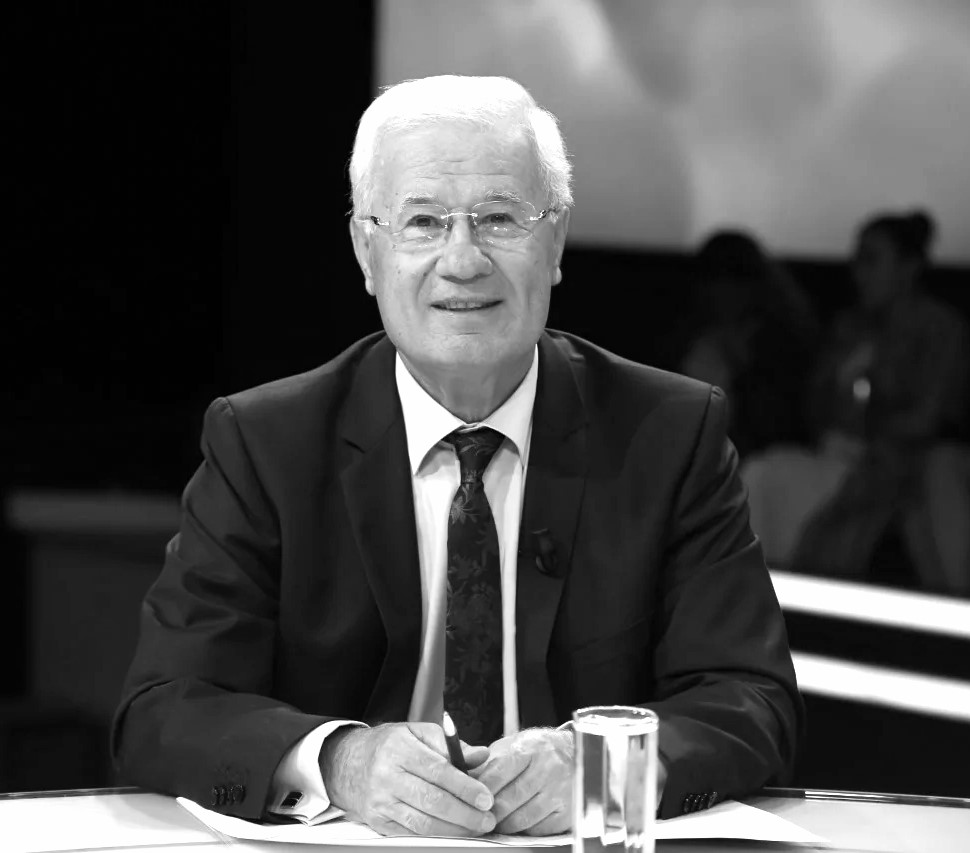
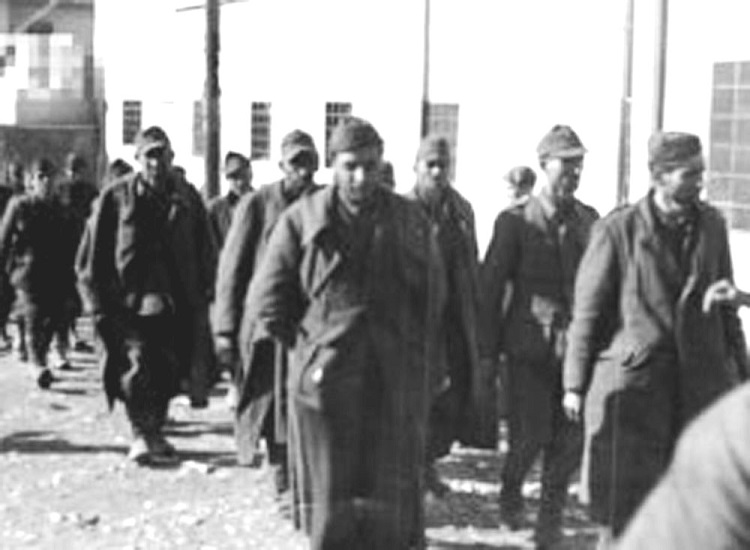
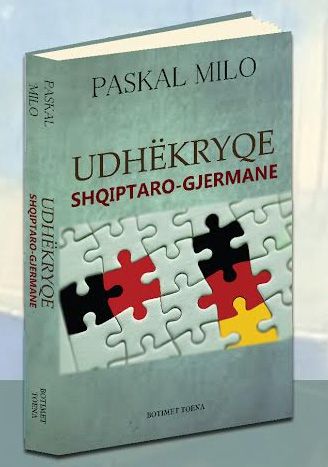
Memorie.al / The repatriation of war prisoners have been one of the most sensitive issues after the Second World War. About 250 German and Austrian soldiers, prisoners, or those who changed combat camps, remained in Albania, where the dictatorship of the proletariat was being installed. It would not be easy for them to return home, and some never returned. They were imprisoned, shot without trial, eliminated in secret as agents…! Among those left behind in Albania, there were also women. Their fate is described by historian Paskal Milo in his newest work, titled “Albanian-German Crossroads,” published some time ago.
The historian has relied on previously unknown documents, extracted from the archives of the Ministry of Internal Affairs, which testify to the number of war prisoners, the conditions in which they lived in Albania, how they were persecuted by the State Security (the Sigurimi), and who was the last German to leave Albania.
Continued from the previous issue
At the Albanian-German crossroads, the nephew of the number two of Nazi Germany, Hermann Wilhelm Göring, also found himself. The 22-year-old lieutenant disappeared in Albania, and many were those who were interested in his fate. In his latest work, “Albanian-German Crossroads,” published by the “Toena” publishing house, historian Paskal Milo recounts the fate of the war prisoners left behind after the end of World War II. About 250 German and Austrian prisoners remained in Albania and waited impatiently to return to their homeland.
Many others had disappeared. Citing German sources, Milo states that “3,602 German military personnel were killed in Albania.” Among them was W. Von Essen, who’s killing and burial site were known to very few people. And those people were precisely high-ranking officials. One of them was Enver Hoxha and the other was Kristo Themelko. Both have recounted the story in different ways. According to Themelko, the lieutenant’s binoculars were given by the latter to Enver, while he kept the pistol for himself and handed it over only in 1992.
As for the ring, at Enver’s insistence, it was given to Dr. Omer Nishani, whose wife, Roza, was Austrian and became an intermediary for finding the bones and personal belongings of the young Von Essen. Likewise, in his book, Milo also recounts the fate of the few German women who remained in Albania, and the very last one to leave was precisely a woman, in 1955.
Passages from the book “Albanian-German Crossroads” by Paskal Milo
The families of the war prisoners, informed about their difficult conditions and mistreatment, sensitized the International Red Cross and the German Red Cross. These institutions several times addressed the Albanian Red Cross to send forms with the names of persons who died after the end of the war, the list of war prisoners with personal data according to the places where they were gathered.
They constantly requested that the Albanian government make a decision for their repatriation, but from Tirana there was silence and dragging of requests. To see closely the condition of the war prisoners in Tirana, representatives of the International Red Cross also came.
These efforts put the Albanian authorities in motion to systematize the lists of German, Austrian, and other prisoners according to the requests of the International Red Cross and to somewhat improve their living and working conditions. Albania had signed the 1929 Geneva Convention on prisoners of war, so the communist regime was obliged to show at least some minimal formal attention.
On February 19, 1949, according to the newest list, there were 229 German and Austrian prisoners in Albania, and next to their names was also noted in which occupied zone of Germany they wished to go.
134 of them wished to return to the American, British, and French occupation zones, while 92 others to the Soviet zone; two imprisoned prisoners had expressed no desire, and only one person named Hans Resman, originally from Boni, requested to stay in Albania.
The issue of the repatriation of German war prisoners gained priority after the creation of two states in Germany, where their governments, independently of one another, began to take a direct interest. On December 2, 1949, a communiqué regarding the repatriation of German war prisoners from Albania was published in German newspapers.
This news set in motion the federal government of West Germany, which, having no diplomatic relations with the Albanian government, acted through the International Red Cross and the French government. Twice, on December 21, 1949, and March 30, 1950, the International Red Cross addressed the Albanian Red Cross, requesting the repatriation of war prisoners, the sending of the most accurate lists, and the completed prisoner cards.
The French government, through its legation in Tirana, sent the Albanian government an official note in which, on behalf of the “Government of the Saar,” it expressed interest in the repatriation of German “prisoners of war” originating from the Saar region, whose interests it had been tasked to represent in foreign relations. At the same time, the interest of the East German government also appeared.
In late December 1949, it was notified by the head of the Soviet diplomatic mission in Berlin that the Albanian government had expressed its readiness for the repatriation of 60 German prisoners who were from the eastern part of Germany. Further negotiations took place in Prague and Bucharest, where both governments had diplomatic missions.
On February 27, 1950, the East German government agreed to cover the transport costs for the repatriation of the prisoners via the sea route from Durrës to a Romanian port, and from there by train to Germany.
The issue was delayed for about another two months, because the Albanian government requested that the East German government also cover the transport costs for all German prisoners, including those originating from the western zones of Germany. On May 31, 1950, the majority of the German prisoners and the Austrian ones, totaling 225 people, left Durrës for Constanța, Romania; on the Soviet ship “Plekhanov.”
The Albanian government, in a special communiqué about this event and to serve its ideological and political partners, declared the repatriation of the German and Austrian war prisoners as fulfilling the requests of the East German government and the Socialist Unity Party of Germany, as well as the Austrian Communist Party. In December, the other 10 German prisoners who had been sentenced to prison were also repatriated. The story of the imprisoned German prisoners continued for another three or four years. The last four, among them two women, were serving sentences on serious charges in prisons.
One of them, named Harry Behnel, escaped to Yugoslavia in 1952 and from there reached West Germany, where he made known that there were still a few German prisoners in Albania. The issue once again returned to the diplomatic agenda of the two governments, Albanian and East German. The imprisoned German prisoners had requested the help of the East German legation in Tirana through a letter they had sent. The Albanian government made the decision to release three German prisoners on December 3, 1953.
But Elsa Koch was kept for another two years, until the end of 1955. It is believed that she was the last war prisoner of the German army to leave Albania. Documentary sources from the early post-war years also reflect the hopes of desperate people to find even just the graves of their relatives killed in Albania.
According to German sources, 3,602 German military personnel were killed in Albania, of whom, until the end of the 1980s, only 2,400 of them had their names and graves known. About 1,200 of them were unknown, even if they managed to have a grave.
The Swedish Red Cross and the family of one of the German officers killed in Albania, the nephew of Herman Göring, Lieutenant W. Von Essen, asked the Albanian authorities even after the War whether he was alive as a prisoner of war or had been killed. The story of this 22-year-old young German officer does not differ from those of thousands of other Germans killed on Albanian soil.
But it is special, not because he was the nephew of the high-ranking Nazi official, but because of the involvement of the highest communist and state leadership of Albania during and after the War. The burial place of this officer’s body was kept secret, and his pistol, binoculars, and ring had been taken from him. This story has been known, but also told in their own way, by very few people, among whom were Enver Hoxha, but also another communist leader of the time of the War and the early post-war years, Kristo Themelko.
The Von Essen family did not manage to get an official answer from the Albanian authorities regarding the fate of their relative. But it found ways and managed to sensitize the Austrian wife of the head of state, Dr. Omer Nishani, to at least return the personal belongings of the slain lieutenant. Hoxha, in his memoirs, claims that Roza Nishani asked for the lieutenant’s ring, but he does not tell the complete truth. During the Nazi occupation in Albania, Enver Hoxha and Omer Nishani. According to him, Doctor Nishani asked for it from Myslym Peza, and the latter gave it to him.
Kristo Themelko, in the memoirs he left behind, tells it almost differently. The possessor of the items was he himself, and after refusing the first time, with the intervention of Enver Hoxha, he gave the ring to Omer Nishani. Themelko claims that he gave Von Essen’s binoculars to Hoxha, while he kept the revolver for himself and handed it over, upon order, to the Ministry of Internal Affairs, almost half a century later, in 1992.
The treatment of war prisoners was one of the humanitarian aspects of the dramatic consequences left by the Second World War. The others were even more severe, such as those of the missing in war or in the infamous Nazi concentration camps, where millions of people were exterminated, among them hundreds of Albanians.
The repatriation of the survivors from these camps also remains a painful and harrowing story. The Albanian government at the end of the War addressed the governments of the Great Allied Powers to facilitate the search for and return of Albanian survivors from the concentration camps to Albania.
The number of Albanian internees in German concentration camps, according to a list compiled by the Albanian government at the end of 1945, was 628 people. Even at the end of 1948, the Albanian government had no information about the fate of 227 of them. This is a topic that deserves a separate, broader, and more in-depth study. / Memorie.al