
By Stavri Daja
Memorie.al / The newspaper “Kathimerini” and the well-known journalist Stavros Tzimas, in the issue of November 5, 2022, published an interesting article on the political indoctrination of the Brazilian politician David Silva Lula in Albania, during the 1970s, through programs financed by secret party funds. These funds have from time to time also benefited members of the Greek Communist Party (KKE) who were located in the countries of the former socialist camp and maintained friendly relations with the communist regime of Enver Hoxha, who had taken care in the early stages to finance institutions, parties, revolutionary military organizations, which he housed and trained on his territory, or even specific individuals, active and shrewd journalists, politicians, collaborators, associations, etc., all over the world. These funds are more widely known as secret funds or secret expenditures.
The reasons for which the secret funds were allocated were the promotion of national issues, the promotion of socialist Albania, the gathering of information for state services, espionage and counter-espionage from various sources, the service or facilitation of various persons with specific tasks or who, through their access to public life, could promote the country and influence international developments, provide services in the interest of the country, or help it prevent or cope with external or internal dangers. The money from these funds was also intended to promote the works of Enver Hoxha and, in general, the foreign policy of the Albanian state.
In the beginning, the amounts spent on such actions were symbolic, but gradually they escalated. Besides purely monetary benefits, other forms of support for communist parties were free hospitality for the party’s friends and sympathizers in Albania, their holidays in Albanian vacation camps, the reinforcement of diplomatic services with espionage and counter-espionage personnel, as liaisons with communist parties or movements around the world, and the granting of scholarships for studies in Albanian higher education institutions or technical schools to communists from all over the world, as a reward for their activity in favor of Albania.
The rewards were carried out according to top-secret orders from the Politburo, mainly by Enver Hoxha and Ramiz Alia (Enver Hoxha’s successor), while the money was delivered by absolutely trusted people from the Albanian secret services, placed within the diplomatic services, without documents or bank mandates, under strict orders not to ask for signatures from the beneficiaries of the money. Until 1961 and the break with the Soviet Union, Albania spent money from the World Trade Union Fund, financed by the Soviets, for such purposes.
After the 4th Congress of the Party (February 1961), the secret financing acquired an institutional character, and in June 1964, the Central Committee approved the creation of the “Solidarity Fund for Marxist-Leninist Parties and Movements,” which channeled money originating from the People’s Republic of China, with the aim of strengthening the fight against world imperialism and modern revisionism and achieving the triumph of the world proletarian revolution.
In just the first two years, the fund had about $700,000 available, but on average it spent about $100,000 per year, a large sum compared to the economic capabilities of the Albanian state. In 1967, $211,500 was spent from the solidarity fund. It was the year when Albania hosted several revolutionary terrorist groups from Africa, whose members were trained in camps and various military units in the country, for which $100,000 was spent, with the aim of preparing them to seize power by force in their own countries.
The ideological and political indoctrination of these groups was undertaken by the “Vladimir Ilyich Lenin” party school, and their military training by the Ministry of Defense. Later (from 1981), these terrorist groups were trained in the mysterious military unit 3781.
Financing for the Greek Communist Party
From the party’s secret funds, activities of the Greek Communist Party, its groups, or specific members were financed from time to time, or they were offered various facilities and amenities for their services in the fight against international reaction and the help they provided in favor of the People’s Republic of Albania. Until 1949, the extensive aid that arrived from the Eastern Bloc countries to Albania, aimed at aiding the Greek uprising, was largely misappropriated by the Albanian services and used for their own benefit.
However, subsequently, after the dispersal of Greek communists across the countries of Eastern Europe, the Albanian state spent considerable sums of public funds intended for Greek communists abroad, who demonstrated solidarity with the policy and ideology of the Albanian communists and contributed in various ways to promoting Albania’s national cause.
Immediately after the withdrawal of the Greek guerillas and their deployment in Burrel – (where the General Headquarters of the DAG was located), Bartziotas called Polidoros Daniilidis and asked him to form an elite company of about 600 sworn commandos for special training, as saboteurs and radio operators, who were transferred to the North, destined for operations in Epirus, Macedonia, and Corfu, and 500 Macedonians stationed in Burrel, with the same mission.
The total number of armed forces to undertake espionage missions in Greece, according to data available to the Greek services, was estimated at 1,500–2,000 individuals. The elite company was later transferred to Cërrik. One hundred and fifty trusted guerillas, according to lists compiled by the Greek Communist Party, had been transferred to the offices of the Albanian State Security (Sigurimi) in Saranda, Gjirokastra, Erseka, and Korça, with the aim of organizing small groups of informants for direct espionage operations in Greece, in the interest of the Democratic Army of Greece.
All those who remained in Albania were considered battle-ready and willing to fight, who could cause serious unrest in Epirus and Western Macedonia and destabilize Greece, should the resumption of the civil war ever be decided. All infrastructural facilities for their four-month preparation in Albania were provided by the Albanian state.
Reception of Key Members of the Greek Communist Party in Albania
In 1958, the Central Committee of the Party of Labour of Albania decided to approve secret expenditures for the free accommodation of key members of the Communist Party of Greece who visited Albania for various missions, mainly to settle refugee issues in various camps or as escorts for commandos and liaisons sent to Greece through various border points, coming from Eastern European countries and their espionage schools.
In January 1960, the Secretariat of the Central Committee of the Party of Labour of Albania decided to grant the KKE envoy in Albania the sum of 19,200 lek as a monthly salary, which constituted ten times the average monthly wage of an Albanian worker, while he would also have at his disposal 230,000 lek for the year 1960 and 30,000 lek for travel expenses, sums given by the Central Committee of the Party of Labour of Albania and the Prime Minister’s Office.
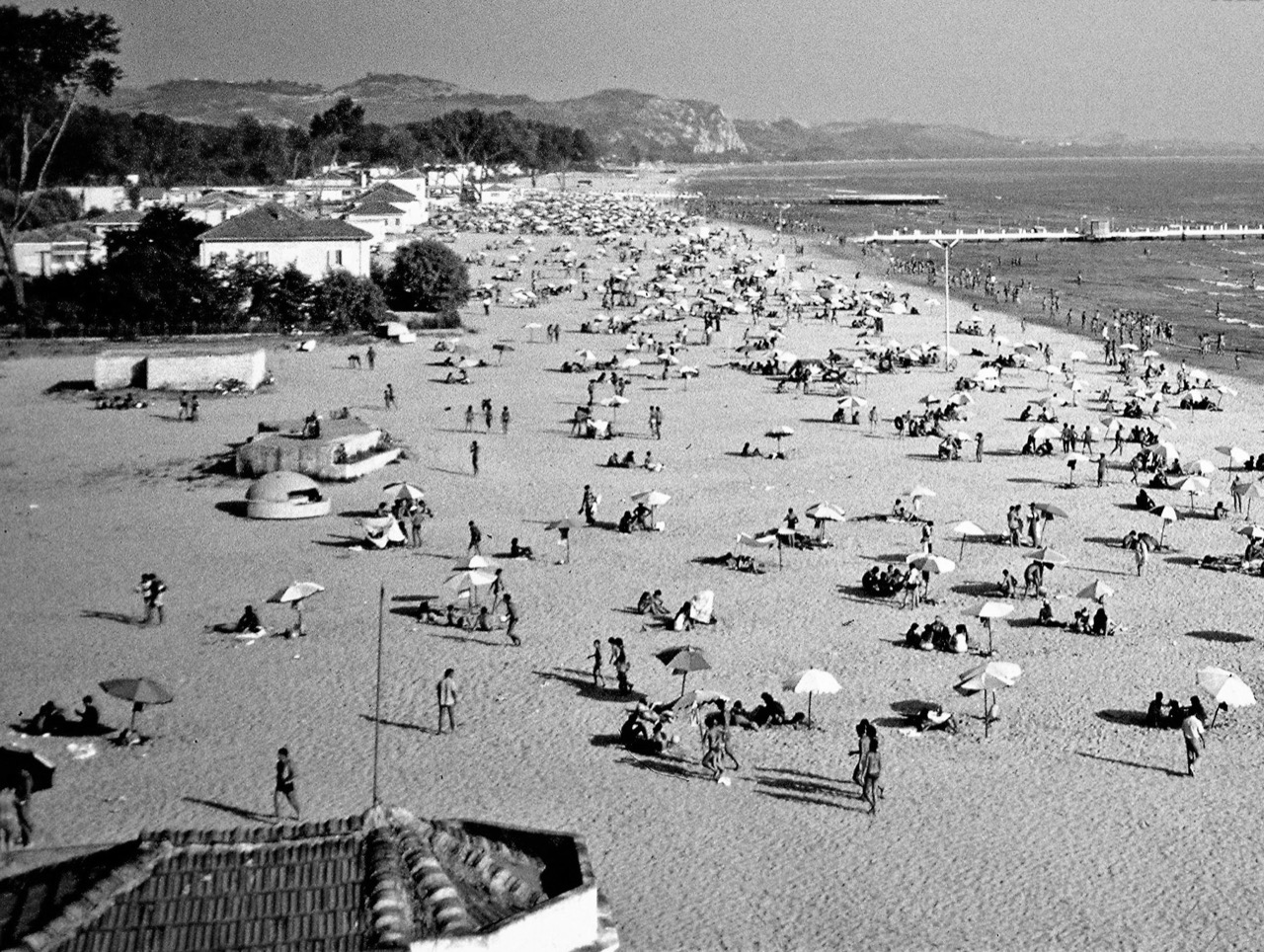
In May 1959, Enver Hoxha himself invited a couple or, in their absence, two comrades from the Greek Communist Party to Albania to spend free holidays on the Albanian coast during the month of June, with the aim of strengthening inter-party relations, and in May 1960, Hoxha again invited Apostolos Grozos, First Secretary of the KKE Central Committee, to spend free holidays in Albania, in order for him to rest and relax from the intensive party work.
In February 1960, Dimitris Partsalidis proposed to the Albanians that they invite certain Greek journalists with democratic views to the country, who would promote Albania positively. Partsalidis himself received an invitation to visit Albania and spend his holidays there, but he hesitated because his wife, Avra, was a defendant and on trial at that time in the Athens trial.
Kostas Koligiannis had also expressed his desire to visit Albania and spend his holidays there for free, in June 1960, through the KKE envoy in Albania, Giorgios Argyropoulos. Koligiannis, during the Civil War, had been hospitalized in Albania after being wounded on the Grammos front.
At the end of December 1960, Enver Hoxha invited a delegation of the Greek Communist Party to the proceedings of the 4th Congress of the PPSH, on February 13, 1961, and he himself undertook all hospitality expenses. After the final conflict between the Party of Labour of Albania and the KKE, the interest of the Albanian party leadership became objectified towards the splinter groups and mainly towards the group of Polidoras Daniilidis, which sought help, as well as political and ideological guidance from Tirana.
In March 1965, a member of the Greek Communist Party (Marxist-Leninist) visited the Albanian Embassy in Prague and, among other things, requested a typewriter with Greek characters for the needs of the leadership in Bucharest, through the Albanian embassy there. In their contacts, the Greeks leveled accusations against other KKE groups, such as the “eternal Gousias,” whom they described as problematic, aloof, ambitious, and contemptuous of all others.
They indirectly recommended that the Albanians stop any aid or facility for his group. They also accused other members of having placed themselves at the service of the Bulgarian secret service and of speaking contemptuously about the Albanians. At the beginning of 1960, the Albanians decided to give the KKE (m-l) and the Provisional Central Committee financial aid of $5,000 in installments, through the Albanian embassy in Vienna, according to its intermittent needs.
A few years later, in 1968, the Central Committee of the Party of Labour of Albania decided to moderate its financing, which would amount to $2,000–$3,000, but the main concern was finding alternative ways to disseminate Albanian propaganda material in Eastern European countries.
Financing for the Group of Jorgo Vonditsios-Goussias
The man who also benefited from the secret expenditures of the Party of Labour of Albania was Giorgos Vontitsios-Goussias. The Albanians’ interest in Goussias was justified by his long illegal stay in Greece (1952–1956), a fact that could provide the Albanians with information regarding the needs of the party and developments in Greece.
In August 1966, Goussias, in his capacity as Lieutenant General of the Democratic Army of Greece (DAG), member of the Political Bureau of the KKE Central Committee (until 1956), sent a letter to Enver Hoxha and Mehmet Shehu and, subsequently, the manuscript of his book entitled: *To Eliminate from the Greek Left Movement the Cancer of Modern Revisionism: The Ideological and Political Positions of the Greek Marxist-Leninists*, which ran to 342 pages, and requested its publication and distribution by the Albanian state in Albania, Greece, and all Eastern countries, its broadcast via Radio Tirana, and its advertisement in Greece, by any means available to the Albanian state, while with the help of Belgian communists, the book would also be published in Greece.
The Central Committee of the Party of Labour of Albania considered Goussias’s book serious: it defended the struggle and personality of Zachariadis and emerged as an opponent of the revisionist clique of Koligiannis – Partsalidis, which had taken the lead of the party through a coup d’état. But the Albanian leadership hesitated in making a final decision regarding the financing of his book.
The Albanian leadership ultimately decided to give him a small financial aid, while expressing its reservations regarding the book’s content and, mainly, regarding the unrestrained glorification and unbridled praise of Zachariadis. Goussias promised to revise the book’s content and make the necessary corrections but declared that the sum of money was too small.
In the end, the fundamental demand of this factional group for its public recognition as a Communist Party (Marxist-Leninist) was not approved by the Albanian leaders, nor was the immediate publication of his book; as such an action would harm the other groups. But aid for Goussias continued in other forms: the provision of paper, typing, and the publication of a small number of books (approximately 500) for internal use, the distribution of which he would undertake himself.
To overcome the disagreements between all the currents that had emerged from the KKE schism (1968), the Central Committee of the Party of Labour of Albania planned to give, on an alternating basis, controlled financial aid in the amount of $1,000 and 30,000 lek, once it was fully convinced of their reliability.
Financing of Other KKE Groups
At the same time, Colonel Gerasimos Maltezos, who lived in Bulgaria and declared himself a fanatical follower of Zachariadis and a loyal friend of the Party of Labour of Albania, sent a 30-page manual to the Central Committee in Tirana, through the Albanian embassy in Sofia, requesting its printing in 30,000 copies and its distribution.
The editorial board of the magazine “Anagennisi” (Rebirth), which mainly published propaganda material about Albania and China, also requested financial aid and support. This group sought the restoration of contacts with the Party of Labour of Albania, through the Albanian embassy in Paris.
In January 1966, Nikolas Psyroukis visited the Albanian diplomatic service in Cairo, as a representative of the group “Friends of the New Countries,” and also requested financial aid, with the aim of fighting “Anagennisi” (Rilindja), but the Albanian side labeled him an opportunist and refused any communication with him. In June 1969, the Central Committee decided to provide the Marxist-Leninist group of Greeks in Poland with a duplicating machine (printing press) and a typewriter with Greek characters.
Scholarships for Greek Refugees to Study in Albania
Another form of financing for the Greek communists was the granting of scholarships for studies in Albanian higher education institutions or even in technical schools, such as that of Ioannis Fotakis from Arta, who studied Albanian philology in Tirana. However, when relations between the two parties soured, the Albanian authorities rejected the requests of the Greeks in Albania to be given scholarships for studies in technical schools. Some of the scholarship holders were imprisoned, such as Efstathios Qekhaev (he studied Russian philology in Tirana, was imprisoned, and died in prison in 1978). / Memorie.al