





By DASHNOR KALOÇI
Part Two
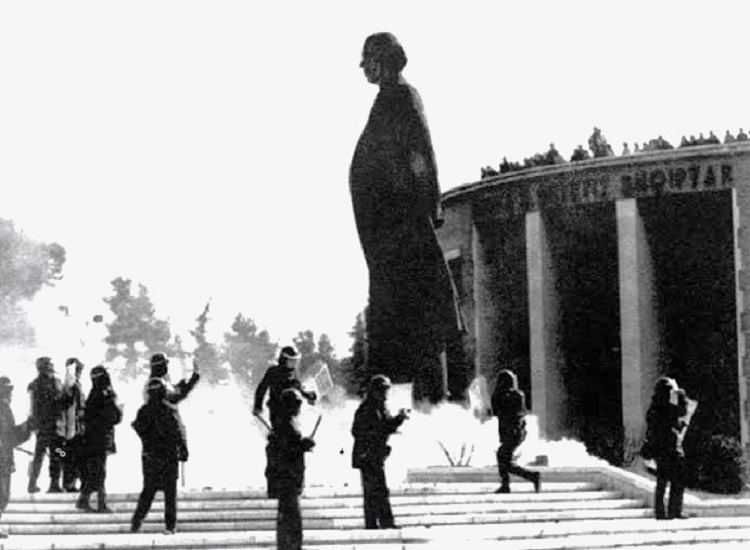
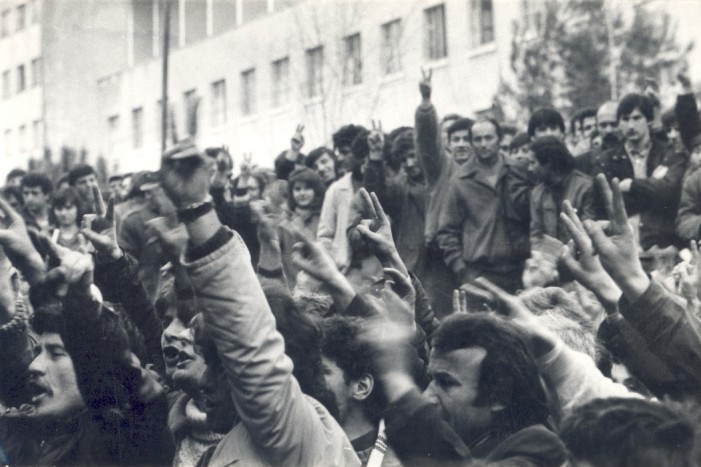
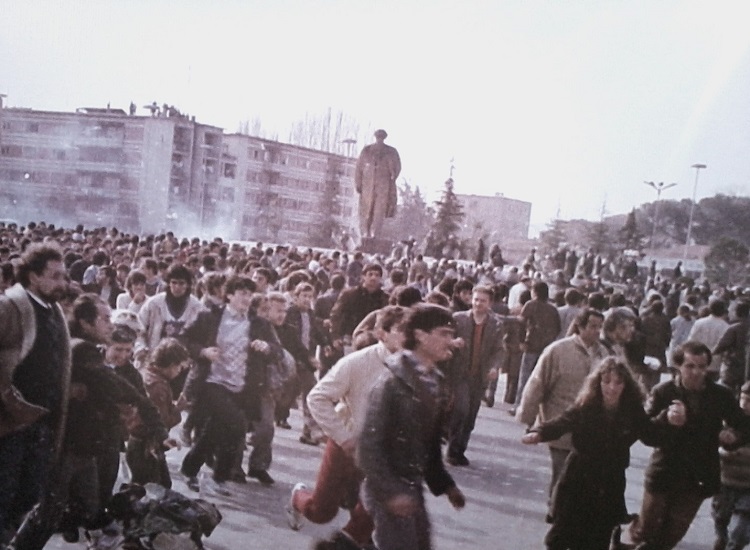
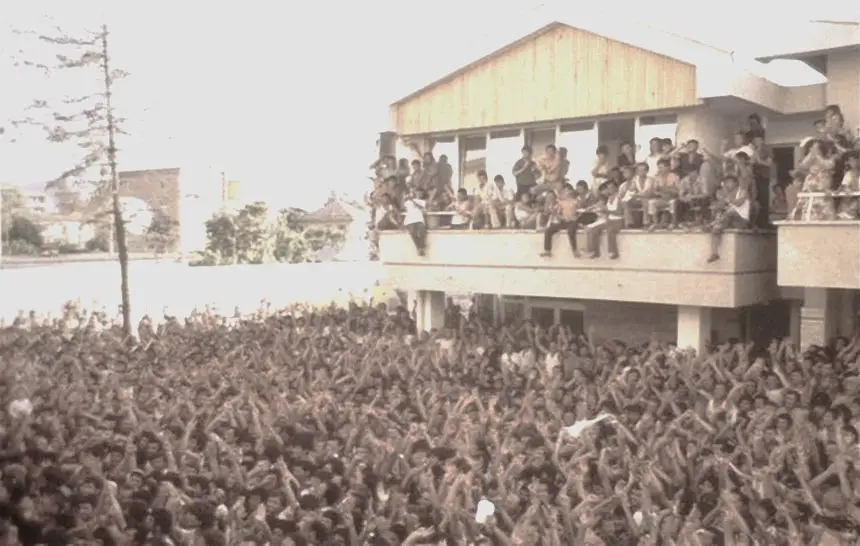
Memorie.al / When not even three months had passed since the declaration of political pluralism in Albania, and the country was on the brink of the first pluralist elections to be held after nearly 45 years of rule by the communist regime, led by Enver Hoxha and his successor Ramiz Alia, on March 6, 1991, the Political Bureau of the Central Committee of the Party of Labour of Albania, headed by First Secretary Ramiz Alia, held a lengthy meeting. During this meeting, several major recent events were analyzed, also making a retrospective of everything that had occurred over the span of one year. Starting from the events of Shkodër in January 1990, regarding the removal of Stalin’s bust, followed by those of Kavajë, the events of July 2nd, when around 6,000 people entered foreign embassies in Tirana and left Albania; the intertwining of these events with the declaration of the Constitution of Kosovo, also on July 2nd, the “implication of the international reaction” led by the CIA, the French, and the Yugoslavs for the destabilization of Albania; the student youth protests in the “Student City” in December, which led to the declaration of political pluralism; the mass departures of Albanians from the country across the north-western and south-eastern borders towards Yugoslavia and Greece; the toppling of Enver Hoxha’s monument on February 20, 1991; the massive exodus of the first days of March 1991, where thousands of Albanian citizens seized ships in the country’s main ports and left for Italian shores; the risk of a repetition of the embassy events, and the preparations for the first pluralist elections to be held on March 31, 1991, where, according to the Albanian embassy in Athens, the American ambassador there had refused an invitation to go to Boston, saying that: “events in Albania are expected to occur.”
Regarding these and other matters, this secret archival document (long since declassified), extracted from the Central State Archive (fund of the former Central Committee of the PPA), discusses this, containing the minutes of the Politburo meeting, where, besides Ramiz Alia’s report, which also addressed the Democratic Party and its two main leaders, Azem Hajdari and Sali Berisha, all the discussions of the “comrades of the Bureau” and the secretaries of the Central Committee of the PPA are also included. For more details on this, etc., the document in question, published for the first time with its respective facsimiles by Memorie.al, informs us.
Continued from the previous issue
THE ARCHIVAL DOCUMENT WITH THE MINUTES OF THE MEETING OF THE POLITICAL BUREAU OF THE CENTRAL COMMITTEE OF THE PPA, MARCH 6, 1991
THE PARTY OF LABOUR OF ALBANIA Secret
CENTRAL COMMITTEE
– General Sector –
PROTOCOL
OF THE MEETING OF THE POLITICAL BUREAU OF THE CC OF THE PARTY
March 6, 1991, 17:00
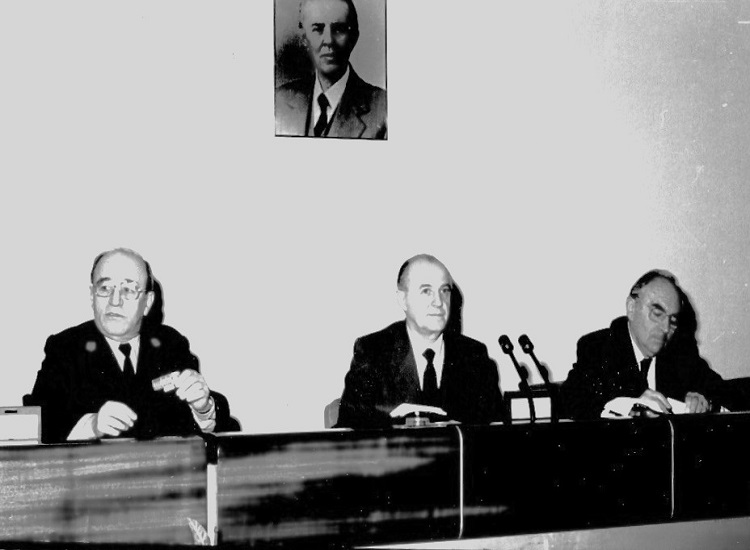
The Political Bureau of the Central Committee of the PPA, in its meeting dated 6.3.1991, discussed the events of the last days and the Letter to be delivered to the Party’s base organizations. The meeting is chaired by Comrade Ramiz Alia, First Secretary of the Central Committee of the Party of Labour of Albania.
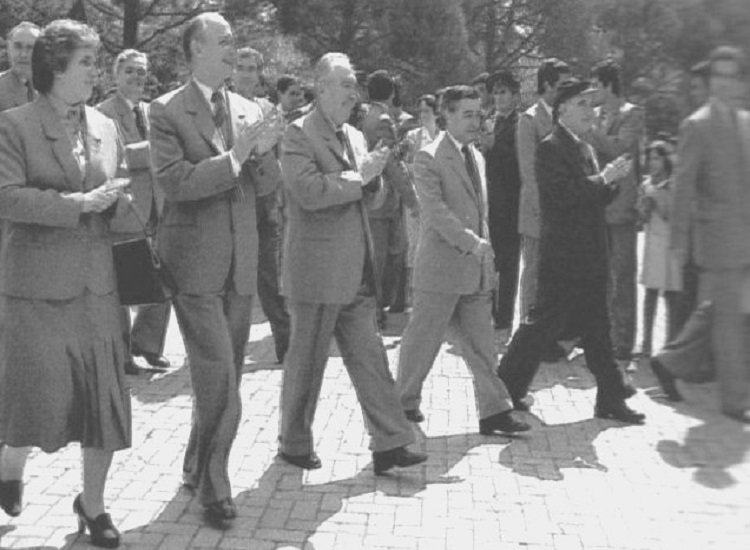
Participants are the members and candidate members of the Political Bureau, comrades: Adil Çarçani, Besnik Bekteshi, Hekuran Isai, Pali Miska, Vangjel Çërava, Xhelil Gjoni, Llambi Gegprifti, Niko Gjyzari, Xhemal Dymylja, as well as the secretaries of the Central Committee of the Party, comrades: Spiro Dede and Abdyl Backa. Comrade Kiço Mustaqi is absent for a valid reason.
DEVELOPMENT OF THE MEETING
COMRADE RAMIZ ALIA: The First Secretary is no longer asked by anyone today, because his arguments are outdated, no longer matching those desires, those opinions that the masses have. But it is not just this, because these movements are massive. When something happens in a work center, the Party secretary goes with great difficulty to dialogue, to discuss with them. The best example was with the students. The secretary of the Party Committee of the Tirana District, their former pedagogue, Ismail Lleshi, a sensible young man, went to speak to them, but they whistled at him. Whereas if Comrade Llambi Gegprifti goes, I believe they won’t accept him; they’ll stone him, this is the reality, because they see that some of our practical actions are in contradiction with the Party’s Program, with their mentality.
Lately, we have been very disturbed by several events of major proportions. It is clear that the war waged against us today, and not only today, is organized from abroad. The internal forces are nothing more than a tool; they merely carry out orders and directives received from abroad. Why do I say this? Because this war did not start today; at the very least, it started from January 1990, with the events that occurred in Shkodër and Kavajë, and which were also attempted to be developed in Tirana. These events were escalated to a higher level on July 2, 1990, when about 6,000 people entered embassies, to be further escalated at the end of 1990, and so on.
If anyone thinks that these events are related to the issue of multi-partisanship, I believe they are mistaken. Multi-partisanship may have provided the opportunity for a better organization of these forces that acted as a tool of the external reaction, but in reality, these forces acted on us according to their scenarios even before multi-partisanship. In a word, the external reaction had elaborated its own programs for Albania, which it could not leave outside this iron circle with which it is trying to suffocate the communist movement in Eastern Europe, including our country.
Of course, it would be naive to think that this anti-communist reaction would fade away. Logic does not say that. If in our conditions it has had certain zigzags that have been related to the tactics used by our Party, tactics which have delayed some types of activities, causing some of them to fail. On the other hand, the initiative taken by our Party itself to democratize life, to move away from some archaic forms of work, from some postulates or from some overly ideological emphases, has undoubtedly caused the reaction to retreat relatively.
There is no doubt that external factors have also influenced here. At a time when the situation in Yugoslavia is extremely turbulent and when the events in the Middle East escalated, a destabilization of Albania was not in the interest of the reaction. The time came for it to increase its efforts and put its scenarios into use one after another. It started first with the students, a contingent which in all Eastern European countries has been used as a strike force. This is what also happened with us, although from the point of view of political and ideological composition, the student youth was the best-prepared part.
Indeed, if the enemies said: “Let the students come and we’ll see,” we, for our part, said: “Let the students come and we’ll see.” But the truth is that the opposite happened. The question arises: were they manipulated by the enemy, or were they seeing that contradiction I spoke of? Perhaps the second is truer, meaning that the students supported the aspect of the Party’s renewal, but they saw that practical actions were disconnected, far behind this aspect. Here I have in mind the program, the draft constitution, generally the plenums of the Central Committee, accompanied by the severe economic situation.
There is no doubt that the work of the enemies also found a great terrain among the students. The events reached their climax with the toppling of Comrade Enver’s monument. The alternative we have always faced as a party leadership, whether in the Political Bureau or in the Plenum of the Party’s Central Committee, have been: on our path of democratization, in this clash of interests, even ideologies, of different views, should we go as far as bloodshed?
This has been our concern in all the clashes and confrontations that have taken place. And we have judged that, to the maximum extent possible, we must avoid bloodshed, because this would stigmatize the Party with great shame, it would show that it is a party which, to maintain its power, prefers to shed the blood of the people it effectively serves. The thesis we have adhered to, to avoid reaching the point of bloodying the people, is a correct thesis.
This international reaction, which has been working actively for at least a year or so, considering the events in Shkodër in January of last year, which were repeated in Tirana, in Kavajë, and elsewhere, then those of July 2nd, and others, was this entire enemy scenario, implemented meticulously and in an organized manner among us, without a guiding hand? In my opinion, there is a guiding hand that leads this scenario. If it is the CIA, the French, and the Yugoslavs as the main protagonists of these scenarios-and I am convinced that these three forces are primarily involved – then here among us they must have a strong base, a headquarters that directs them.
Because it is not possible, in the most categorical way, that in a fine day thousands of people gather in Tirana and about 5-6 thousand people enter the embassies. And confusion is created where somewhere the police let them in, somewhere tells them to get out, somewhere shoots, and somewhere doesn’t shoot. It does not seem to me that these actions are very coincidental, just as it is not coincidental, in my opinion, that they start at extremely strange times: On July 2nd, when the Kosovo constitution was being proclaimed, the embassy events in Tirana occurred, with the aim that international public opinion would divert attention from the Kosovo issue, which would completely discredit the Serbian regime, and engage with the Albanian emigrants who entered the embassies.
In December 1990, at a time when Kosovo refused to participate in the Serbian elections, the massive exodus began in Albania at the borders with Greece, and so the entire world public opinion, instead of engaging with the fact that Kosovo was not participating in the elections, engaged with the fact that thousands of Albanians crossed the Greek border. And immediately Mr. Mitsotakis comes to Tirana, to discuss this issue.
Or now, while in Yugoslavia the civil war almost started with the events in Pakrac and Knin, between Serbs and Croats, and the whole world is talking about what is happening in Yugoslavia, where it is going, how it is being divided, we start the synchronized operation of hijacking ships and the departure of thousands of people from our country to Italy, starting in Vlorë and then in Durrës, in Lezhë, and in Shkodër.
The question arises: who spreads the slogans that the embassies will open or that ferries will come to Durrës? Since the opposition has emerged, it is easier for us to blame the opposition. But it is not true that the opposition is interested in some of these actions, because those aggressive forces that it does not want to escape, escape it precisely. When we don’t resolve issues or find the truth, we cannot accuse others; we cannot place the blame on a factor that is hypothetical.
That this scenario is organized is also confirmed by this fact: The Central Committee of the Greek Communist Party informs our ambassador in Athens that the American ambassador there had been invited to go to a meeting in Boston, but refused to go, saying that he must stay here in Athens, because interesting events will take place in Albania. So even those in Greece are concerned that there is another force acting on us, whereas we who are here inside sometimes want to resolve phenomena with hypotheses, that Azem Hajdari went there and said this, that Sali Berisha went and said that, and we don’t see how and in what way all these things are coordinated.
It is a fact that for all the events that have occurred in our country, which are also related to the toppling of Comrade Enver’s monument, we know nothing, since the State Security organs have given us nothing concrete to reveal the sources of these plans, these scenarios, and their organizers. It is understandable that the toppling of Comrade Enver’s monument was also framed within these scenarios, although I am convinced that on that day the target was not Enver Hoxha’s monument, but the destruction of the Prime Minister’s building and the burning of the Party’s Central Committee.
But the Guard came out, fired, and people were forced to flee from there and go to “Skënderbej” square. If the main target had been Enver Hoxha’s monument, there would have been no reason to turn people towards the Radio-Television building and head here, but they would have gone straight down “Elbasan Street,” as they had gone on other occasions when they held rallies, oriented towards the monument. So, we have never had data on these developments, nor do we have any to this day.
The toppling of Comrade Enver’s monument also came as a result of mistakes, related to the students’ hunger strike, the gatherings in the Student City square, the emergence of a trade union that did not exist at all, the call they made to workers to declare a strike, the Party organizations of Tirana, which not only did not oppose this mass, but on the contrary, many of them, led by the heads of work centers, went themselves to the student square and then all together came down below. Communists may not have participated and surely did not participate in that vandal act, but nevertheless, there was no effort to stop such an action.
In this process, there were mistakes by the Party and the internal affairs organs in the way they acted to avoid this large gathering of people and this outburst. Naturally, it will be seen, but it also depends on the forces they had at their disposal, because the police forces were dispersed, one part was at the student dormitory square, the other part took position at the Radio-Television, another part at the “Enver Hoxha” museum, another at the Lana bridge, whereas in “Skënderbej” square there was relatively a small group, who in front of a large crowd could not do anything.
Should they have fired, and could they have fired when Comrade Enver’s monument was removed? One can now think with a cool head about all the variants. They could have fired and the people might have dispersed, but they could have come back the next morning or in the evening, just as they could have fired, killed several people, and the enraged crowd would have continued the assault and the monument still would not have been saved. So both variants were possible.
Nevertheless, this was the heaviest blow dealt to us as a Party. But no less are the blows we are receiving now with the mass departures of people abroad. Not only as a Party, but also as a people, as a nation, as a state it is a blow, because it shows that this state is unable to perform its most elementary functions. For people to seize ships on the coast and not be prevented in this action, that doesn’t work. Here the limits of tolerance have been exceeded in such a way that it no longer holds.
The toppling of Comrade Enver’s monument aroused a very strong reaction within the Party and among the people. You have not fully felt it, whereas I have felt it with all its weight and doubly: first, through telegrams, which numbered in the hundreds and thousands, reflecting this great concern of the people and at the same time making strong criticisms directed at the Party, at the leadership, not excluding me personally; second, I felt it most strongly in the direct contact I had with all the district representatives, where Comrade Adil, Comrade Xhelil, and Comrade Spiro were present.
I can tell you that never in my life have I felt so constrained. Spiritually I was with them, in the sense that we had the same feelings, the same hatred, and the same anger. Just as we judge that there is something in this, that there is a hand directing it, that there is an instigating factor for these actions, they also had their opinion that here betrayal begins with Comrade Ramiz. Indeed, they told me openly that we have now lost faith even in you. For my part, I did not make them feel guilty, I did not contradict them, I did not tell them: “Are you in your right mind?”
On the contrary, I listened to them with respect to the end, because it also bothers me what I said a little while ago, that all this activity is not something spontaneous, not coincidental, but instigated and scripted by someone. So, today I saw another telegram coming from Bulgaria, with the text that the Yugoslavs are doing an extremely great job with the Albanians coming to Bulgaria. Indeed, they have intervened with the Bulgarian Ministry of Foreign Affairs, to allow the Albanians to stay as long as possible in Bulgaria and preferably on their return or transit through Macedonia, to stay 2-3 days in Skopje.
So, the Yugoslavs are working intensively with our people and preparing them for actions against our country. I had told Comrade Hekuran, when the Yugoslavs returned over 700-odd people to us, what kind of people are these, where are they? Surely among them there are also “soldiers,” because logic dictates that the enemy cannot work only with prepared “officers,” with “generals.” How much do we have these people under control, how do our bodies work with them? For myself, I have no data regarding this issue.
I have all the information, but they are more within the framework of rumors than of a concrete study. This is the situation as far as the events currently happening to us are concerned. Regarding this situation, in the Presidential Council we decided and tasked the Government to declare the Port of Durrës a military zone. If we do not bring this port under strict control, there will be neither imports nor exports, and this situation paralyzes our entire economy. Therefore, the army must take it decisively in hand, with all means.
Whereas in other cities, the situation must be stabilized through the direct intervention of the Party, the authorities, and various bodies. In Vlorë, for example, we have no reason to declare a state of emergency, because the ships have already left. In the meeting I had yesterday with the Italian delegation, I asked them to open 10,000 job positions for our people, but they said they don’t have any. / Memorie.al