Part One
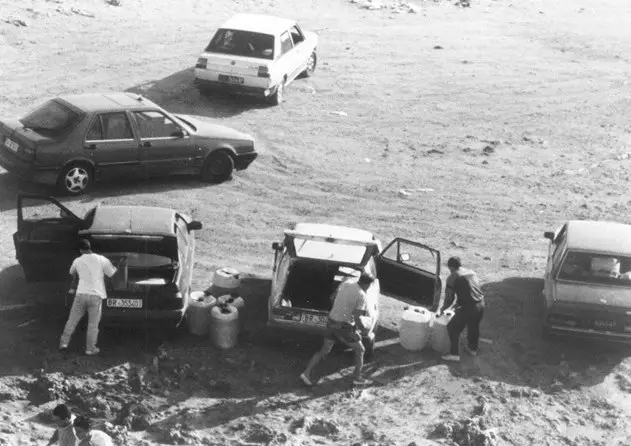
Memorie.al / Albania were mired in debt, and the “clearing” method used at the time among socialist countries was not enough to pull a country out of crisis. Albania produced nothing to exchange. It would be Enver Hoxha himself who, in defiance of every socialist slogan, had signed a dubious contract with a Jewish merchant, which consisted of opening a corridor for cigarette smuggling. All the behind-the-scenes of this agreement, how it was created, how “Albtrans” operated – the trading enterprise under the Ministry of Internal Affairs—are recounted to us by its former director in the 1980s, Lorenc Nenshati, in the book “Albtrans, Top Secret.”
A publication by “Botart,” where through a writing style that does not tire you, indeed piques your curiosity to go unhesitatingly to the last page, the author Nenshati has put an end to the lack of information about this profitable enterprise of the communist era, spanning a time frame of about 25 years (1967–1991).
With great cleverness, the author does not limit himself to recounting only the narrow circle of the mechanism of how this activity, which fueled the smuggling of American-made cigarettes into Southern Italy and the Iberian Peninsula, was carried out. In the book, he also includes the diplomatic problems caused by the smuggling, the positioning of Albania’s Ministry of Foreign Affairs, and even the bloody incidents that were recorded in our territorial waters,” writes journalist Ferdinand Dervishi in the book’s foreword. Below, we are excerpting a part from the book, which shows more clearly why Enver Hoxha allowed cigarette smuggling in Albania.
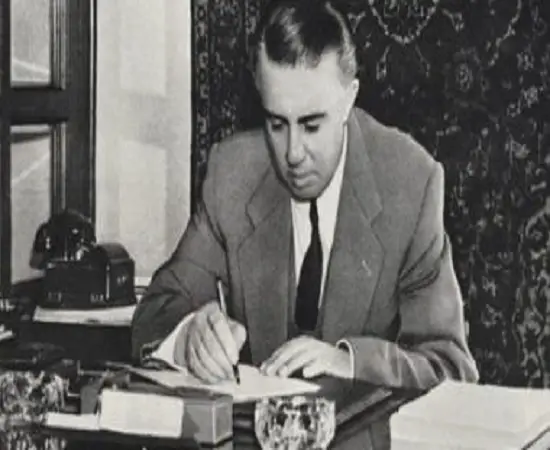
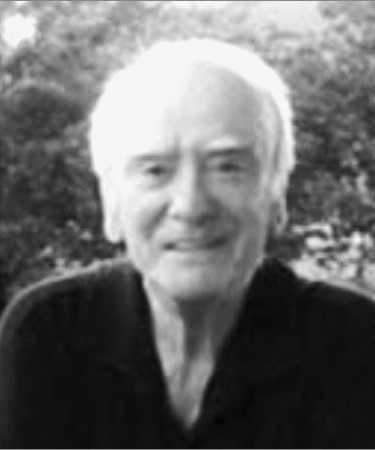
Arnold Beraha and Enver Hoxha – one a Jew and the other from Gjirokastër – ten months of “negotiations” without contact that gave birth to Albtrans.
Albtrans was created almost by accident. It wasn’t us Albanians who brought it to light. On the contrary, we nearly let it slip through our fingers, because the negotiations dragged on for too long. The opening of this enterprise was as strange for our political regime as it was economically and financially interesting. We were not the initiators for its opening, because a complete educational basis on the complex of international market building did not yet exist for us to seek it out.
This market functioned very far from us in terms of distance, schooling, and mentality. Initially, we clung to this link, as they say; “I caught a thief; I want to let him go, but he won’t let me go.” Very few of us had any idea how deep international relations between states are. The basic object of our socialist economy at the time was “clearing”; its basis was the exchange of goods for goods. With this doctrine, trade was conducted within the community of Eastern communist states. Buying and selling was done on the basis of valuing goods in a foreign currency, mostly in dollars.
But these sums moved only on paper. They had nothing to do with banking transactions, but only with exchange plans. At the end of the year, bilateral balances were made and a positive or negative balance resulted: the state that had imported more and exported less than the other was obliged to pay a balance in dollars. All the Eastern states, with this form of trade, suffered losses in foreign currency, but especially the more industrialized states, such as Czechoslovakia, Hungary, and Poland, whose goods could compete in the free capitalist market.
They were obliged, first, to fulfill the clearing plan with the community states and then to throw the surpluses into the international market. At that time, Albania had nothing that it could offer to that market, and on the other hand, it had no way to pay for all those machines it imported for the construction of thermal power plants and hydroelectric plants, as well as their expensive, always insufficient infrastructure.
It could not pay for the diverse metal-cutting machinery to build factories, which often ended up operating at a loss; land, sea, and railway transport vehicles; clothing and foodstuffs for people and animals. A time came when Albania was suffocating in debt to the East, while Enver Hoxha, “always the savior of difficult situations,” until the years when his health allowed it, found a sharp political pretext as a reason: he became mortally angry with the East, now revisionist of Marxism-Leninism, as well as for many other aspects that touched the feelings of Albanian nationalism inside and outside the country.
Those were difficult times. The government drove the country into a dead end: on one hand, it left it without the support of COMECON, and on the other hand, it was preparing the ground to also withdraw from the Warsaw Pact. During its 50 years, Albania has always been in crisis: it started with triska and ended with tollona. At the time Albtrans was opened, Albania was full of debts. Withdrawing from COMECON isolated it even more and self-contained it. Almost everything that was built at that time was unpaid.
Those debts instilled fear in us and we accelerated to publicly denounce the Warsaw Pact as an aggressive treaty. The goal was for the international community to no longer consider Albania a member of the military community. Otherwise, it was imagined at any moment that the armies of the Warsaw Pact would enter Albania in the form of military maneuvers. All great powers, in the end, wage war over debts. Zog had not sold Albania to Italy, but had incurred huge debts. The fruits of those debts were alive everywhere throughout Albania. The situation of those years had nothing to do with Albania being at risk of starvation, but with its headless stance towards communist Eastern Europe.
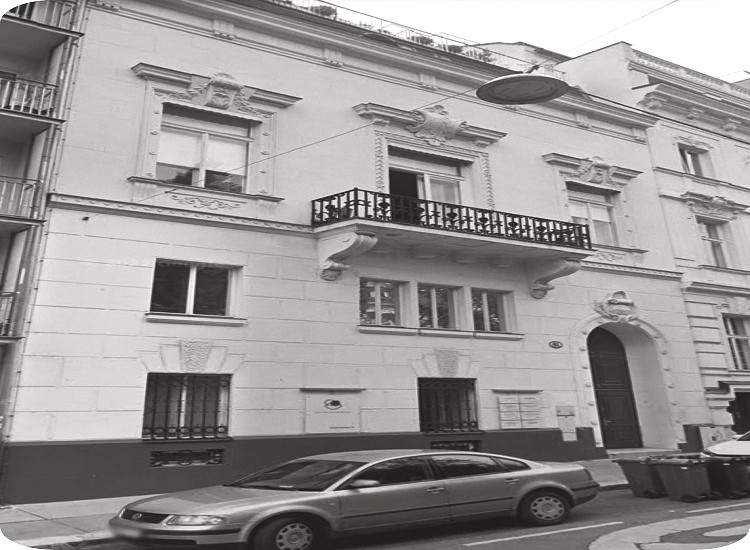
On one of those difficult days of 1966, a representative of the foreign trade enterprise Agro-Eksport, working at the trade office of the Albanian embassy in Vienna, received a phone call from an unknown person, who requested a meeting regarding a mutually beneficial issue. “In a few words,” he said, “I have a special offer that needs to be discussed orally.” The office clerk was pleased. He received him the next day with pleasure, but was surprised. He saw that the offer dealt with a completely different issue from those of daily routine. He barely understood it, as it was different from the practices of foreign trade up to that time. However, at least he didn’t pass it on, but dragged it along with some hope. The person was also extremely interested.
He had done all that preparatory work. The offer had several typewritten pages, a careful piece of work in the name of a large European export-import firm. The man was authorized to conduct preliminary negotiations: to interpret the offer and continue routine negotiations to the end. The person was Arnold Beraha, a Jew, residing in Switzerland. The content of the offer requested the organization of a “free zone” (punto franko) on the Albanian Adriatic coast to transit foreign cigarettes, Marlboro, Red and Box, and Winston. These cigarettes at that time were original. The offer was immediately transmitted to Tirana – just to stay within protocol – but no one was particularly impressed.
Everyone, in silence, considered it an evaded issue. It was known that no one would deal with that. No one in Tirana had the patience to read long offers. Work was simpler back then. Thus, everyone pretended to have seen it, from the Minister of Foreign Trade down to the last clerk, to whom it remained in his desk drawer. A lot of time passed. The clerk in Vienna constantly asked for an answer, pushed by the offer’s man. The clerk had nothing to say; he waited in hope that one day his turn would come. After nearly a year, the hidden offer came out of the drawer.
One of the deputy directors of Agro-Eksport went on duty for the problems the clerk was dealing with, but the latter himself went, as was the rule. The clerk put it in his bag and set off for Vienna, hoping his turn had come. He took it with him just in case, since it was not included in the work program of this assignment. In Vienna, the clerk found common ground with the official of the trade office at the embassy there. Both were waiting for the first opportunity to present it to the deputy director, not as in Tirana, where you had to think carefully before knocking on your superior’s door, but in Vienna, outside the country, where many differences in work position softened.
Both received the same per diem, both ate sparingly, and moreover, this time they had been invited to dinner by the Agro-Eksport clerk who handled relations with the Jew. Both subordinates were clear about what the offer entailed, had read and re-read it several times, had formed clear opinions about it, and were able to interpret it the way the Albanian mentality would want. During dinner, they had thought to open this conversation; they no longer needed to have the papers in front of them, as they knew them almost by heart. The deputy director agreed to meet with the person making the offer. He was genuinely convinced and considered it appropriate that the offer be looked at once more with seriousness in Albania.
In a word, he saw it with great interest and promised to follow it up with priority. In fact, after it made another round in the Ministry of Foreign Trade, the offer somehow reached Enver Hoxha’s ears, who understood its content well and gave his priority approval for it to go ahead. The contract was signed between Agro-Eksport and the “Vanawer Ltd” group. Its boss, on his business card, held the title: Export Consultant for ‘Philip Morris’ for Europe.
MY MEETING IN SWITZERLAND WITH ARNOLD BERAH
On my first visit to Switzerland, as the head of Albtrans, based on a concrete plan I had made back in Tirana, I systematically paid courtesy or introductory visits to all the companies. Through these contacts, I wanted to further enrich my knowledge about the intentions of the near future. I had decided to move away from that old status quo, which had long needed to be broken, in order to create other, more serious business relationships that would favor a qualitative leap in the financial balance as soon as possible. As soon as I arrived in Lugano, the head of the firm “Soko” was waiting for me at the airport. He was the second-in-command himself. The person who introduced me was named Arnold Beraha.
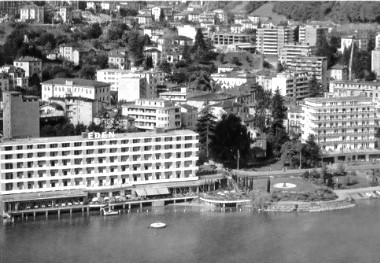
We had an aperitif at an airport bar. I was offered a rare aperitif, “Royal,” champagne mixed with a cherry extract that took on a pink color and created a stronger taste. I opened the conversation, saying that I didn’t remember having seen the gentleman before, unless my memory was failing me. “That’s true,” he replied himself. “The first time you came, I wasn’t here, because I often travel to Vienna.” From the airport, we went to the “Eden” hotel, where a room and a table for dinner had been reserved. Thus, I got to know the person who had directed the negotiations and finalized the agreement for the opening of Albtrans. He was a Jew, certainly a wealthy one too.
Beraha was the person who had put together the foreign commercial group for cigarettes and who had the patience to realize the most bizarre agreement between international capital and the most orthodox communist state in Europe. This Jew had long business experience, which is why he also managed to put Albtrans together. Right after the war, he had created a company for selling electronic equipment, a legal business that concealed one or more other illegal businesses, which at that time intertwined with tax frauds. From the very first conversations, he gave the impression of having a broad professional and cultural horizon.
I asked him if it was true what Mr. Black said about him, that he had become rich with gold trafficking after the war. In Italy, I had had the chance to meet some of my compatriots who had grown rich with that business after the war, until the post-war situation stabilized, and this territory was brought under Interpol’s control. Beraha’s commercial and financial biography was very rich. He told me that after the war, in the early unclear times, when people did not yet respect the laws of profit, he had worked in the circulation of gold trafficking. “Yes, I was involved for 10 straight years,” he confirmed. “During that period, I moved several quintals of gold bullion from all over Europe, but mostly pounds and sovereigns. And I managed to make a lot of money.”
Everything with age. When I started it, I was relatively young to be able to handle it. The difficulty of that work was getting the gold in and out of border-customs points, often even risking border violations. This work functioned as a fairly intelligent illegal private exchange. It was the post-war period and people had to do something during that time of general hunger. There were cases of compromise even with the guards or customs officials themselves who, with bribes, would turn a blind eye. Later, fake gold coins started entering this market from unscrupulous people, and this trade and the people who practiced it became a target of Interpol. I stopped this activity immediately, but all the same, my name remained on blacklists for some time.
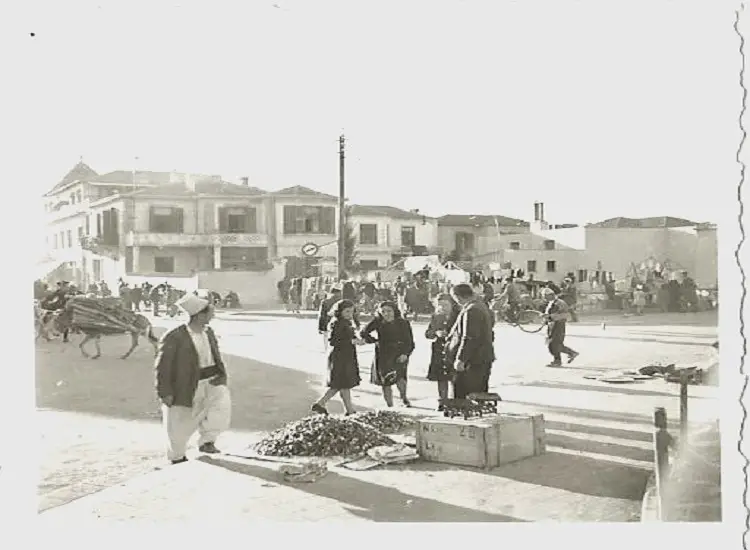
From the very first days of our acquaintance, Beraha told me that he had always had Albania in mind, and that he did not want to end his career without demonstrating “a sign of gratitude towards it.” When I heard those words, I became curious. I asked him on what basis this gratitude was founded. “The reason is that I have old ties with Albania and, in a way, I dedicate my life to it as well,” he explained to me. “To be clearer, I owe my life to an Albanian family in Tirana, because during the war they hid me, as the Germans had me on the lists of Jews. During that time, although with great difficulty, I engaged in a small trade necessary to help the family that had sheltered me.
I was amazed by their magnanimity, protecting me while threatened by danger, at a time when the Germans had put a good bounty on every Jewish head. For the sake of their poverty, they could have profited by denouncing me. I have tried very hard to find that family, through the Albanian embassy in Vienna, but I have had no results. Perhaps they didn’t take my request seriously. Now it’s too late. Even then they were not young, they were around sixty. A lot of time has passed. Today I don’t believe they are still alive. I remember that the lady of the house spoke a little Italian.
She had once complained to me that they had a son who was a partisan in the mountains, but they, as parents, had not blessed his act and ‘had cursed it.’ My gratitude towards Albania, in some way, I found the opportunity to repay with this agreement, which I am convinced, will go well and last long. It wasn’t as if only Albania had that geographical position to build a free zone (punto franko) for the transit of cigarettes on the Adriatic coast.
The members of the group, whenever they got nervous, would tell me why we had to wait until Albania made up its mind to sign the agreement. That’s why they had raised other alternatives, to negotiate with Montenegro or Croatia, which were even more civilized with their communism. But I kept them in check with the hope that precisely the naivety of the Albanians interests us in order to build an activity of our own and direct it according to our views….” / Memorie.al