By Shkëlzen Gashi
Memorie.al / During the 1970s, Kosovo experienced comprehensive political, economic, social, and cultural transformation. In fact, this transformation began in the late 1960s but culminated in 1974 with the adoption of the Yugoslav Constitution, under which Kosovo gained the status of autonomy within the framework of Serbia and Yugoslavia. This status did not align with the demands of either the Albanians or the Serbs. The President of Yugoslavia, Josip Broz Tito, alongside his responsibilities for the dire condition of Kosovo’s Albanians during the period 1944–1966 (otherwise known as the “Ranković era”), also has merits for the advancement of their rights during the period 1966–1980.
Moreover, Tito was of the opinion that Kosovo should have been the seventh republic in Yugoslavia, but this was impossible due to the opposition of Serbian chauvinist forces. In one of his last interviews, given in 1978 to the American professor of Austrian origin, George W. Hoffman, when asked what had been his most difficult task in domestic politics, Tito replied: “To convince the Serbs to accept the autonomy of Kosovo.”
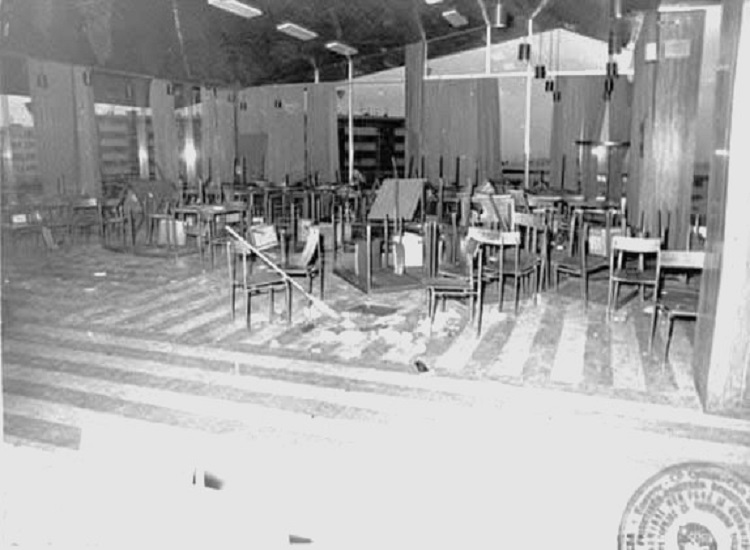
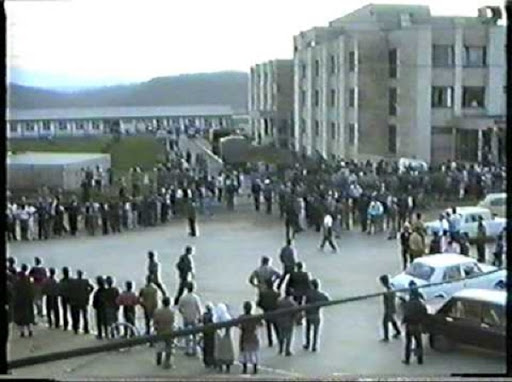
Ten months after Tito’s death, the political, economic, and social situation was dire, and a certain feeling of insecurity and lack of perspective was ever-present. Unemployment in Kosovo was twice as high as in the surrounding republics: 4–5 times higher than in Croatia, and a full 17 times higher than in Slovenia. On March 11, 1981, shortly after the football match “Prishtina” – “Partizani” (which “Partizani” won with a goal scored by Xhevat Prekazi), hundreds of students at the University of Prishtina protested due to the quality of the food and the poor conditions in the Student Canteen.
To be fair, a group of students had also protested on December 12, 1980, over the harsh conditions there. At first glance, these demonstrations appear to have been spontaneous and of a social and economic character, but the breaking of the framed photograph of Josip Broz inside the canteen, the chants in favor of Enver Hoxha, as well as the breaking of advertising billboards for pornographic films in the city center, paint a completely different picture.
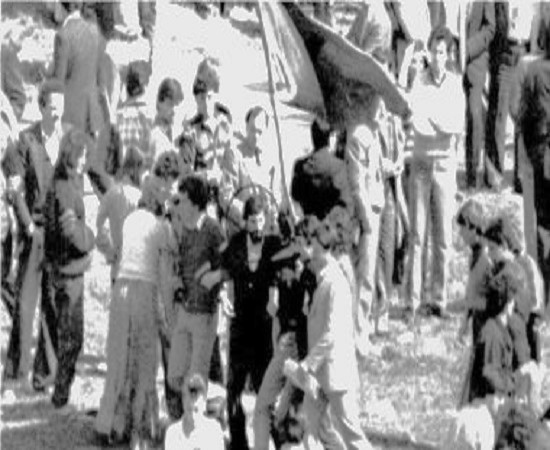
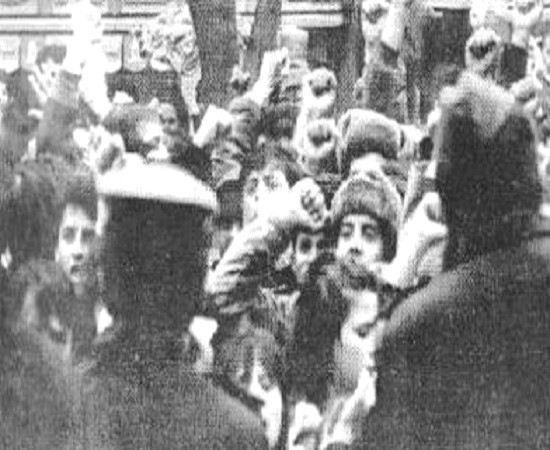
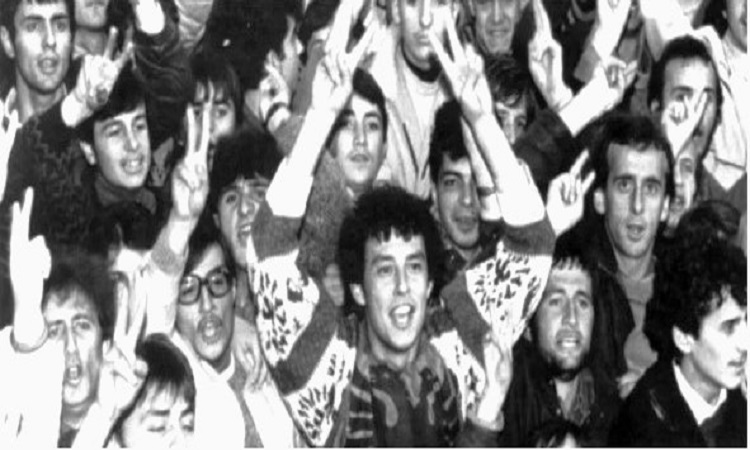
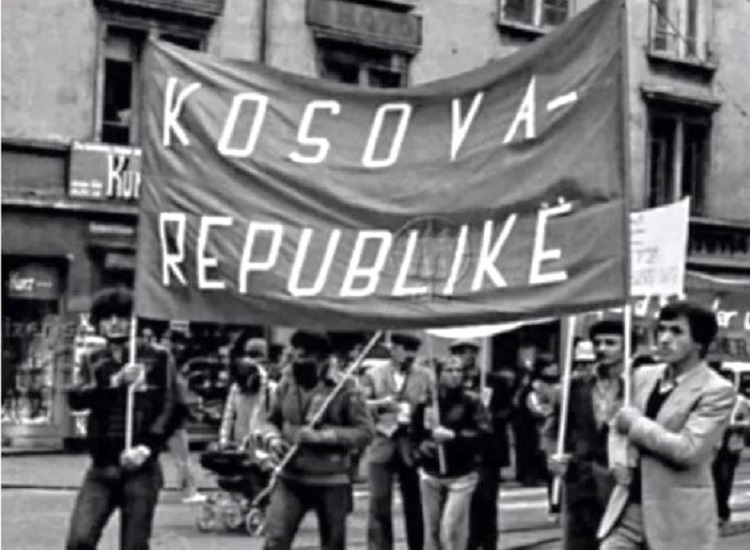
On March 26, 1981, the day Prishtina was filled with spectators for the ‘Youth Relay’ manifestation, organized in honor of Tito to foster the feeling of ‘brotherhood-unity’, thousands of students and citizens protested in Prishtina, this time with explicit political demands. Dominant slogans included: ‘Kosovo – Republic’, ‘Who does Trepča work for?’, ‘We are Albanians, not Yugoslavs’, ‘Union with Albania’, and so on. Illegal Albanian groups and organizations that had operated throughout almost the entire 1970s were also involved in organizing this demonstration.
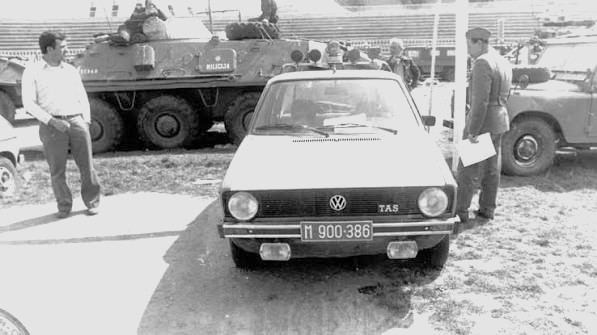
This time, the police intervened even more brutally than the first time. Serbia mobilized the police around the border with Kosovo, but under the Kosovo Constitution, it did not have the right to send them into Kosovo. Therefore, the Presidency of Yugoslavia decided to send special units of the Federal Secretariat for Internal Affairs to Kosovo by plane. These units arrived in Prishtina on March 25, 1981, and the following day they intervened brutally, beating anyone who came in their path, especially students in the dormitories. After the intervention, rumors spread that hundreds of Albanians had been killed and that the police had even entered the girls’ dormitories, thrusting their batons between their legs and striking them on their breasts with them.
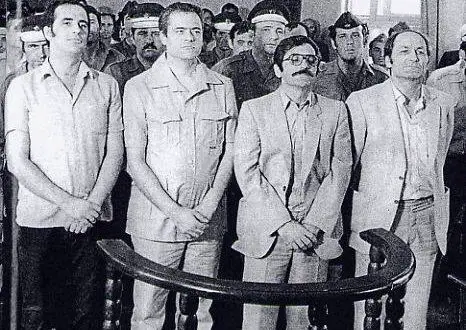
This brutal intervention deeply alienated the Albanians. Therefore, on April 1 and 2, 1981, tens of thousands of citizens demonstrated in almost all the cities of Kosovo, thus giving the demonstrations a nationwide character. During them, two police officers and nine demonstrators were killed, who, unfortunately, are almost never commemorated: Afrim Abazi, Asllan Pireva, Ibrahim Krasniqi, Naser Hajrizi, Riza Matoshi, Ruzhdi Hyseni, Salih Abazi, Sherif Frangu, and Xhelal Maliqi. Meanwhile, thousands were arrested and, by Albanian prosecutors and judges, hundreds of participants were investigated and convicted, and a process of ideo-political differentiation was initiated in all political and social structures of Kosovo.
High-ranking Kosovar Albanian political officials characterized the demonstrations as hostile, destructive, nationalist, and even irredentist. The then provincial, republican, and federal organs called them ‘counter-revolutionary’, which in communist legislation meant the right for the authorities to use all means to suppress them. Worse still, the Presidency of Yugoslavia subsequently decided to declare a state of emergency in Kosovo and order the intervention of the Yugoslav People’s Army (YPA).
Relations between Albanians and Serbs worsened even further when Serbia launched a campaign to suppress Kosovo’s autonomy through propaganda about “pressures, rapes, destruction of property, killings, and displacements of Serbs” from Kosovo. On March 23, 1989, with approval even from the Kosovo Assembly (with an Albanian majority), Serbia definitively completed the process of suppressing autonomy. Be that as it may, throughout almost the entire 1980s, a negative discourse about these demonstrations dominated the public sphere, whereas after the collapse of the communist system, throughout the following decade, and especially after the 1998–1999 war, the positive discourse dominated. Fundamentally, in approaching these demonstrations, there are two currents: loyal and disloyal.
Bajram Kosumi and Hydajet Hyseni are the most prominent representatives of the political current disloyal to Yugoslavia, participants in and organizers of the 1981 demonstrations, and consequently political prisoners for a decade. According to Kosumi, prior to the 1981 demonstrations, a relatively pronounced tendency of Slavic cultural influence and assimilation of Albanians had been observed (“Kosova e vitit 1981”, “Zëri”, March ’96).
Among the main achievements of these demonstrations, according to him, was the interruption of this tendency and a complete return to the trunk of authentic Albanian culture. Likewise, according to Hyseni, at that time, a population census was being prepared, and there was intense pressure in favor of Yugoslavization, so the illegal movement had distributed a tract with the motto: “We are Albanians, we are not Yugoslavs,” which was also turned into a slogan of these demonstrations (“1981: faqe e re në historinë e Kosovës…”, “Zëri”, March 2001).
Thus, according to both, the 1981 demonstrations halted the process of Yugoslavization of Albanian youth. On the other hand, the most worthy representatives of the political current loyal to Yugoslavia, Mahmut Bakalli and Azem Vllasi, at least since the fall of the communist regime in Kosovo, have expressed their conviction that the events of 1981 were staged with the aim of destabilizing Yugoslavia and suspending Kosovo’s autonomy.
They insisted that the 1981 demonstrations cost Kosovo its autonomy, although, in truth, Kosovo’s autonomy would have been suppressed by Serbia even without the 1981 demonstrations. Furthermore, Bakalli and Vllasi claimed that internal and external services were involved in these events, so that after Tito, Serbia would have a dominant role in Yugoslavia and the Balkans.
According to them, forces aiming for instability in Yugoslavia concentrated their activity in Kosovo, the weakest link in the Yugoslav chain, calculating on the numerous social, economic, historical, national, and other contradictions and grievances, to bare their teeth in Kosovo and verify their strength for subsequent steps throughout the entire Yugoslav space.
Although the policy in Albania at the time supported these demonstrations and their demands, a decade later, in September 1992, the President of Albania, Ramiz Alia, in an extensive interview conducted by Blerim Shala and Llukman Halili, published as a book titled “Unë Ramiz Alia dëshmoj për historinë” (I, Ramiz Alia, Testify for History), stated: “I can say that the 1981 demonstrations were completely unexpected for us, and we often racked our brains as to who benefited from them, because the development of relations between Albania and Kosovo was so favorable that these events suited someone else much more than they suited Albanians. Personally, I have thought several times that the Serbs benefited more from those events.”
There is no doubt that the position of Kosovo Albanians worsened severely after the 1981 demonstrations, but unfortunately, to this day, there is no genuine study of them. It would be good for these demonstrations to be thoroughly investigated, for the intentions of both currents to be analyzed and studied, and then the influence of Albania, Serbia, and other states, so that a clearer idea can be formed of what Kosovo gained and what it lost from them. / Memorie.al