
From Alba Kepi
Memorie.al / The city are far more than a community of people, buildings, and streets; it is even more than a system of social services and administrative institutions. The city is a spiritual state; it is an unbreakable thread of costumes, rites, feelings, and behaviors. On this 400th anniversary of the formation of Tirana as an administrative unit, one cannot help but remember those who contributed to its development – the early inhabitants of Tirana. Just as the centuries-old troubles of Albania imposed the calling of assemblies with wise and patriotic men, so too did Tirana once have at its head a council of wise, strong, and patriotic men, united by this unbreakable spiritual thread, with the imposition of a strong moral obligation toward their city.
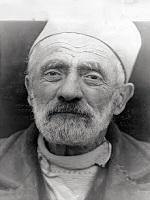
Historical documents, diplomatic correspondence, the legacy of events, and family heirlooms passed down to this day as a biological testament, all show and testify to the role of this council of men, especially during the last two centuries, for their city. They have often been called the early aristocracy or the first bourgeoisie, but the native inhabitants know them simply as “the respected gentry of Tirana.” They were members of wealthy Tirana families, with a strong economic position, and undoubtedly with their social power, under a high sense of responsibility and love for the city.
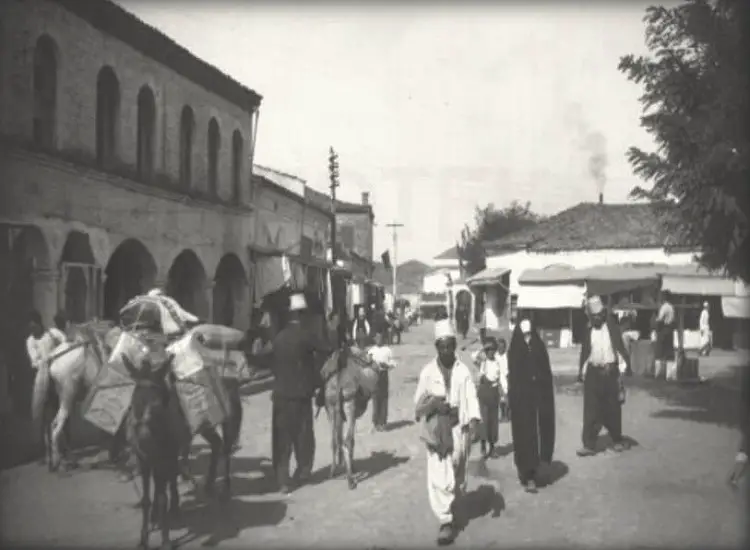
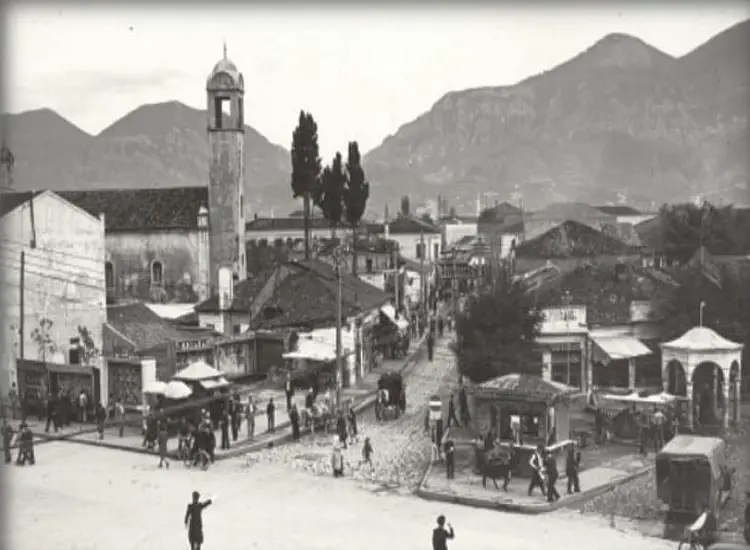
The gentry gathered whenever Tirana needed them – sometimes to build a road, or to construct a bridge, to help a neighborhood or a clan, or to develop a “nahiye” (district) of Tirana – acts of charity carried out with humility and respect for every fellow citizen. Those who know the history of this city well are aware that wherever you walk, you still find visible or invisible traces of the craftsmen, artisans, merchants, and “well-established” families, with a strong economic and no less political impact from the time they were created.
Such were the merchants of Tirana, organized into successful enterprises of the time and with their Chamber of Commerce, active for years. The formation of this chamber is linked to the Gülhane Decree proclaimed in Istanbul on November 3, 1839, known as the Tanzimat Decree. The result was a series of institutional and administrative reforms that led to the creation of commercial courts, and chambers of commerce and industry. A document from 1897 officializes the existence of the Tirana Chamber of Commerce; a Turkish salname (yearbook) of the year 1313 (1897) of the Shkodër vilayet, after mentioning the mayor of Tirana, Mehmet Ali Bey, also writes “the Chairman of the Tirana Chamber of Commerce, Fuat Bey Toptani.”
Part of the respected gentry of Tirana were the artisans, masters renowned in their craft, well-organized from early on into 17 guilds (esnafs). The guilds were united in similar trades or even a single one, where they trained new craftsmen, controlled unfair competition between trades and villages, set prices, and stood by the problems and troubles of the craftsmen. The Tirana gentry responded to the economic demands of the city and contributed to the full holding of seven commercial congresses: in 1922, 1924–25, 1928, 1930, 1932, 1934, and 1939, where the First Congress of 1922 was significant because it produced the decision for “the creation of Chambers of Commerce everywhere in Albania.”
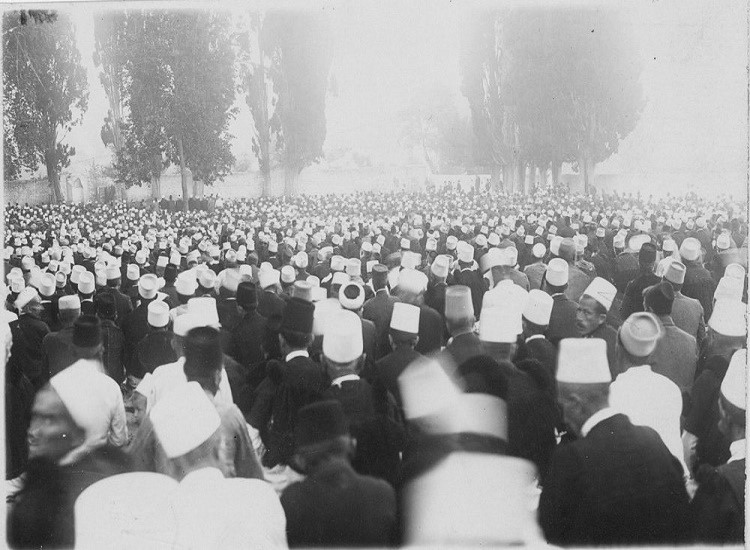
The wise elders of Tirana “communicated” with the residents and the troubles of a homeland “that was suffering greatly,” and in June 1878, they passed from mouth to mouth to the “crowd” that a son of this city, Mehmet Sermedin Seti Toptani, was one of the signatories of the historic document against the dismemberment of Albania and the decisions of the Congress of Berlin. Cross-legged in the Namazgja Square, they jointly decided that the Albanian language should be written in the national alphabet and called themselves Albanians – a full 150 native heroes – at a time when the Turkish government declared anyone who accepted this word for themselves as infidel and traitor.
The Tirana gentry gathered and lamented the plight of their five sons – Jusuf Elezi, Mahmud Fortuzi, Hafiz Ibrahim Dalliu, Beqir Luga, and Mustafa Mara – when they were sentenced to 10 years in prison for nationalism, expressed through their free thought in recognizing the Albanian language, the Albanian emblem, Skanderbeg, and Albania as separate from the Ottomans. These wise men of the Tirana population had no need for armchairs or offices; their role resonated so much in the city’s social life that it was the harmony and mutual respect among the residents. Such an expression was the support they gave to the Tirana Albanians Nikollë Nishku, Sheh Ahmet Pazari, Xhelal Toptani, and Fuad Toptani, when, in front of the Serbian commander, they said: “Albania is a neutral country and Tirana will declare self-government.”
On November 26, 1912, with the voice of Refik Toptani in the square of the sub-prefecture, the Tirana gentry declared national independence, two days before the rest of the country, and said: “May God grant that we remain united as we are today, mouth to mouth, so that we may be able to protect our homeland from the trampling of the enemy. Long live Albania in itself, long live brotherhood, and long live our national flag!”
The power of this social force of Tirana was clearly expressed even when the government of the Congress of Lushnjë, with a specially formed council consisting of Monsignor Bumçi, Aqif Pasha Elbasani, Dr. Mihallaq Turtulli, and Abdi Toptani, demanded that Tirana become the capital of Albania. “Our city is very well as it is, even without being the capital of Albania,” was the decision of the Tirana gentry, after having first listened to the voice of their fellow citizens. Faced with such a situation, the four members of the High Council sent word to the government, which was preparing to enter Tirana.
Urgently, Ahmet Zogu, Minister of the Interior, arrived beside them, who, together with Abdi Toptani, in the company of Shefik Kondi, Mytesin Këlliçi, Osman Myderizi, etc., taking advantage of the close acquaintances he had with the majority of the wealthy Tirana families, went door to door throughout the night, visiting all the prominent native clans: Toptani, Petrela, Qorralliu, Karapici, Alimehmeti, Kaceli, Hobdari, Kora, Mara, Nishku, Tafaj, Lasku, Dema, etc., and clarified to all of them the difficult political situation in which Albania found itself, which risked being dismembered again by its neighbors if its government was not installed in Tirana that very day.
Ahmet Zogu, after receiving the word from the Tirana gentry, promised them transformations with priority given to the image of a European city. Moreover, we must not forget that many of those principles and promises—Ahmet Zogu implemented as soon as he became the head of the Albanian state. Part of the Tirana gentry is also the list of native entrepreneurs included in a 1929 document distributed by the Ministry of Foreign Affairs of Ahmet Zogu’s government, with the aim of promoting services and products “Made in Albania” through the network of Albanian consulates around the world.
Tirana merchants in manufacturing, 1929
Reshat Petrela
Nipat Gjinali
Mehmet Begeja
Mahmut Begeja
Reshit and Hysen Alimehmeti
Hysen Bërxholi
Haxhi Alla
Shaban Alla
Perikli Jorgoni
Haxhi Islamtugu
Abdullah Haxhi Mehmeti
Mersin Koci
Ismail Hima
Asim Dibra
Entrepreneurs in the field of commerce, 1929
Xhemal Tafaj
Ismail Dibra
Prela Luka
Stamles Agency
SITA Agency
The Grocery Craft was represented by:
Muharrem Bey Erebara
Hasan Rradheshi
Gafur Dibra
Muharrem Kruja
Ali Bey Mëniku
Qamil Bey Dibra
Ramazan Koçi
Abdyl Shijaku
Mahmut Këllezi
Sadik Toska
Ramazan Daliu
Selam Petrela
Shaqir Petrela
Islam Daliu
Dalip Topi
Ali Sul Seferi
Islam Fagu
Shaban Fagu
Rexhep Pazari
Mahmut Shijaku
So powerful was the influence of the Tirana gentry on the life of this city that it even frightened such a beast as communism, which, as soon as it managed to enter Tirana, ordered the persecution of their families, arresting, killing, and imprisoning patriots, nationalists, merchants, and craftsmen. The streets of Tirana ran with blood, but the communists were not satisfied with that and began looting. They knew well the economic power of this Gentry and the socio-political contribution they would continue to play among their people, despite all the killings and imprisonments carried out. The Tirana scions were denied the right to inherit their homes, shops, lands, and estates; their movable and immovable property was stolen from them, down to the clothes on their backs, their memories, and their antique furnishings.
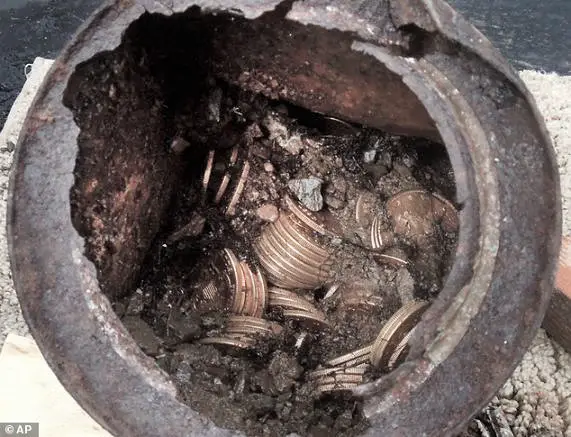
The partisan tax commissions were greedy, and in 1945, they drew up the list of looting their gold francs.
The newspaper “Bashkimi” (Unity) of March 22, 1945, would publish it:
Kazazi Brothers, 16,430,000 gold francs
Çoka Brothers, 14,990,000 gold francs
Murat Begeja and brothers, 5,774,000 gold francs
Hysen and Reshit Alimehmeti, 3,902,000 gold francs
Osman Vaqarri, 1,440,000 gold francs
Besnik Tugu, 614,000 gold francs
Ramazan Konçi, 1,946,268 gold francs
Ymer and Sali Beqiri, 614,000 gold francs
Sadik Kazazi, 398,000 gold francs
Abdulla Turkeshi, 2,433,200 gold francs
Ismail Fortuzi, 224,000 gold francs
Qamil Dibra, 1,870,290 gold francs
Sons of Gaqi, Oparit 371,000 gold francs
Manol Kume, 6,832,400 gold francs
Tase Brothers, 3,830,000 gold francs
Mehmeti Brothers, 126,000 gold francs
Ramazan Zdrava, 130,850 gold francs
Halit Mani, 143,000 gold francs
Vath Baroni, 130,850 gold francs
Abdulla Alliu, and nephews 126,800 gold francs
Qamil Hoti, 264,500 gold francs
Hysen Drishti, 143,000 gold francs
Filip Korra, 2,259,000 gold francs
Fetah Kasmi, 126,800 gold francs
Mustafa Kasmi, 224,250 gold francs
Loxha Brothers, 749,000 gold francs
Ramazan Berberolli, 622,100 gold francs
Mersin Konçi, 668,000 gold francs
Sefedin Zhubi, 159,200 gold francs
Qamil Zhubi, 203,750 gold francs
Qoshja and I. Deliu, 1,566,000 gold francs
Mehmet Kasmi and brothers, 830,000 gold francs
Dushi Brothers, 1,606,320 gold francs
Gjon Laca, 884,000 gold francs
Spahija Brothers, 325,250 gold francs
Kasmi and Ferra, 252,250 gold francs
Iliaz Dajçi, 126,800 gold francs
Xhevat Gabeci, 830,000 gold francs
Xhundi Sheko, and sons, 27,950,000 gold francs
Pashuk Bib Mirakaj, 1,755,000 gold francs
Xhemal Begeja, 143,000 gold francs
Ibrahim Begeja, 1,440,000 gold francs
Qamil Shtiza, 126,000 gold francs
Total sum: 112,469,828 gold francs
The Tirana gentry was looted, burned, and killed by the communists, but they did not succeed in erasing their history and dignity among their residents. / Memorie.al