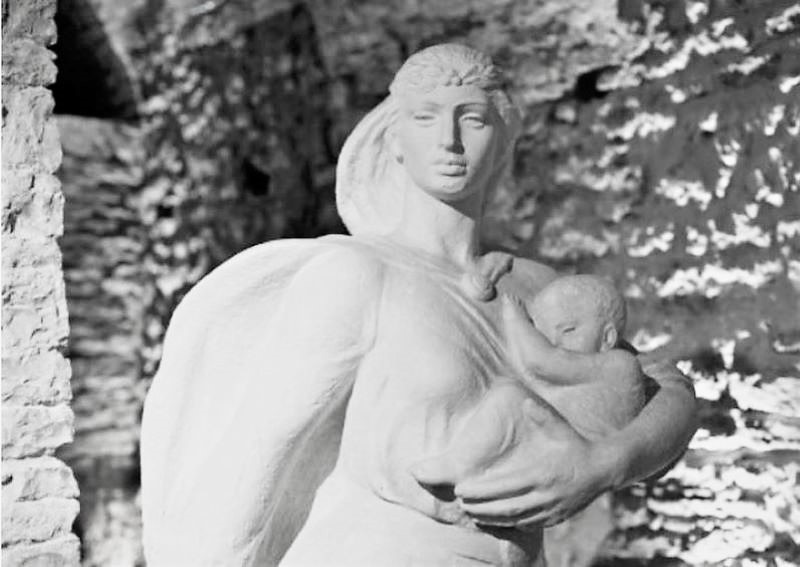
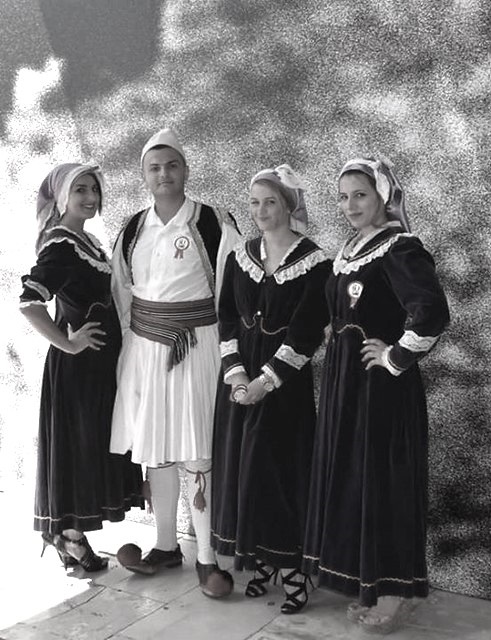
Memorie.al / We are pleased when we hear foreigners – especially those who have visited our country or have read about Illyrian-Albanian antiquity-praising the Albanian woman. Researchers of the Albanian question have written extensively about the Albanian maiden, even though she was not an active, direct participant in social life. Her role within the family, where she gave birth to and raised brave men and heroines, has been highlighted by scholars, who have immortalized the actions of women standing alongside men in great historical events. I do not believe there are anywhere in the world, as in Albania, natural obelisks carved with the self-sacrifice of the Albanian woman.
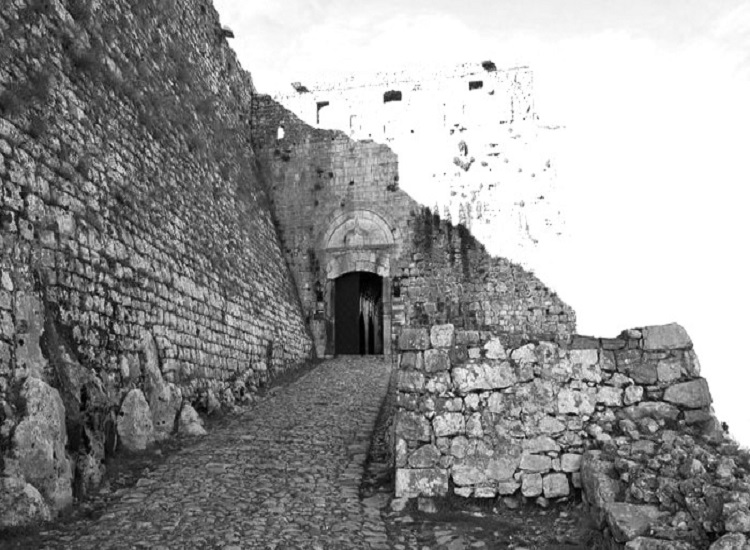
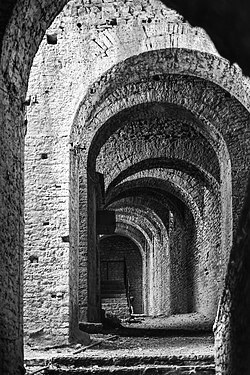
It is not superfluous to repeat that the most important castles of Albania, in the north and the south, bear the names of virtuous Albanian women. The echo of the Albanian woman’s deeds through the centuries has immortalized love as their virtue, while honoring loyalty and faithfulness as their law and norm.
Recall the French academician, Margaret Yourcenar, in her story “The Milk of Death.” The author, drawn to the legend of the wall-building upon which the Rozafat castle was raised, put into the mouth of a character – who, enthusiastic upon learning the legend, exclaimed: “But for a mother, I would have wished for a maiden, like the one in the Albanian legend.”
Byron, and others, has been greatly drawn to describing the Cham woman in many important aspects of her life. Pouqueville emphasized the role of the Cham woman in reconciling blood feuds and finalizing treaties. Elena Gjika (Dora d’Istria), of Cham origin, extended this phenomenon further by generalizing the activity of Albanian women in the context of gender equality, emphasizing: “Brave men, heroic women.”
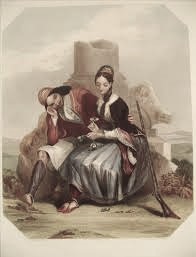
Repeating the deeds of the Albanian woman through the centuries – as fighters and strong in character – is a source of pride. They have been active in decisive moments for their homeland, surviving with weapons in hand or dying with honor, like Argjiro, the women of Sopot, or the Suliote women in the Dance of Death (immortalized in the painting by Ari Shefer; “The Women of Suli”).
The preservation of the identity of the Albanian woman has remained alive in the drawings, graphics, studies, portraits, and canvases of a large number of artists with various Albanian themes. What has been evidenced about Albanian women, regardless of their status in social life, is that they hoped for the future of the country without enemies and enmity.
In important historical circumstances for the defense of the national community, a natural need arose within them for groupings to reach a common consensus and protection. This was the impetus that led Lejla Dino, in very decisive circumstances for the fate of our people, to create the “Community of Albanian Women” in Geneva, Switzerland, in 1919.
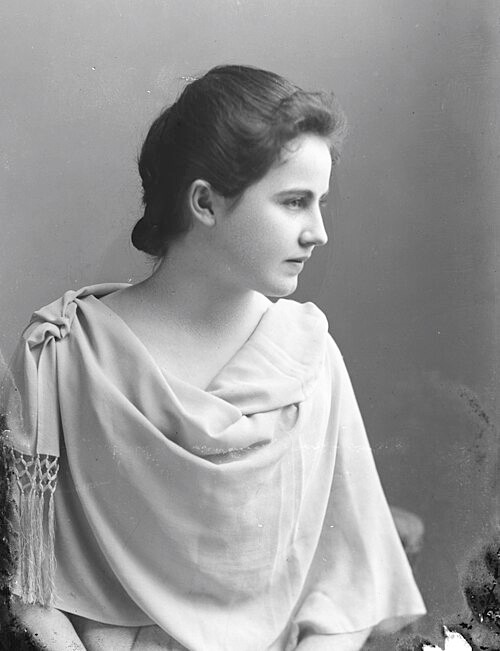
I have been greatly drawn to the fact of this Cham woman, Lejla Rasih Dino, who, on behalf of Albanian women, diplomatically addressed the highest world authorities regarding the issue of Albanian territories left outside the borders in 1913.
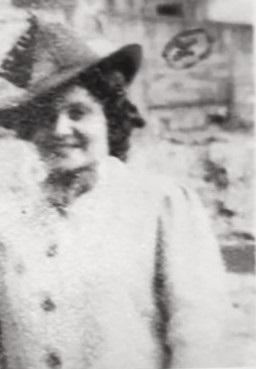
Lejla Dino (Ileri) 1893–1966, came from a family with high patriotic and national traditions, having projected the demands for the future of the Albanian nation. On behalf of the community of Albanian women, she addressed the Paris Peace Conference regarding the major problems of our nation.
She was, therefore, the first Albanian woman who, with courage, addressed the chairman of the Paris Peace Conference at the right time, concerning the Albanian issue (precisely when the “spoils” of war were being divided among the belligerent forces). This courage of a Cham woman was no coincidence, but a continuation of the Dino family’s participation in all the great events of the struggle for freedom and independence.
The Dino family has produced many renowned figures, of the rifle and of the pen, which have entered the golden history of our nation. Thus, their daughter, Lejla, walked the path of her ancestors, who never remained silent in the pursuit of justice for the national identity and the heritage of Albanian lands. Her father, Rasih Dino, was the son of Abedin Dino, a participant in the League of Prizren. Following his father’s example, Rasih became a fighter and contributor to the Declaration of Independence.
He was at the head of the Albanian delegation participating in the London Conference. He traveled the world over and across to lobby against the dismemberment of Albania by predatory neighbors. As a representative of Albanians temporarily residing in Switzerland, of the Pan-Albanian Federation “Vatra,” and of the society “Chameria” in the USA, he sent a request from Geneva to the Council of Ministers of Italy, demanding that the Italian government renounce its covetousness for Vlorë and help restore Albania’s independence, as well as secure the return of the regions of Chameria and Kosovo.
For this contribution, the society “Chameria” in America appointed him as a representative of the Cham population at the Paris Peace Conference in 1919, but he was obstructed by the French and Italian governments.
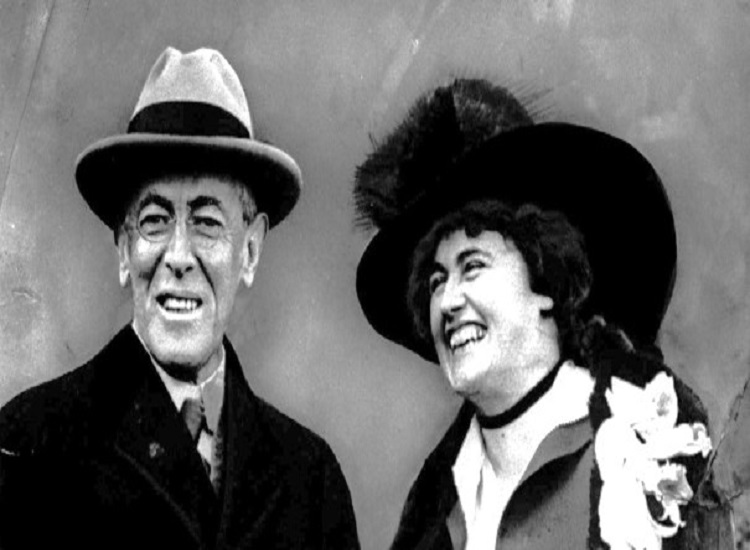
Thus, Lejla, when she saw the obstacle being placed before her father, mobilized even more. As chairwoman of Albanian Women abroad, she took advantage of the arrival of the Presidential Wilson family at the Paris Peace Conference. It was the first time an American President had come to Europe.
She knocked on the door of the symbol of Peace, Woodrow Wilson, who was awarded the Nobel Peace Prize. She knocked on the door of the humanist, who received the blessing of Pope Benedict XV—the first American president to visit a Pope. She addressed this most renowned figure in world politics, for the protection of the Albanian cause in general, and of Kosovo and Chameria in particular.
She knocked on the heart of a noble personality, who had officially signed and established on the calendar the second Sunday of May as Mother’s Day. On this occasion, Lejla utilized her acquaintance with Edith (Galt) Wilson, President Woodrow Wilson’s wife, through a letter in which she laid out the legitimate demands of the Albanian people, denied by the predators.
For the record, Edith Galt was a direct descendant of the Native American woman, Pocahontas.
In that letter, the daughter of Chameria wrote, among other things: “….The terrible sorrows and cruelty that Albanian mothers, wives, and daughters endured, seeing the blood of their loved ones shed under the yoke of foreign oppressors, will naturally shake your noble human feelings, and you will help us to win our beloved freedom. At these moments, the neighboring states of Albania want to annex parts of our beloved land, or to take away our political independence from us. But we are certain that the glory of your husband’s lofty and humane feelings, and with your help, these things will not be able to be done, and that we will soon have our independence, through which our sufferings will come to an end….! Hundreds, thousands of Albanian workers, who were forced to leave their homes and take refuge in your free America, fervently hope that their first homeland, the provinces of Kosovo and Chameria, which were unjustly separated from Albania in 1913… Will be liberated…!” (Published in “Albania”, January 1, 1919)
The illness that befell President Wilson while he was in Europe was sudden. Edith, the devoted wife of this great man, continued her care for her husband, even taking on presidential duties to the extent that she could be considered a shadow female president. Even though the president was ill, she could not stop his spiritual and physical momentum, as he continued on his path to create an international political organization that would guarantee the preservation of World Peace.
Thus, in a severe state of health, forbidden by doctors from acting on the ground, with an indomitable will to realize peace and his presidential duty, he survived until the end of his term with the unstinting help of his wife, Edith. The end of his life came soon after, but he remained a symbol of world peace and, for us Albanians, the savior from the further dismemberment of our lands by predators.
Lejla’s letter has been read over the years and has, to some extent, realized its demands. It took another American president (Bill Clinton) to accelerate the liberation of Kosovo, and yet another American president (George W. Bush) to finalize Kosovo’s Independence. The Cham issue, now internationalized, will gain its legitimacy, because Chameria exists physically, its martyrs and its history are right there.
Lejla is no longer alive, but future generations, for whom she thought, will continue to read her letter. At that door where Lejla knocked, she was aware that great values could be won for the future of the Albanian Nation. She had faith when she addressed the President of the USA, Woodrow Wilson, because he was the leader of a powerful state and the most perfect example of democracy in the world, without whose help we would not be where we are today.
The message of US Secretary of State Hillary Clinton to the Albanian Parliament, on the occasion of the 100th anniversary of Independence, that “we will be by your side for another 100 years…”, is a continuation and a good omen for making Lejla Dino’s letter immortal.
The Albanian woman today, with equal status in social life, will be a strong voice for the protection of her identity and human rights. With a strong democracy in Albania and with the help of the USA, major problems, which time has dragged on, can be resolved. / Memorie.al