
By Dr. Hasan Bello*
Part Two
Memorie.al / This article is based on two reports drafted by the commissions of Republican and Monarchist deputies of the Albanian parliament. It aims to compare the fundamental arguments and counter-arguments that these two groups presented to the parliament’s leadership regarding the determination of the form of regime in the new statute of the Albanian state. What strikes you is that they reflect a high degree of responsibility, intellectual level, and legal-constitutional preparation on the part of the deputies. Regardless of how political developments unfolded, it must be emphasized that all representatives of the groups in question were inclined toward finding the most suitable form of regime, one that would ensure stability, prosperity, and internal constitutional democracy for the Albanian state.
Continued from the previous issue
After France, another European state that had applied the republic was Portugal. But it did not constitute a model state, because the insurrectionary movements that broke out from time to time had created an unstable situation. While the case of Switzerland, divided into cantons, was an exception, in accordance with the ethnic and social composition of that state. A concrete example that was closer to the mentality and socio-political conditions of the Albanian people were the Balkan states. According to the monarchists, almost the entire Balkans was a monarchy.
Who could deny the services that King Carol had rendered to Romania? He had been a key factor in the development and emancipation of that nation. Ferdinand of Bulgaria, although of German origin and a primary cause of dragging his country into the war alongside the Entente, had played an irreplaceable role. Moreover, even after the war, when Stamboliyski came to power, he did not change the dynasty and recognized Ferdinand’s son as heir.
This, according to the monarchists, openly showed that the Bulgarian people felt this form of regime to be necessary. Another state, which should be an example for a people with an undeveloped national consciousness, was Yugoslavia. Therefore, they emphasized that the Albanian people needed moral support in a king more than anyone else. He, they argued, would be the personification of national unity. The case of Greece, despite the problems of recent years, was essentially a success story. Here, they had in mind the historical contribution of the monarchy to the founding and consolidation of the Greek state.
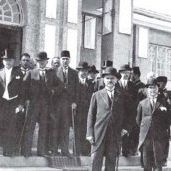
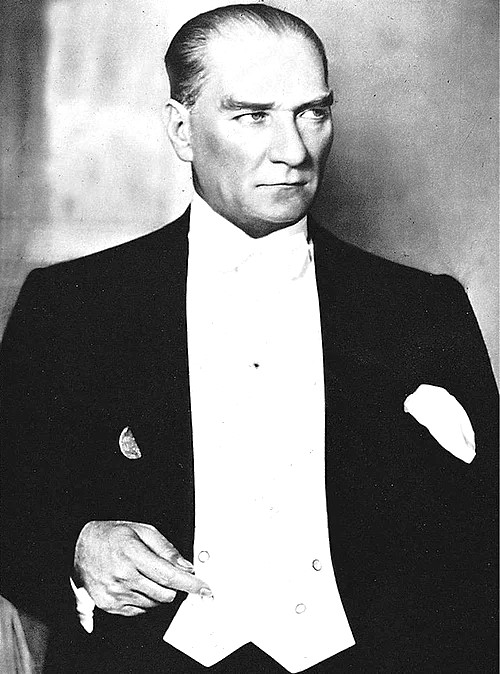
A typical case was also the Turkish Republic founded by Mustafa Kemal. He was the model that had influenced the Albanian political elite more than anyone else. But this case was a product of the political and historical developments that had occurred in Turkey. Mustafa Kemal had saved it from being carved up and invaded by foreign forces, had the army behind him, and had abolished the Caliphate. Whereas an occidental royal crown, according to the monarchists, would be a source of European civilization. For the Albanian people, they argued, a European king was not a sign of conservatism. On the contrary, it was a proof of liberalism.
Another reason why the monarchists opposed the republic was that they saw in it the source of anarchy. Whereas the monarchy, in their view, would create the necessary conditions for the stability and development of the Albanian people. The monarchists also considered the criticisms that existed regarding the weaknesses of this system, such as:
– The issue of religion.
– The issue of the beys.
– The economic issue.
– The infringement of the people’s liberty and sovereignty.
– Having a foreigner at the head of the state and the problems of a dynasty’s crime for future generations.
– The antagonism between the king’s mentality and the social condition of the country.
– Complications regarding the search for a king.
– The intrigues that foreigners might carry out through the king.
– The king could be an obstacle to Albania’s development.
– The king would create an unnecessary militarization of Albania.
Regarding the issue of religion, the republicans thought that Albania, in which four religions existed, could not become a monarchy. This was based on the argument that the king’s religious affiliation would arouse the discontent of the different elements. In order for the king to have moral influence, he had to belong to the religion of the people. This was also enshrined in the constitutions of the Balkan monarchies.
The monarchists preferred that a European king be placed at the head of Albania. This would accelerate the process of modernization and unification of the Albanian nation. He would influence the rapprochement of all elements within the country. A European king would also help Albania in the international arena. The idea that a Christian king would be opposed by Muslims was the fruit of foreign propaganda. On the contrary, a Christian king in a country with a Muslim majority was an indicator and a great help in foreign policy.
The argument that the monarchy would be a burden for future generations, driving them to overthrow it through insurrection, was countered by the monarchists with the fact that if this were legitimate, it would be entirely correct. But in their opinion, it was better to have an insurrection after 50 or more years than the outbreak of an insurrection every year. They considered the monarchy as an institution that would produce political stability; as the most efficient means to put the country on the path of progress. Consistently, they cited as an example the case of Britain, the Netherlands, Belgium, and the most developed countries of Europe.
A foreign king, even a European one, according to the republicans, would conflict with the mentality and social condition of the Albanian people. He could easily fall prey to internal intrigues. But this argument was dismissed by the monarchists, who were of the opinion that it was not rare for many Europeans, within a short time, to become excellent connoisseurs of the psychology and problems of the Albanians. Some of them feared that the arrival of a European king would ruin the customs and traditions of the people. According to the monarchists, this was the unjustified fear of individuals who sought to preserve Oriental traditions.
The argument that a foreign king would become a political tool of the state from which he came was considered by the monarchists to be correct and principled. But they proposed that the king be chosen from a state that had no direct interests in Albania. The king, according to the republicans, would be an obstacle to the country’s development. This shows that the republicans saw the monarchy as a symbol of conservatism and as a medieval institution.
Whereas the monarchists held the opposite view, considering the monarchy and a European king at its head as the main supporter of the intellectual elite. He, in their view, would be the best example, whose moral influence would be a guide for putting the country on the path of occidentalization. The argument that the king would create unnecessary militarization was countered by the monarchists by emphasizing that Albania was not Switzerland, which enjoyed guaranteed neutrality.
Our country lay in the heart of the Balkans, surrounded by states that aspired to annex it, armed to the teeth. Therefore, in their view, Albania needed a small army, relative to the country’s capabilities. But it had to be well-organized and disciplined, under the command of a European king. In this way, the Albanian army would become a guarantor of internal political stability and Balkan peace.
One of the main reasons why this group supported the monarchy was the fact that only thus would the influence of the army in politics be avoided. This, in their view, would be the greatest guarantee towards happiness and progress. This stance is entirely justifiable considering that, following the example of the Young Turk political elite, both in Turkey and in our country, the army had been used as an instrument for seizing power illegitimately. The monarchists aspired that only in this way would the army be placed in the service of national interests; that only thus would it be kept away from politics and the parties that fought to come to power.
The reasons why the monarchists were against the republic were:
– The complications that would arise regarding the election of the head of state.
– The lack of a common vision and action.
– The possibility of a coup d’état and dictatorships because political and civil morality was still lacking.
According to the monarchists, the main reason they were against the republic was that in our country there was a marked lack of personalities who were ready for such a high duty. But even if there were capable individuals, the currents of political parties would aim to elect individuals who could easily be used as their tool. On the other hand, public opinion, as in civilized countries, would be afraid that capable people at the head of the state might use power to declare a dictatorship.
Experience had shown that in Albania, parliamentarism had turned into parliamentary oligarchy. In appearance, a kind of popular liberty was observed, while in essence, the most elementary rights were being suppressed and trampled upon. Therefore, according to the monarchists, a bipartisan body was needed. Neither the High Council nor the President of the Republic could do this, as they, elected by parliament, would be under pressure and in the service of the parliamentary oligarchy.
The election of the head of state in a country where religious feeling was stronger than national feeling was a problem in itself. According to the monarchists, if the head of state were a Muslim, it would arouse the discontent of Christians, and vice versa. This problem would be repeated at every election, causing division instead of the unity so necessary for the Albanian nation.
The election of a collegial head of state following the example of the Congress of Lushnje generated the problem of whether he should be elected by parliament or by the people? If the four representatives of the republic’s presidency were elected by parliament, they would be tools of the political parties that had elected them. If they were elected by the people, should the vote be general or according to religious affiliation? Muslims, being the majority, would elect Christians who did not correspond to the will of Christians.
Thus, the religions would be represented in the presidency, but not the wishes of Christians. In this way, the presidency of the republic, instead of being a prestigious body and a pillar of national unity, would become a source of division among religious elements. With the collegial system, a majority and a minority could be formed, which could change constantly depending on political circumstances.
Another reason the monarchists were against the republic was that the Albanian people lacked political maturity and morality. In such conditions, the republic could become a favorable ground for anarchy or dictatorship. They appealed that Albanians needed more than anything else stability, not adventures. With their hand on their heart, the monarchists argued that no matter how strong the currents of idealism that drew them towards republicanism might be, they were not in favor of applying this system in Albania.
Nevertheless, they did not wish to take responsibility either before history or before general opinion. Therefore, they appealed to the National Assembly that before taking such an important decision, it should turn to the Albanian people for a plebiscite. This report bears the signature of the chairman of the monarchist commission, the jurist and Deputy Milto Tutulani. / Memorie.al
*Researcher – Institute of History, Tirana