By Mërgim Korça
Part Five
Memorie.al / The impulse that prompts us to contemplate the historical period between the years 1939 – 1945 from a broad, fundamental, generalized, and thoroughly scientific perspective requires that we shed light on, and subsequently rely upon, historical facts that were not only consigned to oblivion but also deliberately distorted by the historians of the dictatorship era. Therefore, we are compelled to begin our analysis by first establishing the basic, genuinely scientific criteria regarding the use of linguistic terms without disfiguring their meaning—let alone allowing subsequent erroneous interpretations (driven by political-ideological motives) which, in turn, inevitably lead to entirely false conclusions.
Continued from the previous issue
At this point in dealing with the problem, I believe the moment has come for a major assertion by a great thinker and one of the most prominent personalities of the Albanian Nation, who was likewise labeled a traitor and a criminal by the red propaganda: Baba Rexheb. He used to say and repeat: “…The monstrous crimes of the first decades, the unprincipled war against religious faiths, as well as the elevating of blind obedience to the personal leadership of the dictator into cults, are the three destructive factors of our nation’s morality. If the sense of morality is lost, the path is opened to all the evils of this world!”
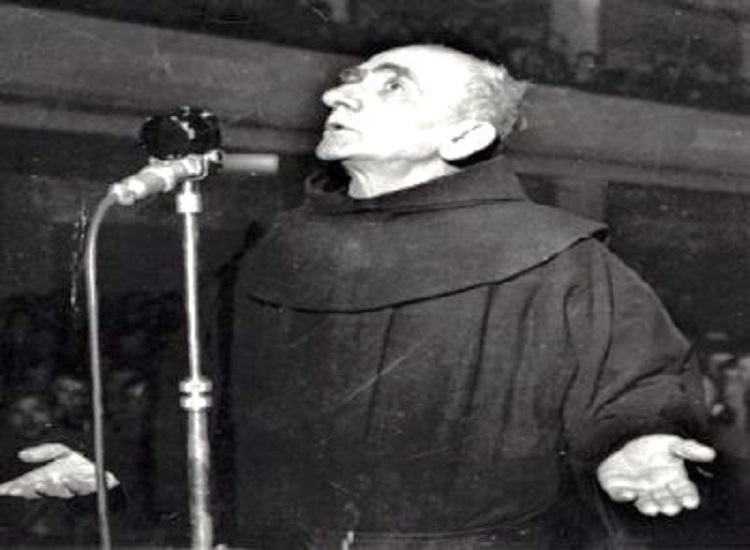
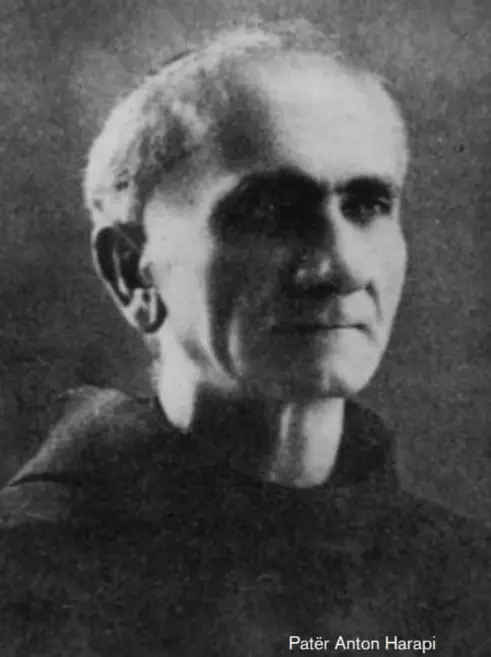
Following the train of facts presented thus far, we intend to shed light on one of the most controversial figures of the 1940s. Personally, Enver Hoxha as well as the Albanian Communist Party accused the revered Father Anton Harapi of being a collaborator and a traitor to the Fatherland. Under the weight of these accusations, he was inhumanly tortured, and my brother Genci (a living witness of that time in the Tirana prison) affirms that through electric shock torture, they had punctured one of Father Anton Harapi’s eardrums, causing him to lose his hearing almost entirely while being tortured! And in the end, Father Anton Harapi was sentenced to death and executed by firing squad!
To assist the readers of these lines moving forward – so that based on facts, and only facts, which were unfortunately hidden by the historians of the dictatorship period, and by having the opportunity to scrutinize and read for themselves in archive documents the data we are conveying today – a wide window is opened for them to judge with their own minds and form solid convictions regarding the distortions made to our national history, which continue to be inherited by the younger generations through history books to this very day.
Let us list a series of facts:
a – Father Anton Harapi is proposed to accept being a candidate for election as a member of the High Council of Regency. Father Anton refuses, conditioning his non-acceptance on his status as a cleric.
b – A request was addressed at the time by the Albanian Parliament, through the State of the Vatican, to the then Pope Pius XII (Pope Giovanni Pacelli). He approved the request, permitting Father Anton Harapi to occupy the state post.
c – The permission granted by the leader of the Vatican is made known to Father Anton Harapi, and He (Father Anton – Author’s note, M.K.) sets forth his condition: “Even if it happens that I accept to be one of the members of the High Council of Regency, you must know that I do not accept to approve any decision of the High Court regarding death sentences. Therefore, know that I shall not place my signature in such cases!”
d – Father Anton Harapi, after accepting the high office, did not receive any salary due to him for the entire duration of his tenure as a member of that Council, and on the other hand, continued to reside in his cell at the church where he had been living previously!
Let us proceed now with some excerpts taken from the speech delivered by Father Anton Harapi before the Albanian Parliament and the Albanian Government on January 13, 1944.
In principle, Father Anton poses the question: “…Whether to align with anarchists to shed blood, or to abandon the national cause. And since my soul did not dictate that I do either the one or the other, I was forced to choose one of two: either to commit a folly by accepting this office, or to show weakness by walking away. I decided it was better to commit a folly: or – as those Albanians say who wish to supposedly keep themselves unstained – I chose to compromise myself. This is the reason for which I agreed to take part in the Albanian authority: because I could not bear to see Albania in anarchy!”
Or furthermore, unless one refuses to hear and consequently fails to understand Father Anton, his statement leaves no room for ambiguity when he says: “…Why, pray tell, do the communists clothe and arm themselves with patriotic zeal, when above all else they care about doctrine and not the fatherland? The terrorist measures, then, the fratricide, the tight bond up to total dependence upon a foreign hand, and the use of every means for personal gain, leave no room for doubt. Look here, with a pistol to the chest no one becomes a brother or a companion, but a slave, a tyrant, or a hypocrite. By always destroying, one cannot build.”
And Father Anton concluded his speech with the monumental assertion: “Today, as we stand on the brink of being overturned, both the fierce and the mild, in this final cataclysm, there will be no Germanophiles, Anglophiles, or Italophiles for us; there are no people of yesterday and of tomorrow; today we shall be Albanians and only Albanians, capable of stripping ourselves and forgetting everything, solely and exclusively to save the nation, the state, and the people. Hurrah, let us unite, for we are finished: Let words and arguments cease. Let us build the national monument: the unity of Albanians!”
SOME CONSIDERATIONS REGARDING THE DISCUSSED FACTS
– Since the core of this discussion is the linguistic term “COLLABORATION” as well as the qualifier “COLLABORATOR” – used after World War II with an invariably insulting and personality-annihilating connotation toward the person who engaged in cooperation – we must establish a common denominator so that the actions themselves, as well as the personas, can be judged by shared and well-balanced considerations. Since we are in the field of history, without entering at all into genuine physical laws of a relativistic nature from Einstein or spatial ones from Minkowski, but drawing the proper lessons from those laws, we cannot fail to first take into account the first and fundamental consideration, which even historical science cannot evade, according to which:
REGARDING ANY EVENT, THE SPATIAL AND TEMPORAL COORDINATES ARE INTERLINKED DEPENDING UPON THE DISPLACEMENT OF THE OBSERVER.
Therefore, as a consequence, to be as objective as possible in judging events, we must displace ourselves in time and view, and certainly also judge, historical developments from the level of knowledge available back then when the events under consideration were unfolding. This implies avoiding precisely the factor of POLITICAL OPPORTUNISM (discussed previously when dealing with “definitions”). This is the first and most important condition.
The second unquestionable condition is the need to judge facts only after gathering as many contemporary documents and testimonies as possible regarding the events under consideration. Precisely based on these prerequisites, relying on all the facts and documents presented so far – where we endeavored to bring forward facts that during the dictatorship period were either entirely hidden or visibly disfigured according to communist ideological orientations – we will attempt to draw the most well-balanced conclusions, so that historical truths are spoken and then passed down to subsequent generations exactly as they were.
All the facts presented thus far, by the virtue of practical possibility within the abundance of options that open archives present today – hindering no researcher from scrutinizing documents – are simply orienting within the framework of this analysis. This is clear. On the other hand, it must be borne in mind that the aim is to make it clear to the general public how the collaboration carried out and exercised by patriots, whether they were intellectuals or not, labeled as Albanian Nationalists, with Fascist Italy or Nazi Germany under the conditions of the presence of the foreign soldier’s boot on our soil, WAS A COLLABORATION GENERALLY TO THE BENEFIT OF ALBANIA.
In contrast, the communist collaboration, initially with Yugoslavia, subsequently with the Soviet Union, and finally with China, without Albania being trodden by the foreign soldier’s boot, were collaborations involving the TOTAL SUBMISSION OF ALBANIAN INTERESTS TO FOREIGNERS and, unfortunately, for the benefit of purely PERSONAL, egoistic interests of Enver Hoxha! This is the general view. Let us proceed further. A very meaningful objective indicator for the reader of these lines, I think, is the comparative presentation of two contemporary facts with statistical data:
The Albanian Governments after April 7, 1939, until the day the communist dictatorship was established, numbered seven; thus, with an average duration in power of less than one year. Meanwhile, Enver Hoxha remained Chairman of the Council of Ministers for the following ten years (October 23, 1944, until July 19, 1954, while also holding the post of First Secretary of the Central Committee of the A.P.L. [Albanian Party of Labor]), and then for another thirty years continued as First Secretary of the Central Committee of the A.P.L., thus the absolute leader of the country. Naturally, the logical conclusion comes to mind that no matter how self-centered the seven prime ministers of the occupation period may have been and regardless of their thirst for power, their very duration at the head of the state did not allow them to implement their plans, however egoistic they might have been.
Whereas for Enver Hoxha, who remained at the head of the state for almost a full 40 years, no researcher, no matter how well-disposed they might want to be toward him, can obscure that unprecedented thirst of his for power! Had it ended there, it would have been well. However, his extreme egoism could not have paved its way without being backed also by his paranoia, which led him – supported also by his bloodthirsty nature – to eliminate, in a proportion exceeding 50%, even his closest collaborators and his blindly loyal supporters!
These were also the reasons that granted him the honor of taking his deserved place among the “ONE HUNDRED AND ONE MONSTERS OF WORLD HISTORY” (A work by the British historian Simon Sebag Montefiore), where the 101 figures selected from world history were scrutinized and chosen across a 3,000-year time span!
As for the duration of being an absolute ruler, Enver Hoxha, compared to other tyrants treated by the author in the aforementioned book – without straying from the circle of those best known to the reader – is ranked as follows:
- Enver Hoxha: 39 years as absolute leader.
- Joseph Stalin: 29 years
- Mao Zedong: 26 years
- Adolf Hitler: 12 years
- Benito Mussolini: 12 years
- Vladimir Lenin: 7 years
Just to clarify for the reader the framework of those selected in the above-mentioned book, let us remind you that the list of these personas treated by the author begins with Attila the Hun and continues to Adolf Hitler, from Lucrezia Borgia to Ivan the Terrible, from Joseph Stalin to Saddam Hussein, from the first emperor of China to Mao Zedong; and the qualifiers with which he distinguishes these criminal leaders are: TYRANTS AND DICTATORS, CANNIBALS AND SERIAL KILLERS, TORTURERS AND PSYCHOPATHS, MILITARY LEADERS AND CONQUERORS, DEPRAVED AND TRAITORS!
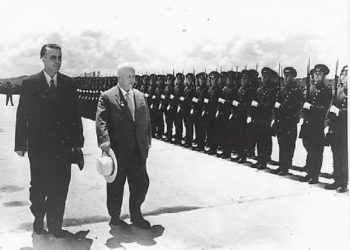
Without straying from the topic, I cannot fail to mention another fact. When Nikita Khrushchev, in his speech addressed to the 22nd Congress of the Soviet Union in October 1961, emphasized that by now the leaders of Albania, Enver Hoxha and company, ought to cede their places to the young leaders of the party and the state, he could not even imagine that Enver Hoxha’s major egoistic aims would keep him at the helm of Albania for another 19 years to come! And it likewise never crossed his mind how he himself would be dismissed in 1964 as General Secretary of the Communist (Bolshevik) Party of the Soviet Union!
THE HISTORICAL PAST, NEVER TO BE FORGOTTEN
Whenever leaders of various countries have disregarded the historical past, their countries have paid dearly for this disregard on the part of their leaders. Let us recall some key moments from the history of our people. Without going deeper into time, let us return to the last 20 years of the 19th century. Our Nation, or more precisely, the Albanian population, continued to be scattered throughout the Balkan Peninsula, naturally integrated within the Ottoman Empire.
In 1875 – 76, Slavic uprisings for independence erupted. Turkey was ready to intervene. Meanwhile, England provoked the London Protocol. Who profited the most? Bulgaria, to which Turkish lands (but populated mainly by an Albanian and not a Turkish population) were given with priority. Dissatisfied, Serbia, Montenegro, as well as Russia which was aiding them, attacked Turkey and swiftly broke it. What arose from those circumstances? The treaty named the Treaty of San Stefano (March 3, 1878), which granted the victors even more Turkish lands (all populated by Albanians)! What do you call this? Slavic generosity with total trampling of just Albanian interests!
Did anyone feel sorry that the interests of our nation were being so harshly and unfairly trampled upon? Not at all. But why did they invalidate the Treaty of San Stefano back then and Bismarck organized on June 13, 1878, the calling of the Congress of Berlin? Because they wanted Russia’s influence in the Balkans to be reduced without delay! That is all. The unpleasant outcome was that Albanians were once again territorially constrained, remaining the prey of a Turkey that was itself downsized.
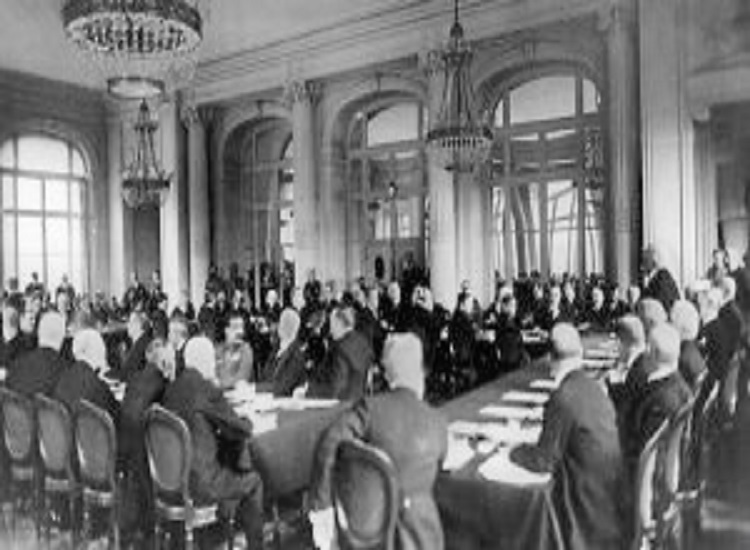
Throughout those decades, the Great Powers stood idly by watching the sale of Albanian interests for the sake of international balance in the Balkan regions! To illuminate this fact, after the declaration of Albania’s independence, the London Conference of Ambassadors (December 21, 1912 – March 23, 1913) – the darkest period of that conference for Albanians – was the one that gave the Slavs territories inhabited solely by Albanians!
And just to underscore this SCANDAL, let the reader know that Serbia alone received 20,000 square kilometers of Albanian territory (when the whole of Albania today numbers 28,748 square kilometers!?). The same framework applied to Greece as well. In the territory of Chameria, out of 55,000 inhabitants, 400,000 of them (indigenous Albanians) were massacred, killed, violated, and deported solely for the sake of 80,000 Greeks!
The Foreign Secretary of England, Sir Edward Grey, stated under those circumstances: “…The main objective of the conference, the preservation of the agreement and understanding among the Great Powers, was achieved…”! Whereas history proved that it, despite the trampling it did to Albanian interests, did not at all achieve the balance it supposedly aimed for. What proves this assertion? The very outbreak of World War I!
Thus, the London Conference only confronted and opposed the Serbo-Greek colonialist projects against the Albanian ethnic project. Except for Austro-Hungary, whose anti-Russian interests caused it to support Albanian interests, no one else defended them because our territorial neighbors’ interests were backed by Russia!
In short, historically none of the large states has defended the interests of the small ones unless those interests coincided with theirs. This was true throughout the past century as well. The conclusion? After World War II, the Soviet Union did not even count Albania in its calculations, and relations with us, until June 28, 1948, passed through Yugoslavia (until before the Informbiro resolution).
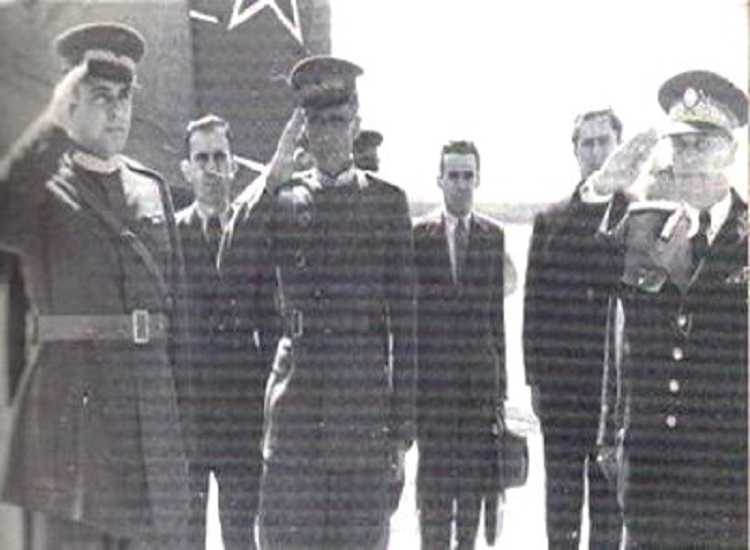
Here lies the thread of the tangle of that Gordian knot where, alongside alliances, collaborations are also intertwined. Although Serbia took 20,000 square kilometers from us, Enver Hoxha, driven purely by his extreme egoism, not only did not let that fact shake the direction of his collaborator path with Yugoslavia, but after gifting it Kosovo, subsequently (I remind the reader), on December 15, 1947, at the meeting of the Political Bureau of the Central Committee of the A.C.P., in the presence of Marshal Tito’s envoy, Sava Zlatić, Enver Hoxha declared (the minutes of that meeting are preserved in the State Archive – Note by M.K.):
“…Now that we have liquidated this obstacle (Nako Spiru – Note by M.K.), we must win back lost time and make the De Facto union of Albania with Yugoslavia as quickly as possible in all fields (party, economy, army, etc.), for Albania cannot stand as an independent state, and even less build Socialism, WITHOUT UNITING WITH YUGOSLAVIA….”
Moving forward now, we follow the thread of the tangle of the Gordian knot, analyzing all the facts brought forward previously, fact after fact, regarding the goals that guided Enver Hoxha subsequently, concerning the relations he created with the Soviet Union, then with China, and finally, during the total self-isolation he imposed on the country – a time in which his ferocity in accusing and liquidating his closest collaborators was a precise continuation of his criminal line followed from the time of his underground days until the day he himself died!
Here now we turn once again for help to the second fundamental consideration of the physical sciences of relativity which, in relation to historical sciences, objectifies:
REGARDING ANY EVENT, THE SPATIAL AND TEMPORAL COORDINATES ARE INTERLINKED DEPENDING UPON THE DISPLACEMENT OF THE OBSERVER FIRST, AND SUBSEQUENTLY, THE JUDGMENTS GIVEN BY THE OBSERVER DEPEND UPON THEIR OWN POSITIONING – NEITHER SPATIAL NOR TEMPORAL, BUT OF THE INTERESTS OF THE OBSERVER THEMSELVES.
Secondly: Based on this scientific postulate, we take a step forward regarding the passing of historical judgment, starting from entirely unbiased premises as well as relying on the documented facts presented, toward shedding light on and interpreting the concept of collaborationism – a concept misused since the end of World War II. As a point of historical comparison, without any need for over-refinement, we pose the not-at-all rhetorical question:
How did Russia, on one hand, consider, and how did Austro-Hungary, on its part, consider the decision of the London Conference of Ambassadors (December 21, 1912 – March 23, 1914) according to which Serbia was given 20,000 square kilometers of land populated by a over 90% Albanian population? After the question, an incontestable fact must certainly be added: Russia started from pro-Slavic premises, whereas Austro-Hungary from its anti-Russian interests! / Memorie.al
To be continued in the next issue