By Agim Popoci
Part One
Memorie.al – An analysis by the Yugoslav Ministry of Foreign Affairs, drafted in 1952, on the relations of the secret services in Albania, is published for the first time, shedding light on many issues related to the relationship between the two countries, but above all on the preparation for what would happen later in Kosovo. Journalists Agim Popoci translates and adapts this secret report into the Albanian language, equipping it with relevant explanations under the title “Foreword to the Serbian Terror against Albanians,” a publication of the Institute for the Study of Crimes and Consequences of Communism. A book that comes to the aid of historians and researchers to shed light and clarify some elements that have characterized the relations between Albania and Yugoslavia, how the intelligence agency functioned in Albania, how infiltration was carried out, how much was paid, as well as to debunk some myths regarding certain figures of Albanian history, such as Ahmet Zogu, who returned to power and overthrew Fan Noli’s government precisely with the help of the Yugoslavs.
As the author of the book rightly explains in his foreword, it was this established network, the policies pursued in the period between the two world wars that would precede the activity of the Albanian communists Popović, Mugosha, and others, and their role in the creation and selection of the leadership of the Communist Party of Albania.
FOREWORD TO THE SERBIAN TERROR AGAINST ALBANIANS
It is known that the Communist Party of Yugoslavia (CPY), from 1939, had the mandate for the Albanian communists. For this reason, in 1941, the Yugoslav communists Miladin Popović and Dušan Mugoša stayed in Albania. Regarding this matter, Blažo Jovanović, on October 13, 1948, in Cetinje, left this note:
“At the end of September 1942, you called me (Tito – B.P.) to Glamoč and I came from Prozor. Then you told me that I must go to Albania, as a delegate of the Central Committee of the Communist Party of Yugoslavia, and since I received no response from ‘Deda’, I must wait a few days.”
In the letter he received a few days later in Pidriš, when Jovanović had set off with Dušan Mugoša, it read: “After agreeing with ‘Deda’, you must go to Albania and your task is: 1. To elect a secure Central Committee at the local Conference of the Communist Party of Albania; 2. To carry the experience of the National Liberation War to the circumstances there; 3. Try by all means to penetrate, because it is of great importance; I immediately – on October 3 – set off on the road with comrade Dušan Mugoša and 15 other comrades, from Montenegro.
From there, we set off, myself, Dušan Mugoša, and Major-General Vojo Todorović. There we held party meetings and conferences, from the cells up to the 1st Local Conference in Albania, where the Central Committee of the Communist Party of Albania was elected, and the formation of military units began.”
But, for many crimes of the Albanian communists, precisely these two protagonists, Miladin Popović and Dušan Mugoša, would turn out to be instructors of crime, even though their presence in Tirana was accompanied by numerous Serbian officials, even with much higher ranks than Popović and Mugoša.
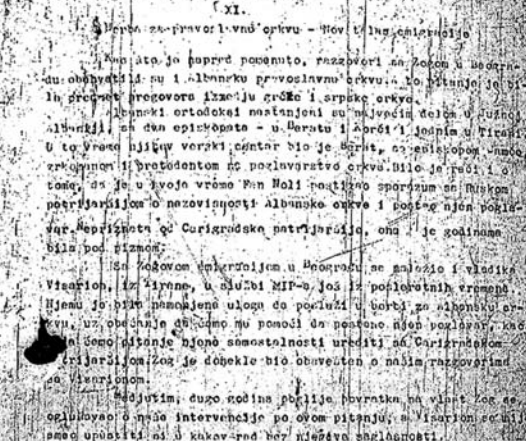
A confidential analysis, based on reports of the Serbian Secret Service, titled: “Albania between the two wars,” besides testifying that their presence in Albania was no coincidence, regardless of being treated as Serbian brothers, shows that this was an epilogue of many years of work of an entire structure, for which even the Serbian prime ministers themselves were engaged, with the clear mission of violating and occupying Albanian land, at any cost. Unfortunately, included in this cost was also the Serbian terror against Albanians.
This was not a coincidence either! Many studies have been made on Serbian territory, but these secret documents from the Archives of Hostile Units and the Military Historical Institute of the Yugoslav People’s Army in Belgrade, on the basis of which this analysis was drafted in 12 chapters by the Ministry of Foreign Affairs of Yugoslavia, in 1952 in Belgrade, besides providing many answers regarding the official Belgrade-Tirana relations, the Albanian delegation on the orders of Belgrade at the Peace Conference in Paris, the role of Zogu, the fall of Noli’s Government, etc.
As well as the Serbian use of the Republic of Mirdita, the establishment of the Albanian Orthodox Church, the protocol for determining the border of Albania, and the increased concern of official Belgrade regarding Italo-Albanian relations, as a constant obstacle to the “Serbian occupation of Albanian land,” also testify to the mentality created by the Serbian state, mainly based on these reports of the Serbian Secret Service, as to why terror is the only and indispensable means to keep Kosovo and to fight to secure an outlet to the sea, at least from Shkodra.
What was the purpose of drafting this analysis? After the first clashes for power between the two dictators, Enver Hoxha – Josip Broz Tito, the Serbian Secret Service, the UDBA, continued its work on Albanian soil where, besides the diplomatic representation, its field workers continued with regular reports to Belgrade. But, how would it proceed with Albania, which for the moment had escaped Serbian occupation?
This is the question that most concerned official Belgrade, and this may also be the reason why the entire state apparatus was activated to draft a genuine short-term and long-term plan, for the account of which the analysis of the Yugoslav Ministry of Foreign Affairs was also drafted: Albania between the two wars! How reliable are the data from this analysis?
Bearing in mind that we are dealing with a confidential document for internal use, this document speaks of Albanian collaborators of the Serbian state, named by first and last name, who are protagonists of very important events. According to this data, they may clash with or disprove many facts of current Albanian history, regarding which opinions may differ.
However, every fact from this document, down to the sum of money given by the Serbian state to the respective collaborator, can be compared with the product or the development of the event. And this undoubtedly falls to historians, who now have this new document at their disposal.
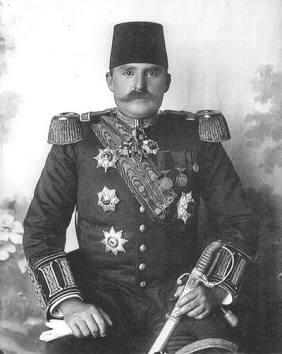
The “deconstruction” that this document makes of the Peace Conference in Paris (1946) will be a very important issue for researchers, as will the activity and cooperation of Belgrade with Albanians, from Essad Pasha until 1939.
Concrete evidence regarding the issue of Saint Naum and Vraka, the struggle against the Committee of Kosovo, and the impossibility of buying the only Albanian, who, as the document says, besides being irredeemable as an anti-Serb, also remained the only incorruptible Albanian, Hasan Prishtina.
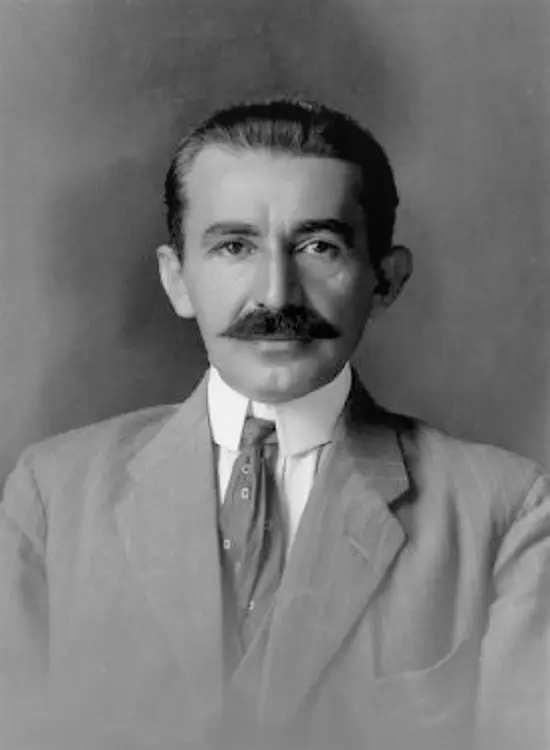
Ahmet Zogu may continue to be called a satrap and traitor by the Albanian communists for the interests of Serbia, but from this analysis he does not turn out to be such. The reasons are numerous; indeed, Belgrade blames itself for why Zogu “deviated” from Serbia towards Italy.
For politics, the economy, security, and even the Albanian Orthodox Church, Belgrade accuses Zogu of being a deceiver, but it is the latter who, for the first time, created a different Albanian policy, economy, and security, while this document also gives him the unrecognized merits to this day for the creation of the Autocephalous Albanian Orthodox Church…! / Memorie.al