
By Auron Tare
Part Two
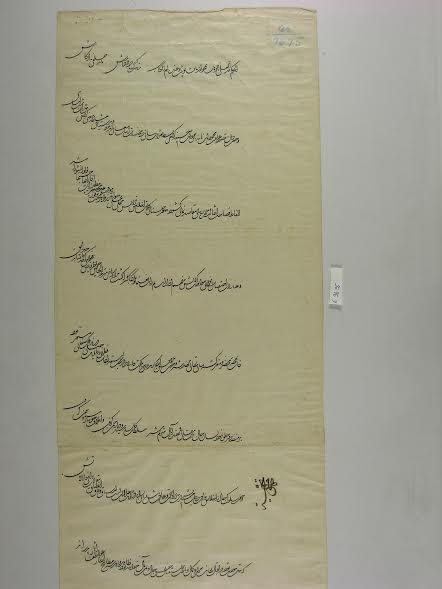
Memorie.al / A few years ago, from the Topkapi Palace Archive in Istanbul, the answer finally came that document E9695, which I had long sought, had been approved for publication. First mentioned by the Turkish scholar Tahsin Öz in writing on the period of Sultan Mehmed II, unfortunately this Persian document had never been translated. Dr. Öz mentions that he had been able to distinguish the word Akhisar in the document, but without elaborating any further explanation. It was this piece of information that led us to believe that this document might be related to Skanderbeg’s Kruja. The document received from Istanbul is written in Old Persian and, to this day, has not been translated by any scholar in the field.
Interesting is the fact that, for various reasons, the document has escaped the attention of historians of the period of Sultan Mehmed II, as well as his relations with the Venetians, particularly concerning the Albanian territories.
Continued from the previous issue
The arrival of Malpiero in Shkodra and the meeting with the Sultan are described by several sources of the time, but the negotiations between them are unknown. Was Malpiero perhaps bringing a new proposal to the Sultan? The Italian captive, Gian Maria Angiolello, who was an important official close to Mehmed, has left his testimonies in his “Chronicle,” where he also speaks of this meeting. “Malpiero came with a swift galley to the Buna and disembarked at a place called San Celso. He sent his Secretary Manenti, accompanied by 40 Ottoman horsemen, to the Sultan’s tent.”
From this meeting, only one document produced by Secretary Manenti for the Signoria remains, sent on August 27, reporting on the failure of the Mission to save Shkodra. Manenti returned to Venice, while the Admiral of the fleet approached Lezha, which was also under siege.
Chronologically, we can follow the events as follows:
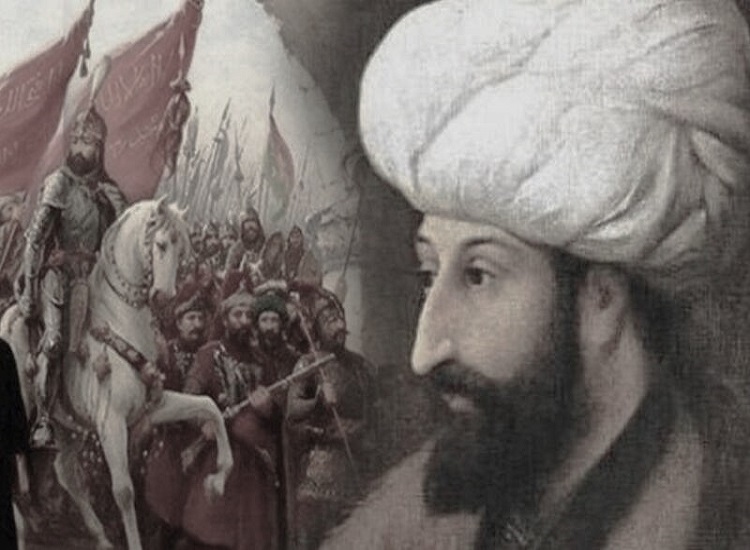
Mehmed, freed from the pressure of Uzun Hasan of the White Sheep, prepares the expedition against Arbëria. The Venetians attempt a peace with difficult conditions for them, but Mehmed continues his march. Mehmed, via the Via Egnatia, arrives in Kruja, where he personally participates in its surrender by the Venetians on June 15, 1478 (15.RI.883). On July 2, he moves his camp to the banks of the Buna, where he awaits the envoys of the Venetian Doge (Malpiero and his secretary Manenti), whom he had received a few weeks earlier at his camp in Manastir.
On July 5, he writes the letter which is sent under the supervision of his loyal Mevlana Murat Çelebi to the Eastern rulers, who were closely following Mehmed’s campaign in the Balkans, declaring the fall of Shkodra. After attempting a general assault on the Castle, Mehmed leaves the siege on September 8, returning to Istanbul. The chronology of the Fathname in Persian leaves no doubt as to the date of its signing by Mehmed II beneath the walls of Shkodra. But the Venetian sources are infallible regarding the date of the fall of Shkodra, as January 4, 1479.
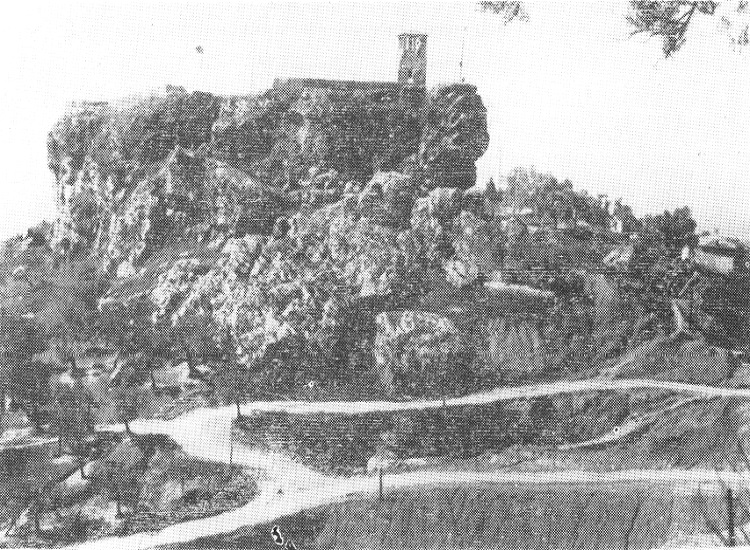
What happened between the time Mehmed declared the conquest of Shkodra and the official date of its abandonment by the inhabitants of Shkodra? Venetian sources and Barleti’s chronicle shed light on the great efforts of the people of Shkodra and the Venetian garrison in defending Shkodra. Not only the castle garrison, but the entire population of Shkodra, including women, participated in the bloody battles.
The Dominican Friar Bartholomew of Epirus, Gjon Kapistrano, and the cavalry commander Nikollë Moneta led several sorties outside the Castle, raising the defenders’ hopes for a possible liberation. But it seems that Mehmed II was announcing the capture of this Castle 7 months before the defenders abandoned the Fortress. Could it be that Ambassador Malpiero, who had met the Sultan on the banks of the Buna, had secretly accepted the capitulation of Shkodra?
If this rare document is taken as an authentic document issued from Mehmed’s chancellery, then it appears that a secret agreement had been signed between him and the Venetian Signoria, through Admiral Malpiero. If this is true, the sacrifices of the Fortress’s defenders may have been a desperate attempt by the Venetians to create a false illusion of defending Shkodra, sacrificing the latter for their commercial interests in the East.
According to Prof. Thackler, the hand that signed the document is different from the hand of the scribe who wrote it. This is a highly interesting fact, and if we wanted to be a little exaggerated in our hypothesis, we might think that perhaps the signature is that of Mehmed himself. It is a fact that the Sultans never signed official documents, but if we take into account the fact that Mehmed II was a highly educated person and the connection of Shkodra with the cult of Alexander, the signing of the document by his own hand is a possibility.
The signing of Mehmed’s letter with the title of conqueror of Iskenderie can be explained by the classical education that Mehmed had received in his youth. His visit to the ruins thought to be ancient Troy in 1462 (according to the Greek chronicler Kritoboulos) is well known, as is his claim that the conquest of Constantinople was a revenge for the destruction of Troy (Kritoboulos).
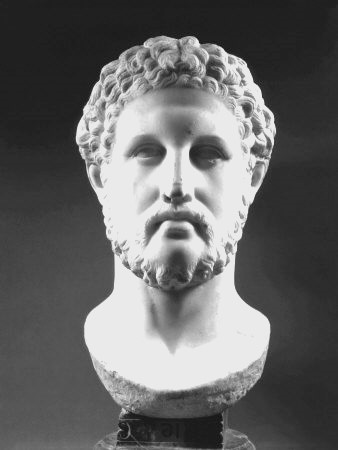
It is known from contemporary sources that Mehmed styled himself after the model of Alexander. Nicolo Sangudino, who had a personal audience with Mehmed after the conquest of Constantinople, reports on the latter’s interest in ancient history and particularly in Alexander the Great. Likewise, in the study by historian Julian Raby on the figure of Mehmed, we learn that in the Sultan’s Library, among other works, there were volumes of Arrian’s Anabasis, a classic work on Alexander the Great, as well as a copy of Homer’s Iliad.
Iskenderie is translated from Arabic as the City of Alexander. But why does Mehmed, with evident pride, send news of the conquest of this city to the rulers of the East? This is a highly interesting question. From the depths of the centuries, Shkodra is known for its famous legend of Rozafa, and local oral traditions have no source that connects this city with Alexander the Great or any ancient ruler with that name, with the exception of the Statute of Shkodra, where the founding of the city is linked to the name of the famous Macedonian general.
However, we can take this claim of the city’s antiquity in the context of the time, when, under the influence of European fashion, even the drafters of the City Statutes sought a glorious origin for it. Likewise, a reliable but little-used source by our historiography is Evliya Çelebi, a well-known Ottoman traveler for his journeys through the territories of the Empire. In his description of the city of Shkodra, he writes: “We traveled to the city fortified with walls, Iskenderie. This city was founded by Iskender Zulkarneyn (Alexander the Great) and was called Iskenderiyye.”
So, according to Çelebi, Shkodra in his period had as a legend its foundation by Alexander the Great. The identification of Shkodra with Alexander the Great, at least according to Ottoman scholars, is a path previously untrodden. Perhaps Mehmed’s insistence on conquering Shkodra, beyond strategic issues, May also is linked to his ambition to conquer a city founded by Alexander the Great.
Perhaps missing archaeological excavations could shed light on the veracity of this claim, but what is very important is the fact that for the Ottomans, Shkodra was an exceptionally important city due to its strategic position. For scholars, the hypothesis that Mehmed II, in addition to strategic reasons, also had personal reasons for taking Shkodra would be of interest.
According to specialists of the Ottoman period, in the time of Mehmed II only three cities called Iskenderie were known: Shkodra in Arbëria, Alexandria on the present-day Turkish coast, which served as the main port for the Syrian city of Aleppo, and the third, the famous Alexandria of Egypt. Until the period of Mehmed Fatih, none of these cities had been conquered by the Ottomans. For this reason, our document specifically designates Shkodra as the city of Alexander conquered by Mehmed, and the epithet he claims for himself as its conqueror is quite interesting. / Memorie.al
Bibliography used:
(Topkapı Sarayı Müzesi Arşivinde Fatıh II/ Sultan Mehmede Ait belgeler Belleten 53, 1950, pp 49-56 (page 54))
F.Babinger “Jakub Pascha ein Leibartz Mehmed II Revista degli Studi Orientali 1951.
(The Uygur account of Mehemmed II’s victory in 878/1473 over Uzun Hasan (R. Rahmeti Arat, Fatih Sultan Mehmed’in yarlIǧI, in TM, vi (1939), 285-322; cf. idem, Un yarlIk de Mehmed II, le Conquerant, in Annali del R. Ist. Sup. Orientale di Napoli, n.s. i (1940), 25-68).)
Stavrides, Théoharis (August 2001). The Sultan of Vezirs: The Life and Times of the Ottoman Grand Vezir Mahmud Pasha Angeloviu (1453-1474) (Ottoman Empire and Its Heritage Series, Volume 24). Brill Academic Publishers, Inc. p. 65. ISBN 90-04-12106-4.
Heath W. Lowry (2003). The Nature of the Early Ottoman State. SUNY Press. p. 116. ISBN 978-0-7914-8726-6. Retrieved 20 February 2013.
Setton, Kenneth M. (1978), The Papacy and the Levant (1204–1571), Volume II: The Fifteenth Century, DIANE Publishing, p. 340, ISBN 0-87169-127-2 Babinger, Franz. Mehmed the Conqueror and His Time. New Jersey: Princeton University Press, 1978.
Ecthesis Chronica 40. Mukrimin Halil Yinac “Ahmed Pasha Gedik” IA 1 193-199
Halil Inalcik “Ahmad Pasha Gedik” EI2, 292-293
Sehabeddin Tekindag, “Mehmed Pasha Karamani” 1A 7, 588
Sehi Beg, Hest Bihist: the Tezkire by Sehi Beg ed Gunay Kut (Cambridge MA 1978) f24r, Tekindag “Mehmed Pasa Karamani” 1A 7 588
İnalcık, Halil, “Aḥmad Pas̲h̲a Gedik”, in: Encyclopaedia of Islam, Second Edition, Edited by: P. Bearman, Th. Bianquis, C.E. Bosworth, E. van Donzel, W.P. Hans J Kissling “Die Anonyme Altosmaniche Chronik uber Sultan Bayezid II” Munich 1967 .134
P.Xhufi “Arberit e Jonit”
Inalcik. H “Mehmet the Conqueror” 1432-1481 1960
Inalcik. H “Perandoria Osmane. Periudha Klasike 1300-1600.” Tirane Dituria 2013 Seven Ottoman Documents from the Reign of Mehmet II V.L.Menage
Da Lezze (Gian Maria -Angiolello)
K.Jirecek “Skutari und sein Gebiet im mittelalter”
L.von Thalloczy, Illuyrisch-Albanische Forschungen Munich 1916 pp 94-124