By Frank Shkreli
Memorie.al – From the crimes of communism to the Serbian crimes in Kosovo, beautiful words are no longer enough. A democratic state must have the courage to acknowledge the truth, to document it, and to turn it into state policy. I have addressed this subject in dozens of articles over the years, trying to draw attention to one of the deepest and still unhealed wounds of Albanian society: confronting the communist past, the crimes of the dictatorship, and the state’s obligation to place historical truth at the foundation of national memory. I cannot remain silent about the crimes of communism!
I have treated this issue not as just another political polemic, but as an obligation toward the victims, their families, and the generations that must know the past in order to better understand the present. Precisely for this reason, the developments of these days and the tour of AIDSSH to the former internment sites compel me to return once again to this topic, with a question that, after 35 years of transition, can no longer be avoided: how far has Albania progressed from words to deeds in confronting the legacy and crimes of the communist dictatorship?
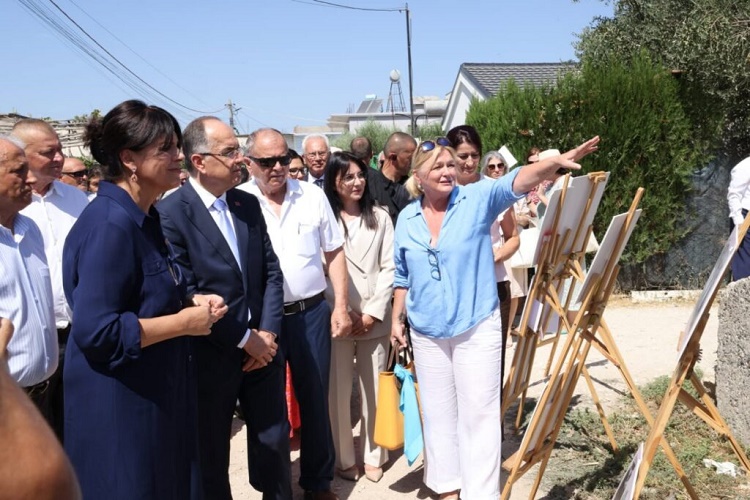
There are topics that cannot be closed with a political statement, a commemorative ceremony, or a wreath of flowers. There are wounds of history that demand more than words: they demand Truth, Memory, Justice, and, above all, a clear stance from the state. Precisely for this reason, the commemorative tour that the Authority for Information on the Documents of the Former State Security (AIDSSH) is conducting these days in the former internment villages of Lushnja is much more than a commemorative activity. It is a journey into a past that post-communist Albania has still not fully confronted.
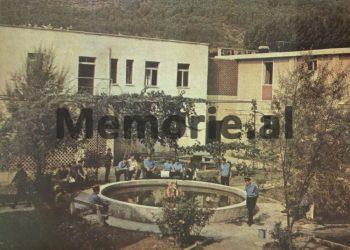
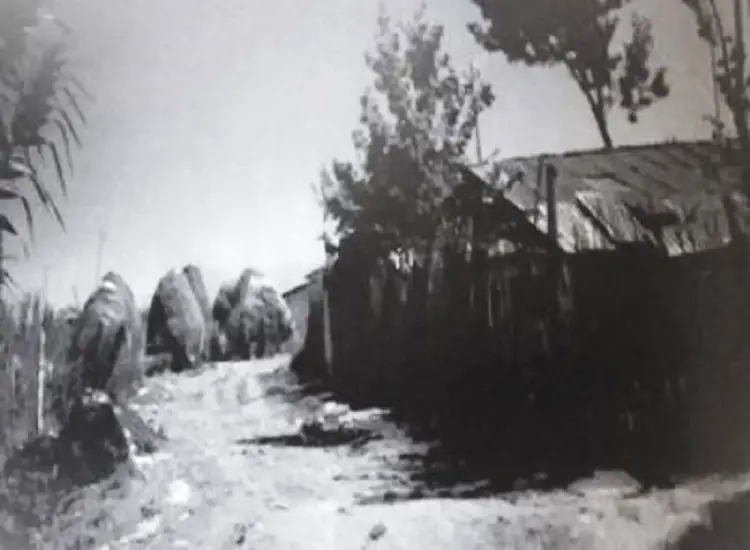
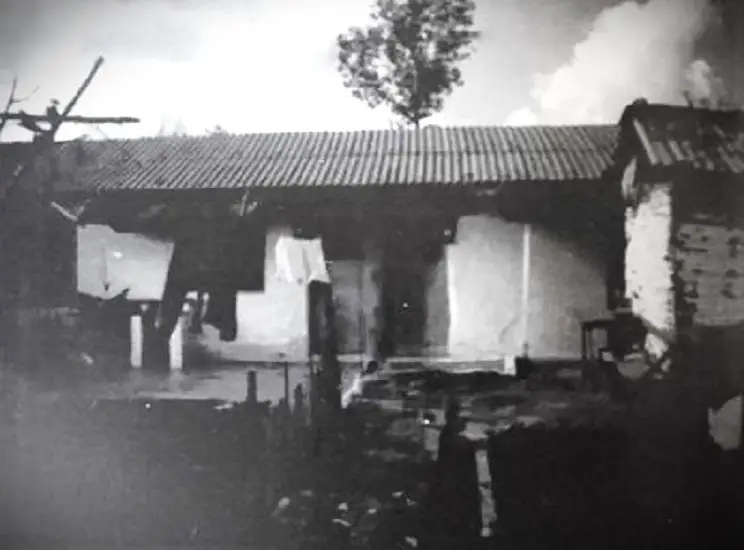
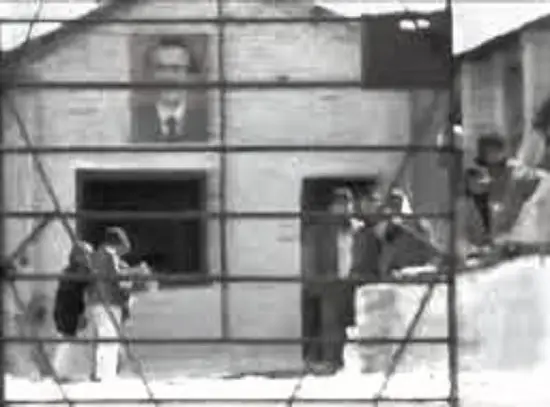
AIDSSH itself has articulated this problem directly, speaking about how the transition has behaved with “hypocrisy” toward the persecuted and calling for the state’s regret to be demonstrated through deeds. In Savër, Gjazë, Kosovë e Madhe, and other settlements where thousands of Albanians were interned by the communist regime, they are not simply visiting forgotten places. They are visiting places where the communist dictatorial state destroyed people’s lives—not because they had committed any crime, but because the regime had declared them “enemies,” “declassed,” or undesirable.
President Bajram Begaj, who joined this tour, has called for the preservation of memory and for turning it into a lesson for future generations. But here arises the unavoidable question: what has been done over these 35 years, beyond words? Thirty-five years of transition and an unfinished balance sheet. Albania has passed 35 years since the fall of the communist regime. “Left-wing” and “right-wing” governments have come and gone. Presidents, prime ministers, parliaments, and political programs have changed. Albania has joined NATO, opened negotiations with the European Union, and built new democratic institutions.
But one fundamental issue remains unfinished: confronting the communist past. It is true that the Albanian Parliament has debated resolutions condemning the crimes of the communist regime. But that is all. It is also true that politicians from across the political spectrum have, on various occasions, condemned the crimes of the dictatorship. There have been presidential, parliamentary, and governmental statements. There have been museums, books, conferences, and commemorative activities. But the problem is not an absolute lack of words. The problem is the gap between words and deeds.
If a state condemns a criminal regime, then it must be willing to do the work that accompanies that condemnation: to open the archives, to bring responsibilities to light, to identify the victims, to find the missing, to preserve the sites of suffering, to educate the younger generations, and to ensure that the crimes are not relativized. This is why the work of AIDSSH and other organizations is of particular importance—but it is not enough.
The institution has the responsibility to collect, administer, process, and make available the documents of the former State Security for the period 1944–1991. But one institution cannot do alone what must be a national policy of memory. Is it enough to remember? No. Memory without responsibility risks remaining only ceremony. A democratic society does not remember the past only to weep for the victims. It remembers in order to understand the mechanism that produced the victims.
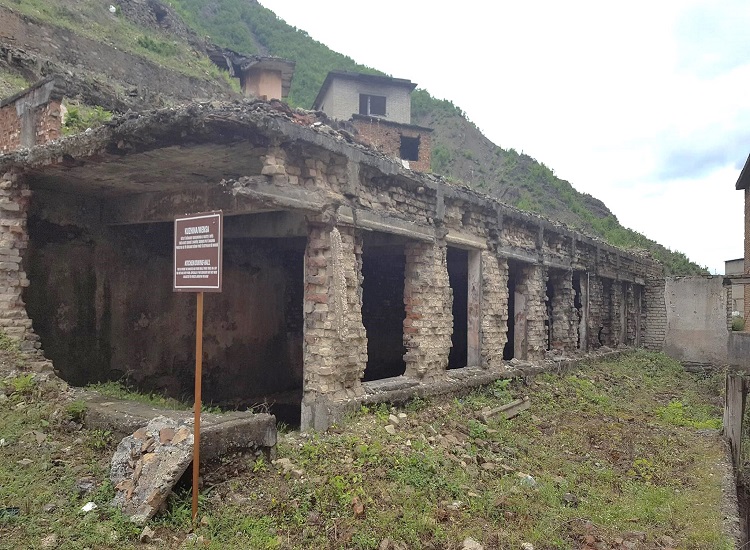
Therefore, an Albanian child must learn what internment was, what the Tepelena camp was, what happened in Spaç, Burrel, Qafë-Bari, and in dozens of other places of suffering. They must learn how the State Security functioned, how fear was used, how families were destroyed, and how a dictatorship turned the law into an instrument of oppression. Despite legal limitations, the documents of AIDSSH make this possible—though not completely. Earlier, the published documents regarding the massacre at Qafa e Valmirit proved that 14 men were executed in 1949 after a trial conducted in record time.
The documents of the trial also show that they had not been responsible for the murder of Bardhok Bibë. These are not just stories of the past. They are evidence. And a democracy that has evidence of the crimes of the dictatorship also has an obligation to make them part of the national conscience. Where are the deeds? This is the question that must be asked of the Albanian political class, regardless of affiliation.
It is not right to leave the responsibility for memory solely to historians, families of former persecutees, journalists, or institutions like AIDSSH. The state must assume its own responsibility. Because the victims of communism are not victims of a political party. They are victims of a system that ruled Albania for nearly half a century. Therefore, confronting that system must not be a matter for one party. It must be a matter for the Albanian state.
Here lies one of the greatest failures of the transition: de-communization was never transformed into a full national project. Much was said. Much was promised. Resolutions were debated. Statements were made. But many families continued to wait for compensation, recognition, clarification of the fate of the missing, and, above all, a full moral acknowledgment of their suffering.
The same question applies to Kosovo. This leads us to another issue that cannot be entirely separated from this topic: Albania’s stance toward Serbian crimes in Kosovo. Here too, we must be fair: Albania has condemned Serbian crimes in Kosovo, and Albanian politicians from across the political spectrum have spoken publicly against them. But what is missing is a continuous, strong, institutionalized state policy formalized by the Albanian Parliament.
A policy that does not depend on the next statement by a minister, deputy, or prime minister. If Albania considers itself the mother state of a nation that has experienced one of the greatest tragedies in Europe in recent times, then the documentation of crimes against the Albanians of Kosovo, the preservation of evidence, and the demand for justice must be part of its state memory and diplomacy. This is not about fueling hatred toward a people. It is about not allowing crime to be forgotten. Reconciliation is not built on forgetting. True reconciliation is built on Truth. Albania must learn not to be afraid of history.
Perhaps this is the greatest lesson that AIDSSH’s tour brings us these days: that Albania must not be afraid of its own history. Not of the crimes of communism. Not of the victims. Not of the documents. Not of the names. Not of those responsible. A democratic state is not weakened when it admits that its political predecessor committed crimes. On the contrary, it is strengthened. Because democracy begins precisely where the state admits that it is not above the Truth. In this sense, President Begaj’s words about memory take on a special significance.
But they too must be accompanied by a simple question: what will be done, concretely? Will we continue with ceremonies? Or will a national policy of memory be built? Will we keep talking about the victims? Or will we give their families answers? Will we say we condemn the dictatorship? Or will we teach the younger generations what it actually was? Parliament must take the next step. This is the moment for the Albanian Parliament not to remain only with the resolutions of the past.
A new parliamentary debate is needed—serious and comprehensive—on the 35 years of confronting the communist legacy. A debate that includes archives, victims, families of the persecuted, the missing, internment sites, education, musealization, compensation, and the responsibility of institutions. And above all, a clear stance is needed: The crimes of the dictatorship are not a matter of the “left” or the “right.”
They are a matter of Albanian democracy and national history. Likewise, when it comes to Serbian crimes against the Albanians of Kosovo, Albania must have a clear institutional stance, grounded in documents, evidence, and international standards of justice. After 35 years of transition, Albania no longer needs more solemn declarations. It needs deeds.
Meanwhile, while appreciating the good work done by AIDSSH in opening, administering, and publishing the documents of the former State Security, this does not mean the institution should be beyond criticism. On the contrary, a serious debate on Albania’s confrontation with the communist past must also include the institutions tasked with this mission. Over the years, there has been no shortage of criticism toward AIDSSH—regarding the way it handles the files, the pace of their declassification, transparency, the access of family members and researchers to documents, as well as how information has been administered and communicated.
Some of these criticisms deserve institutional responses and greater transparency. But criticism of AIDSSH should not be used as an alibi to hide a much larger problem: the responsibility for confronting the communist past does not fall solely on this Authority or any other. It is the responsibility of the Albanian state and, above all, of the political institutions that have led the country over these 35 years.
Therefore, what must come next is the responsibility of political institutions. Because it cannot be expected that only one institution carries the weight of an entire history on its shoulders. Now it is the state’s turn. It is Parliament’s turn. It is Albanian politics’ turn. And it is also society’s turn. Because a country that does not know its own past risks repeating it. And an Albania that remembers its victims only on commemorative days—though rarely—but does not turn memory into state policy has still not completed its moral and national transition.
After 35 years, Albania must finally do what it has not sufficiently done: confront the past—not to turn back, but to move forward. This is not revenge. It is not retaliation. It is not political warfare. It is historical justice. And above all, it is state and national dignity – so that the evil of communism in Albania is not perpetuated. / Memorie.al