By Agim Popoci
Part Two
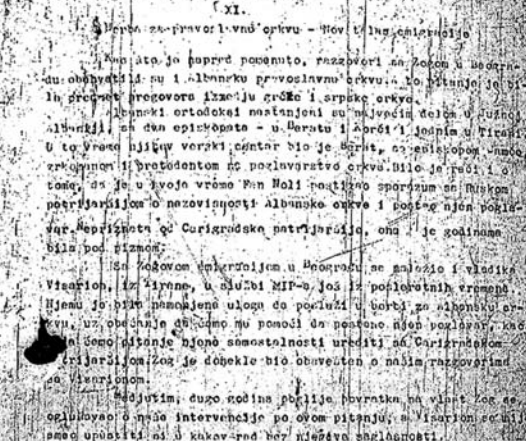
Memorie.al / An analysis by the Yugoslav Ministry of Foreign Affairs, drafted in 1952, regarding the reports of the secret services in Albania, is published for the first time, shedding light on many issues related to the relations between the two countries, but above all, on the preparation for what would later happen in Kosovo. Journalists Agim Popoci translates and adapts this secret report into the Albanian language, equipping it with pertinent explanations under the title “Foreword to the Serbian Terror against Albanians,” a publication of the Institute for the Study of Crimes and Consequences of Communism.
A book that comes to the aid of historians and researchers to shed light and clarify certain elements that have characterized the relations between Albania and Yugoslavia; how the intelligence agency operated in Albania, how infiltration was carried out, how much it was paid, as well as to debunk some myths regarding certain figures of Albanian history, such as Ahmet Zogu, who returned to power and overthrew Fan Noli’s government precisely with the help of the Yugoslavs.
Continued from the previous issue
From the secret document of the Ministry of Foreign Affairs of Yugoslavia
The Yugoslav service of the Ministry of Foreign Affairs built its intelligence support in Albania over many years. It was guided by the experience of the Serbian consulates in Macedonia and Kosovo in the period before the Balkan Wars. It exploited the traces and friendly connections of the Serbian army from the time of its stay in Albania.
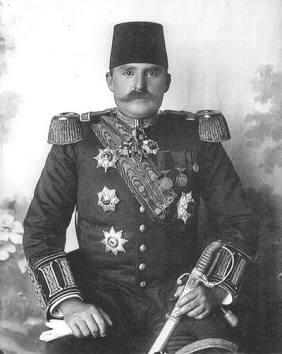
From Esad Pasha and the “Esatists” to the emigration in 1939, nearly three decades passed; many tasks, mistakes, and failures were intertwined; many collaborators and loyal men paraded and were shaped along the way. In the end, through the prism of this long-term work, one experience crystallized—we have always lost, we have lost not because the opponent was stronger than us, but because of our own mistakes or the fifth column within the state’s leading circles.
Our mistakes largely stemmed from the division of the service, which on the ground fostered egoism and unhealthy ambitions, from which the service suffered seriously. The fanaticism and mutual intrigue of the organs of the Ministry of Foreign Affairs, the General Staff, and in some cases even the Ministry of Foreign Affairs in foreign territories, led to the recruitment and re-poaching of collaborators and loyal men. Such work inevitably increased many dirty tricks, infiltrations, and thefts.
Our mistakes further derived from incompetence and frequent changes at the center, which caused disruptions on the ground, resulting in damage and disappearances caused by various loudmouths and adventurers, solely for the purpose of further personal advancement. And finally, our mistakes came as a consequence of the thinking that predominated, especially in the recent period of work, that positions in Albania could be better defended in Rome than in Tirana, which led to the Belgrade Pact, Mussolini-Stojadinović, in 1937, and further on to the occupation of Albania in 1939.
Our service in Albania in 1924 possessed abundant material resources, with a good network of loyal men and collaborators. The main resources were concentrated in Shkodër. The embassy in Tirana was placed at the disposal of a credit, which was called indefinite, of $500 per month, while the monthly credit was 200 Napoleons, paid every month to a specified number of loyal men according to a coded list.
The embassy aimed primarily to have guaranteed support in the Ministry of the Interior, the Ministry of Foreign Affairs, the Prefecture of Tirana, the Gendarmerie, and the Customs in Durrës, the Army, and the Post Office. In addition, it financed a barbershop and a store, as well as a hostel in Tirana, two cafés, one of which was in the Port of Durrës and the second in the Port of Shëngjin.
The indefinite credit was spent mainly on the destruction of the actions of the Kachaks and the “Committee of Kosovo,” as well as on unforeseen expenses. Shkodër, until the Pact of Tirana, was the main operational center of our service, with a good intelligence network and abundant resources. The difference between the work in Tirana and that in Shkodër was that a credit had been allocated to Shkodër, where certain sums had been given for years to the same persons.
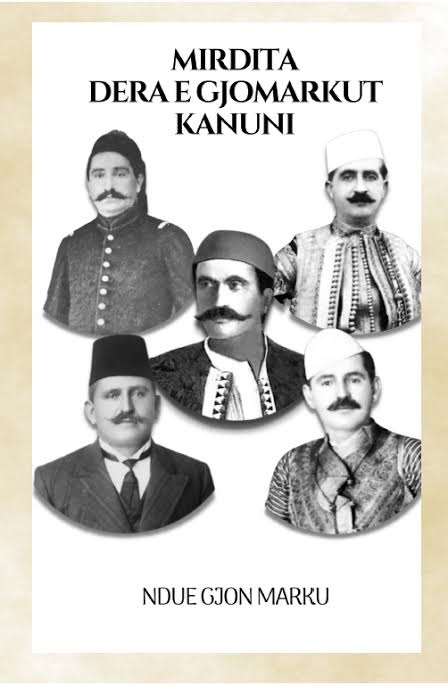
The Bajraktar of Mirdita, Mark Gjoni, and later Gjon Marka Gjoni, received for years 100 Napoleons as an “honorary” reward, and for his men, depending on need and the development of events, 100,000 gold francs per month. For Shala, Kelmend, etc., a monthly credit was also determined without any obligation on the part of the users. This was a kind of “apanage,” with a tacit agreement that is by nature understandable, so that the users might employ it with the obligation to serve as friends when and if the need arose.
With the strengthening of the central government, the service gradually transferred to Tirana, but in the first post-war years, the terrain in Shkodër was more favorable for work. A large number of Serbian families in the city, some of them very old and with great authority among the Albanians, facilitated the creation of the most favorable conditions through patriotic cooperation. For years we had there the Serbian Bishop, the school, and the cemetery of Serbian soldiers maintained by the clergy. The village of Vraka near Shkodër, mostly Serbs with a church and a school.
Finally, the proximity of the border with the corrupt Albanian customs and border service, which had an almost open path. In 1924, Ivo Vuković served in Shkodër as Consul General, an experienced and capable official, from the well-known Montenegrin family, Vuković, with numerous friendly connections among the Albanian bajraks of northern Albania. Opposite him stood an inflated, incompetent, fascist-protectionist Italian Consul General, in perpetual fear that he would pay the price if he entered an Albanian house…!
THE RETURN OF ZOGU
The armed action began on the evening of December 13th, and Zogu entered Tirana on December 24th. For the preparations of this action, 30,000 Napoleons were spent. The final sum of 10,000 Napoleons was paid to Zogu in Dibër, on the eve of crossing the border. As soon as he arrived in Tirana, Zogu requested many other sums. Analyzing the entire work, from the decision to launch the action to its conclusion, with Zogu’s entry into Tirana, the Service for Albania within the Ministry of Foreign Affairs noted several mistakes, which had serious consequences.
The fundamental mistake, according to the assessment, lay in the fact that the greatest attention was focused on the direction Dibër-Tirana, as the shortest and most dangerous for the Albanian capital. Concerns and preparations regarding the direction Prizren-Lumë were left to Ceno Bey, while Stojan Dajić was tasked with dealing with Muharrem Bajraktari. It is no coincidence that independence and initiative for work were left to Ceno Bey. In the goals of the Serbian Secret Service at that time, he was to play the ultimate role. The entire Kryeziu family was ready to relocate to Albania.
Ceno Bey and Zogu were bound by the besa born from the marriage with Zogu’s sister. He was to become his Minister of the Interior. Ceno, on the other hand, was in close cooperation with the Ministry of Foreign Affairs, according to the family tradition predating 1912. He understood the role assigned to him in Albania, a role that satisfied his ambitions…! However, Ceno Bey was known in the Dukagjin Plain in Albania as a “Kosovar”; because of this fact, he was unpopular, foreign, and little valued. It was unnecessary to popularize him, to build his reputation, either with gold or with heroism.
Dajić was an old teacher in the Prizren area, since the time of Turkey. He had experience in the narrow sense of approaching, informing, and communicating gathered data. Muharrem Bajraktari was ambitious, something Dajić did not discern and did not report. If Muharrem had been recruited as a commander, Bajram Curri would certainly have lost his head. This almost happened to Ceno Bey. Much later, the men of the Serbian Secret Service met Muharrem Bajraktari in Budapest. They showed him great honors as a guest they had at the “Hungarian Palace.”
He took this very naturally, as if it befitted him according to his tribe and rank, as if it should be so. Only his eyes betrayed him, full of Albanian pride. The second mistake was that Zogu stayed too long in Skopje. The Army Commander, Bozha Terzić, reasoned with his own head that it was easier to concentrate Zogu near him rather than in Dibër. The men of the Service, on the orders of the Ministry of Foreign Affairs, contacted Terzić in Dibër, asked for guarantees, and handed over 20 sacks of gold.
Since they had traveled at night to Dibër, and the road was constantly threatened by the VMRO comitadjis, Terzić gave them his car and soldiers for the return trip, but did not say a single word that Zogu was in Skopje. Jellić’s telegram caused confusion and unnecessary dangerous movement, as well as delays. And, the service was divided. Each one took water to their own mill, be it the Ministry of Foreign Affairs, the Ministry of the Interior, or the General Staff. Concretely, in the case of the Albanian emigration, this caused obstacles and complications.
The District Chief in Gjakova, for example, would senselessly interrogate emigrants ‘about the events in Albania, about Muharrem,’ and others. It happened that the organs of the Ministry of the Interior irresponsibly sent their loyal men across the border to collect some data, in a larger number of arbitrary and unfounded cases.” / Memorie.al