
Part Eight
Memorie.al – The CIA has revealed the major role that the Soviet Union played in communist Albania. In several documents classified as “Top Secret” but declassified years ago, it is shown that the USSR built several important military bases, especially in the south of the country. There, details are given about the submarines that Moscow had on the island of Sazan and in the Bay of Vlorë, as well as air bases such as those at Rinas, Kuçovë, etc. Then a panorama of political developments is given, where the dismissal of Defense Minister Beqir Balluku in the summer of 1974 from all his functions in the army and the party is mentioned. Likewise, a special place in the declassified CIA documents is given to those dealing with Albanian political emigrants in Yugoslavia, who were integrated into the Prizren Committee, initially chaired by Apostol Tanefi, and under the pressures of the UDBA, which recruited them through coercive measures – such as return to Albania, etc.
Continued from the previous issue
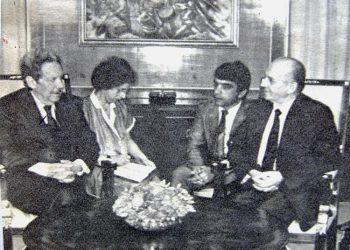
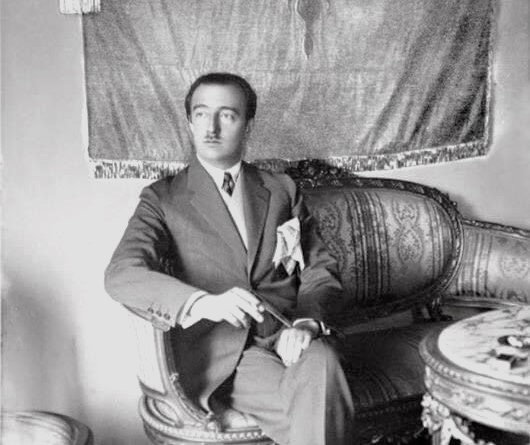
The King of Albania, Ahmet Zogu, attempted to gain support from the Yugoslavs to overthrow Enver Hoxha’s communist regime. The CIA has brought to light a document from 1952, in which the details of a meeting held in Skopje between Zog’s representatives and Tito are shown. There, the details of the conversation between the parties are revealed, while it is attested how the Yugoslavs deceived them by using false identities.
October 23, 1952
Meeting Between Representatives of King Zog and Marshal Tito
What contacts does Zog have in the USA?
Apart from his wife’s grandmother, there is also Joseph Blackburn, who is married to Geraldine’s sister, Virginia. While Church’s wife is the daughter of Count Seher-Thoss, the head of German intelligence during World War I. Her mother was an American who was forced to commit suicide by the Gestapo during World War II. As far as I know, Zog has no other contacts in the USA.
Does he have legal representatives in other countries?
He has a lawyer in Alexandria, but his name is not known. Zog’s documents are written by Church and then reviewed by the Egyptian lawyer.
Does Mr. Church’s company have any connection with Albania at present? What are Zog’s contacts in Albania?
Church’s company has no contacts in Albania. Zog has continuous contacts with clandestine individuals in Albania. Georges Gog, who takes care of Zog’s security, goes back and forth to Albania, while members of the underworld in Albania often come to Egypt.
Does the current regime have any legal claims against Zog? In what amount? Is it possible that a portion of Zog’s property could be given to Albania if action is taken against him?
Certainly, the current regime claims about 3 million dollars in gold that he took, which are most likely state funds. Zog claims he is spending them on his court, but only 750,000 of them remain. No one knows the true legal or other situation.
What are Zog’s plans for the future?
Zog plans to take a house in France next summer and return to Alexandria in winter. He is fixated on the idea of returning to Albania to expel the Soviets from the country. He is seeking military and material aid from the USA but believes he can gather enough Arab soldiers to form an army, as he is very friendly with King Farouk of Egypt.
Church says he can control Zog, but he wishes to be accompanied by a military officer of the rank of colonel or higher to discuss military matters. Zog very much likes the military aspect.
August 21, 1950
Memorandum for the Assistant Director of Policy Coordination
The Situation of the Resistance in Albania
From one of our missions in Albania, which is in close contact with the resistance movement, we have received the information elaborated in the following paragraphs. According to our mission, many members of the Albanian resistance believe they can no longer endure the suffering they are undergoing and have decided to escape to Yugoslavia at the first opportunity. They would prefer to go to Greece, were it not for the long distance from northern Albania to the Greek border. Despite all efforts made to persuade them to stay in Albania, they clearly cannot endure another winter in the mountains, as life is so difficult that it is driving them toward madness.
The leader of this mission has asked to know whether the Yugoslav political activists in Albania (previously reported to you) are known to us and whether they represent the Allies’ effort. They also asked whether anti-communist activists from Albania would be well received in Yugoslavia. Regarding Yugoslav support for the Allies, they asked what Yugoslavia’s policy was regarding Korea.
The above message informs us that Tropoja is the center of Albanian and Yugoslav espionage, with Yugoslav and Albanian agents constantly crossing the border. The Yugoslav agents are described as all having previously been members of Albanian resistance groups. On August 10, 1950, our mission in the country sent a contact to investigate an invitation to meet an unidentified person who wished to supply the mission with Yugoslav weapons and ammunition.
Yugoslav Movements
Among the populations of Northern Albania, there is a strong conviction that the Yugoslavs are planning an armed movement in Albania, with the aim of raising the morale of the mountain resistance groups. Some quantities of weapons are reported to have been distributed daily by the Yugoslavs, which have also been accepted by Albanian nationalists, who had been approached before but had refused pending approval from our mission.
The mission leader fears that such generosity on the part of the Yugoslavs will have the effect of winning the sympathy of many people who have suffered greatly working for us. In conclusion, the mission leader said that his persuasive work would not be sufficient, and therefore he needed urgent instructions on the course of action to follow. Yugoslavia made hundreds of attempts to overthrow Enver Hoxha’s regime, but failed.
Activities of Abaz Ermenji in Greece
September 1950
The return to Athens from Italy of the Albanian refugee Abaz Ermenji, who a year earlier had left with the help of the British, has caused unusual commotion among the circles of Albanians from Northern Epirus and other refugees in Greece. They have sought to learn the purposes of his arrival in order to oppose his plans. The Albanians received Ermenji with skepticism.
They had information that an agent of the British had gone to Trieste in 1949 to sign cooperation with a representative of Tito, Kasanović, for the subjugation of Albania to Tito’s influence, and therefore he and Balli Kombëtar were turning toward Titoism. This was not received with enthusiasm by the Albanians.
Among those with who Ermenji had been in continuous contact were Luan Gashi, Muharrem Bajraktari, Ibrahim Kelmendi, and Ejup Binjaku. Ermenji said he had come to Greece on the orders of the Anglo-Americans. When the Albanians responded that the British and Americans were not of one mind on the Albanian problem, Ermenji assured them that he was acting according to the orders of both allies, British and American, and that they had agreed with each other.
He further declared that the issue of Northern Epirus does not exist for Greece, and that it must accept the borders of 1939. Ermenji did not reveal the true purpose of his arrival in Athens, or if he did, he did so only with his inner circle, which so far has not spread it. Four days after Ermenji’s arrival in Athens, a letter from the Albanian refugee Islam Vërlaci came to Evangelos Birkos. In the letter, it was reported that the purpose of Ermenji’s arrival in Athens was to organize Titoist cells in Greece, which would spread propaganda into Albania, declaring that Tito would be the sole liberator of Albania from Hoxha’s dictatorship, and therefore Albanians should support his effort.
Vërlaci also wrote that Ermenji belongs to the left wing of Balli Kombëtar and that Ali Këlcyra could cause division within Balli Kombëtar, with the aim of fighting against Titoist Albanians. Vërlaci recommended action against Ermenji’s activities. Birkos immediately passed the letter to the Greek authorities and consequently to other Albanian refugees. Therefore, they avoided further contacts with Ermenji, except for the aforementioned names. At the same time, the refugees began to organize their opposition.
The refugees of the Lavrion camp made preparations to show their opposition to Ermenji in case he came for a visit. But Ermenji either must have learned of this, or he was not allowed by the Greek authorities, as he did not come to the Lavrion camp but stayed at the “Bristol” hotel throughout his stay in Athens.
Clashes
Ermenji’s arrival and Vërlaci’s reporting that he had turned to Titoism spurred the growth of a strong anti-Yugoslav sentiment among Albanian refugees in Greece. Among several foreign demonstrators was the confrontation of Albanian General Prenk Previzi, who called Ermenji a “traitor.” But a parallel development was also provoked by Ermenji among the Northern Epirotes, who are mostly anti-Slav.
When Vërlaci’s letter became known, they all united against Ermenji and denounced him to the Greek authorities. Nevertheless, some of them, including Papadimas, visited Ermenji and spoke with him. Ermenji informed Papadimas that he was acting according to instructions from the British and Americans. According to the opinion of our source, Papadimas reached some kind of agreement with Ermenji, but it was not understood what happened.
In 1946, Ermenji submitted a memorandum to the Greek authorities, in which it is believed he expressed support for the union of Greece and Albania into one state. Birkos has now shown the Albanians and Northern Epirotes a copy of Ermenji’s memorandum, which the latter had concealed from them. Given his statement that Greece must accept the Albanian borders of 1939, this revealed Ermenji as an untrustworthy man and inconsistent in his beliefs.
This was also the reason why Ermenji did not receive the warm reception he had desired from the refugees. At the time of Ermenji’s visit to Athens, the Albanian political divisions were as follows: 60 Kosovars led by Xhafer Deva, 45 Zogists led by Spahi Dino, 18 Ballists led by Ali Këlcyra, 7 Ballist followers of Ermenji, 23 independents supporters of Vërlaci, and 35 others.
Ermenji told an acquaintance that he still held the opinion that Albania and Greece should unite into one state, and that he had not changed his mind since the memorandum he had sent to the Greek government in 1946. He said that the Greek government should appoint a representative to handle the matter responsibly, and that Greek anti-Slav propaganda should stop. Ermenji always avoided questions about the purpose of his arrival in Athens. Regarding indirect references to Tito and the possibility of his overthrowing Hoxha’s government, Ermenji replied that Tito did not have many supporters in Albania and that it was very difficult to incite the people against Hoxha’s regime. When the fact that Tito was also a communist was mentioned, and that anyone who cooperated with communists suffered the fate of Petkov and others, Ermenji did not respond. / Memorie.al