
Part Seven
Memorie.al / The CIA have shown the major role that the Soviet Union played in communist Albania. In several “Top Secret” documents, declassified for years now, it is revealed that the USSR built several important military bases, especially in the south of the country. They detail the submarines that Moscow had on the island of Sazan and in the Bay of Vlorë, as well as the air bases, such as those at Rinas, Kuçovë, etc. Then a panorama of political developments is given, where the dismissal of the Minister of Defense, Beqir Balluku, in the summer of 1974, from all his functions in the army and the party, is mentioned. Likewise, a special place in the declassified CIA documents is given to those that discuss Albanian political emigrants in Yugoslavia, who were incorporated into the Prizren Committee, initially chaired by Apostol Tanev, and under the pressures of the UDBA (Yugoslav secret police), which recruited them through coercive measures, such as returning to Albania, etc.
Continued from the previous issue
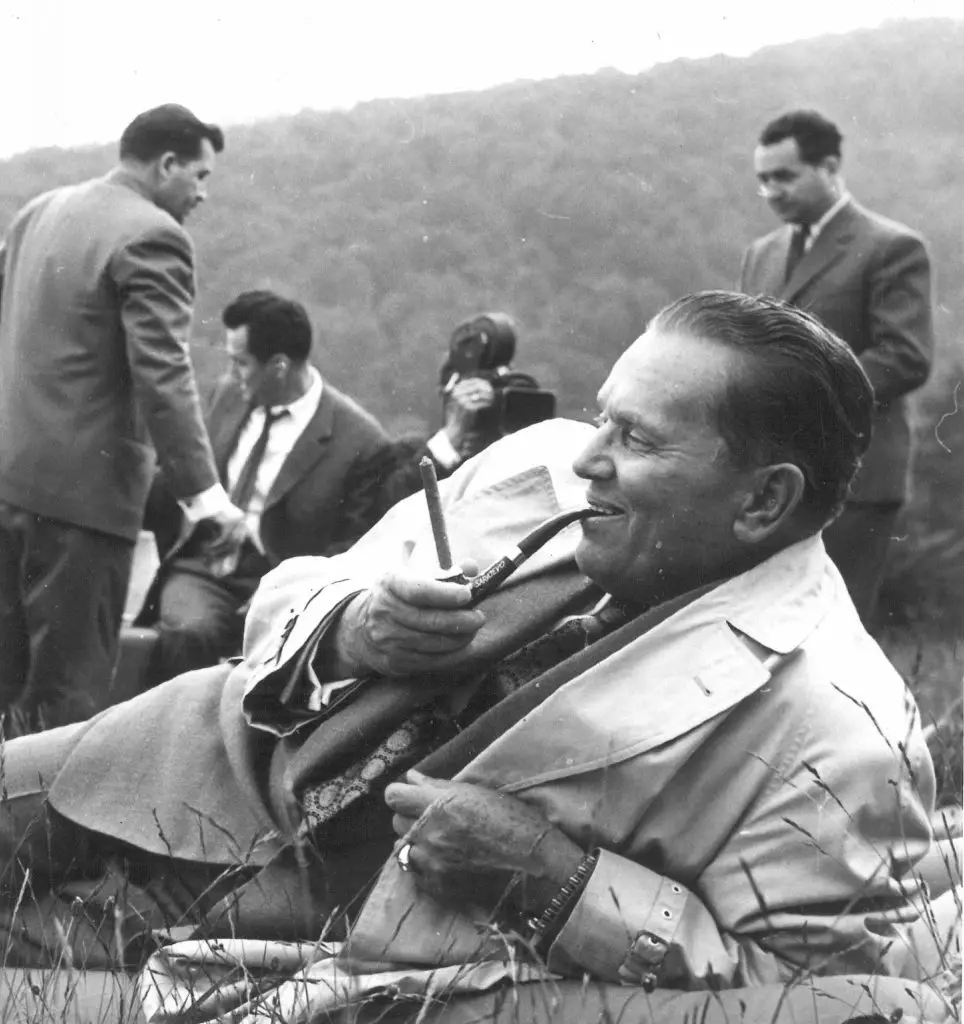
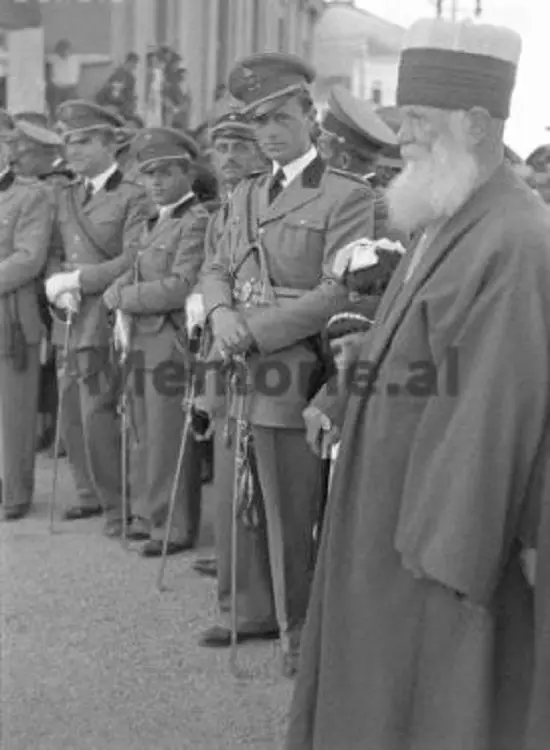
The former King of Albania, Ahmet Zog, attempted to gain support from the Yugoslavs to overthrow the communist regime. The CIA has brought to light a document from 1952, in which details are given of a meeting held in Skopje, between representatives of Zog and Tito. It details the conversation between the parties, while demonstrating how the Yugoslavs deceived them, using false identities.
October 23, 1952
The Meeting between Representatives of King Zog and Marshal Tito
Representatives of Marshal Tito and representatives of the Albanian King Zog met for a three-day meeting, from 28 to 30 August 1952, in the village of Saraj, about 10 km east of Skopje. The Yugoslav delegation consisted of Branko Milić and Colonel Čedomir Mijović. While the Albanian delegation representing King Zog consisted of Safet Lutfi Tozani, Avni Deralla, and Irfan bey Ohri. The Albanian delegation had arrived by plane in Skopje from Thessaloniki.
First Session
During the first meeting of the delegations, Colonel Mijović was described as quite gloomy. The discussions were opened by Tozani for the Albanian side, who stated that their mission was to establish a basis for cooperation with the government of Yugoslavia and that initially their duties included only exploratory talks. The delegation was also instructed to arrange a future meeting of more powerful representatives of King Zog and Marshal Tito. Ohri, speaking in Albanian, raised the issue of Yugoslavia’s recognition of the legitimacy of King Zog and the territorial integrity of Albania.
He brought to the attention of the Yugoslav delegation the fact that King Zog had deliberately refused to participate in political combinations against Enver Hoxha’s regime, since Zog was of the opinion that without Yugoslav knowledge and approval, such an adventure would cost the Albanian people too dearly. The Albanian delegation, Ohri continued, has the sincere will to discuss the problem of cooperation for the liberation of Albania from the clutches of the Cominform. Given the importance of such negotiations, the Albanian delegation of King Zog invites the government of Yugoslavia to send its plenipotentiary representatives for discussions with it.
King Zog will accept any time and place determined by the government of Yugoslavia. If the meeting is decided to be held in Egypt, it must take place before the king takes up permanent residence in France. On the Yugoslav side, Milić responded that he was pleased and that he had not expected such a realistic approach from the Albanian delegation. He declared that his government agreed with the principles of the Albanian delegation on the territorial independence of the country within its current borders. Furthermore, regarding Greek ambitions, Milić said that current relations between Greece and Yugoslavia had reached a point that would influence Greece to renounce its territorial claims over Albania.
The proposal for a meeting of high representatives of Tito and King Zog would have to be resolved at a later date, since neither of the two representatives currently had decision-making power. Milić added that he hoped for a quick response from the government on the proposal. He then assured the Albanian delegation of the Yugoslav government’s respect for the territorial integrity of Albania, while in a way suggesting that the Albanian delegation should familiarize itself with the program of the Albanian emigrant group in Yugoslavia, the League of Prizren.
Second Session
Colonel Mijović, who had been sullen during the first session, seemed in a better mood and displayed his fluent knowledge of the Albanian language. Milić opened the second session of talks with the announcement that he had received a positive response from the government regarding the representatives’ proposal for a meeting of plenipotentiary envoys of leader Tito and the Albanian King Zog. The time and place of the meeting would be communicated in the near future. Milić asked the Albanian delegation what they thought of the political emigrant group, the Independent National Bloc, led by Ismail bey Vërlaci, son of Shefqet bey Vërlaci, in Italy. Ohri replied that there were many capable people in this group and that King Zog was willing to forget their past sins.
Then Colonel Mijović asked the Albanian representatives about several Albanian political figures and further answered questions put to him by Ohri and Deralla. In all cases, Mijović gave detailed answers about the persons, both known and unknown. He then asked Deralla and Ohri for comments on the following persons: Gjon Markagjoni, a member of the Independent National Bloc, leader of the Albanian Catholics; Colonel Bib Mirakaj, former secretary of the Albanian Fascist Party, Minister of Interior during the Italian occupation; Myslim Peza, a general of Hoxha’s, a well-known partisan and former collaborator of Ohri’s; Lutfi Spahiu, Vice President of the League of Albanian Refugees; Colonel Muharrem Bajraktari, a well-known partisan, now in Greece; Bishop Fan Noli, former prime minister, now in the United States, as well as several other names not mentioned by the source.
Ohri answered all questions about the persons of interest, carefully trying not to pass judgment on them or to denounce them in any way. The delegation noted with sympathy the interest shown toward fascist groups, especially when Mijović commented positively on names such as Markagjoni, Mirakaj, and others. At one point in the discussion, Colonel Mijović asked for the opinion of King Zog and his representatives on the Albanian communists. Ohri replied that the communists were Albanians like all the others, who held different political convictions, and that King Zog had no intention of taking revenge against them. The only wish of King Zog, according to the envoys, was the elimination of Cominform influence, after which the Communist Party of Albania and other parties could freely defend themselves before the public opinion of Albania.
Third Session
In the third session of talks on 29 August 1952, Milić asked whether King Zog had an organization ready to move against Hoxha’s regime. He further asked whether King Zog was receiving current information on Albania through his own channels, or whether he needed information from the Yugoslav government. Ohri replied that in the formal sense of the word, the King did not have an organization ready for action, but he did not wish to establish such an organization until cooperation with Yugoslavia was fully completed.
Ohri further stated that of course Zog had his supporters in Albania, ready to act, and that several dozen Zogist agents had already been sent to Albania. However, these agents had been given clear orders not to engage in offensive activities, but to wait until the appointed day, to avoid the risks of premature action. Milić expressed full agreement with Ohri’s statements and with King Zog’s views. He then apologized and left that night for Belgrade.
Fourth Session (30 August 1952)
With Milić’s departure, the talks continued only between the Albanian representatives and Colonel Mijović. The latter became quite friendly, especially with Deralla, to whom he said: “We too desire the destruction of the Cominform. We cannot stand idly by while watching events in Albania. If you cannot bring about the revolution, then we will be forced to intervene ourselves. But in any case, we would prefer a revolt instigated by the Albanians themselves, whom we would certainly support secretly.” Mijović received a phone call during the meeting and when he returned, he announced that he had been summoned immediately to Belgrade. As he left, Mijović said that this urgent summons was a good sign for the cause, and then bid farewell to the representatives. On 31 August, the 3 members of the Albanian delegation returned to Istanbul by plane from Skopje and Thessaloniki. While on 8 September, Ohri and Deralla left Istanbul for Alexandria, Egypt.
Comment 1
The Yugoslav representatives appear to have used different names in their conversations with members of the Albanian delegation. Branko Milić was introduced by that name to Ohri and Deralla, but with Tozani he used the name Branko Stanković. While Čedomir Mijović was introduced by that name to Ohri and Deralla, but was introduced as Milić Sava to Tozani. In conversations about each other, the two Yugoslavs used the names Branko and Čedo.
Comment 2
Branko Milić asked Tozani whether it was true that King Zog had sent sums of money to the former Yugoslav King Peter. Tozani replied that he was not aware of any loan, but expressed his certainty that if this were true, it was not for political motives. For this meeting, the Yugoslav government ensured that the atmosphere was as positive and friendly as possible. The village of Saraj was the perfect choice with its welcoming premises, good food, and organized services. Each discussion session was held in a different room of the resort. The Albanians had every wish fulfilled and paid not a single cent. Upon their arrival, they were forbidden to exchange currency, and even upon departure, the Yugoslavs tried to purchase their return tickets to Istanbul.
But when the Albanians became angry, the Yugoslavs insisted on buying their tickets as far as Thessaloniki. All three Albanian representatives were cheerful and optimistic about the reception and the smooth conduct of the talks. They all agreed that the Yugoslav representatives spoke with authority and that the substance of the issues had been received seriously by the Yugoslav government. In their minds, the Albanians had no doubt that the Yugoslav government was sincere in its intentions to meet with King Zog, and that this was a new era in Albanian-Yugoslav relations.
September 19, 1949
According to the request for information on the former King of Albania Zog, Mr. Church declared the following information about him:
Assets Held by Ahmet Zog
He has $108,000 in the National City Bank, about $5,000 in the Guaranty Trust fund, land and a building in Alexandria worth about 40,000 Egyptian pounds, the Albanian crown jewels worth about $200, and about $750,000 in gold, out of the approximately $3,000,000 he took with him from Albania.
Liabilities He Had
Zog has a moral obligation to pay $115 per month to his wife’s grandmother. She is 82 years old, lives in the USA, and is known as Madame de Strahl d’Ekna. He has no other obligations in the USA. In other countries, he must provide for his wife’s four sisters and her brother John Apponyi, who is suffering from tuberculosis in a sanatorium in Sicily. Further, I cannot say, but his friend Farouk, the King of Egypt, does not allow him to go into debt in Egypt.
Sources of Income in the United States and Financial Support
He has nothing in the USA, except his bank account. He receives nothing from Albanians here or in other countries.
To Whom Does Zog Make Payments, in What Form, at What Intervals?
He pays his wife’s grandmother $115 per month, payments are made once every two to three months.
People Who Handle Financial Affairs in Zog’s Circle
His Prime Minister and personal guard, Martini, oversees everything. His black market operations are carried out by Count Alexander de Villa, an elegant and very cunning gentleman. But Zog handles many matters himself, while his wife Geraldine does the translations.
How Does Mr. Church’s Company Communicate with Zog?
Only Mr. Church and no one else communicate with Zog. Most communications are done by letters addressed to Mrs. Geraldine, never to Zog directly. For urgent matters, telegrams are used. Couriers are never used, but Church does have this option available as well. / Memorie.al