By Raxhije Dushi – Rugova
Memorie.al/ It is not at all easy to oppose mentality, much more so a mentality that publicly condemns you and where the woman’s voice is insensitive, almost non-existent as a result of ignorance and illiteracy. Sami Frashëri said: “If we want to have an advanced society, first and foremost we must have educated women, because children receive their first education from their mothers.” The woman is the mother of the child, the lady of the house or of all humanity. Due to long periods of rule by various conquerors, the Albanian people, and particularly the Albanian woman, did not have the opportunity to follow the path of emancipation, although they did not lack the desire and will to become emancipated like other free European peoples. This opportunity came to the Albanian people only in the 20th century.
The opportunity to open the first Albanian school in Gjakova came during the Austrian occupation, when Kosovo’s independence was also declared. At that time, during the years 1915-1918, the Albanian school was opened in Gjakova. In the school year 1917-18, the girls’ school was also opened. The first teachers of this school were Emine Shehdula, the mother of Agim Gjakova, and Dominike Ndocaj, who conducted lessons in a private house, initially with 15 female students and later with 30 girls. But after 1918, Kosovo was preoccupied by the Yugoslavs and all Albanian schools were immediately closed.
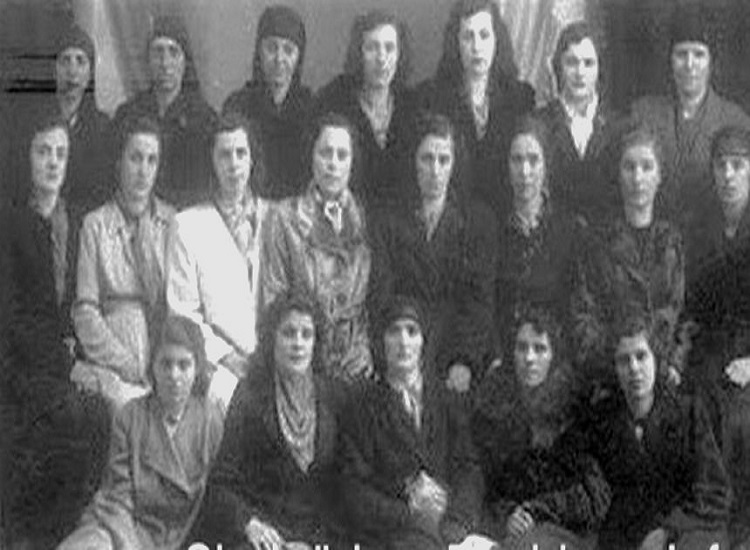
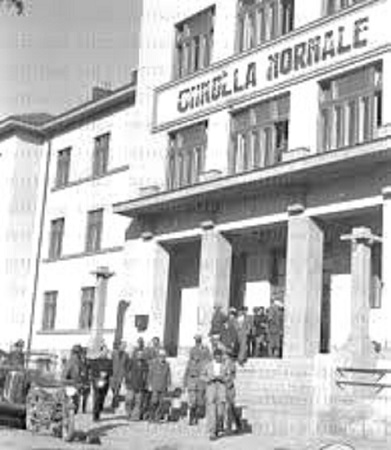
The opportunity to reopen Albanian schools in Gjakova came to us in 1941, when Kosovo was occupied by Italy and national unification was also achieved at that time. Albanian schools were reopened during this period. During the period 1941-45, the following teachers taught at the girls’ school: Emine Shehdula, Shirine Shehdula, Pina Kola (a teacher who had come from Shkodra), Zografe Martini, Vera Gashi, Lirije Tanefi, Marije Lumezi, Xhevrije Lipoveci, Marije Hajdari, Melihate Deva – Nura, Nasibe Rizvanolli, Mervete Xhevori and Drita Kryeziu.
This number of Albanian female teachers at that time shows the great desire for emancipation and education of Albanian women who, until then, had been closed women without perspective. So, during this time, a considerable number of girls from Gjakova were educated, who served as a contingent of future teachers that opened the light of knowledge even after liberation, that is, after 1945 and beyond, not only in Gjakova, but in many villages and different regions of Kosovo.
These teachers, besides their contribution to the educational process, gave a very great contribution to the emancipation of women by organizing various courses such as anti-illiteracy courses, health courses, sewing courses, not only with young girls but also with older women. One of the activists of these courses was Nanije Bakalli-Deva. Together with several teachers, she went from village to village to organize these courses. But they also did great work by convincing men to let their wives attend these courses, because they were for their own good.
During the Second World War, a considerable number of women from Gjakova were also engaged in the National Liberation Movement to liberate the country from the Nazi-fascists, just like the Bejtullahu sisters once had fought against foreign armies to protect their honour. Among the most distinguished was Bije Vokshi, who, besides participating directly in the war, also strived to achieve gender equality between men and women, as an active part of society.
Many other women from Gjakova were engaged in this movement, such as Ganimete Terbeshi, who, due to her great activity, caught the enemy’s eye, was captured and hanged as a true heroine. With her were also engaged her sister, Hidajete Terbeshi, Muradije Terbeshi, known as Halla e Terbeshit (Aunt of Terbesh), Shefkije Terbeshi and many others such as: Safete Nimani, Hidajete Muhaxhiri, Halise Muhaxhiri, Shefkije Dobruna, Gjylshahe Pula, Hyrije Hana, Xhije Hana, Mema Vokshi, Cymë Puka and Naxha e Lakucit, and many others.
These women later continued their activity in various fields, especially in removing the havala (a traditional practice restricting women), which was a great obstacle to the emancipation of Albanian women. At this time, due to the great need for educating Albanian women, the government of the time had also organized accelerated pedagogical courses in Prizren and Peja, where they even sent girls who had completed only four grades to prepare them as teachers. There were cases when these very young girls, aged 13, like Besa Dyla-Gaxha, were appointed as teachers. Now education had become massive for all youth, and in classrooms, boys and girls learned together.
According to notes taken from various texts from the school years 1946-52, around 50 names of female teachers in Gjakova emerge, who gave their contribution to teaching, not only in Gjakova, but everywhere there was a need across Kosovo. The female teachers who worked during this period are: Shqipe Gjakova, daughter of teacher Emine, had worked in the lower gymnasium.
Ganimete Baraku-Brovina, Mandushe Bejtullahu, Hydajete Beqa-Domi, Marije Berisha, Serbeze Brovina, Xhilone Brovina, Nafije Deva, Nanije Deva, Hidajete Dobruna, Shqipe Grezda, Durrije Shita, Shpresa Bardhi-Meça, Nazmije Nimani, Sadete Nushi-Luzha, Nakije Agani, Shyqerije Zherrka (who also played as an actress in the city theatre), Vera Binishi (also an actress), Hidajete Terbeshi-Gërqina, Nanije Bokshi-Nixha, Mervete Hoxha-Nimani, Resmije Purrini Shala, Edibe Binishi Pula, Nizafete Binishi-Pula, Sevdije Dushi (for her contribution, she was appointed deputy director and led this sector for eight years).
Hysnije Deda, Pakize Shasivari, Shyrete Valla, Andane Kolçi, Naxharije Binishi, Samile Dushi, Florije Domi, Ganimete Hoxha, Bardhe Vokshi-Vala, Nexhmije Kabashi (who was also an activist in many activities and a wonderful actress), Nanije Koshi, Ferihane Canhasi, Bahrije Polloshka, Atifete Kryeziu, Drita Kryeziu, Zejnete Baraku, Nashide Baraku, Zyrafa Rraci, Florije Rizvanolli, Nafije Nushi, Nadire Komoni, Fatime Berisha-Xharra, Muhamedije Bokshi, Samile Kabashi, Shyrete Dyla, etc. The name of Ganimete Vula-Nura is also worth mentioning, not only was she a teacher but also a great activist and is known as the first Albanian paratrooper in Kosovo. Gjakova is known as the cradle of art and culture.
A chapter in itself is also the appearance of women from Gjakova as artists and singers. In the amateur theatre of the time, the following performed: Igballe Zherrka, Vera Binishi, Drita Bakija, Atifete Kryeziu, Jalldyze Rudi, Rabije Domi. But those who continued as professional artists are the sisters Qefsere and Mervete Kurtishi, Elida Shasivari, etc. While as singers, the following stood out: Zyhra Mula, Hazbije Kavaçi (a well-known singer and dancer), Z. Vera… the first ballerina in Kosovo, who had completed her studies in Skopje, Besa Arllati, Sadete Kupa, Bardhe Riza-Gjini, Gongje Çaushi, Hazbije Dautaga, Mandushe Bakija, Bahrije Shyti, etc.
Sanije Kryeziu is known as the first Albanian harmonica player, who in the 1930s played music, which was a rare case not only among us. Samile Roka is known as the first female photographer in Kosovo, who worked not only in the city but also in villages with great difficulty but with a rare desire and courage. In the city library of Gjakova, Florije Nura and Fitnete Pruthi also worked as librarians. While in the Regional Museum of the city of Gjakova, Fatmire Buza worked.
At that time, a considerable number of women from Gjakova, besides attending various schools across Kosovo, also went to study at various faculties in Yugoslavia, such as Belgrade, Zagreb, Sarajevo, Ljubljana, Skopje and other places. To prepare and give their contribution as experts in various fields. The first ones are: Lejla Rraci, completed her studies in Belgrade as the first Albanian gynaecologist in Kosovo, Qamile Jaka completed her studies in dentistry.
Sute Polloshka Stavileci in Belgrade for pharmacy, Litafete Nebi Komoni Xërxa studied sociology, Lirije Sahit Barku-Caka completed her studies in Belgrade in philosophy and pedagogy, Behije Dashi completed her studies in Belgrade and was the first Albanian architect in Kosovo. Mervete Isa Radoniqi specialized in cardiology in Belgrade and was a lecturer at the faculty.
Drita Bakija-Gunga, Doctor of History. Egjlale Dobruna, studied in Zagreb and is the first Albanian archaeologist. Nurije Shllaku Haxhikadrija, completed her studies in Sarajevo in economics. Nysrete Vula-Mulla, completed her studies in literature and also engaged in writing poetry, as the first Albanian poetess in these parts. Nesrete Vula, as an Albanologist, Myhybije Dushi completed her studies in physics. Nafije Meka, completed her studies in chemistry and lectured at the faculty, Samile Dushi completed her studies in Skopje and Novi Sad in the German language and was a lecturer at the faculty.
Raxhije Dushi Rugova, completed her studies in Skopje and Pristina in the English language, had also gone to England to master the English language as well as possible, as the first woman to go abroad and was the first woman in Gjakova to start teaching English in secondary schools. So the number of Albanian women was quite large, who specialized in various fields of knowledge and science.
From that time until now, the number of Albanian intellectual women is continuously increasing and we can say that a high degree of gender equality has been achieved in all fields of life. The vast majority of the teaching staff in the schools of the municipality of Gjakova is women. We encounter women in all institutions of the country, working not only as workers but also as experts. From the prosecutor’s office, Shpresa Bakija, to the government, such as Atifete Jahjaga as President of Kosovo.
Our women today are deputies but also mayors of the municipality of Gjakova, such as Mimoza Kusari Lila, so also in decision-making positions. Thanks to the emancipation of women, gender equality has also been achieved and in the majority of our families there is no more discrimination against women, but they organize life in harmony within their families./Memorie.al