
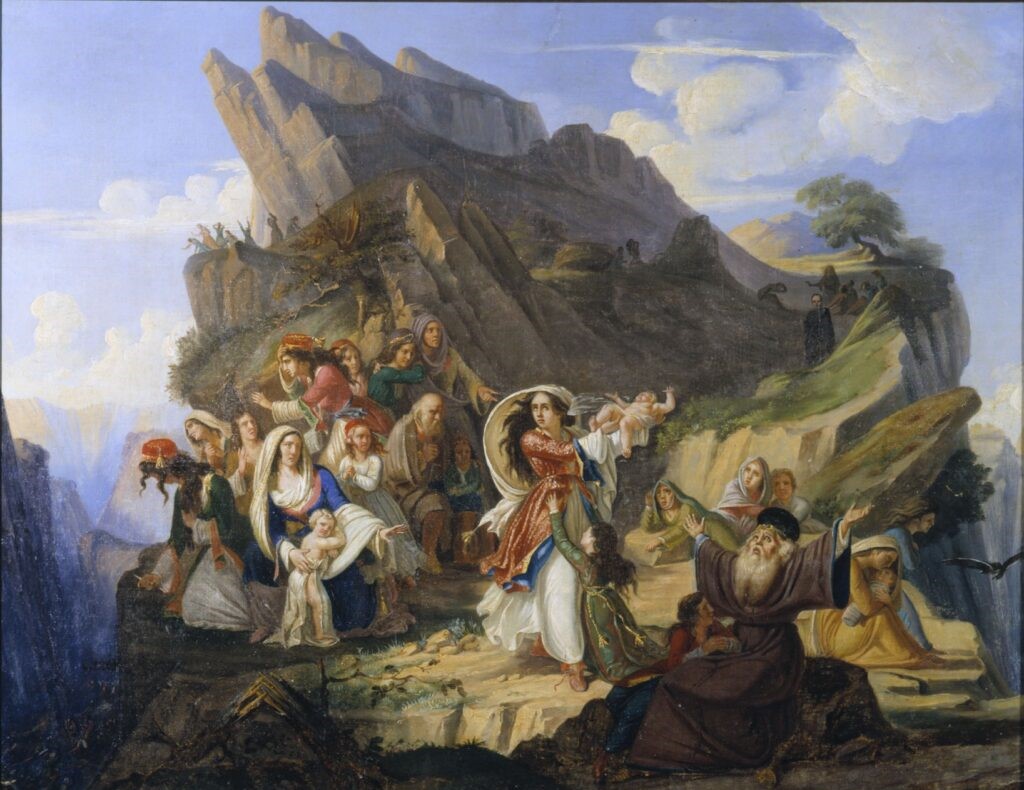
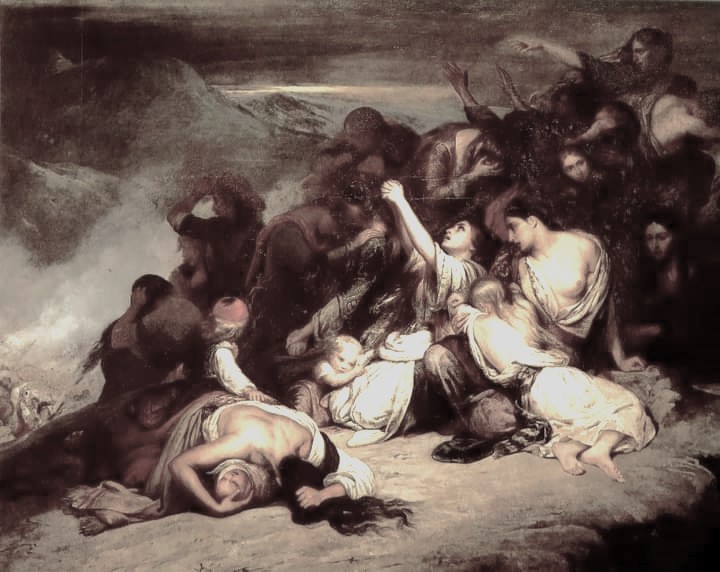
Memorie.al / For many people, the legend of the women of Souli is well known. To avoid being dishonored by the soldiers of Ali Pasha Tepelena, fifteen Souliot women, after an unequal battle, threw themselves to their deaths by falling into a chasm at a place called the Monastery of Vatërnica, somewhere in southern Albania. The event, which is believed to have occurred in 1804, continues to be mentioned to this day; moreover, over the years, songs have been sung and much has been written about this event. However, not many people know that an act similar to that of the Souliot women was also performed by 5 young girls from Gjakova, and that was over 100 years earlier than the event at Vatërnica.
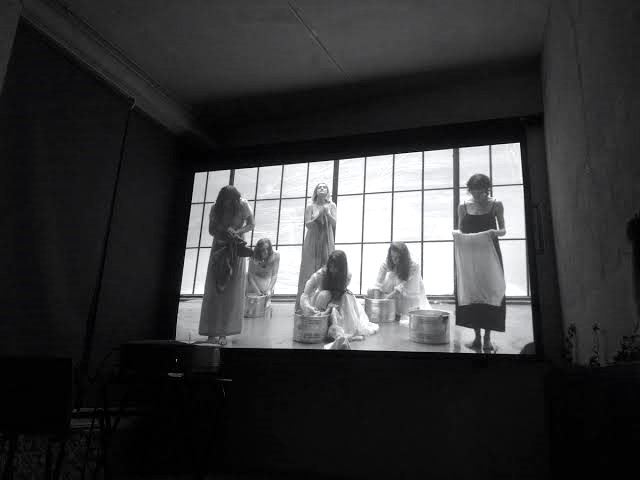
According to the legend, as told by the elderly, the event involving the Gjakova girls is believed to have occurred in 1689, during the Austro-Turkish war. While the five daughters of the Bejtullahu family were washing clothes in the courtyard of their house, in the “Hankë” neighborhood, one of the old quarters of the city, Austrian soldiers had entered inside and wanted to dishonor them.
Accepting death before dishonor, the girls fought hand-to-hand with the soldiers in a highly unequal battle, and at the moment when they realized their strength was failing and the opponents were about to achieve their goal, they decided to scald themselves alive in the hot water of the cauldrons they were using to wash the clothes.
“The Graves of the Girls,” a Sacred Place
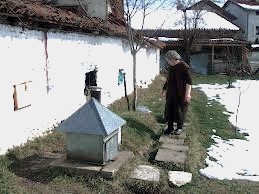
The scalded girls were buried in five separate graves in a corner of the courtyard, a courtyard where, to this very day, the descendants of the Bejtullahu family continue to live. The graves remain well-maintained even today, while on both sides of each, a white stone has been placed, just enough to mark the grave site.
“The legend of the girls and these graves has been passed down from generation to generation, not only within our family,” says the lady of the house, Mandushe Bejtullahu, who, following family tradition, continues to this day to care for the girls’ graves. “Dushi,” as the lady of the house is otherwise known, a retired teacher now at the age of 77, recounts that the citizens of Gjakova still respect the girls’ sacrifice to this very day.
“It is believed that the day the event occurred was a Wednesday, which is why even today, hundreds of Gjakova families who believe in this event do not practice washing clothes on Wednesdays. This phenomenon is especially present in our neighborhood,” she says. However, the tragic end of the daughters of the Bejtullahu family is the beginning of a story that continues to have effects to this very day.
“The graves of the girls have been transformed into a *türbe* (sacred shrine), and this place throughout Gjakova is known as the ‘Türbe of the Girls.’ Every day, people with troubles come here, hoping that in this place they will find peace, help, and salvation,” says Dushi, testifying that in many cases, visitors return after some time.
“People come with all kinds of afflictions and, after making the *ziyaret* (visitation), I pray for them, saying ‘May God grant your wish.’ There are cases when, after some time, the same people come back smiling and content, because their troubles and problems have been resolved,” she continues.
Unbelievable Stories
Dushi and other residents of the neighborhood tell dozens of cases and stories related to the self-sacrificed girls—stories that some find believable and others find highly superstitious. For many years, besides during the day when she accompanies many guests, she lights a lamp at the graves every night, and in a spot built with sheet metal, she also places candles.
“If we don’t light the lamp for them, they will come and knock on our door,” she says. And that’s not all. According to Mrs. Bejtullahu, they also appear on many other occasions. “People to whom they have ‘appeared’ say they are very beautiful, like girls from the old days with their traditional headscarves,” she recounts. However, thousands of citizens who come and go from this family’s property also believe in these graves.
Ismaili, a neighbor of the Bejtullahu family, also recounts many stories he has heard and interesting curiosities that have been passed down through generations. “It is said that earlier, every night, a large water jug full of water was sent to the graves, and the next morning it would be found empty. This practice happened every day,” he says.
Such events are also recounted today by the lady of the house, Dushi. “The girls do not wish for music to be played near them; this was proven once. Many years ago, a party was organized in our courtyard. The wedding guests, with frame drums in their hands, were singing near the pear tree,” she says, pointing to a tree trunk that, according to her, is 150 years old.
“However, immediately, snakes and large constrictors began to appear on the tree. This is a completely true event,” insists Mrs. Bejtullahu.
Two Similar Wars
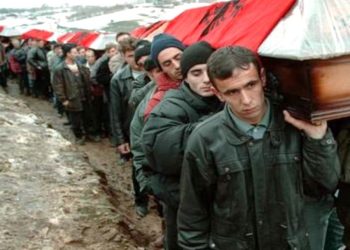
However, the story of the “Türbe of the Girls” does not end here. According to family members, the girls who sacrificed themselves in a war, three centuries ago, also had an influence on the recent war in Kosovo. Mrs. Mandush recounts that during the war, the girls appeared to her daughter in a dream and “assured” her not to be afraid, because the enemy would not come to their house. According to her, this becomes even more convincing because all of her neighbors’ properties were burned, while their house was the only one that survived without any harm.
“The horrors of that time on this street were repeated during the recent war, when many people were killed in this neighborhood and many houses were burned,” says Selimi, Mrs. Mandushe’s son. Masar Rizvanolli, a well-known historian in Gjakova and among the few who have written about this history, says that these graves hold special cultural, religious, and historical significance.
“The heroization of the Gjakova girls, immortalized by the population of this region by turning their graves into a türbe, carries within it far-sighted messages for the future generation. They have served as a source of inspiration for the youth in their liberation war against invaders, whenever the country was in danger. The girls and women of Gjakova showed their heroism many times whenever the country was in danger during various periods of time,” Rizvanolli has stated.
He added that; “The ‘Türbe of the Girls,’ besides its religious character and importance, also represents a cultural and historical monument, which testifies to a significant period through which the population of this region passed. “This represents material evidence of the existence of the Albanian population in Kosovo even before the great Serbian migration, which, according to some romantic Serbian historians, caused the depopulation of Kosovo by the Serbian population,” concluded Rizvanolli. He is preparing a scholarly paper for this purpose, which he hopes to present very soon. / Memorie.al