Memorie.al / The history of the Albanian Captaincy is not as old as the sailors of Durrës themselves, who are known in the Adriatic as tireless, wise, tough, brave, and patriotic people. The Albanian Independence was greeted by no fewer than 500 ships of various sizes, which immediately began to sail under our national flag. Several attempts have been made to create a historical record of the Albanian Captaincy, but they have remained only in their initial steps. A few years ago, when Vladimir Beja was at the head of the General Captaincy of Ports in Durrës, there was an initiative of this kind, but it remained unimplemented, while its history remains unwritten, despite the efforts that numerous researchers have made in this direction.
Unwritten History
Few studies are found on the history of the Albanian Captaincy, and those that exist are gathered from historians, writings in various newspapers, and testimonies of sailors. The history has been written with war and sacrifices, while the institution of the Captaincy has directed and overseen the implementation of legality at sea. The Durrës historian Sali Hidri, in his book “Durrësi 1900-1939” (Durrës 1900-1939), writes that this was a city with many seats of foreign consulates, a sensitive port point in the Adriatic for the transport of mutual goods, as well as for the movement of passengers to and from the ports of Brindisi, Bari, Trieste, and to the south, the Mediterranean ports as far as Corfu, Tripoli, Malta, etc., being in constant contact with the political situation and with the Albanian patriotic, National Awakening (Rilindas) thought.
The elderly citizen of Durrës, of Ulcinj origin, Mr. Abdullah Uruçi, recounts: “My father, back in 1912, had a boat of the fllugë-sanallë type, with which he carried out trade within the Adriatic waters.” Likewise, speaking about the Ulcinj fleet, which according to him at the beginning of the 20th century reached 500 ships and floating vessels, he tells a moment when the commander of the Austro-Hungarian fleet in Trieste asks an Albanian captain from Ulcinj: Why does your ship have three flags? The captain replies: On the first mast is the flag of our sea, on the second mast, the flag of our bondage (Montenegro), and on the mizzenmast, our red and black flag.
The First Ship
From this port, on November 26, 1912, the patriot Ismail Qemali and his supporters began to realize the Albanians’ dream of independence. On November 6, 1913, the Italian telegraph agency reported the news of the arrival at the port of Fiume of a ship flying a distinctive flag, which was that of the new Albanian state. It was Zef Llupi’s boat, which for the first time carried no foreign flags, replacing them with a red cloth and, in the middle, lengthwise, a black stripe, which in colors symbolized our flag. From this occasion, this form of the flag remained a tradition for our navy. This also marked a new era for our fleet, because until that time our sailors sailed under foreign flags. In a brief historical overview of the origin of captaincies, a document prepared by former General Captain of Ports Vladimir Beja, it is stated that the beginnings of this structure are in Shkodër, specifically in the village of Obot, which conducted extensive trade with Italian and Montenegrin ports.
The Origin of Captaincies
Based on the origin of Captaincies in Europe, the first data on the creation of this institution are outlined in the 11th century, in Spain, Portugal, and Italy, out of the need to have maritime law, which can be defined as the law that carries within itself the values that transcend the state border, to follow the ship during navigation outside its waters. Under various names, special Magistracies were thus established in Kingdoms and coastal republics, which were quickly proclaimed and consolidated as Directors of the Merchant Fleet and Supervisors of Ports. In different countries, they were military, with a hierarchical organization equal to that of the Royal General Staff, and often had under their command the technical service, as well as the Port Police. Over the years, it was deemed necessary to have a directing unit for discipline and all maritime and port activities, merging two bodies: the disciplinary one and the military-administrative one.
The structures of these Captaincies consisted mainly of port captains according to the port’s class, port officers according to classes 1, 2, and 3, and port employees, primarily in the financial and technical sectors. The ever-increasing intervention of the state in all aspects of national economic life, and the vigorous development of navigation, both from an economic and technical point of view, logically resulted in a continuous expansion of functions and a greater commitment of the captaincies.
The Albanian Captaincy
Approximate elements of an authority similar to that of the Captaincies are found initially in the Port of Durrës, around the year 1914, but it is interesting that in the village of Obot in the district of Shkodër, on the Buna River, an inspectorate operated for the control and administration of about 70 ships from Shkodër and Lezhë that traded with the ports of Trieste and Venice.
From 1914 until 1942, the year in which the institution of the Captaincy was established, with the first Captain being Stefan Goga, appointed by the Provisional Government, Albanian sailors carried out their activities in rather turbulent waters due to the fact that occupations and various successive wars had brought about the destruction and burning of our maritime fleet. In the summer of 1916, the port of Durrës was under Italian occupation. In the book “Il corpo delle capitanerie al servizio della nazione” (The Corps of Captaincies in the Service of the Nation), Rome 1965, p. 57, it is written: “Our soldiers (Italian, editor’s note) were charged by the Port Captaincy with organizing the service in the port of Durrës.”
On November 6, 1913, the Italian telegraph agency reported the news of the arrival at the port of Fiume of a ship flying a distinctive flag, which was that of the new Albanian state. It was Zef Llupi’s boat, which for the first time carried no foreign flags, replacing them with a red cloth and, in the middle, lengthwise, a black stripe, which in colors symbolized our flag. From this occasion, this form of the flag remained a tradition for our navy.
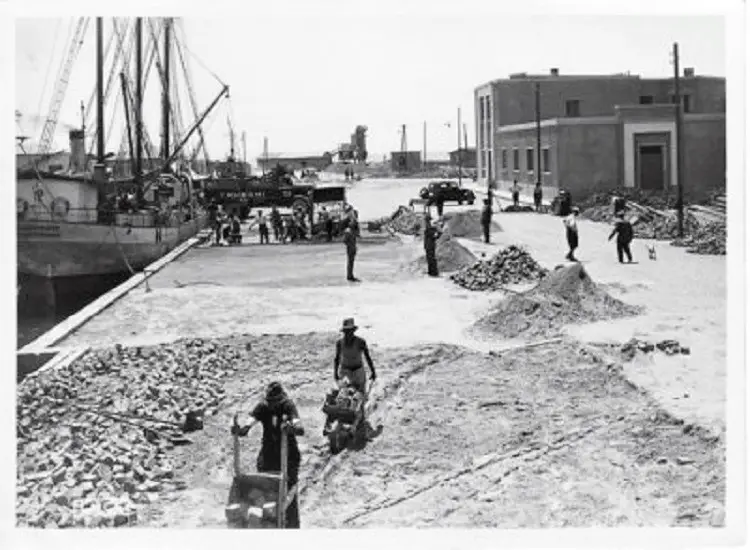
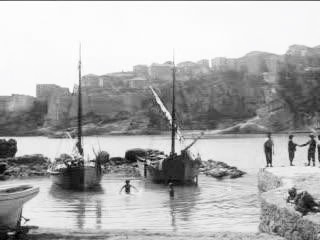
A foreign traveler, the Frenchman Justin Godart, while writing in 1921 about the condition of the Port of Durrës, expresses himself thus: “…Today the old port, open and unprotected from the winds, has turned into a large lake. Disembarkation is done via small boats, because large steamers cannot approach the shore. Three sunken Austrian ships are distinguishable by their funnels and sails…”! Another French citizen, Jacques Bourcart, who stayed in Durrës in the years 1918-1921, in his book “L’Albanie et les albanais” (Albania and the Albanians), writes that the new Governor of Durrës, Rexhep Jella (a former student of Robert College in Istanbul), very active and enterprising, has decided to restore Durrës to its former importance and make it welcoming to foreigners who land in Albania. The great rejuvenation plan he has prepared has now begun to be implemented…”!
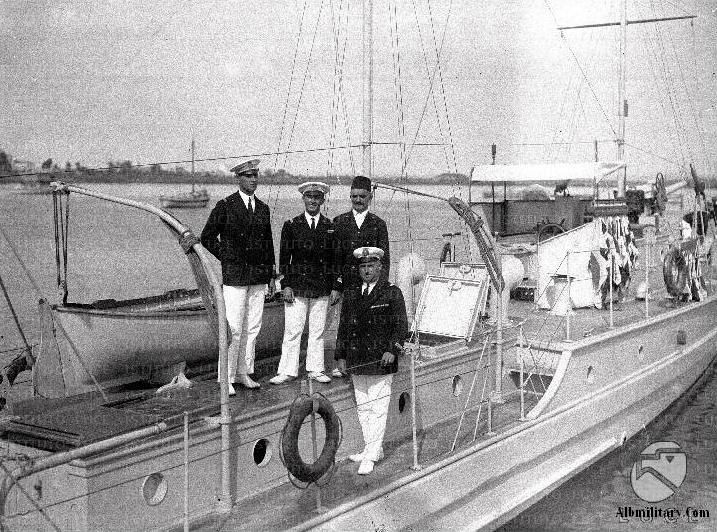
Nevertheless, within 10 years, in 1927, our sailors revived this fleet to over 60 ships of various types: 60 units of boats and motor-sailers built locally or purchased, as well as 3 steamships brought from abroad. A significant event was the purchase from Italy on December 25, 1925, of 2 ships of 190 tons each, which were named “Skanderbeg” and “Shqiponja” (The Eagle), marking the official day of the creation of our Naval Combat Fleet.
The Influence of Italy
But bad days were coming for the Albanian fleet, due to Italy’s continuous pressure on King Zog. On April 10, 1929, the Albanian government, under pressure from the Italian government, drafted a new law which further aggravated this situation: “Since the laws in force prevent large-tonnage ships from entering the waters of our coast and touching our docks, it is proposed that the docking fees for steamers be as follows: for ships with a capacity up to 500 tons, the docking fee shall be 0.1 Gold Francs per ton; for 1001-1500 tons – 0.2 Gold Francs per ton; and over 1500 tons, no fee.” This was an unprecedented law in maritime navigation policy. While an Albanian 100-ton boat would pay a tax of 10 Gold Francs at its own dock for each departure, Italian steamers would enter and leave our docks freely without any tax. Our sailors protested against this law to Zog’s government.
In 1930, to somewhat appease the sailors outraged by this dismissive attitude, a new draft law was drawn up according to which, to assist the Albanian navy, all branches of the civil and military administration were ordered to carry out their transport using Albanian ships. However, this law, due to covert interventions, was not approved by parliament. The competition from Italian companies against our fleet led to the disappearance of our two steamers under unclear circumstances. Thus, the steamer “Shqipëria” (Albania) was seized by the Italian government and given to the company “Puglia”, while the steamer “Oboti” sank during the voyage to Trieste. The owner of the steamer “Skënderbeg”, seeing the looming danger, sold his steamer to the Yugoslav company “Jadranska”.
Abdullah Uruçi recalls an old sailor, Osman Mema, who taught others, like Mr. Xhemal Baze, or Count Baze as the Italians called him; likewise, he mentions the Gjylë, Bilalë, Uruçi families as old seafaring families. Before liberation, wool, leather, olive oil, etc., were exported, while Albanian white salt broke into European markets.
THE CAPTAINS
Who has led the Captaincy in Durrës?
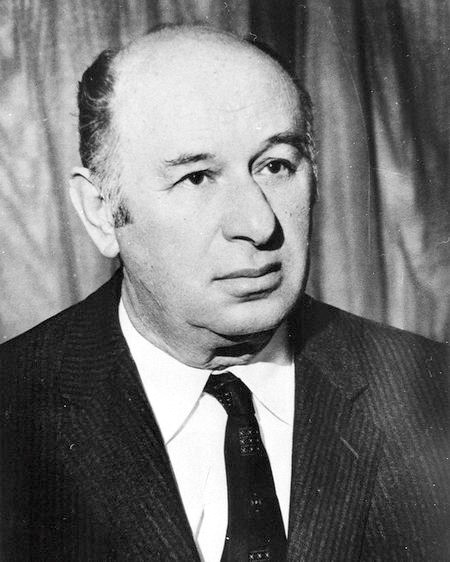
– Stefan Goga – 1942-1944
– Ligor Sava – 1944-1966
– Pavllo Nikolla – 1966-1968
– Haxhi Shehu – 1968-1969
– Ligor Sava – 1969-1972
– Arqile Papadhimtri – 1972-1978
– Qemal Hatellari – 1978-1982
Reorganization
The liberation of Albania found the country in ruins. One of the combat actions carried out at sea during this period was the liberation of Sazan Island, carried out from the Karaburun Peninsula, with the help of small boats. Albania was almost without a combat fleet and with very few wooden boats. After the war, the newspaper “Bashkimi” (Unity), dated April 25, 1945, wrote:
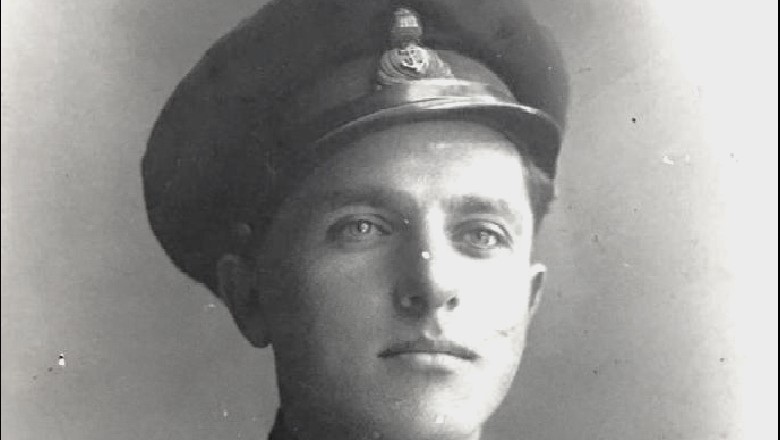
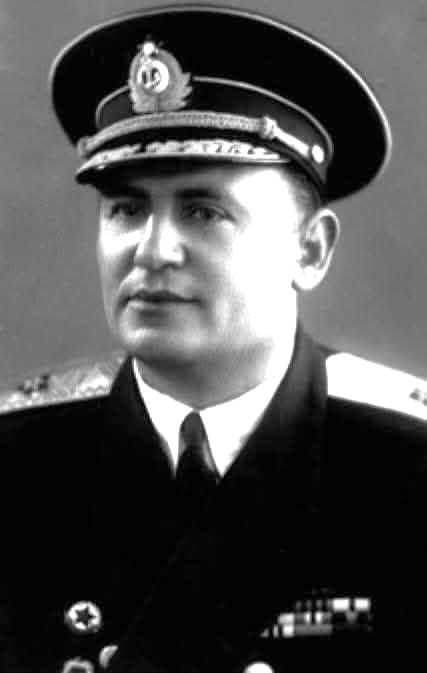
In February 1945, within the Ministry of War and National Defense, the Naval Combat Section was created, which included the Combat-Naval Fleet, the Merchant Fleet, the Fishing Fleet, ports, and everything related to the sea and coast. The head of this section was appointed Captain I, Abdi Mati, a sailor trained at the Naval Academy of Livorno, Italy, and his deputy was Officer Rudolf Bumçi, a sailor with great experience in the maritime field, who worked in this difficult position until February 1947, when he was relieved from this duty due to health reasons.
In 1944, the head of the Port Captaincy of Durrës was Ligor Sava. In 1946, the nationalization of all maritime assets was carried out. This nationalization gave the new state only 41 boats with a total tonnage of 1957 tons. The nationalized boats were made of wood, depreciated, and largely unsuitable for long voyages.
The history of the Albanian Captaincy has been made by personalities and intellectuals, whose education and training would be hard to find nowadays. But this history has also had its ups and downs. The institution has been under the authority of the Ministry of Internal Affairs, the Ministry of Transport, and has even become part of the Port Authority at various times.
The 1990s
After 1992, the Durrës Captaincy was led by Captains: Ronald Dano, Rrapi Filipi, Kujtim Caka, Vasil Rrëmbeci, Bashkim Harizi, Hamdi Domi, Flamur Rakipi, Viron Kolaj, and Muharrem Tupja. Starting in 1980, this institution came under the Directorate of Ports, while on January 1, 1991, the General Captaincy of Ports was created and came under the Ministry of Transport. On August 1, 1991, the Port Captaincies came under the Ministry of Defense, and in June 1998, the Port Captaincies were again placed under the Ministry of Transport, where they remain to this day.
There are General Captains of Ports who have led this institution and continue to work in it, while for the past year, the Maritime Directorate has been established. In 1991, the head of the General Captaincy was Abdulla Elezi, who was replaced a year later by Çapajev File, then Muharrem Tupja, Hamdi Domi, Osman Metalla, Hyqmet Hima, Vladimir Beja, and since 2008, its head has been the General Captain, Edmond Doraci.
The 1990s brought no small number of problems for our Merchant Fleet. This fleet was listed by International Conventions on the blacklists of navigation, because many arrests were carried out against ships flying the Albanian flag. Currently, the number of ships and ferries flying the Albanian flag is 15, one of which is new, specifically the 2033-ton merchant ship “Kristi 1”, purchased by an Albanian businessman in 2011. The standards of the European Union require that countries whose ships are included in the blacklist of maritime transport, which includes Albania’s merchant fleet, no longer conduct commercial activity with EU countries.
But precisely, the inclusion of the fleet on the blacklist has led Albanian businessmen to register their ships in Panama or elsewhere. “Recently, there are two ship owners who have bought ships of 17,000 and 35,000 tons respectively, but they will register them in Panama,” – the Durrës Port Captaincy informs. However, in recent years, the situation has been heading towards significant improvement. The alignment of Albanian legislation with that of the European Union and the growing competition in the maritime transport sector has made the renewal of the Albanian fleet imperative. The fleet has almost halved in number over the last two years, and this has had a positive impact on raising the levels of required standards. / Memorie.al