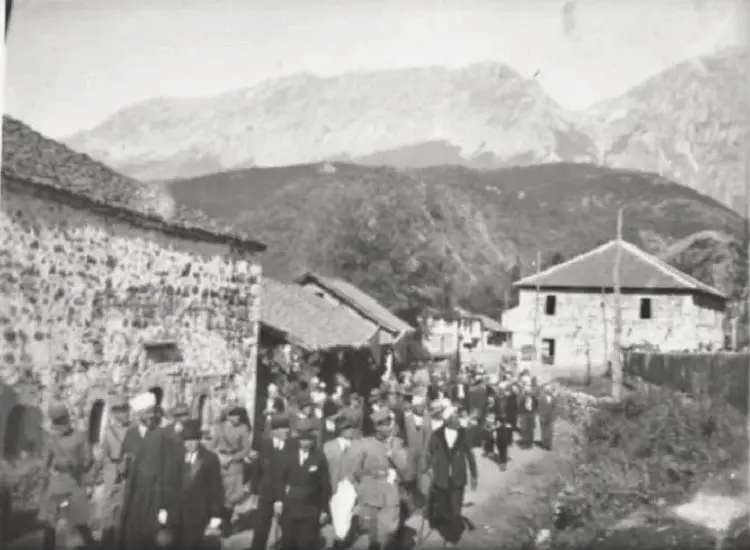
Memorie.al / Nobody know where to begin when writing about a house that we have long called a “door.” By the word “door” we understand a valuable heritage in the service of people in need or in the service of the homeland. And although I do not know where to start, it must be started, because many years have passed and the door of the standard-bearer (bajraktar) of Shipshan has remained without words. Not because it has remained without words in the sense that no one has written about it, or because there are no words for this door, but because no peasant of its own has written about it. And so, father and son, Din Bajram Bajraktari and Bek Din Bajraktari, inherited the door of the standard-bearer of Shipshan. A lineage founded amidst great hardship. Oral tradition turned into legend speaks and constructs all kinds of tales, some even assuming Fishta-like proportions. Someone might say that this or that does not hold true, but it is universally known that every birth entails pain and great hardship, yet birth is beautiful.
The flag, as a banner (bajrak), was taken in war with bravery and self-denial. The resistance there was unparalleled. All the men of Shipshan and Gash fought heroically. Until then, we lived as one tribe and were led by the banner of Gash. No one knows exactly how Shipshan became separate, but it is known that at the request of two hundred households or “times” (as it was called then), the mother banner granted the right for those households to become a separate banner, according to the rule of the time (Sharia).
War and the flag-bearer are killed in a struggle most praiseworthy for homeland and faith. The first man of the door of the present-day standard-bearer of Shipshan sees that there is no flag among the living. He looks and sees that the flag lies among the corpses, there on the battlefield. With unmatched courage and patriotism, he runs toward the symbol of the nation and of the tribe (military unit). After fighting several opponents, he defeats three at once. He takes the flag. He returns to the other fighters. He informs them of what happened. In his village, Papaj, he places the flag. He does this to show that he fought for faith and homeland, not to gain precedence.
The movements of the time called upon the new door for the new banner. And it was decided that, through all historical twists and turns, it would lead in the battles of mind and strength for the homeland. After Bek Din came Tahir, and later Rustem and Salih Tahiri. Tahir took part in several popular movements where his word was heard and his opinion taken. This leading man had unparalleled support from the young men and men of Shipshan in general, and particularly from the village of Kasaj.
Rustem Tahiri, in the war of Plavë and Guci, clashed with the regular military forces of Beliçko Bojoviç. This bloodthirsty man was defending the interests of the Serbian state. Rustem, at the head of the youth of the Highlands of Gjakova, triumphed in the right and won, for the moment. After this victory, this young man of Kasaj in Shipshan fell seriously ill and died in his own home.
There are all sorts of descriptions regarding Rustem Tahiri’s virtues, which were incomparable with any of his contemporaries. The standard-bearers, even though they were no longer recognized under the constitution (the statute of the Kingdom), still had to exist as a door, and even to contribute to the new life of the country. And for this, Salih Tahiri – educated in foreign schools but based in Albania – was what this time required.
He was appointed to the municipality of Bec and Pejë as an important administrator. The life-or-death conflict with the Serbian state forced him to leave there and continue his work in the municipality of Pukë as head of agriculture. In this municipality, he gained a reputation as a young man of his time. The people of Pukë loved and respected him. There, it was inevitable that the fairy-like charm of Xhevahire would catch his eye.
She came from Gjakova to her uncles in Kabash. Oh, Shpend Halili – a man and a door known for everything that the time required. There, and only there, Salih Tahiri wished to rest. Since he had relations with Shpend, he did not delay and told him that he loved that girl whom Shpend had as a guest. Shpend laughed. He told him: “The girl you saw last night is my niece. Yes, man, she is the daughter of Misire. We had given her in marriage in Flet, and Sadiku, Misire’s husband, died. This Xhevahire Sadikja was born on the fortieth day after Sadiku’s death. We were expecting a son, but a daughter was born. Now she stays with her uncles in Gjakova. I will talk with my friends and let you know.”
The state of waiting for word regarding Xhevahire Sadikja did not last long for Salih Tahiri. The friends from Flet, men of name and weight in the society of the time, knew the door of the standard-bearer of Shipshan; indeed, they even knew the future groom. This recognition took Salih by surprise. “Do not be surprised,” said Shpend. “Your house has been a friend to the door of Kryezi. And my friends are family friends with the Kryezi of Gjakova. There, they have seen you and heard your word.”
The marriage was arranged quickly and just as Sali Bajraktar wanted. One day, Salih was coming together with his bride from Gjakova. Both mounted on saddled horses. Young and beautiful. They measured up to the charm of an epic. If Fishta had met them, he would have said: “Sokol Halili has come with the daughter of Krajli.” The song would continue. “Her forehead is like the dawn at sunrise. Her eyebrows and hair are like the forest on snowy mountains. Her neck and stature are like fairies in the light of lightning. Her eye is like the black ink of June. She has a waist like the ring on the finger of Sali Tahiri.”
Thus spoke the old women of our village about that bride on that September day when she was coming from Gjakova. Even though the sun had conquered the earth, that olive tree of the blue sky shone. Life is not all like dreams. This couple, unmatched in charm and love for each other, did not have children that would bring them joy. They gave birth to daughters who died as if sold. Xhevahire, as a daughter of a good door, gave her opinion that the door of the standard-bearer must have an heir. “You, Sali, must marry again.” Finding himself in unknown circumstances of life, Sali Bajraktar asked for the hand of a girl from the door of Bajram Haziri, in Rrogam-Llugaj.
Oh, Bajram Haziri. One of the foremost hearths of the Highlands of Gjakova. One of the most renowned men in this region. He died tortured, solely for the fault of being a man whose word was heard. The time did not want shadows. And this man’s shadow harmed them then. At least that is what was thought at the time. Almost as soon as Sali Tahiri’s second wedding was concluded, Mustafa Sali Bajraktari was born. The grandson of Rustem Tahiri, of Sadik Rama of Flet. Fully complete in every way that a future leader needed. Everyone in that village rejoiced. Mustafa was born into the hands of Kada Januza. She was the mother of Rustem and Sali Bajraktar, descended from the most renowned door of Vuthaj in Plavë.
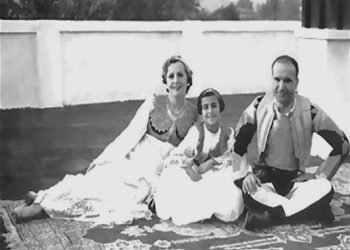
He grew up together with Tahir, his paternal half-brother. Tahir, son of Fatime Rama. This daughter of the foremost door in the Highlands, right after the hearth of Mus Zeneli of Qelia in Shipshan. With Tahir, they were almost like twins. They got along very well and were among the most favored boys of the village. Today, the whole village remembers these two boys with longing and special respect. As I said above, life does not come as in fairy tales. Albania was liberated. Sali Bajraktar was appointed to important positions in the Tropojë district. He held duties in the district administration, up to head of agriculture. Political events unfolded one after another.
The family of Sali Bajraktar was forced by the state of the time to live outside the Tropojë district. He and his family resided in the Fier district. There, almost all the children received a triple education. Mustafa, Tahir, and Besnik learned the intelligent game of chess. Mustafa loved and kept Besnik very close. Even when he escaped to former Yugoslavia, he wanted to take Besnik with him. He appreciated him intellectually and tried to educate him differently from the times. He did this without attracting attention.
The daughters of Xhevahire and Fatime became the finest girls, not only of the village but also of the region. I say “of Xhevahire and Fatime” because these two were in charge of the girls’ upbringing. Salih did not have the time to deal with the girls, even though there were many: Drita, Bedria, Makbulja, Bahria, Nexhmia, Zarifja, Vojsava, Afërdita, Fiqiretja.
The years passed, and emigration or internment – which means living outside the residence of the Bajraktars – brought a new level of knowledge and conditions for understanding life and the Albanian reality of the time. For Mustafa Salih, this was condition number one: to seek freedom and his right to be free. He made the decision, but he did not calculate correctly. He escaped, as it was called in the legal terminology of the time.
The escape to former Yugoslavia brought him tragedy, not only familial but also personal. The calculation was incorrect. With the Serbs, his family was at odds both privately and nationally. Therefore, Mustafa would not find there what he sought.
As soon as the Serbian officials in Gjakova and Pejë learned who he was and to which family he belonged, they returned him in record time, without proper procedures – that is, with accelerated procedures. In Tropojë, he was sentenced to many years in prison.
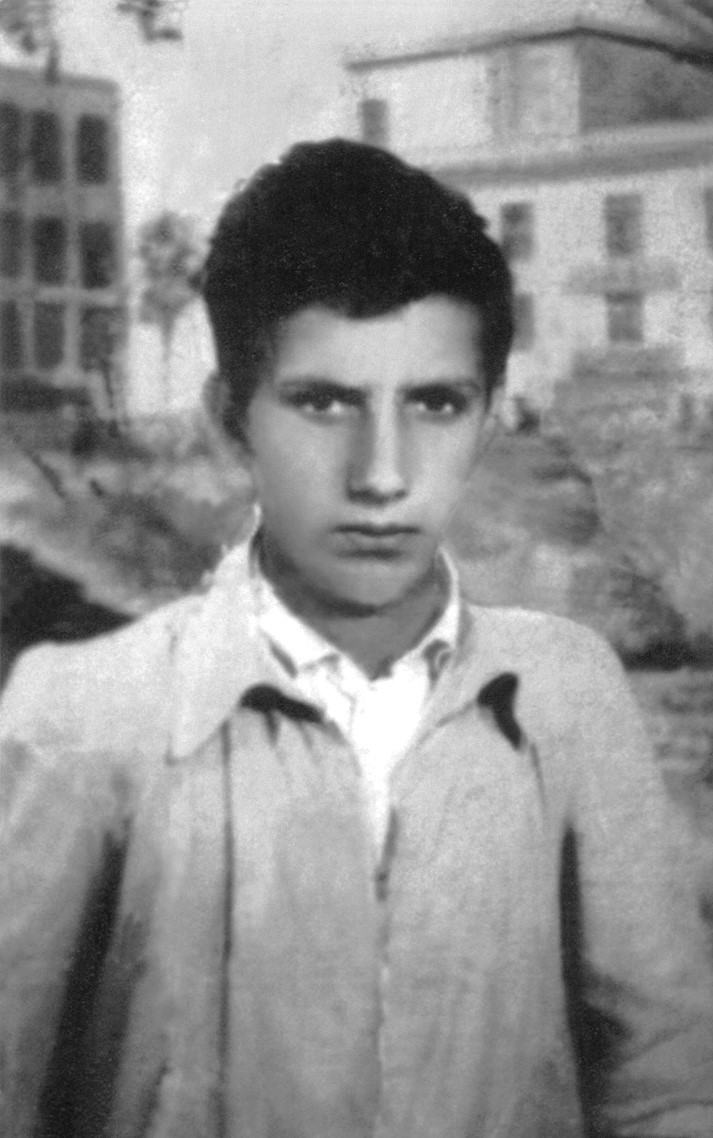
A heavy accusation for an eighteen-year-old. Escape in the form of treason against the homeland. “I do not understand,” Mustafa told the courtroom. “You understand, you understand,” replied those who judged him. “Yes, I understand, but it is not true that I have betrayed my families and patriotic ideals. I have sought and still seek freedom, not only for myself but also for all the young people who are growing up today in my homeland.”
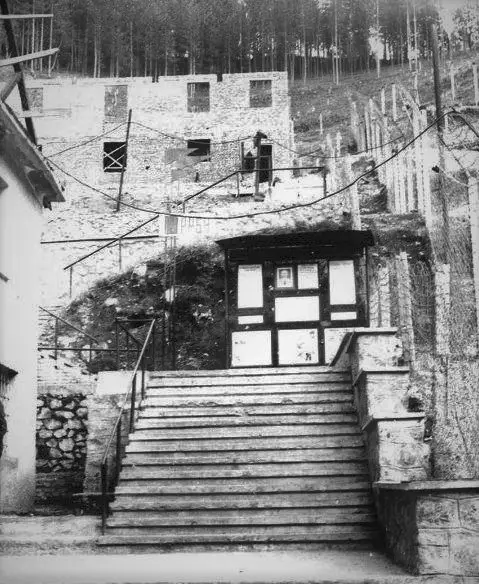
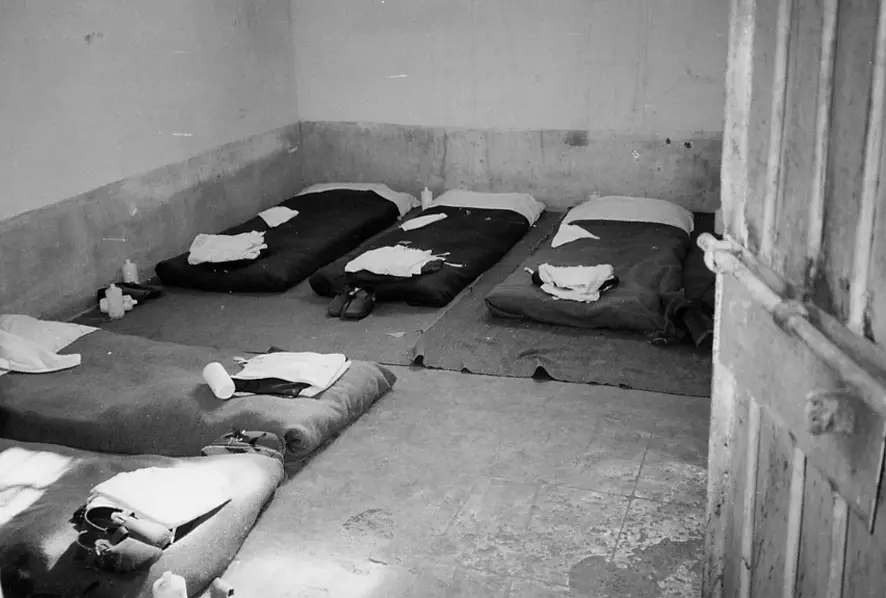
With this statement, he confirmed the ideological accusation and was sentenced to serve his punishment in Spaç, Mirditë. There, he could not endure the loneliness and sought freedom by escaping from the place where his sentence was being served. With this act, this young man’s sentence was increased by another twenty years. Life in prison and torture did not abate.
He had left his mother and sisters in the village of Kasaj, in misery. He remembered his mother, whom he had left ill, his little sisters, and all the other people in internment. This life was unbearable. The day did not grow old even though he constantly studied and learned foreign languages. The day did not pass, even though heated debates among the prisoners consumed hours and nights.
His mother Xhahia, as all the children called her, bore the heavy burden of keeping open the door of the standard-bearer of Shipshan. This woman, whom Fishta might once have called “the sun has stopped and is looking in wonder, the moon is shining and giving light to the star, night shall never fall,” now took on the bearing of a man. With Makbule, now grown to thirteen years old, she mastered everything related to this house.
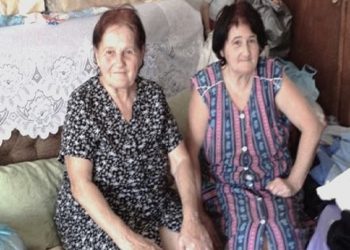
If we were to define her now with one phrase, it would suit her better than anyone else: “the iron woman.” With an incurable disease, with young children and the label “enemy,” she bore the full weight of life in the village. Makbule recalls: “We have boundless respect for our brother villagers. They never abandoned us. They helped us as much as they could and as the times allowed.”
She continues with hours of memories and names all the villagers one by one. Bulja constantly accompanied Xhahia to visit Mustafa in Spaç and Burrel. She tells all kinds of events that are subjects for essays and stories, even humorous ones now that times are understood differently. Bedria, married – and to a husband also bearing a label of the time – never abandoned those suffering people, neither she nor her husband.
One day, timidly, Bulja went to the post office to receive the reply regarding a sum of money she had sent to her brother, Mustafa, in prison. That little money earned with blood and hardship – no novel could tell it. The postal official handed her a return answer, on which was written: “The recipient of the money has died.” The ground spun around her. She asked the official, “Are you mistaken? I am not the recipient of this telegram?!”
At home, she handed over the telegram as if absent-minded. Xhevahire Sadikja read it. As soon as she read it, she lay down on her bed and remained there until she passed away. She spoke and cursed even her own coming into life. “Why did I learn to write and read?” she said. “To read of my son’s death – this is what I finished the boarding school in Gjakova for.” She talked to herself like that almost all that night.
During this time, Salih Tahiri and the children he had with Fatime Haziri were also interned in the village of Bricë, in the united village of Lekbibaj. The situation of this family became very difficult. The family’s morale never fell. Besnik continued his secondary school in Breg-Lumi Dukagjin. An example of education and determination, indeed a product of Mustafa’s selection.
Here, in this unusual account of this family, the verse suits well: “That rifle, which fell on you, fell on all our brotherhood.” The rifle that took the life of Sadik Rama of Flet and left Xhevahire without a father, shadowed her whole life in misery and suffering. They say that an orphan never truly rejoices. This account confirms that old saying better than anything. In a psychological terror and persecution, not only physical, the family of Mustafa Bajraktar lived united and dignified. Life now has a completely different shape. Everyone’s values are measured by their own individual contribution.
The postulates that suit Mustafa Sali Bajraktar are these: there is nothing but birth. He has received the decoration “Martyr of Democracy” from the President of the Republic, and he is an “Honorary Citizen” of the former Tropojë municipality. Now in eternity, his name will be in Old Tropojë – “Mustafa Bajraktar” Square, the place where he spent his life until its end. Generations will boast of this quality name bestowed by the institutions for his contribution. Now time appreciates values. / Memorie.al