Part One
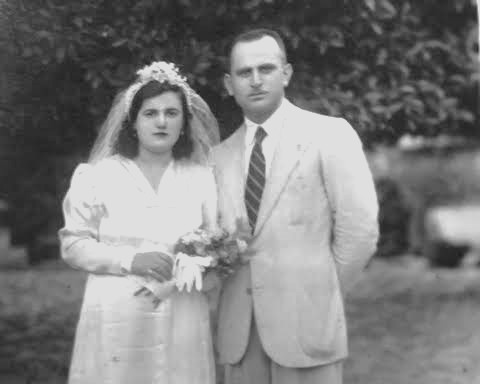
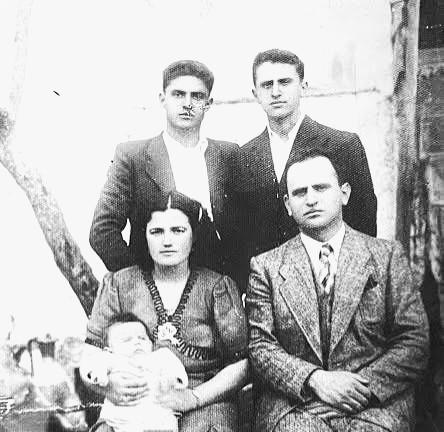
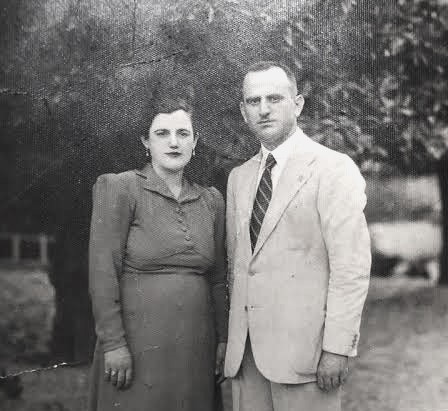
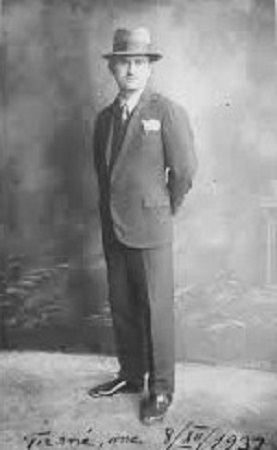
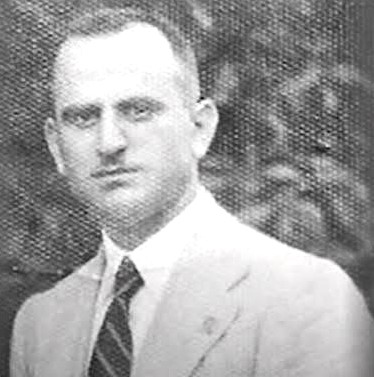
Memorie.al / 76 years have passed since the execution, but Daut Elezi’s family, despite their efforts, still has not found his remains. Suzana, the youngest of the children, who was not even one year old when her father was arrested, recounts the sorrows that have accompanied their family throughout their entire lives. Daut Elezi was one of those young Albanian intellectuals of the 1930s, educated in the West, whose life was cruelly cut short with the establishment of the communist regime. He worked in the state administration before and during the Second World War, ending this career in Gjilan. Very little is known about him today. Even his descendants are discovering his figure piece by piece, with great effort. Because for over 40 years they could not speak, and for more than 30 years of pluralism, those who hold the hidden truths speak little or not at all.
Daut Elezi returned to Albania at the end of the war, with the idea that he had no reason to be afraid, since he had done nothing wrong, but the communists arrested him in 1947 and, a few months later, sentenced him to death by firing squad. According to a document that the family retrieved from the Archives of the Ministry of Public Order in 2004, he was accused that: “during the time of the occupation, he propagated and agitated in favor of the occupier and the treacherous organization of Balli Kombëtar” and that “after the Liberation of Albania, he agitated against the reforms of the regime, made contact with fugitives and supplied them with necessary items…”
The family never saw him again from the day they came to arrest him at home, and they never learned what happened to him. Even today, they have doubts whether he was executed after the court’s decision, or before. Five children from two marriages, a wife in her mid-20s, a brother who had left the “Normale” of Elbasan and joined the National Liberation War, and a sister who donned black clothes at the very beginning of her thirties and never took them off again, lived with the sorrow for the beloved man lost forever.
The words of Daut’s brother, Sulejman, remain in the memory of even the youngest: “As long as my brother’s bones are not found, I want that when I die, you throw my body into the sea, to be eaten by the fish. I do not want to be buried in this land, where I was not even able to find my brother’s bones.” A grief that continues even today, even for the younger generations of the family, and which creates indignation in circumstances where, despite their efforts, they are faced with the apathy of institutions to give back what they can, from the irreversible: the acknowledgment of Daut Elezi’s figure and, above all, his remains.
“He was a criminal to them, we accept that. I don’t have a criminal, I have a father. I want the bones, wherever they are,” says Suzana Elezi Dervishi, Daut Elezi’s youngest daughter, who could not get to know her father because she was not even 1 year old when he was arrested. Through this interview, which will be published in two parts, she attempts to convey, through the testimony of Suzana Elezi Dervishi, the family’s unquenchable call for the discovery of Daut Elezi’s bones and the drama that encompassed three generations due to the execution of the intellectual whom the communist regime declared a war criminal.
Who was Daut Elezi?
To tell the truth, very little has been said. They didn’t have the confidence to speak because we might speak outside, we might be provoked, so here and there, we found out bits and pieces. We didn’t even know that my father had supposedly been a lawyer. These institutions have acknowledged all of this now. He was a lawyer because he didn’t accept a defense lawyer at the trial. “I am capable of defending myself,” he said. My father was born in Peqin.
He finished school. We hear about his early years. Then he went to the “Normale” of Elbasan. He worked for a short time; he was in the Civil Registry. He worked in administration all the time. Then he went to Italy for studies. He came back…! He was a Mayor. He was once in Libofshë of Fier, in Buz of Tepelena, in Elbasan, head of the Civil Registry office of the area because it was a large area. Then he went to Rahovec. From Rahovec, he went to Gjilan. He stayed in Gjilan longer. He stayed about 3 years, it seems to me.
Italy had arrested 300 Kosovar men, Albanians; put them in a school or a warehouse. And then Fascist Italy capitulated, and the Germans were coming in. The Germans would also take them to concentration camps, as savage as they were. My father gave the order to open the prisons and saved 300 men. Even that certificate he received from Lutfi Haziri is thanks to those 300 men he saved. Also for the help he gave to the Albanian schools there. He also had many photographs of him inaugurating roads. They built small roads within the city, apparently.
How did it happen that he left Gjilan?
They saw that in Gjilan it was impossible to live. Because after the system fell, at the municipality, which was an old house, but with large basements, the Serbs would call people in, supposedly to question them, and they killed them in the basement. They left them there, the building stank. It has now become the city’s museum. My father came secretly; the people of Gjilan escorted him on horseback, all the way to Kukës, at the border. And our people came out to ambush them. They had intelligence that someone was crossing. They went back to Gjilan that same night. They stayed two days, I don’t know, and then they were taken out in an extremely secretive manner. Where they took him out from, I don’t know.
How was it possible that he returned to Albania when the communists had taken power?
Many Kosovars who had been living in Turkey for a long time promised him a job to go there, since he was also educated for the time. There weren’t many, we’re talking about 100 years ago. They told him: “Don’t go to Albania,” but he knew, he had gone to school, he knew what communism was. – “But I haven’t done anything,” he said. That’s the first thing. And the second: his brother was a partisan. My uncle, the one who raised us, left the “Normale,” and was with the 1st Assault Brigade.
My brother, whom I considered a father, had been at the American School in Golem, Kavajë. He said: “They were partisans, I… [Uninvolved].” He was a civil servant; he didn’t get involved with…! He inevitably carried out the policies of the state in power at that time, but they fought for a Greater Albania. That was what all the fuss was about, that they didn’t want that, because these [communists] were all sold out… That’s it…! My father was killed at 40 years old.
In what year?
He was arrested in ’47. In February of ’48, he was killed.
What was your father accused of?
One of my father’s accusations was…! When they came, they searched the belongings in the house – my father had a library, a good library – they flipped through the books. The people there were ignorant, but inside a book, they found a telegram from Shefqet Vërlaci. When my father married for the second time – because his first wife had died – he took my mother, Vërlaci was on vacation in Italy and sent him a congratulatory telegram for the wedding. My poor father didn’t tear it up, he didn’t think…! It wasn’t a shame to have a telegram from the Prime Minister.
The second thing was that he supposedly helped a criminal, Hamit Matjani, whom we call a criminal, but he was a nationalist. They accused him as if they had seen him carrying him supplies. My father was apparently on a boat. He had gone to the villages beyond the Shkumbin River, according to a shepherd who was guarding the sheep, and my father apparently had a letter in his hand. But he didn’t know what that letter contained, what that letter was, but he saw it from a distance. For longer, I don’t know what to say, – she says, – but he got off the boat and had a letter in his hand.
My father was the chairman of the Democratic Front for the city of Peqin. But he resigned. Because these people really liked those songs and dances. The railway was being built, they would come there, but apparently my father didn’t like it. Perhaps that could have been the reason. And he resigned. In the indictment, they completely bypassed it, they don’t mention it at all. Even my brother, Shpëtimi, who was four years old, remembers that. The oldest was four, the other two and a half, me six months. And he was once at my father’s office, and he even remembers the center of Peqin, that “my father took me by the hand, he says, and bought me…”, whatever he bought him, something there, he took him out. He remembers his father. He also remembers the moment of the arrest.
Did they arrest him in front of the children?
At home. They took him while he was eating bread. And he took a mattress with him. He tied it himself, my poor man. They didn’t even let the people (of the household) help him.
What happened to your father after the arrest?
No one ever saw him again. He would take a thread from his shirt, apparently from the bottom, and he would pluck off all the buttons and thread them onto the string. He wanted to show apparently that: “I am finished,” and he would put them back inside his shirt pocket. Let alone that they were blackened, the clothes that came out of there were stained with blood and tar, wet, moldy. They would get wet and their clothes would dry on their bodies.
Did no one from the family meet him?
No, no.
In which prison was he held?
In the prison of Elbasan.
And where were you living at this time?
We were in Peqin. They had left Elbasan because they also had a house in Peqin, the house that our grandfather had.
Did your father accept the accusations?
No, nothing. He didn’t accept them. While being taken out for execution, he said: “Tell the children to keep their heads high.” They also accused him for those 300 men he had freed there. “You did that to save your own skin!” – “What skin?” – He had said, my poor man.
What do you know about the trial, about the execution verdict?
We don’t know what happened. We didn’t know how he was killed. Later we found out that he was supposedly shot. The date of the execution and the date of the claim [for food] shift by 10 days. He was already dead.
Is there an execution protocol in the file you obtained?
No.
How did you find out that he had been killed?
They had taken food, as they came every week. My mother, with her husband’s son, Mustafa, who was a partisan, in the Peza detachment. He was 17-18 years old, without finishing high school. And an acquaintance from Elbasan – because my father was known, he had been a lawyer in Elbasan, before he left for Kosovo – told him: “Dajë, (these locals use the word dajë) take that bride, don’t wander around here because Daut has been dead for ten days. Because these people don’t get enough with food. Daut never had any of the food you send reach his hands. Just give it to the kids to eat, because they are orphans,” he told him. And my poor mother ran away. That brother took her. He took her to an acquaintance, that gravedigger, who later showed the place of the execution. And all night long, they informed the people they knew in Elbasan, without telling my mother anything.
The next morning…! There were private buses that ran the Peqin-Elbasan route. – “I saw them,” my mother said, “that all those people, the relatives, were there, but I didn’t think that Daut had died.” Those from Elbasan would come to open the funeral ceremony in Peqin. And when they got off there, my older sister had me in her arms, I might have been about 1 year old because my father also spent 10 months in investigation, my poor man. And how would they tell my mother to make her understand? Because she knew nothing.
And my father’s aunt, who lived in Elbasan, said: “The orphans of the aunt.” She embraced me as a child and my sister who was holding me. My sister had gone out into the street – our house was by the roadside – waiting for my mother to come from Elbasan with some good news about my father. My mother fell unconscious right there and for three months she didn’t know where she was. “Okay, the house,” she would say, “the belongings, but what did they have against my husband’s head?” Because we would start from scratch, from zero again.
Was the house sequestered immediately upon your father’s arrest?
Yes, yes. They wrote those down. “You will preserve them”! They signed whatever they wrote, whatever they had, and even children’s clothes. We would stay a few more days there, it seems. With three small children. There were seven people: my father’s two children, the three of us: five, my mother: six, my uncle: seven. They were all young. The oldest, my mother, was 25. My mother went to the Municipality there. “Where should I go,” she said, “with all these children? – Drown yourself! – he said. Because the river passes there, the Shkumbin. – Drown yourself in the Shkumbin,” he said.
You have learned from other prisoners that your father left a dying wish for your older sister.
The executions were done in the morning, at 03.00 – 03.30 in the morning, but when the prisoners heard a door opening, a noise because there were those iron bars, they would try to look through the small windows of the doors to see who was being executed. – “You who are alive, who are looking at me now,” my poor father tells them, “whoever survives, whoever has the luck to get out, tell Kadrie (his wife): take care of Lutfie! For the girl he had with his first wife, because she was of a mature age. She was about 14-15 years old. He said, “She (referring to his wife) will take her own children and leave.”
But you all lived together.
We knew we were all sisters and brothers, we didn’t know they had a different mother until late. Those conversations were not had in our house. We were two sisters, three brothers. We called our uncle baba (father). They were sick with grief. They didn’t let my mother go out to work. They said: “They mock these…?! They mocked our brother. We will take care of her. Bread with salt, let her stay at home, raise the children.” They needed them, they were all young.
Did your father manage to send his ring out of prison?
There was a man there; my mother’s stepmother had him as a brother. It happened that when he was escorting them to the WC one morning, my father recognized him. He didn’t recognize my father because he was unshaven, exhausted. He had never seen my father like that, as he was there. And when my father quietly says to him: “Zija, don’t you recognize me?” He recognized him by his voice. – “What are you telling me, Master Daut?” – “Forget Master Daut,” he tells him. Through him, on another occasion when he escorted them, he sent the ring out.
To respect the connection of being related by marriage, he asked for a meeting. He asked for a meeting thinking: “Since I cannot meet my family, I am here; it is my duty to respect you.” What my poor man endured! He was from Imsht of Lushnja, they sent him to the Highlands of Shkodër. He paid dearly for that action. He didn’t reveal anything about the ring, but he did ask for a meeting.
What have you managed to find out about your father’s execution?
There is someone who was a gravedigger. And when they had finished the job – because it seems to me they opened the grave themselves, as exhausted as they were – he saw my father with a beard, because my father was a man who kept himself well-groomed, you see, he didn’t look like that. “Ou,” he got scared when he saw him. – “Do you feel sorry?” they asked him. – “No, no, I’m just surprised,” he said, “that he has a beard that he hasn’t shaved.” He put a stone there at the head, he says. He had said not to worry.
Did you contact this person afterwards?
He had died. But he had told his son. It is roughly thought where.
Where?
In Krastë of Elbasan, but how vast is Krasta! They didn’t know exactly. There were five people who were executed. My father and the father of the governor of the Bank of Albania were killed in the same place. They are from Elbasan. There were five people. Five wealthy families. We weren’t wealthy, in fact. We were a normal family. We liked school, yes. My grandfather was a cleric (*hoxha*) and had a small footage shop. Good thing my father’s parents weren’t alive when he was killed!
When did the search begin?
Since ’92-’93. My brothers were in good health and about 30 years ago, when democracy came, based on people’s information, they took an excavator and dug.
They couldn’t find him?
No. Some say that very quickly, fire pits and bunkers were made, and they threw them straight into the Shkumbin River. I don’t know. I don’t know what to say. We have no data. But my brothers stayed there for three days with the excavator. And approximately from there, my sister’s son brought a bag of soil, which we used to make an imaginary grave, and we placed it there. My father has now been dead for almost 80 years.
For someone who has never lacked anything, what we are asking for after so many years seems excessive. “He died, he died. He would have died by now anyway.” He would have died, but he died at 40. We want to have a place where we can bring flowers. He was a criminal to them, we accept that. I don’t have a criminal, I have a father. I want the bones, wherever they are. These people don’t show them. They must know, because they weren’t animals that killed, they were people. They also have maps, they say, they know very well. / Memorie.al