By Dr. Gjovalin Gjeloshi*
Part Two
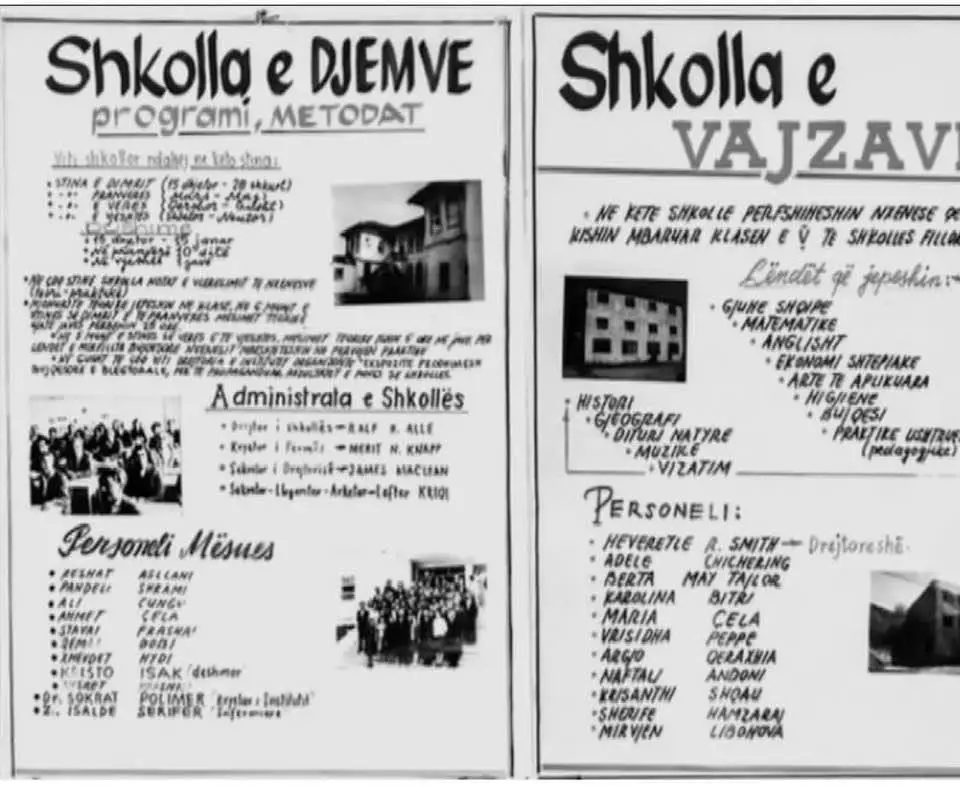
Memorie.al / Exactly 45 years ago, in the autumn of 1976, the Agricultural School of Golem, Kavajë, was celebrating. Almost all of its 600 students were involved in demonstrative drills named: “Books high, rifles ready, and granaries full.” (This name came from an initiative taken by the students of the 2nd-B class of that year, of which I was also a part. The demonstrative drills, so that the reader knows, resembled the demonstrations held by school or university youth on the occasion of the May 1st holidays or November 29th, known as Liberation Day). Preparations took several months. In those weeks leading up to the celebration, there was a great deal of seriousness. It was expected that the school would be visited by a high leader of the Albanian state, Haxhi Lleshi, who had once been a student at this very school. Besides the demonstrative drills held at the school’s sports center, a considerable number of activities followed on the day of the celebration.
Continued from the previous issue
The school’s two traditional branches, after 1945, were Agronomy and Zootechnics. The grandeur of the agronomy branch never faded, even when named schools in this field flourished in our country, such as the Agricultural High School of Kamza, the Agricultural School of Peshkopia, of Fier, Korça, etc. The pride of “sending children to this school” also existed when, commonly, over 340 secondary agricultural schools were opened throughout the republic, in every unified village.
After 1990, despite the changes in the pre-university agricultural education system, the agricultural direction in Golem continued and continues to remain even today. If hundreds of agricultural secondary schools in Albania were turned into general high schools, in Golem the two inherited basic branches initially remained, but a general high school class was also added, simply “just to have a seed,” but also to meet the demands of the surrounding area and not to be left “behind the others.” But the “race” of who would drop the agricultural direction first, Golem left to the other schools.
Agribusiness, a name that does not frighten
If you notice, today such titles as: agricultural high school, agricultural technical school, etc., of this nature, with names rooted in the word agriculture, do not exist. Everyone is afraid of agriculture, as an activity per se, but also of the word itself. (But when the government is afraid, how can the children not be?). I do not know where we want to go, if in the future there will be no people who know how to work in agriculture. So that they know how to plant and tend to crops, prune trees, drive agricultural machinery, how to feed animals. The grandfathers or fathers who know these things, we will not have them one day. So that we do not frighten the children and so that they do not feel insulted (Oh God, where have we arrived!) that they are studying to work in agriculture, the few schools or branches within these schools that remain in Albania, we have given the name “agrobusiness.” This is what also happened with Golem.
Today in Golem there are three branches: Agrobusiness, which I have the desire to call “agricultural,” with one class in all four years; Economics in all four years, and this year a new branch has been opened: Veterinary Medicine. But no matter how much the “economics” branch progresses (and there is progress), Golem will take a long time to gain the status that the schools of Berat or Lezhë have had in these fields. And even more so, the fragile Veterinary Medicine branch, when will it manage to have the name that the veterinary school in Shkodër had? So, I wish Golem to progress and keep alive its own unrivalled name: that of the Agricultural Technical School. I hope that, after this long transition, the love for engaging with agriculture—in practice and in theory—will return to us.
“Icons” removed from the walls
Alqi Dhrami, one of the physics teachers during our time (1975-1979), was among the youngest teachers at the school. Like many of the older, renowned pedagogues of this school, he too is a resident of the town of Golem. As such, in the early 1990s, he remained the only teacher who connected its two eras: before and after 1990. Others had retired or were no longer alive, and the younger ones had been transferred to other schools. Thanks to his age and long experience, in the late 1980s and early 1990s, he was the deputy director of the school.
During the time he carried out his activity as a teacher, he lived through the flourishing of the technical school as a national school with a name throughout the republic, the tremors and its reorganization into a more local and regional school (even its abandonment by groups of students in the spring of 1991, when dozens of boys and girls rushed to the ports like many other young Albanians to emigrate), as well as the lowest point, which he considers, the year 1999, when the number of students dropped to a minimum. Even at this point, that year he had the courage to take over the directorship of the school.
– After two years, he recalls, – we opened a new branch, Tourism. It was this branch that saved the school from closure. In 2001, around 200 students enrolled in this branch and this kept us alive. Moreover, there were enrollments from other districts as well, outside of Durrës and Kavajë. The old tradition that once existed with the agricultural school was almost entirely revived.
A year later, after this success, in 2002, they removed the “veteran” as director of the school, and in 2011 they transferred him even as a teacher to the 9-year school of the area. Naturally, I am not saying that Alqi Dhrami was the best of the teachers who taught us. There were many like him there, and there were others before him. Being “the best” was difficult, and that is not for me to determine. I called him an “icon” for the aforementioned reasons. We, our generation, called him an icon because when we visited Golem in recent years, just his presence connected us with the time we studied at that school. However, such unmeritocratic movements and appointments in education, if they do not affect the quality of teaching, or do not compromise the history of such schools, even these “icons,” it doesn’t matter, they just scratch our nostalgia.
“EDE” Golem
The Experimental Didactic Economy (EDE) of Golem was (was, because it no longer exists) a miniature agricultural farm, the director of which was simultaneously the director of the Golem school. This form of organization is as old as the school itself. Regardless of the names, such as “farm” or simply as the school’s “private land,” for an agricultural technical school that prepares technical personnel for agriculture, land is the “air of the school.” Just as a medical faculty cannot exist without a “University Hospital Center,” a professional school, in this case an agricultural one cannot function without a didactic experimental center on a certain area of land. As early as 1922, when Erikson was thinking about the agricultural school, he asked the Albanian government to give him land in an area owned by the state, where, besides establishing the “National College of Agriculture,” he would also have a “model farm and experimental station” near this college.
Where the school is (today and yesterday) and where the economy was until the 1990s, for this area of land, Erikson wrote to the Secretary of State for Commerce, Hoover, who later became President of the USA, that the Albanian government had given a donation of 300 hectares of land. And this land “good for agricultural cultivation… was fertile land and was located five miles from the city of Durrës.”
From that time until the mid-1990s, when the school would remain crippled without its experimental-didactic-productive base like a “fish out of water,” there would be few changes in the teaching-technical-productive program of the Golem school. According to later documentation, the Didactic Economy would again be an agricultural farm of 300 hectares of land and would constitute “one administration” together with the school. The only difference later would be the number of practical hours, which in the Albanian-American College formed the foundation of the program. If back then, students would get up before dawn to go to the stables or fields to do agricultural and livestock work, by hand or with mechanical tools, later this work would be carried out by the farm’s labor force, and the students would only carry out instructional internships there, without being obliged to work a full shift.
Today, five miles from Durrës…
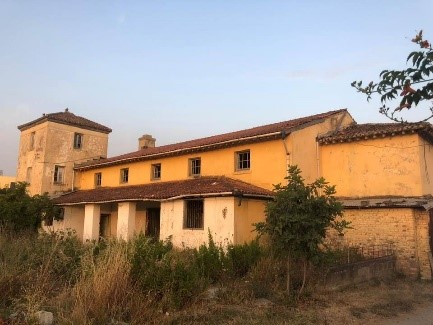
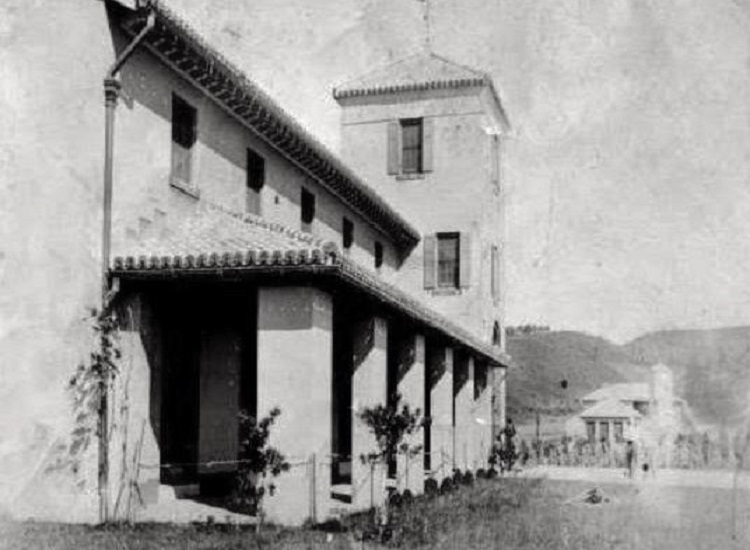
95 years ago, five miles from Durrës (just as Erikson wrote to Hoover), a great school was “born.” “Great” in every dimension: with students (boys and girls), with American and Albanian teachers, with modernized theoretical and practical teaching programs, and above all, with a didactic farm that would ensure “the training of young Albanians in modern scientific agriculture in all its branches.” Today, it is and is no longer that school.
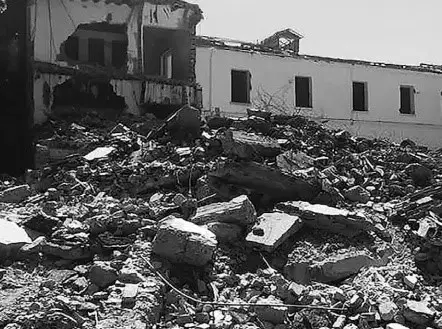
The destruction of the Didactic Economy and the appropriation of that land area, which for decades was the property of an educational-agricultural institution, is the clearest indicator of how unjustly the Land Law acted in hundreds of cases in Albania, disregarding elementary property rights. Naturally, in this “slaughterhouse” of abuses with agricultural land, in such coveted areas as that of Golem, such a large piece could not escape the bite. The same thing, let’s tell the truth, would also happen in Velipojë, Shëngjin, or in any Albanian coastal area (it is the era of extorting national wealth, certainly, but also “the wealth of others”). But, to reduce the economy of this model school to only five hectares of land, and even that without any ownership documentation, is an abuse that only authorities in Albania can perpetrate.
Any school director, who has tried to defend the school’s rights in this sphere even a little, has been fired from their job. That is what happened to Alqi, that is also what happened to the last director, Hilmi Xhaferri. This will continue to happen as long as the school is led by non-professionals, or by those who have nothing to do with education or the 90-year history of the Albanian-American Institute of Golem. / Memorie.al
*Former student of this school