
By Auron Tare
Part One
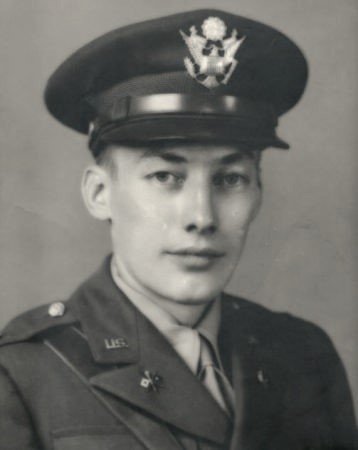
Memorie.al / From Cairo to Albania. First with the nationalists, later with the communists. James Hudson, former captain of the American secret service, in an account about Albania in 1943.
I would like to begin with a simple question: Who is Captain James Hudson?
I finished college in Pennsylvania and graduated in chemistry and physics. I was selected by the army to be a special services officer. They put me into several projects and trained me in how to work with microfilms and other things of that kind. The reason was that they needed someone to record with a handheld camera the events of the war. That is, a kind of chronicler type.
You took part in the Cairo Conference; we would like you to share with us some memories about its developments…?
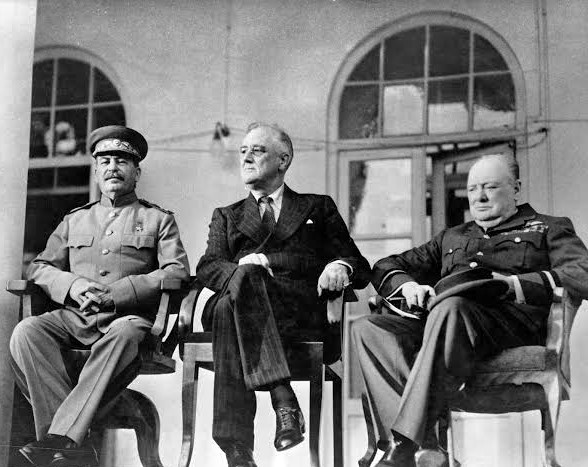
I was on the staff of General Russell Maxwell; he was a commanding general of the US army forces of the Middle East in Cairo. At that time Cairo was the crossroads of the world for the Allies. If you wanted to go to Russia, you went to Cairo; if you wanted to go to India, you went to Cairo. Everything was decided in Cairo and there I met many people.
That is how I became involved in the Cairo Conference. We learned at command that Franklin Delano Roosevelt would come. The press behaved well toward Roosevelt. I knew many press people, such as John Phillips of ‘LIFE’ magazine, etc. The press did not release any photograph of Roosevelt that showed him as crippled, neither in a wheelchair nor being held by James Roosevelt, his son. He was treated with all possible respect.
Regardless of what is said, in all these great conferences the most important work was not done by Stalin, Churchill or Roosevelt, but by their staff. All those generals, admirals, air force officers lined up on one side and the other – when they came out for a break during the sessions, they talked. So I listened to all the conversations, learning what the plans of these three countries were.
Was Albania ever mentioned there?
Yes, it was mentioned… by a Russian, who turned out to be meeting Churchill constantly.
Was there any decision about Albania at the Conference?
At that time Yugoslavia was much bigger and with influence, but the country Stalin was truly interested in was Albania. Albania, I hope your people understand, is a key country, it is its geopolitical position…!
You mention in your memoirs that King Farouk too received a gift from Roosevelt?
Yes, correct.
Did you ever meet King Farouk?
I flew in a plane with him, many times. He was a pilot.
Albania. Had you heard of it before? Were you surprised that you would go there? How was it?
Yes, I had heard of it. Let me tell you how and when. I took the last photo of the last German killed on the island of Kipan in Tunisia. It was the last German killed in Africa and afterward they were dispersed across the Mediterranean. I returned to Cairo and during the return I said to myself: “The war in Africa is over, that’s what I came here for. What will I do now?” and I was truly the only one for the role I played. There was absolutely no one else above me. My whole career was that crazy.
No one was interested in what I was doing. Anyway, a friend of mine asked me what I would do now. “Honestly I’m looking for a job,” I answered. “I’ve heard something that might interest you,” and they told me about the 13 American nurses who had been shot down over Albania. The American service was looking for a battle officer. There were many OSS boys, but they were all from Harvard, Princeton, who did not want to do this difficult job. The service wanted someone to go there and get these nurses out.
At that time I knew absolutely nothing about Albania. Not even when I was in Cairo did I know that the British of SOE were in Albania and knew it much better than we did. Anyway, one of the reasons I knew something about Albania was that I had a large volume of Albanian postage stamps. So I knew about Albania from postage stamps and I liked this. I presented myself to the Service and they trained me in hand-to-hand combat. They taught me many things of this kind. There they also explained the history of Albania to me.
Who told you?
The American Secret Service.
Were they Albanians, Albanian-Americans, or Americans?
Americans. I am sure they were Americans of the Secret Services. It was a short training, more of an informational type. So I went to Brindisi and then to Bari. Here I met Harry Fultz.
How was Fultz?
Fultz was a very serious boy; rarely could I have ever seen a trace of a smile. He hardly resembled the other OSS people at all. I do not remember ever not finding him at his table at whatever hour, studying maps or the reports that came in, and you would not hear his voice. He had a small staff of Albanian translators. They knew English very well, since he had Americanized them. There were two of them who did the greatest work in translating documents. I could describe them, but I do not remember the names very well.
One was called Stevens, Americanized, I am sure. They were good boys. The three of them were at the so-called Albanian Directorate. Each directorate had a name. There was the Greek one, the Yugoslav one, etc. They were completely independent, barely spoke to one another, which was foolishness, because we were all the same, but the Greeks saw the Albanians as if they were enemies. There was not much love, as far as I could see. So too with the Yugoslavs. The Balkans is special. Anyway, to put it briefly, Harry Fultz was the most hardworking official I have ever seen in my life.
When you first entered Albania and had learned that the person who would take you there was the Hollywood actor Sterling Hayden, was it he who gave you information about Albania?
Sterling Hayden, a Hollywood star, was discovered in Naples, not far from the Naval Academy. He was a sailor. At that time he was 22 years old and you could lose your girlfriend if she saw him. He adored the sea and small boats. He had been making the route to Albania for some years, so he knew that part of the coast well. Sterling Hayden had married Madeleine Carroll. She was truly a film star. She was part of an American show that went to entertain the troops.
We had taken Rome those days, not even a week before. We were in Otranto, trying to get me into Albania, when he hears that Carroll would come to Rome for the show. So he calls me: “Bill,” because that was my pseudonym. “Bill, if I can’t take you the first time, I have to leave you. Carroll will come to Rome. I know those damned generals there. They will seduce her and I have no time at all. I must go there to protect her from them.” And so he did. We tried two or three times, but in the end I went with an Italian crew.
When you first came to Albania, did you find another actor in the “Pamje nga Deti” [View from the Sea] Cave – Anthony Quayle, who worked for the British Secret Service?
True, Major Quayle, when I arrived, had malaria and yellow fever. John Jang had the same thing, as did their radio operator. In Albania at that time you could catch these two diseases and malaria was everywhere.
How was Quayle? He became a famous actor after the war and wrote a beautiful book about Albania…?
Yes, true. He was one of those British that honestly most American men do not like. There were two groups of officers, those who preserve rank and those who are very strict. Most American officers were down to earth, regardless of the rank they might have. When you went to an officers’ club, even though there were 4-5 ranks together, you could play cards or whatever you wanted. But Anthony Quayle was high class and did not approach the others. But I, in fact, took care of him in the “Pamje nga Deti” Cave and in the end we evacuated him to Italy.
Did you meet him after the war?
No.
When you went to the “Pamje nga Deti” cave, how many people did you find there? It’s strange, because it is a cave about which even today in Albania it is not known what happened there, where the American and British Secret Services divided that space and built the agent network. We wanted to know who your contact in Albania was. And another interesting question is, did Harry Fultz use his former students to build a network of informants?
On the first trip, as I told you, when they came to Cairo, they needed someone to go in there. Many volunteered, but they were looking for someone like me and I was ready to do it. So I went there as second in command, following Makadu, who had the pseudonym “Tank.” I did not know many things about this mission, nor about how the 13 American nurses were. Harry Fultz never left his table.
He did not sleep, did not eat, and stayed there like a true statue. He never touched Albania during that time. He did not even come near it. We were two officers depending on Fultz, captains, Tom Stefani and I. I was the chief intelligence officer. He was the officer specialized in Special Services. His job was to get along with Enver Hoxha…!
When we arrived there, there was nothing set up, no network for intelligence. Regardless of what they may have told you, we did not receive any intelligence from the communists. I had a person in Dukat, who was my first contact, named Hodo Meto. He had graduated from Fultz’s school. So it was with Xhelil Çelo. He was very brave. They killed him after I left there. I liked him very much, but he did nothing for intelligence.
He came with me to collect documents, translated for me, and so on. Hodo was the one who had the connections. He had an important contact, Petron, who was Secretary of the Municipality of Vlora. What he did was copies of German documents. He was the master of copying and gave me most of the correspondence through Hodo. Likewise they had a courier. Anyway, we began to open up with branches everywhere in Berat, Gjirokastra, Tirana, etc.
So you created a genuine espionage network?
Yes, and we trained our agents as best we could. We did not know them all, of course, since we only saw the end of the network. This was part of the agreement; otherwise you lost the idea of the network. At first we had around 20 agents, I do not remember them all, but I can tell you some names.
What was the purpose of the intelligence? German movements, or more precisely, did they have to do with the Germans, the country itself, or the political factions?
Harry Fultz was a politician. He wanted to know more about the country, the politics and the game between the ‘National Front’ and the communists. This was what interested him most. We had a military mission. What worried the American Secret Services most was the German Mountain Division that was coming from Stalingrad.
It was known what had happened to them in Russia and they were in bad shape. Anyway they were coming to Albania to recover their forces. This happened in 1944. The Germans were taking troops from Hungary, Bulgaria, White Russia, wherever they could find them. Some from France, but not many, some Poles, some Czechoslovaks, and they brought them to Albania to be trained and to become a tactical reserve.
This was one of my jobs, to see how these forces were being trained, whether they were a force ready to move or not. Fultz collected Albanian newspapers and I sent him many of them. I had a collection of them, but I lost everything later. All my beautiful equipment I lost. Many of the Albanians were thieves up in the mountains, they had a hard life. They took any kind of food they found.
Your main operation there was in Dukat? I wanted to know your impressions of life in Dukat at that time, knowing that Dukat was more connected with the ‘National Front’ than with the partisans…?
Maliq was the main man with whom we worked there. I think Maliq Koshena, I often forget their surnames. He was very strong compared to the men of the village, but they were worried about the Gestapo and the SS troops.
Do you remember from your memories, when you say there was a certain tension between the base in the “Pamje nga Deti” cave and the villagers in Dukat?
No, there was at first, but it changed later. This tension was when we had just arrived and the inhabitants of Dukat were afraid. And they were right, because they had no help from anyone. The Italians came and did what they wanted, the Greeks likewise. So it was a frightening time for the Albanians, but also for the countries fighting in the Balkans. But this lasted until the Germans began to leave. When the Germans were leaving, they felt stronger.
They said the Germans have left and now we have you and we must protect you. I kept gold in my pocket and in my belt. I had some Albanians on a monthly wage. I gave Ali Baba three gold coins a month and his task was to bring me things from Vlora. He brought them to me with those small animals, what do they call them? Ah yes, donkeys. Albanian men were harsh with women and donkeys. I am sure things have changed now, but then women and donkeys were loaded the same way.
The “Pamje nga Deti” cave was a territory of the ‘National Front’. How were your relations with this organization?
Fantastic for me, I am speaking for myself. They behaved well toward me and they all had a strong positive feeling for America. It seemed they liked the Americans very much, even more than the English. We encountered this everywhere, because the Americans were easier to get along with. The English, even with those I worked with, were heavier.
I asked you about Skënder Muço…?
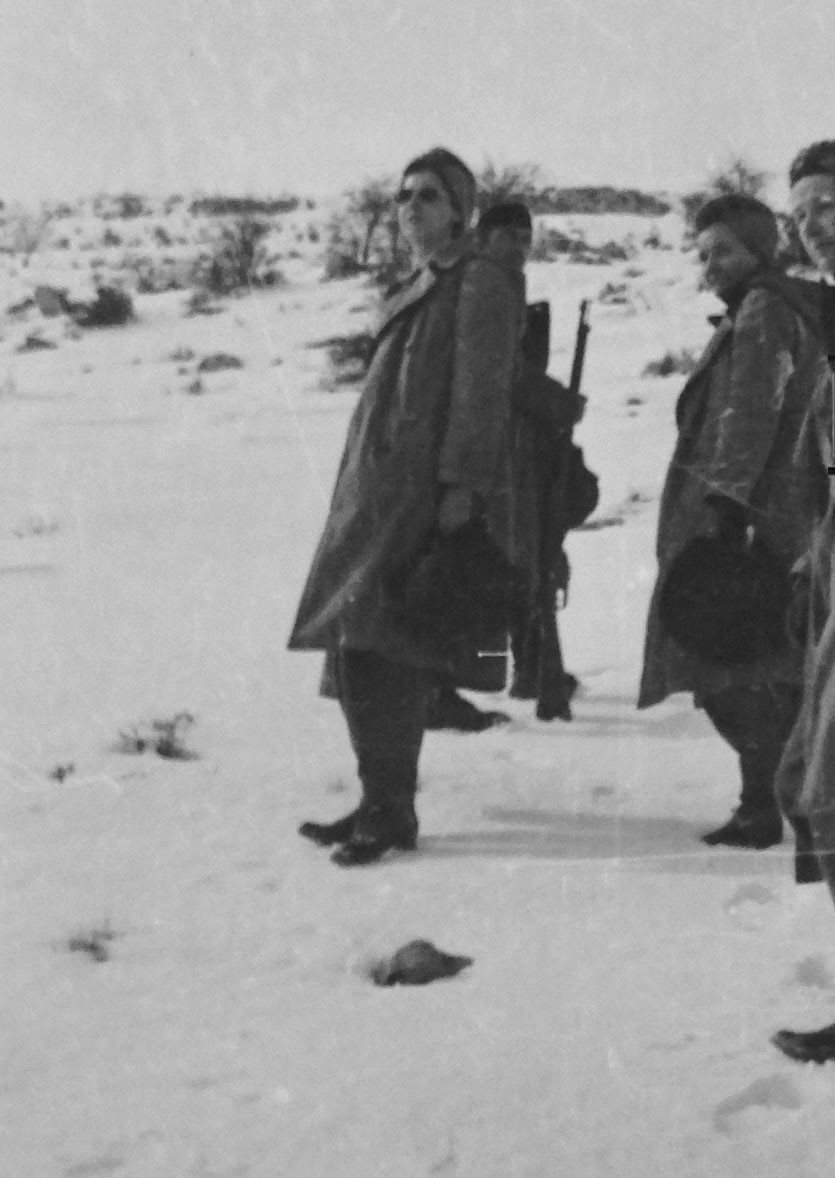
I liked that man very much. I was very sorry when I learned that he was captured and killed, not long after he had visited me. We spent a week together. He was dressed fantastically. To be honest with you, I understood that he would be killed one day, since he had the same clothing as in England, nicely ironed, long riding boots. Albanian men were lucky if they had sandals, which they made themselves from car tires. Skënder Muço did not speak much, but he was brave and of course I also had Hodo and Xhelil. Intelligent were those who had been to school.
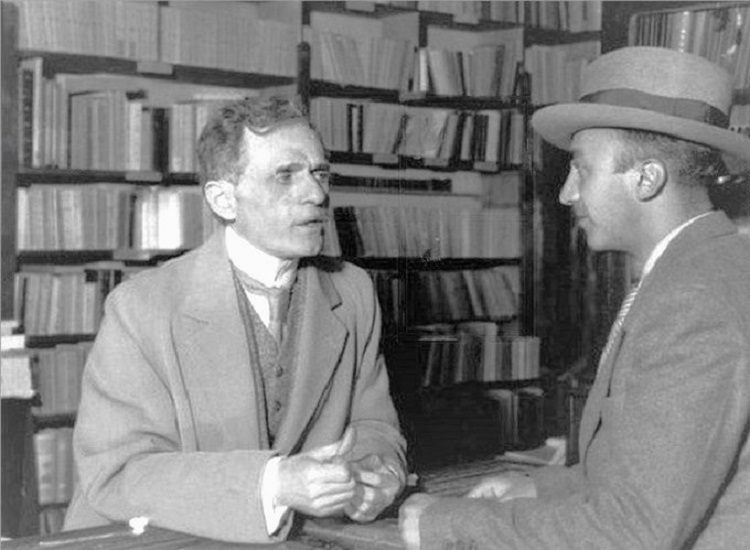
It seemed to me that Harry Fultz had as his purpose to teach his students American English. At this time I also met the two most important people in Albania: Mehdi and Mit’hat Frashëri, but they were of the old school. Skënderi was younger, a handsome boy, kind and smiling. He said beautiful things about America. He gave me messages to send to President Roosevelt, which I forwarded to the Office in Bari, but I do not know whether President Roosevelt would have had the opportunity to receive them or not.
You said you met both Frashëris? What was your impression of them?
I liked them both. They were very intelligent, but they did not speak English. They explained to me several times through Xhelil Çelo that they were not there because they liked the Germans, or that they supported them, but this was the only way they thought to keep the country on its feet.
Everyone wanted to lead and it was not simply a military matter. It was important that money circulated among the cities, that the administration worked, and you know that in a slow country like Albania, there was a big difference between the north and Gjirokastra in the south.
I agreed with them and I think the Frashëris played the right part. They kept the state on its feet, kept the newspapers in circulation and the country moving. Hoxha was in the General Staff with his boys and attacked quite a few German patrols, just so they would have some publicity with the English. The Americans hated this thing. /Memorie.al
Continued in the next issue